REVIEW · JACKSONVILLE
Self-Guided Kayaking: Real Florida Adventure
Book on Viator →Operated by Paddle Jax Amelia · Bookable on Viator
A black-water creek run, with wildlife right beside you. It’s a self-guided paddle where you don’t need a map and you go at your own pace, plus the photo-friendly mirror water is real. The big trade-off: wildlife is never guaranteed, and you’ll need to be comfortable stepping in about six inches of water and swimming if something goes wrong.
What I like most is how the route is set up to be simple—one-way up and back—and how the experience is built for beginners without feeling “baby-sit” about it. The second strong point is the included equipment and guidance so you can focus on the water, not logistics. If you’re visiting in peak heat, plan for sun and dehydration, because August-style weather can turn “easy paddle” into “stay cool or suffer.”
If you do decide to go, you’ll likely get clear help from staff (names like Zoe and James show up in the experience), and you’ll start with the basics before you paddle off on your own. This is also a private setup for your group, so you’re not squeezed into a big, noisy line while you try to spot birds, turtles, or the occasional alligator.
In This Review
- Key Things You’ll Notice on This Kayak Adventure
- Black-Water Creek Paddling: Why This Route Feels Easier
- Self-Guided Means You Control the Pace, Not the Safety
- Check-In and Launch: What Happens Before You Paddle Off
- The Paddle Itself: A Simple Out-and-Back Through Florida Wetlands
- Wildlife Viewing: How to Spot Turtles and Stay Calm Around Alligators
- Weather, Timing, and That Real Florida Heat Factor
- What to Pack: Water, Snacks, Swimsuit Options, and Photo Gear
- Gear and Entry Rules: Where Most Beginners Need Clarity
- Value and Experience Quality: Included Guidance and a Calm Setting
- Who This Two-Hour Paddle Fits Best
- Should You Book Real Florida Adventure in Yulee?
- FAQ
- How long is the self-guided kayaking tour?
- Do I need a map to paddle this route?
- Is the tour a loop or a round trip?
- What wildlife might I see on the paddle?
- What swimming ability is required?
- What does the entry and exit involve?
- Is kayaking equipment provided?
- What should I bring?
- Is this tour okay for children?
- What happens if weather is poor?
- Is it private or shared with other groups?
Key Things You’ll Notice on This Kayak Adventure
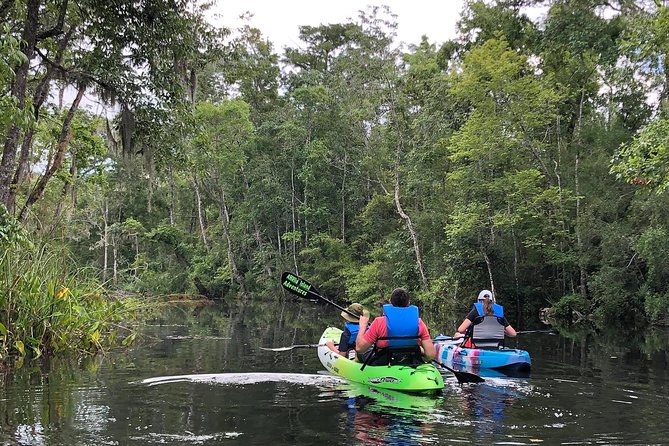
- One-way up and back route: no map needed, just follow the plan and turn around.
- Black-water tributary of Amelia Island: calm-feeling paddling with nature sounds and photo-ready reflections.
- Wildlife sightings are part of the point: turtles, alligators, birds, fish, and plenty of local plants.
- Equipment is provided: you show up, get set, and paddle without hauling gear.
- Audio guidance on a self-guided app: you can listen at your pace while you cruise.
- Beginner-friendly timing: this wetland waterway is less influenced by tide than open coastal water.
Black-Water Creek Paddling: Why This Route Feels Easier
This tour runs on a black water tributary connected to the Amelia Island area. That dark, tea-colored water isn’t just a cool look—it often means the water feels more sheltered than direct ocean or open-coast paddling. The result is an outing that’s typically comfortable for first-timers, and it works at different times of day because the waterway isn’t as affected by the tide.
I like that the experience is honest about the setting: it’s a real Florida wetland corridor with trees, quiet stretches, and wildlife around you. You’re not driving to a “made-for-tourists” channel. You’re paddling through an ecosystem where birds call from the branches, fish break the surface, and turtles can pop up without warning.
One practical detail matters for comfort: the route is described as an easy up-and-back paddle with no map required. That design keeps your focus where it should be—watching the water, timing your strokes, and enjoying the scenery—without the stress of navigation.
And yes, the reflections can be stunning. When the water is mirror-smooth, you get that black-water “window” look that makes photos pop.
You can also read our reviews of more tours and experiences in Jacksonville.

Self-Guided Means You Control the Pace, Not the Safety
Self-guided kayaking is often a mixed bag: sometimes it’s “good luck,” sometimes it’s “here’s a phone and a prayer.” Here, the setup sounds more structured. You’re given kayaking equipment, you get an audio self-guided experience through a mobile-friendly setup, and you’re able to paddle at your own pace on a simple route.
That one-way up and back plan is the big deal. Instead of a complicated loop where you wonder if you missed a turn, you’re basically doing a clean out-and-return. You can slow down whenever you want—especially when you spot birds along the shoreline or see a turtle moving in the shallows.
The audio app concept is another part I’d count as real value. Even when you’re just cruising, the guidance helps you notice what you’d otherwise miss: wildlife, plants, and the little natural patterns along the creek. In the experience’s feedback, people specifically called out the speaking points running through the self-guided audio, which is a good sign you’re not stuck guessing what you’re looking at.
Still, remember what self-guided really implies: you’re responsible for your own awareness. You can stop when you want, but you also need to stay alert, because wildlife and sudden changes in water conditions don’t care about your schedule.
Check-In and Launch: What Happens Before You Paddle Off
Your meeting point is at 463540 FL-200, Yulee, FL 32097, and the activity ends back at the same place. In real-world terms, that means you’re not getting transferred to a remote drop-off and left on your own. You return to the same base, which simplifies the overall experience.
At the start, you’ll be set up with the kayaking gear you need for the paddle. The key is that the tour is designed so you can show up ready to move, not spend your morning assembling parts. In the feedback, people mentioned staff making sure they had what they needed and feeling safe before taking off—especially on early departures.
One detail you should clock early: the rules say kayakers must be capable swimmers in case of emergency. That isn’t meant to scare you. It’s there so you don’t enter thinking kayaking is the same thing as “floating.” Creeks have currents, wind shifts, and that can mean trouble if you’re not confident in the water.
Also, you’ll need to step into the kayak and out of it, with a note that you’ll be stepping into roughly six inches of water. Plan for that. If you’re wearing sandals or the wrong shoes, it’ll feel awkward. If you go in expecting shallow entry, it’ll feel normal.
The Paddle Itself: A Simple Out-and-Back Through Florida Wetlands
Once you’re launched, the experience is exactly what it says it is: paddle down the black-water tributary, stay with the route plan, and return. There’s no complicated sequence of stops listed, which is actually the point. You’re meant to move through the habitat like a slow-moving observer, not like a guided tour bus.
Along the way, you’re looking for wildlife, plants, and birds. The tour description highlights the possibility of turtles and alligators, and the experience’s feedback backs up that this area can be very active. People reported multiple turtles, birds, and fish jumping at the surface. One of the most memorable moments described was an alligator sighting near a fallen tree log—an example of how the creek’s structure creates ideal habitat.
Here’s the practical tip I’d give you: don’t paddle like you’re in a race. Slow strokes pay off because wildlife often reveals itself after a moment of stillness. If you keep pushing hard, you’ll create noise and wake that scatters the whole scene.
And because this waterway is described as not as influenced by the tide as direct coastal waters, it’s generally easier to plan your day. You’re not constantly second-guessing tide timing the way you might on the open coast.
Wildlife Viewing: How to Spot Turtles and Stay Calm Around Alligators
Let’s talk about the big one: alligators. The tour description directly mentions them as a possibility, and the feedback includes sightings ranging from a baby alligator to much larger ones. The key is that you should treat alligators like what they are: unpredictable wildlife, often present without fanfare.
When you see them, you don’t need panic. Keep your distance, paddle steadily, and avoid sudden thrashing. If you’re with a child or someone new to paddling, this is one area where your calm actions set the tone.
For turtles, look for movement near edges—especially where shoreline plants meet open water. Turtles can surface quietly, then drop back down. People described spotting several turtles over a two-hour window, which makes it feel plausible, but also remember: in some seasons and conditions, you might see fewer.
And birds? Expect them. Birds are often the easiest wildlife to spot because they’re active and visible above the waterline. Even when you don’t catch sight of turtles or gators, birds and plant life can keep the paddle interesting.
A small dose of realism helps your trip: wildlife is part luck, part patience, part staying quiet. If you go in expecting certainty, you’ll be disappointed. If you go in expecting chances, you’ll have a better time.
Weather, Timing, and That Real Florida Heat Factor
This experience is subject to favorable weather conditions. The important part is that the operator won’t automatically cancel for light rain, unless temperatures are less than 60°F, in which case you’ll have options around rescheduling or canceling (or you can choose to still go if you want).
What I’d plan around is not just rain. I’d plan around sun and heat. In the feedback, one guest described heavy heat in August and said that it affected the experience. That’s not surprising: a two-hour paddle with sun exposure, even on a calmer creek, can add up.
So here’s what to do: bring sunblock and reapply if you’re out there for most of the day. Wear a hat you can tolerate sweating in. If you’re wearing long sleeves, that can be a comfort move in the heat.
If you want a quieter start, early time slots can be a plus. People talked about doing an early morning paddle and being the only ones out there—an easy way to turn “nature time” into something almost private, even though the tour is designed for your group.
What to Pack: Water, Snacks, Swimsuit Options, and Photo Gear
The tour says you may bring water and snacks. I strongly agree with that. Even though you’ll likely get set up with the kayaking basics, you can’t count on feeling refreshed mid-paddle if you didn’t hydrate. For anything resembling August-level heat, bring more water than you think you need.
Sunblock is explicitly recommended, and I’d treat that as non-negotiable. Also pack a change of clothes or wear swimwear so you’re not stuck in damp gear after you finish.
For photos: the mirrored black-water look can be exceptional. If you’re trying to capture that reflection effect, bring your phone or camera in a way that won’t panic you when it gets splashed. Tight grip, dry storage, and calm paddling make a huge difference.
Finally, consider comfort items that help you enjoy the paddle more than the “action shot” does: sunglasses with a strap, a hat, and quick-dry layers if you tend to get cold in the wind after you finish.
Gear and Entry Rules: Where Most Beginners Need Clarity
The biggest beginner “gotcha” isn’t the paddling technique—it’s getting in and out. You’ll be stepping into about six inches of water to enter and exit the kayak. That means footwear and balance matter. Go slow at the dock area, and don’t rush the transfer.
You also need to be comfortable swimming in case of emergency. This is a safety baseline. If you’re unsure about your ability in open water, treat the recommendation seriously and ask questions before you go.
Equipment is provided, which is a major comfort and value point. You don’t have to worry about renting twice—kayak, paddle, safety gear—and you don’t have to store a bunch of bulky items.
And because this is described as easy for beginners and not heavily tide-influenced, it’s a good training-wheel experience. You’ll learn feel—how your strokes guide the kayak, how to correct course with gentle adjustments, and how to stop without feeling like you’re “doing something wrong.”
Value and Experience Quality: Included Guidance and a Calm Setting
Even without seeing exact pricing, you can judge value by what’s included and what gets taken off your mental checklist. This tour provides kayaking equipment. It offers self-guided audio with talking points. It gives you a simple route (one-way up and back) so you can spend your energy on the water instead of navigation.
Another value factor is the format: you go at your own pace. Two hours is long enough to feel like you actually did something, but short enough that beginners don’t feel trapped if they need a breather. And because it’s private for your group, you’re not spending your paddle counting strangers or dealing with bunching.
From the feedback, one recurring praise is that staff were friendly and helpful—people highlighted the feeling of safety before launching, and even mentioned top-of-the-line gear. That kind of pre-launch setup matters more than most people think. If you feel secure, you relax, and then you spot more wildlife.
There is one fair caution: wildlife is wildlife. One person did not see many turtles during their August trip, while others saw several. That doesn’t mean the experience is “bad.” It means the creek is alive, and you’re working with natural conditions.
Who This Two-Hour Paddle Fits Best
This self-guided kayak tour is a strong match if you want an authentic Florida nature paddle without being locked into a strict schedule. You’ll like it if:
- You’re a beginner who wants a manageable, calm-feeling route.
- You want wildlife opportunities without a complicated itinerary.
- You like quiet, nature sounds, and the chance to hear birds instead of a tour guide talking over you.
- You’re comfortable stepping into shallow water and you meet the swimming requirement.
It’s also described as suitable for ages 4 and up, but children under 12 must ride in a tandem kayak with an adult. So families can go, just plan for the pairing.
If you’re the type who hates navigating or reading instructions while on the water, self-guided on an out-and-back route can be a relief. You still have to stay aware, but you don’t have to “figure out where to go” mid-paddle.
Should You Book Real Florida Adventure in Yulee?
If you want an easy, nature-forward kayaking outing on a black-water tributary near Amelia Island, I’d say yes—this is the kind of trip that rewards calm paddling and curiosity. The self-guided approach, the simple up-and-back route, and the included gear reduce friction, so you spend more time actually on the water and less time wrangling logistics.
I’d hesitate only if you know you’ll be miserable in heat or you need guaranteed wildlife. The creek is a real habitat, not a zoo. You might see turtles, birds, fish, and even a gator—or you might see fewer animals on a given day.
If you’re flexible, bring sun protection, hydrate, and go in expecting chances, not certainty, this is a great value-style adventure: simple format, strong nature setting, and a good chance of seeing Florida at work.
FAQ
How long is the self-guided kayaking tour?
It’s about 2 hours long, approximately.
Do I need a map to paddle this route?
No. The route is set up as an easy one-way up and back, so you don’t need a map.
Is the tour a loop or a round trip?
It’s a round trip on the same corridor: you paddle up and back.
What wildlife might I see on the paddle?
You may see turtles, alligators, many species of birds and fish, and local flora and fauna.
What swimming ability is required?
All kayakers must be capable swimmers in case of emergency.
What does the entry and exit involve?
You must be willing to step into approximately six inches of water to enter and exit the kayak.
Is kayaking equipment provided?
Yes. All kayaking equipment is provided.
What should I bring?
You can bring water and snacks if you want. The tour strongly recommends sunblock, and you may also want a change of clothes or to wear swimwear.
Is this tour okay for children?
It’s recommended for ages 4 and up. Children under 12 must ride in a tandem kayak with an adult.
What happens if weather is poor?
The experience requires favorable weather. If it’s canceled due to poor weather, you’ll be offered an alternative date or a full refund.
Is it private or shared with other groups?
It’s private. Only your group will participate.