REVIEW · BERLIN
Berlin Walking Tour with Audioguide on Your Smartphone
Book on Viator →Operated by TouringBee · Bookable on Viator
Berlin has a way of stacking eras on top of each other. This self-guided route uses GPS and a smartphone audio guide to keep the story moving. You’ll hit the big icons fast, then linger where you want, from neoclassical Berlin to Cold War reminders.
What makes it interesting is the format: you follow an offline map, press pause for a coffee, and replay parts anytime during your 1-year access. I like the structure and the practical navigation tools, especially the landmark illustrations that help you spot what you’re hearing about.
One consideration: because there’s no human guide, your experience depends on the app working smoothly. In a few cases, people reported the app freezing or GPS being a bit off, and that the route can take longer than the 2-hour estimate.
In This Review
- Key things I’d watch for
- Berlin Highlights in 2 Hours, on Your Phone
- Price That Feels Like a Ticket, Not a Tour
- Pariser Platz to Brandenburg Gate: Start With Meaning
- Reichstag Dome: Panoramic Views With a Political Backdrop
- Holocaust Memorial and Führerbunker: Two Stops, Two Different Weights
- East Berlin Symbols: Ampelmännchen and Trabi Nostalgia
- Checkpoint Charlie Without the Tour-Noise
- Gendarmenmarkt to Bebelplatz: Architecture and Ideas
- Unter den Linden: Frederick the Great and the Opera Street Scene
- Berlin Cathedral and Museum Island: Choose Your Museum Energy
- Marx-Engels Forum and Rotes Rathaus: Politics You Can Walk Past
- Television Tower to Alexanderplatz: The End Point Feels Like Berlin
- How the App Works (And How to Avoid App-Drama)
- Who This Berlin Tour Fits Best
- Should You Book This Berlin Smartphone Audio Tour?
- FAQ
- Is this tour offered in English?
- How long is the Berlin walking tour with smartphone audio?
- Where do I start, and where does it end?
- Do I need a human guide?
- What’s included in the price?
- What is not included?
- Can I cancel for a full refund?
Key things I’d watch for
- Offline map + GPS route helps you stay on track without guesswork
- 24 audio recordings cover major history moments across the city center
- Pause-and-go pacing means you control photo stops and coffee breaks
- Landmark illustrations make it easier to recognize sights on the street
- Self-guided format saves money, but tech glitches are on you to manage
Berlin Highlights in 2 Hours, on Your Phone
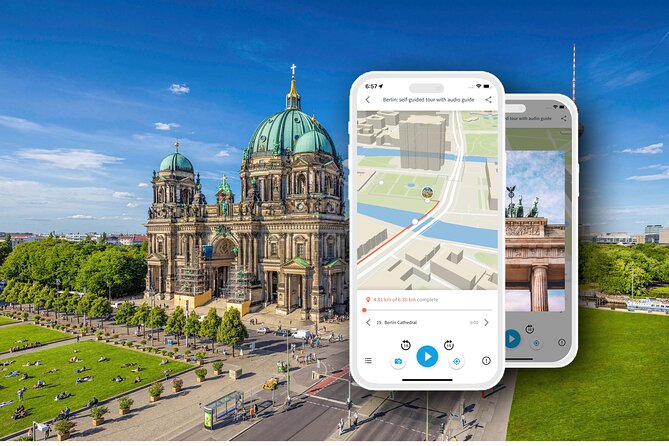
This is a budget-friendly Berlin walking tour built around a smartphone app (iPhone and Android). You don’t meet a guide. Instead, you download the app, activate your purchase, and follow the route on the mobile map with audio recordings and visuals.
The biggest value isn’t just price. It’s the way the tour fits your day. You can slow down for viewpoints, cut a stop short, or do extra photos without apologizing to anyone holding a clipboard. The route is designed to work as a compact “greatest hits” loop, with most stops free to visit.
Cost matters here. At $6.61 per person for roughly 2 hours of audio content, you’re paying for information plus navigation—not admission tickets. If you were already planning to walk the historic center anyway, this can feel like you’re upgrading your stroll with guided context for the price of a snack. You also get 1 year access, so if you come back to Berlin (or simply want to replay parts), the content stays with you.
The catch is simple: you’ll need your own smartphone and headphones. Headphones aren’t included, and the tour expects you to manage the app yourself.
You can also read our reviews of more tours and experiences in Berlin.


Price That Feels Like a Ticket, Not a Tour

For $6.61, it’s tempting to assume this is “bare bones.” The inclusion list suggests it’s not. You get:
- an audio guide app for iOS/Android
- an offline map with the route for GPS navigation
- 24 audio recordings
- illustrations to identify landmarks
- 1 year access to the tour in the language you choose
That’s a lot of content for the money, especially in a city where the highest-cost parts of sightseeing are usually entrances. Here, many major stops are free—Brandenburg Gate, Holocaust Memorial, Checkpoint Charlie’s outdoor area, and more—so you’re mostly spending on audio and convenience.
The honest tradeoff: this isn’t a live human guided walk. You won’t get on-the-spot answers, crowd tactics, or a guide correcting you when the city layout changes. If you’re the type who likes to read maps, listen while you walk, and steer your own route timing, you’ll like this setup. If you prefer a person to lead and adapt, you may feel the lack of real-time guidance.
Pariser Platz to Brandenburg Gate: Start With Meaning
Your tour starts at Pariser Platz (10117 Berlin). It’s a great opening because it’s readable from street level: you’re immediately near the Brandenburg Gate and the ceremonial feel of the area.
Pariser Platz is where the story starts to sound official. You’ll look around and hear the context for why this square matters. Then the audio brings you to the Brandenburg Gate itself—described as a neoclassical masterpiece and a symbol that shifted from division to reunification. Even if you’ve seen the gate in photos a thousand times, standing close changes how you understand it. The architecture fills your view, and the surrounding streets make it feel like a working public space, not just a postcard.
A practical plus: these first stops take about 10 minutes each, so you’ll build momentum fast. The audio format also means you can spend longer if you want, especially if you’re taking skyline photos or just standing and listening as street life moves around you.
Possible drawback: the route is dense. If you’re sensitive to walking, plan a slower first hour and use your early stop time to steady your pace.
Reichstag Dome: Panoramic Views With a Political Backdrop

Next comes the Reichstag, Berlin’s parliamentary building. The standout here is the glass dome theme—transparency and democracy, plus a practical payoff: you’re encouraged to ascend for city views.
From a self-guided-tour perspective, this stop works well because audio can frame what you’re seeing before you commit to any climb. The dome isn’t just a design detail. It’s part of the larger “how a modern democracy presents itself” idea, which helps the structure mean something rather than just looking impressive.
One timing note to keep you realistic: the official plan mentions about 10 minutes at this stop, but the overall experience may stretch beyond two hours in real life depending on walking pace and breaks. If you want time for viewpoints and photos, treat Reichstag as a “slow it down” moment rather than a quick photo stop.
Also, since there’s no human guide, you’ll want to manage any queues or entry expectations yourself. The tour description doesn’t promise specific ticket timing—so arrive with buffer.
Holocaust Memorial and Führerbunker: Two Stops, Two Different Weights

The tour doesn’t shy away from heavy history. First is the Memorial to the Murdered Jews of Europe. You’ll walk through the grid of concrete slabs—an experience that works even without commentary because the layout does a lot of emotional work for you. The audio also points you to the subterranean Information Centre, which adds context so the memorial doesn’t stay abstract.
Then the route moves to the Führerbunker area. Today, it’s described as an underground complex whose site has an informational display, with a somber reminder of Hitler’s final days. For some people, pairing these two stops is intense, but it also makes the history feel less like a single lecture. It becomes two different kinds of remembering: one designed for reflection and public memory, and one tied to a specific end-of-war location.
If you want this part to land well, don’t multitask. Give yourself a few minutes of silent walking—then use the audio to explain what you’re seeing. That’s often the best way to avoid turning memorial visits into just another checkbox.





East Berlin Symbols: Ampelmännchen and Trabi Nostalgia

After the heavy stops, the tour shifts tone with Ampelmännchen, Berlin’s quirky traffic light figures. Created in East Germany, they’re now a familiar city symbol of unity. This is the kind of place where a little audio context changes how you see everyday details. You start noticing street-level design choices as part of cultural history.
Then you encounter the Trabi (Trabant) theme. The audio guide frames it as an East German automotive icon that’s now used for nostalgic tours. Even if you don’t ride, the cultural framing helps you spot why these vehicles matter to Berlin’s collective memory: they’re not just cars, they’re artifacts of an era.
These lighter, street-level pieces are a smart contrast in a history-heavy itinerary. They also make the route feel more like real walking around Berlin, not just a string of museums.
A practical tip: keep your phone battery for later. This section is where you’ll likely stop more often just to look around.
Checkpoint Charlie Without the Tour-Noise
The next Cold War marker is Checkpoint Charlie. You’ll see the replica of the border crossing and hear the history tied to escape attempts and the divided city. Since it’s presented as a tangible reminder of Berlin’s past, it’s a stop that works even if you’re not planning to spend long indoors.
As a self-guided traveler, you get to choose your attention level. If you want a quick stop, you can keep it short. If you like learning slowly, you can linger and replay specific audio segments while you read what’s around you.
This also tends to be a popular area. Because you’re not managing a group schedule, you won’t feel pressured to match anyone else’s pace.
Just remember: free outdoor time can still turn into a longer day if you also want photos, reading, and a careful look at the displays.
Gendarmenmarkt to Bebelplatz: Architecture and Ideas

The tour brings you to Gendarmenmarkt, one of Berlin’s most elegant squares. The audio highlights the symmetrical look of the German and French Cathedrals and frames the setting around the Schiller Monument. The Konzerthaus is also part of the scene, which helps explain why the area feels “designed for culture,” not just sightseeing.
Then you head to Bebelplatz, a square tied to intellectual life. What makes it especially meaningful is the mention of an underground memorial connected to the Nazi book burning, focused on intellectual freedom. The audio approach makes sense here: the public square is just the surface; the underground memorial gives the deeper weight.
One small detail that’s worth listening for: people love this stop because you can notice features you might miss on your own, like the glass element described near the square. That’s exactly what a good audio guide should do—teach you where to look next.
Unter den Linden: Frederick the Great and the Opera Street Scene
From Gendarmenmarkt and Bebelplatz, the route connects to Berlin’s grand central boulevard area. You’ll pass the equestrian statue of King Friedrich II of Prussia on Unter den Linden. It’s described as a colossal statue designed by Rauch, honoring Frederick’s legacy. Even if you don’t know the name beforehand, audio context helps you see why it’s placed where it is—this street is designed like a stage for power, art, and state identity.
Next is the German State Opera (also on Unter den Linden). The audio frames it as a cultural jewel and notes that you can find world-class performances. Even if you’re just sightseeing, the point is that Berlin’s “monuments” aren’t only political—they’re also artistic institutions.
If you’re planning to see more than you walk past, keep this in mind. This is one part of the route where a little extra time can pay off if the building entrances and views are accessible when you’re there.
Berlin Cathedral and Museum Island: Choose Your Museum Energy
The tour includes Berlin Cathedral on Museum Island, described as a Baroque masterpiece with a grand dome, ornate interior, and a terrace for panoramic views. Then it moves to Museum Island, a UNESCO World Heritage site on the Spree River with multiple museums, including the Pergamon Museum and Neues Museum.
The key for you: Museum Island is not a “one look and done” place. Even though the route time slot suggests short stop durations, you can treat this section like a fork:
- If you want the exterior impact and terrace views, you can keep it short.
- If you want museum time, you’ll likely stop longer than the audio plan expects.
This is where the self-guided nature is useful. You can keep walking when you’re done, or stay longer if something grabs you.
If you’re trying to do a lot in one day, focus on one anchor sight at Museum Island, not five. The audio can help you pick what you’ll care about most.
Marx-Engels Forum and Rotes Rathaus: Politics You Can Walk Past
The itinerary includes the Marx and Engels Forum, with statues and reliefs, plus remnants tied to the Berlin Wall theme. It’s also framed as a peaceful park retreat, which is interesting: this kind of space shows how ideology can be absorbed into everyday landscapes.
Then there’s Red Town Hall (Rotes Rathaus), described with a distinctive red brick Neo-Renaissance facade and the adjacent Neptune Fountain. The audio points this stop as the seat of government, which helps explain why it looks the way it does and why this corner matters in the city’s civic identity.
These two stops work best when you accept they’re not meant to be museum-level experiences. They’re more like “read the city’s current face” moments—places where politics becomes architecture.
Television Tower to Alexanderplatz: The End Point Feels Like Berlin
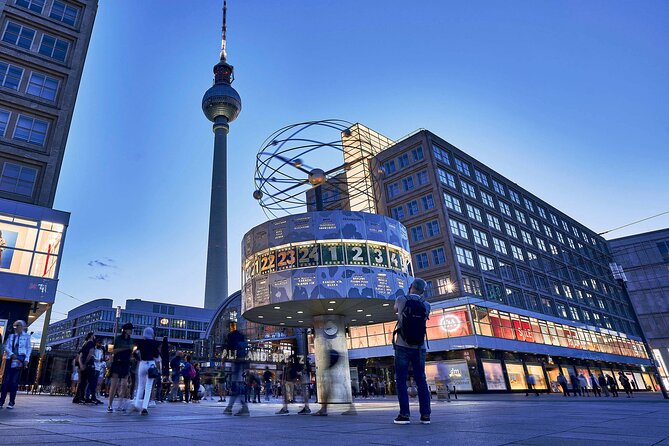
The final landmark section centers around the Television Tower near Alexanderplatz. The audio describes it as a GDR relic and an iconic landmark. The key practical value is the observation deck concept—panoramic views that make the city’s scale click.
From there, the tour arrives at Alexanderplatz, described as a busy square with shops, cafés, and the Weltzeituhr clock. Since it’s also a transportation hub, it’s a good area to reorient and plan your next move.
Two practical notes:
- Bring your energy for walking here. Late-day fatigue can make even short stops feel longer.
- If you want photos from the tower, factor in time for waiting and the climb/elevator rhythm.
Even though you end back at the meeting point (Pariser Platz), this area helps close the loop. You’re leaving the day from one of Berlin’s most recognizable modern landmarks, which makes the earlier history stops feel connected rather than random.
How the App Works (And How to Avoid App-Drama)
This is a smartphone audio guide, so your success depends on setup and basic tech readiness.
What you should know:
- You’ll use a mobile app on iPhone or Android
- You’re given an offline map with a route for GPS navigation
- You’ll follow the map and listen to the audio recordings
- You get illustrations to identify landmarks
- You must bring your own headphones
From user feedback, the experience is often smooth: people reported the app being intuitive, GPS working well, and no technical issues. A different set of comments suggests you should expect occasional friction: app freezing, minor GPS inaccuracy, and audio delivery that some found a bit theatrical.
Here’s the way to handle it like a pro:
- Download and activate before you start walking, ideally with stable Wi-Fi.
- Bring a portable battery if you plan to use GPS and audio for a long stretch.
- If the app freezes while you’re stopped for a coffee, close and reopen; the tour is designed to resume from where you left off (reported by at least one user).
- If GPS seems off, pause and use your eyes—then recheck the map once you’re back aligned.
Also, if you want a more guided feel, you can create your own structure: play audio at walking pace, then switch to silence when you reach key sights for photos and reading.
Who This Berlin Tour Fits Best
This walk suits you best if:
- you like self-guided travel and flexible pacing
- you’re visiting central Berlin and want a compact route of major sights
- you want context while walking, not a strict lecture format
- you prefer replaying audio when something catches your attention
It may not be ideal if:
- you hate tech dependencies (GPS, app playback, headphones)
- you want deep architectural analysis at every stop
- you prefer a human guide to adapt, answer questions, and keep timing tight
Also, keep in mind the stop sequence includes a wide range of topics—from memorial sites to civic architecture to East German symbols. If that mix feels right for you, you’ll probably enjoy the contrast.
Should You Book This Berlin Smartphone Audio Tour?
If you want a low-cost way to cover Berlin’s core landmarks with a guided narrative, this is a smart choice. The biggest strengths are the offline GPS map, the 24 audio recordings, and the freedom to stop whenever you want without coordinating with anyone else. It’s also good value because many highlights are free, so you’re mostly paying for interpretation and navigation.
I’d book it if you’re comfortable troubleshooting basic phone issues and you’re okay with the audio being the main “guide.” If you want someone to lead every step, correct route confusion, and provide deeper architectural commentary on demand, you may feel limited.
My practical recommendation: try it when you want a reliable walking route for Berlin’s highlights, especially if you’re the type who can handle a self-guided app plan.
FAQ
Is this tour offered in English?
Yes. The tour language available for this experience is English.
How long is the Berlin walking tour with smartphone audio?
It’s approximately 2 hours.
Where do I start, and where does it end?
It starts at Pariser Platz, 10117 Berlin, Germany and ends back at the meeting point.
Do I need a human guide?
No. This is a self-guided smartphone audio tour. You’ll download the app, activate your purchase, and follow the route on the mobile map.
What’s included in the price?
Included items are the audio guide app for iOS and Android, an offline map with the route, 24 audio recordings, illustrations to recognize landmarks, and 1 year access to the tour in the language of your choice.
What is not included?
Transportation, a human guide, the smartphone and headphones, food and drinks, and entrance fees/tickets are not included.
Can I cancel for a full refund?
Yes, you can cancel for a full refund if you cancel at least 24 hours in advance. If you cancel less than 24 hours before the start time, the amount paid is not refunded.