REVIEW · BANGKOK
Bangkok Chinatown: Self-Guided Mystery Puzzle Quest
Book on Viator →Operated by Questo · Bookable on Viator
Chinatown turns into a game when you follow clues. I like that there’s no guide—you just use your phone and move at your own speed—and I like that the route works with offline play so you can wander without chasing Wi‑Fi.
One possible catch: map accuracy can be a weak spot, so go in with patience if Google Maps doesn’t line up perfectly with the app steps.
In This Review
- Key highlights before you start
- A self-guided puzzle walk through Bangkok Chinatown
- How the app-led quest works (and why it matters)
- Timing and pacing: your 1 hour 30 minutes walk
- Stop 1: Kan Kee Nam Tao Thong and the herbal drink clue
- Stop 2: Wat Traimit and the Golden Buddha statue
- Stop 3: Eiah-Sae coffee shop and a clue in a living corner
- Stop 4: Wat Lokanukroh inside Sampeng Market vibes
- Stop 5: Leng Buai Ia Shrine and the story of refuge
- Stop 6: Wat Leng Noei Yi / King Chulalongkorn’s rename and dragon motifs
- Food, drink, and local color without planning every minute
- Price and value: $6.99 for a structured Chinatown adventure
- Practical tips: phone battery, offline play, and map hiccups
- Who should book this self-guided Chinatown puzzle quest
- Should you book Bangkok Chinatown: Self-Guided Mystery Puzzle Quest?
- FAQ
- Is there a guide with this Bangkok Chinatown puzzle quest?
- How long does the quest take?
- Can I start at any time?
- Do I need internet to play?
- What are some of the key stops included?
- How does it work for groups?
Key highlights before you start

- Phone-led directions that tell you where to look next, step by step
- Offline mode while exploring, so you can keep going even if data is spotty
- Chinatown stops with real-world texture like old drink shops and prayer shrines
- A built-in story trail: solve each challenge to reveal the next place
- Group-friendly setup where one purchase can cover everyone on their own phone
- A walk you can pause and resume without feeling locked into a fixed schedule
A self-guided puzzle walk through Bangkok Chinatown
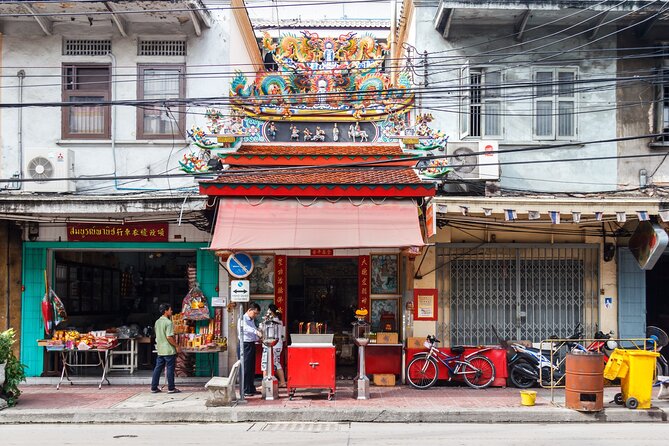
This is an outdoor escape-game style experience built for Bangkok Chinatown: you use an app, hunt for answers around you, and let each solved step point you to the next stop. No guide meets you in person. No group herding. Just you, your phone, and a string of meaningful places.
The value here is simple. It turns sightseeing into problem-solving, so you notice details you’d otherwise pass by. And it’s designed to be flexible, starting at any hour and letting you take breaks without losing your progress.
For a small price, you’re buying the structure and the motivation—then the real payoff is seeing how Chinatown looks and feels through the lens of those clues. You’ll be moving through temples, market areas, and old-school businesses that local life keeps going.
You can also read our reviews of more tours and experiences in Bangkok.



How the app-led quest works (and why it matters)

Here’s the core idea: each challenge asks you to look around, find a specific answer, and then follow exact on-screen directions to the next location. As you solve, you also get the story of that place—so it’s not just chasing points. It’s learning along the way.
What I like most is that the experience is built around attention. You’re constantly scanning storefronts, architectural details, and the immediate surroundings. That’s a great fit for Chinatown, where clues are often right in front of you: signage, statues, shrine shapes, decorative motifs, and the way a space is used.
You can also play offline. That’s a big practical win in Bangkok, where signal can swing around. You still want your phone charged, but you don’t need internet during the walking part, which reduces one more thing that can go wrong.
Timing and pacing: your 1 hour 30 minutes walk
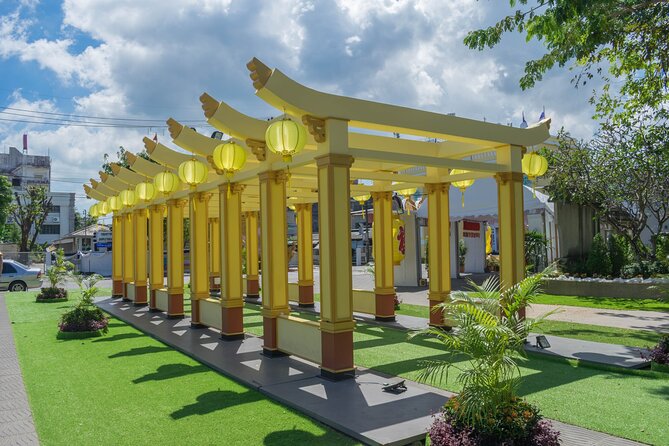
The advertised duration is about 1 hour 30 minutes, but the experience is flexible. You can start any time, pause when you want, and resume later. That’s useful if you’re mixing this with meals or temple visits, or if the walking pace of Chinatown is slower on your feet that day.
Also, it’s a private activity for your group. That means you’re not competing with strangers for phone signals, quiet moments to read clues, or a spot at a popular corner. If you’re doing this with friends, the “one person buys for everyone” option is handy because it keeps things organized.
Most importantly: you’ll want to treat it like a casual scavenger walk, not a timed sprint. When the app asks you to look closely, rushing is how you miss things—and then you burn energy catching up.
Stop 1: Kan Kee Nam Tao Thong and the herbal drink clue
Your first stop sits in the older-business heart of Chinatown. A standout here is 100 year-old Kan Kee Nam Tao Thong, known for Chinese herbal drinks. It’s the kind of place where the product and the history are tied together. Even if you’re not sure what to try, you’ll feel the age in how the shop operates and how people interact there.
The quest challenge at this stop is built for your eyes, not your memory. You’re asked to look around for the answer to move forward. That’s a nice way to avoid the usual “read a sign, move on” routine. You’re actively searching, and the shop setting makes that feel natural.
If you want to make the most of this first stage, slow down just enough to notice labels, displays, and any standout details. Then, once you’ve solved, you can continue without that feeling of missing context.
Practical note: Chinatown shops can be loud and crowded in waves. If you’re trying to focus on a clue, plan one calm minute before you begin scanning.
Stop 2: Wat Traimit and the Golden Buddha statue
Next comes Wat Traimit, famous for housing a seated Buddha statue that’s about 5.5 tonnes and dates back to the 13th century. The gold sculpture is nearly 5 meters high, and it’s located roughly 450 meters west of Hualampong Railway Station.
In the game, your task is again a look-around challenge. The point isn’t just to admire the statue from one angle. The app nudges you to find an answer tied to this location, and then it tells you where to go next.
This is a strong stop in a self-guided format because Wat Traimit is visually dramatic and easy to recognize. You don’t need perfect map accuracy to locate the general area. Once you’re at the right place, you can focus on the clue rather than wandering.
Temple-watching tip: take a moment to study how people move through the area. If you’re standing in the wrong spot, you might struggle to “see what the app expects.” Small repositioning often fixes that fast.




Stop 3: Eiah-Sae coffee shop and a clue in a living corner
Then you shift from temple grandeur to everyday Chinatown life at Eiah-Sae coffee shop. This place is almost a century old and has been passed down through generations, keeping a homey, noisy atmosphere.
In a puzzle quest, this kind of stop is gold because it’s not too polished or too quiet. You’ll likely have ambient motion around you—people chatting, ordering, and passing through. That makes the “look around for the answer” mechanic feel more like real travel and less like a museum worksheet.
It’s also a good moment to take a small break. The experience highlights sampling local drinks and food at shops popular with locals, and Eiah-Sae fits that theme naturally. Even a quick sip helps you recharge before you continue to the smaller sacred spaces.
If the clue feels hard, don’t panic. Step back, scan the space again, and try looking at the details you’d normally skip because you’re hungry or distracted.
Stop 4: Wat Lokanukroh inside Sampeng Market vibes

After coffee life, you land in a smaller religious space: Wat Lokanukroh, described as one of Bangkok’s smallest temples. Here, no monks live on site, but people still come to pray and offer ceremonies—right in the heart of Sampeng Market.
This stop is meaningful in a different way than Wat Traimit. It shows Chinatown faith in a “used daily” context. You’re not just seeing a historic building. You’re seeing how belief and commerce sit side by side.
For the quest, it’s the same pattern: look around, solve, then move on. The challenge format makes you pay attention to the temple’s setting rather than just the building itself. That’s especially useful in Sampeng, where it’s easy to get lost in shopping streets without noticing places of worship nearby.
Sensitivity note: temples and shrines are active spaces. Keep your voice down, watch your step, and treat the search for a clue as part of respectful observation.
Stop 5: Leng Buai Ia Shrine and the story of refuge
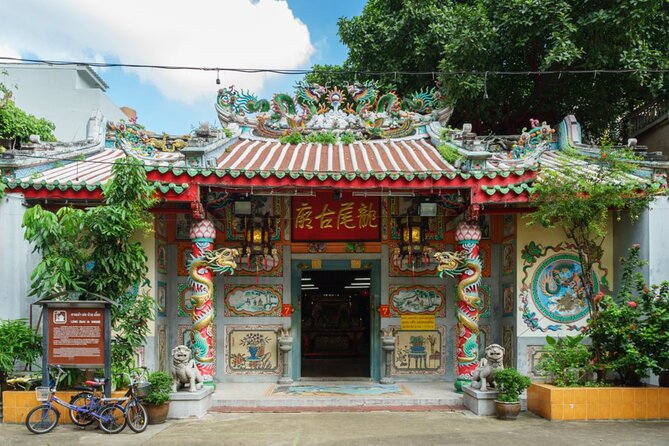
Next is Leng Buai Ia Shrine, an ancient Tae Chew shrine and described as the oldest Chinese shrine in Thailand, built in 1658 during the Central Ayutthaya period. The story here centers on how Chinese businessmen would come for refuge and pray for business prosperity.
In the game, your clue-solving is your way into that context. Instead of reading about it once, you practice noticing the shrine’s traditional Chinese architectural style as you search for the answer.
What I like about adding a shrine like this in a puzzle route is that it keeps the experience grounded. Chinatown isn’t only big tourist temples. It’s also places people rely on for daily hope and routine faith.
If you’re the type who likes cultural details, this stop can turn into one of your favorite moments—because the shrine’s age and purpose are immediately more believable when you see it in place.
Stop 6: Wat Leng Noei Yi / King Chulalongkorn’s rename and dragon motifs
The final phase continues with another layered religious stop. This place was opened as Wat Leng Noei Yi in the 1870s, and it served as an introduction of Mahayana Buddhism in Bangkok. Later, King Chulalongkorn renamed it to its present title.
The visual details matter here. You’ll see plenty of animal, floral, and Chinese dragon motifs, and the ordination hall houses a gold-colored Buddha.
In a self-guided format, this kind of ornate decoration helps you solve because the clues are easier to connect to what you can see. If you feel stuck earlier in the quest, this last stretch often gives your eyes a clearer target.
When you finish, the app guides you onward to the ending location—near a wedding store as shown by the Questo app directions—and you wrap up your walking mission.
Food, drink, and local color without planning every minute
One of the best parts of this quest format is that it naturally builds in opportunities to sample Chinatown food and drinks. The experience specifically calls out places popular with locals, and your stops include businesses tied to drink culture—like the herbal drink shop at Kan Kee Nam Tao Thong and coffee at Eiah-Sae.
You don’t need to schedule full meals around the game. Instead, think in small breaks: a quick drink while you’re already at a stop, a snack if you’ve solved a challenge and want to keep energy steady for the next leg.
Because the game encourages looking around, you’ll likely pause more often than you would on a normal walking tour. That’s not wasted time. It’s how you end up seeing more of the everyday Chinatown vibe, not just the major sights.
Price and value: $6.99 for a structured Chinatown adventure
At $6.99 per person, this is priced like an impulse add-on that can still feel meaningful. The big value isn’t the phone game itself—it’s the fact that the route organizes your attention across multiple real locations. You’re paying for the “why do I stop here?” and “what am I looking for?” structure.
It also offers group discounts. If you’re traveling with friends, one person can purchase access for everybody by selecting the total number of people, and each group member plays on their own smartphone. That’s a good way to keep coordination simple.
One more practical value point: it’s permanently available 24/7, with full flexibility to start any hour. That means you can work it into your schedule rather than reshaping your whole day around a fixed tour time.
If you like independent travel and you don’t want to pay for a guide, this is one of those low-cost ways to turn “walking around” into something with momentum.
Practical tips: phone battery, offline play, and map hiccups
The experience is designed for offline exploring, which is excellent. Still, you’re relying on a smartphone, so treat battery life like part of the budget. Bring a power bank if you have one.
Then there’s the main caution: instructions can be confusing, and some locations may not match Google Maps perfectly. In practice, that means you shouldn’t assume the pin is always right. Use the app’s on-screen directions as the authority, and be willing to walk a few extra steps if something feels off.
To reduce stress:
- give yourself a little extra time at the start
- keep location services on so the app can guide you
- if you hit a wall, pause and re-check what the challenge is asking you to see, not just where the pin is
If you’re the type who gets frustrated by tech glitches, you might find this taxing. But if you stay patient and treat it like a puzzle, the mismatch issues often become part of the game rather than a deal-breaker.
Who should book this self-guided Chinatown puzzle quest
This works best if you enjoy puzzle-style travel and you like moving at your own tempo. It’s also a solid fit if you prefer not dealing with a human guide—no meeting someone, no waiting for a group, no crowd management beyond what Chinatown already offers.
It’s also good for couples and solo travelers who want a mission-based itinerary. And since service animals are allowed and most travelers can participate, it’s generally easy to join.
You might want to skip it if you:
- hate relying on app instructions to navigate
- get easily discouraged when directions don’t match your phone map view
- want a hands-on cultural explanation from a person
In other words, if your style is spontaneous wandering plus casual reading, a traditional guided option might feel safer. If your style is “figure things out as I go,” this is a fun match.
Should you book Bangkok Chinatown: Self-Guided Mystery Puzzle Quest?
I’d book it if you want a low-cost, flexible way to see Chinatown with a purpose. The stops are varied and meaningful, from Wat Traimit’s Golden Buddha scale to small prayer spaces inside market life. And the offline, no-guide setup is a real comfort when you’re trying to avoid extra friction on travel days.
I’d skip it—or at least go in with eyes open—if you’re the kind of traveler who needs pinpoint navigation every step of the way. If you get stuck easily when tech directions feel messy, the quest format may feel more exhausting than fun.
If you do book, go slowly at the first couple of clues, keep your phone charged, and treat any map mismatch as a small detour instead of a failure. Do that, and you’ll likely end the walk feeling you actually saw Chinatown, not just passed through it.
FAQ
Is there a guide with this Bangkok Chinatown puzzle quest?
No. This is self-guided. You follow the app step by step and solve challenges using your phone.
How long does the quest take?
It takes about 1 hour 30 minutes, approximately.
Can I start at any time?
Yes. You can start at any hour, and the experience is available 24/7.
Do I need internet to play?
No. You can play offline while exploring.
What are some of the key stops included?
The route includes Kan Kee Nam Tao Thong, Wat Traimit, Eiah-Sae coffee shop, Wat Lokanukroh, Leng Buai Ia Shrine, and the later temple area connected with Wat Leng Noei Yi and its ornamented hall.
How does it work for groups?
If you’re part of a group, one person can purchase access for everybody by selecting the total number of people, and each member plays on their own smartphone. You can also purchase tickets individually.