REVIEW · DRESDEN
Dresden: Old Town Self-Guided Scavenger Hunt Tour
Book on GetYourGuide →Operated by Stadtspiel Schnitzeljagd GmbH · Bookable on GetYourGuide
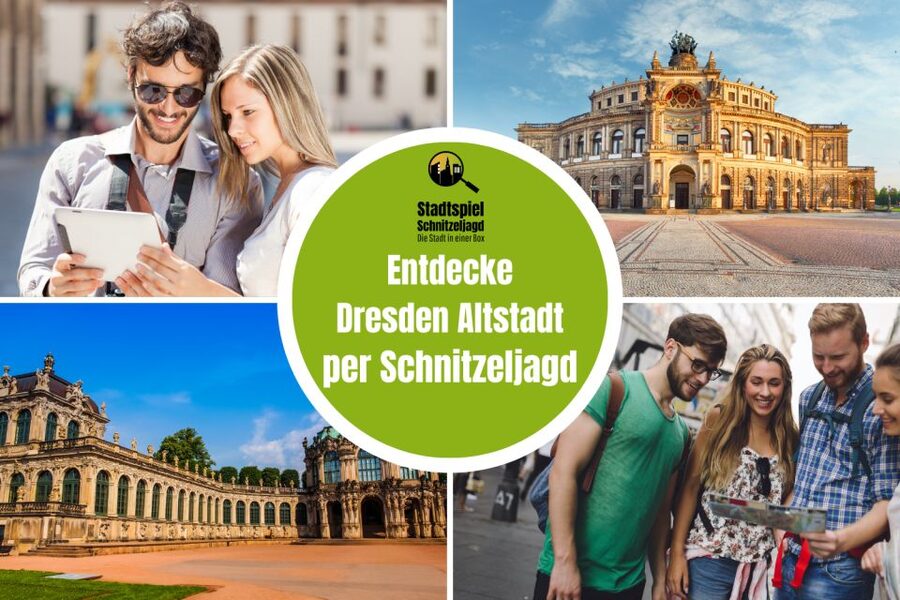
Riddles turn Dresden’s landmarks into a game. This self-guided scavenger hunt sends you through the Old Town with 11 sealed envelopes, each one leading you closer to key sights like Semperoper, Frauenkirche, Residenzschloss, and the Zwinger.
I like the flexible pacing built into the format—you can pause for photos, coffee, or a breather without feeling like you’re holding anyone up. I also like that the route includes real “walkable Dresden” moments, from the Augustusbrücke area down toward Brühl’s Terrace. One drawback to consider: if you hit construction or a temporary closure, you may need to adapt your route, and the puzzles can feel a bit straightforward depending on how you like your challenges.
In This Review
- Key points before you go
- How the sealed-envelope hunt really plays in Dresden
- Starting at Theaterplatz: Semperoper first, then you’re off
- Augustusbrücke and Brühl’s Terrace: the route you can actually enjoy
- Frauenkirche and Dresden Castle: where the puzzles meet the classics
- Puzzle level, pacing, and what that means for your day
- Value and what you’re paying for at $41 per group
- Shipping, pickup, and the one detail that can trip you
- When construction or closures change your route
- Who should book this Dresden Old Town hunt
- Should you book the Dresden Old Town scavenger hunt?
- FAQ
- How long does the Dresden scavenger hunt take?
- Do I need a tour guide with this experience?
- What do I need to bring?
- Can I pause the hunt and come back later?
- What sights will I see on the route?
- Do I get the box by mail, or can I pick it up in Dresden?
Key points before you go
- 11 sealed envelopes keep the order mysterious until you earn the next number.
- You control the timing, so 210 minutes is a flexible target, not a strict leash.
- Major Dresden sights are all on the game route: Semperoper, Frauenkirche, Residenzschloss, and the Zwinger.
- On-site info cards give context on what you’re seeing and how buildings are used today.
- An emergency envelope is there if you get stuck (and you don’t want to restart).
- A voucher for reduced entry to the Dresden Transport Museum is included.
How the sealed-envelope hunt really plays in Dresden
This tour is not a guided lecture and it’s not a “race.” It’s more like a choose-your-own-adventure for Dresden’s center, delivered as a box of sealed envelopes.
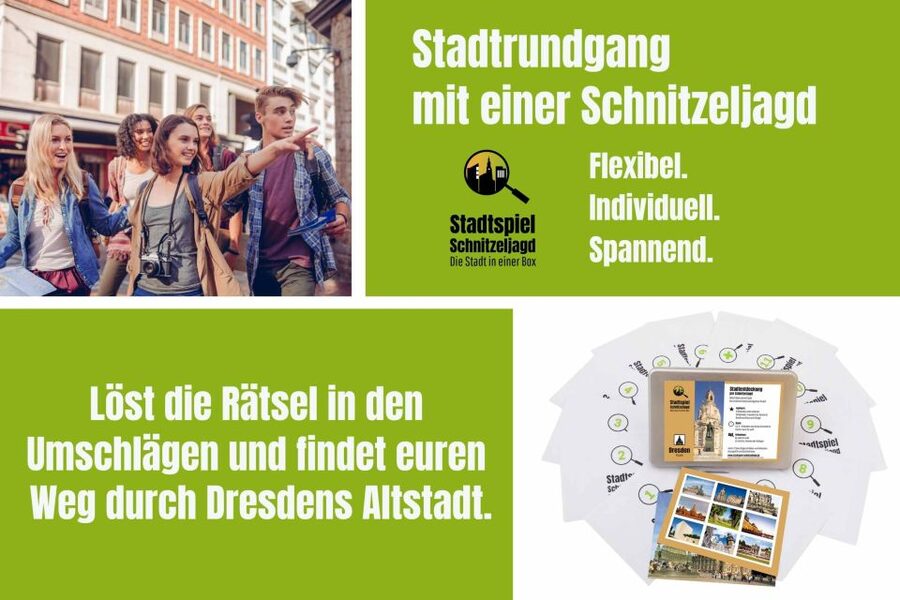
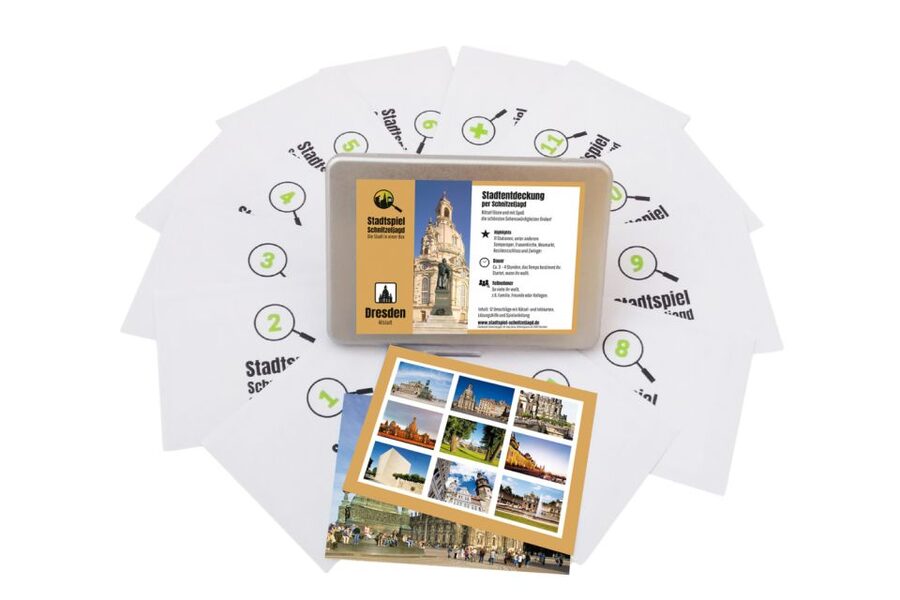
When you start, you’ll work through numbered, sealed envelopes. Each one contains riddles plus directions. Solve a riddle, then use the resulting number to figure out which envelope to open next. The sequence is not something you can plan in advance, which keeps you from walking on autopilot—and it also helps you notice details you’d usually skip.
For each sight along the way, you get written information meant to turn your stop from a quick look into a “wait, that’s why it matters” moment. The game also tells you how to move from place to place, which is a big deal in a city center where streets and viewpoints can be confusing even when you think you know the geography.
If you like structure, you’ll enjoy the format. If you hate structure, it can still work because you stay in control. You can pause, snack, and restart later without losing the whole plot.
You can also read our reviews of more tours and experiences in Dresden.

Starting at Theaterplatz: Semperoper first, then you’re off
Your hunt starts at Theaterplatz, near the Semperoper. There’s no guide meeting you here. You just bring your game box and follow the directions in the first envelope.
Starting at Semperoper is a smart move. It’s a landmark that gives you an immediate sense of scale—big, dramatic, and central to how people experience Dresden’s historic core. From the first steps, the game pushes you to do more than admire from a distance. You’ll move through the area with purpose, and the riddles encourage you to look carefully at what’s around you.
One practical tip: wear shoes you’re comfortable walking in for a solid chunk of time. The experience is designed around walking, and the “puzzle pauses” don’t remove the need for steady footwork.
After you set off, the hunt keeps moving you through the core sights rather than dropping you into far-flung neighborhoods. That’s why the 210-minute duration feels realistic: it’s long enough to take in multiple major stops, but short enough to still be done in one afternoon for most people.
Augustusbrücke and Brühl’s Terrace: the route you can actually enjoy

Next, the game guides you toward Augustusbrücke and into the area around Katholische Hofkirche and Brühl’s Terrace. This part matters because it’s where Dresden’s center starts to feel like a lived-in city, not just postcard architecture.
Walking near these spots gives you a natural flow of viewpoints. The directions help you connect buildings you might otherwise treat separately. And the included info helps you understand what you’re looking at—so the “oh, that’s pretty” moment turns into something a little more grounded.
You’ll also pass the Academy of Fine Arts area with its impressive dome and the New Synagogue. These aren’t just random stops. They broaden your Dresden view beyond the most famous churches and palaces. If you’re the kind of person who likes architecture that tells stories about different eras and communities, this section is a win.
A note for planning: if temporary barriers or detours are active, your experience can shift. One account described having to deal with an area where a nearby sight linked to the water required going down toward the Elbe for the correct information. That’s not the normal “you’ll miss everything” situation—but it is a reminder that Dresden’s center can have construction-related detours. If you see fences or blocked sightlines, don’t panic. Keep following the game directions and use the included solution support if you hit a wall.
Frauenkirche and Dresden Castle: where the puzzles meet the classics
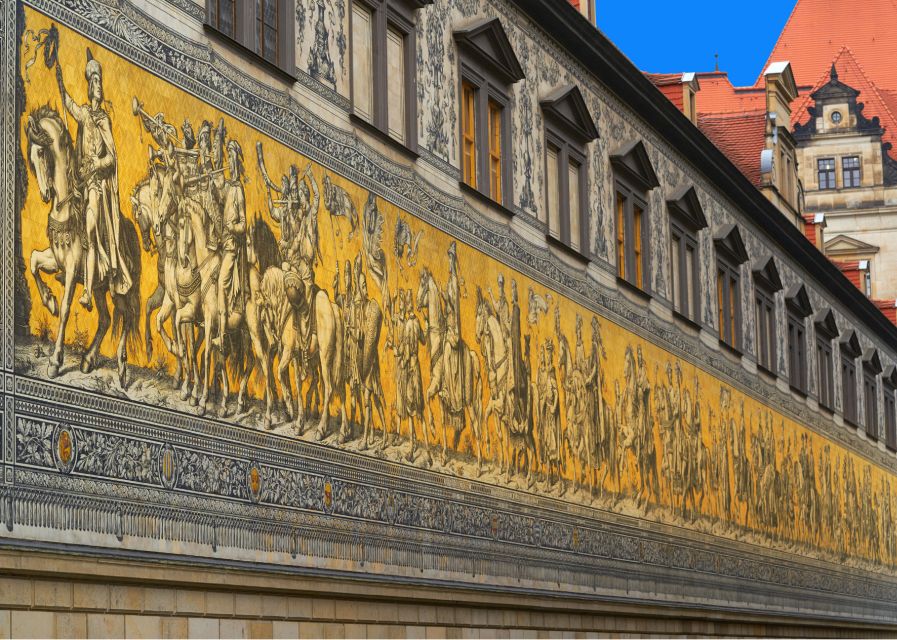
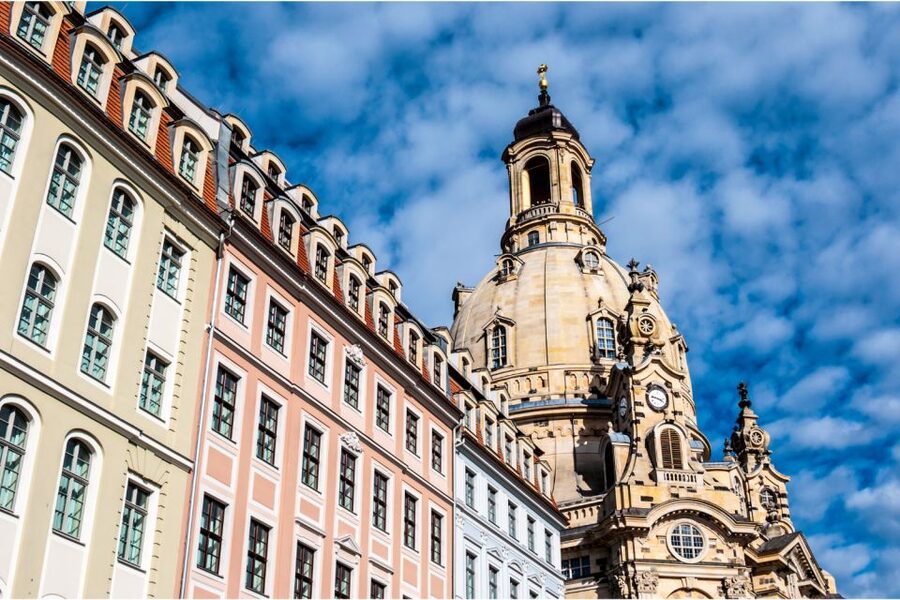
The heart of the game lands at Frauenkirche, along with Dresden Castle (Residenzschloss) and the Zwinger. These are the stops most people want, so it’s smart that the hunt spends time here.
Frauenkirche is the kind of place where your brain automatically starts doing two things at once: looking at the structure and trying to understand its meaning. The game’s info portions help you connect the dots instead of leaving you with only broad impressions.
One word of caution on the Frauenkirche approach: the puzzle design can include repetitive counting or circling elements. If you’re not in the mood for extra “find exactly this detail” tasks, that part might feel a bit more work than reward. The trade-off is that the game format pushes you to engage at a close-up level rather than just walking past.
Then you move on to the castle complex and the Zwinger—two big names, and both offer plenty to look at even if you’re not trying to solve a riddle every step. This is where the self-guided pacing helps most. You can stop longer if something catches your eye, or move quicker if you just want the main sights and the satisfaction of finishing.
Puzzle level, pacing, and what that means for your day
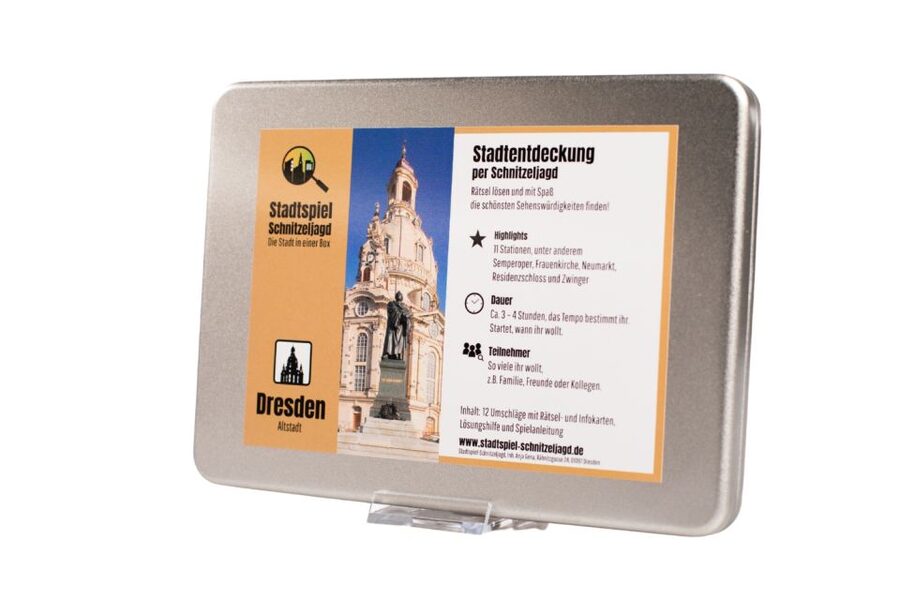
The experience is designed to be approachable. The riddles are generally straightforward, and the whole route is meant to be walkable without feeling like you need map skills or puzzle wizardry.
That’s good for:
- families and kids (it’s easy to read the tasks out loud at a basic level)
- older visitors who want a simple structure for exploring
- couples or friends who want a fun walk with light mental effort
If you want a tougher brain workout, you might find the standard difficulty less demanding. In that case, the best approach is to take your time with the sights and facts, not just the puzzle answers. Treat the info parts like the real “challenge” and you’ll still get value.
About pacing: you’re not stuck on a timer. You can start whenever you want after you have the box, and you decide how long to linger at each location. Even though the advertised duration is 210 minutes, your actual time depends on how often you pause for photos and breaks. This is also why the game works well as a mid-day plan or an afternoon activity.
Value and what you’re paying for at $41 per group
Let’s talk money in plain terms. It costs $41 per group up to 10, which matters because you’re not paying per person. If you’re traveling with friends or family, the price stretches much further.
What you get for that money:
- a scavenger hunt box with 11 sealed envelopes
- shipping included (with an estimated timeline), or you can pick up locally
- an emergency envelope with solutions if you get stuck
- detailed info for each sight
- a voucher for reduced entrance to the Dresden Transport Museum
What you don’t get:
- a tour guide
- food and beverages
- entrance fees for the sights
- transport tickets
So the value question becomes: do you want a structured walking experience with explanations, but without paying for a guide’s time? If yes, you’ll likely feel it’s worth it. If you want deep, live interpretation from a person, then this isn’t built for that. It’s also not a “skip-the-line ticket.” You’ll still handle any entrances on your own if you want to go in.
One more small value point: because there’s an emergency envelope, you’re less likely to lose hours if you misunderstand a clue. That reduces the risk factor of self-guided fun.
Shipping, pickup, and the one detail that can trip you
You can experience the hunt after receiving the box, regardless of the selected time slot. That flexibility helps.
If you’re shipping the box:
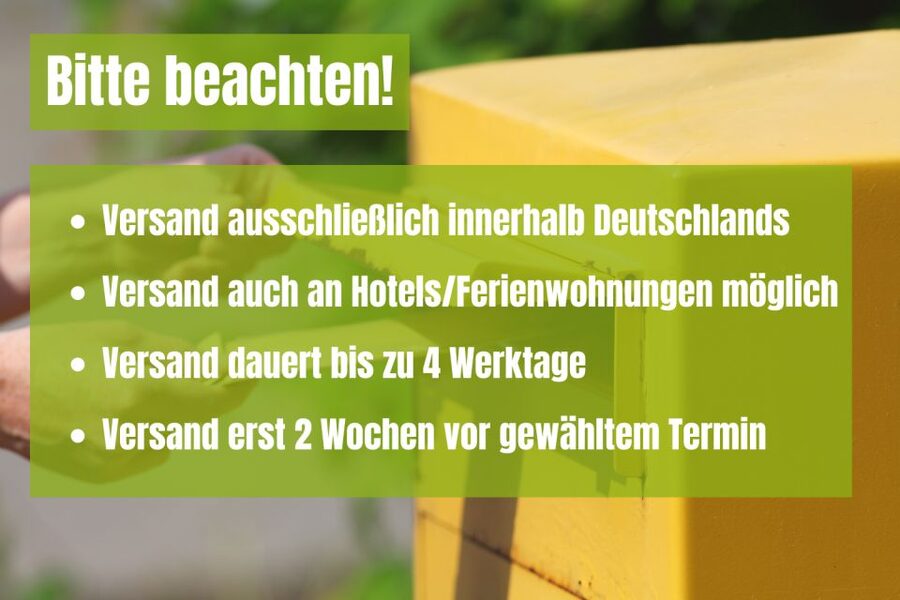
- shipping takes about 4 working days within Germany
- it ships at the earliest 2 weeks before your selected date
If you prefer pickup in Dresden, you can get it Monday to Friday, 9:00 AM to 5:00 PM at:
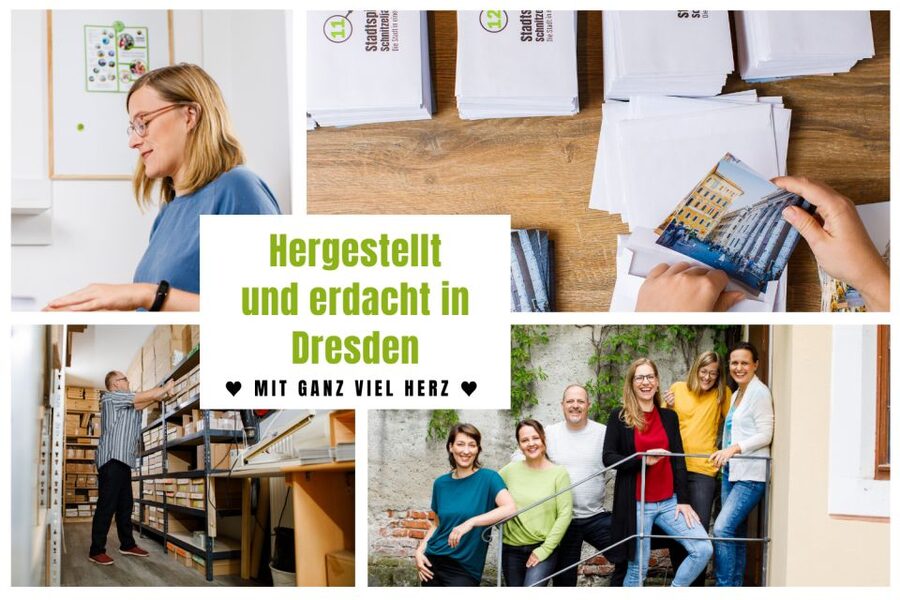
Stadtspiel Schnitzeljagd (Stadtspeil Schnitzeljagd shop), Rähnitzgasse 24, 01097 Dresden
(Weekend and public-holiday pickup isn’t available.)
Why this matters: if you show up in Dresden without the box, you can’t start. So either plan your pickup window carefully or give shipping enough time.
Also bring the box with you at the starting point. There’s no guide at Theaterplatz to hand you anything at the start—your box is your “ticket.”
When construction or closures change your route
Dresden’s center can have temporary construction, and that’s the main uncertainty with any self-guided walking plan. One experience described a situation where a nearby bridge connection was disrupted and barriers prevented seeing a water-related detail until going down toward the Elbe for the correct info.
Here’s how to handle that mindset:
- treat the route as “directions + clues,” not guaranteed perfect sightlines
- follow the instructions even if something looks blocked
- use the emergency envelope if you’re stuck and want to keep moving
The good news is that the game’s purpose is still intact: you’ll be walking through the major historic areas and getting the built-in info stops, even if a particular viewpoint needs adjustment.
Who should book this Dresden Old Town hunt
This scavenger hunt is a strong pick if you want:
- a self-guided way to see top Dresden sights
- a flexible walking plan with built-in “what am I looking at?” details
- a fun activity that works for mixed groups—especially families
It may be a weaker fit if you:
- want a guide-led storytelling experience
- prefer hard, competitive puzzles
- expect every stop to be “perfect view” without any detours (no self-guided city plan can promise that)
If you’re traveling as a small group, the per-group price is especially appealing. If you’re traveling solo, it can still work well, but you’ll want to be honest with yourself about whether you enjoy puzzles enough to keep you engaged through the full walk.
Should you book the Dresden Old Town scavenger hunt?
I’d book it if you want Dresden in a way that’s active, flexible, and anchored to real landmarks. The 11-envelope format keeps the walk interesting, and the included info pieces help you see more than just the famous names. At $41 per group up to 10, it’s also a budget-friendly way to add structure to your sightseeing—without paying for a private guide.
I wouldn’t book it if you’re mainly chasing deeper historical narration from a person, or if you know you hate simple puzzles. In those cases, you might prefer a standard guided walking tour instead.
If you’re on the fence, the practical test is this: do you enjoy figuring things out as you go? If yes, this is a fun way to get your bearings and make Dresden feel like more than a list of monuments.
FAQ
How long does the Dresden scavenger hunt take?
The hunt is designed for about 210 minutes, but you choose when to start and how long to stay at each location.
Do I need a tour guide with this experience?
No. There’s no guide at the meeting point, and you follow the sealed-envelope directions on your own.
What do I need to bring?
Bring comfortable shoes and the game box.
Can I pause the hunt and come back later?
Yes. You can take a break at any time, and you can even continue the scavenger hunt on another day.
What sights will I see on the route?
The game takes you past major Dresden Old Town landmarks, including Semperoper, Frauenkirche, Residenzschloss, and the Zwinger, plus areas around Augustusbrücke, Katholische Hofkirche, Brühl’s Terrace, the Academy of Fine Arts dome, and the New Synagogue.
Do I get the box by mail, or can I pick it up in Dresden?
You can do either. The box can be shipped (shipping is included, and can take up to 4 working days within Germany), or you can pick it up in Dresden Monday to Friday from 9:00 AM to 5:00 PM at Rähnitzgasse 24, 01097 Dresden.