REVIEW · BANGKOK
Bangkok’s Wireless Road: A Self-Guided Audio Tour
Book on Viator →Operated by VoiceMap Audio Tours · Bookable on Viator
Wireless Road tells Bangkok’s story in plain sight. This self-guided audio walk, led by local historian Paul Jorgensen, takes you from BTS Phloen Chit down toward Lumphini Park and back—while the audio cues play exactly when and where you pass each landmark.
I especially love the offline VoiceMap setup. You load the audio once, put your phone in your pocket, and walk at your own pace with GPS-timed directions. If you want to pause, you can—no need to keep up with a group.
One thing to consider: this experience pays for the audio tour itself. It does not include food, drinks, transport, or any museum tickets along the way, so you’ll want to plan a simple start-to-finish walk.
In This Review
- Key things I’d pay attention to
- Wireless Road with Paul Jorgensen: An audio tour built for walking
- Getting oriented at BTS Phloen Chit and following the auto-play route
- British Embassy grounds and the mall that replaced them
- Nai Lert and the rain trees: the shade story behind this neighborhood
- The Green Mile: a pedestrian link between Lumphini and Benjakiti
- Trimurti shrine and the Hindu symbols you’ll start recognizing
- The details that make Wireless Road feel like a story (not a checklist)
- Price and value: is $7.99 reasonable for an hour in Bangkok?
- Offline VoiceMap tips: making the tech disappear
- Who should book this Wireless Road audio walk
- Should you book the Bangkok Wireless Road audio tour?
- FAQ
- How long is the Bangkok’s Wireless Road self-guided audio tour?
- Where does the tour start and end?
- Does the VoiceMap audio work offline?
- Do I need a smartphone to do the tour?
- Is this a group tour?
- Can I get a refund if I cancel?
Key things I’d pay attention to
- GPS-timed audio so you hear the right story at the right spot
- Paul Jorgensen’s local context behind everyday streetscape details
- Wireless Road sights with names you can picture later (like Nai Lert)
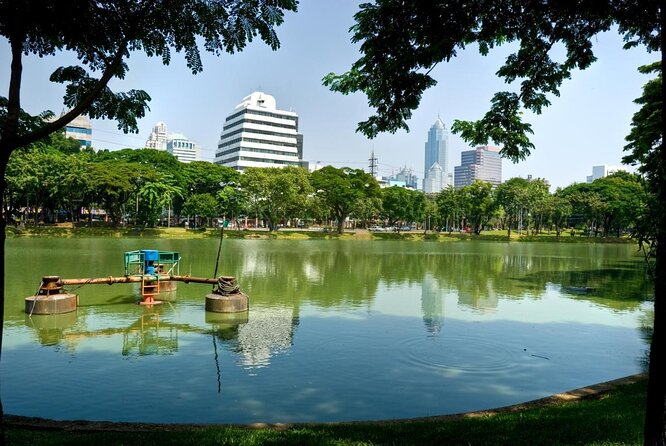
- Parks on the route and a real pedestrian link called the Green Mile
- Religion and symbolism explained through things you can actually see on the walk
Wireless Road with Paul Jorgensen: An audio tour built for walking
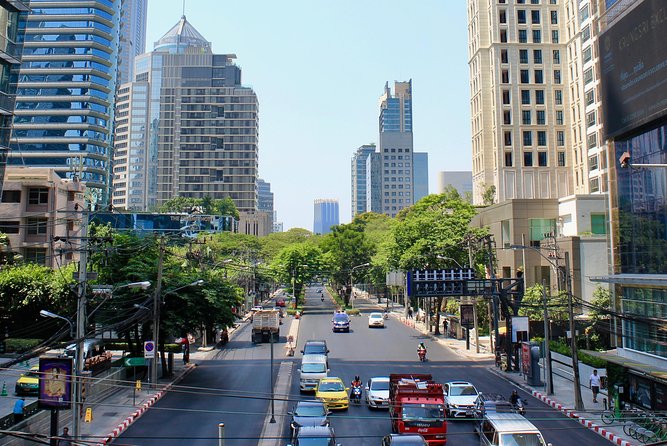
Bangkok has plenty of ways to get your bearings—BTS lines, apps, maps, busy sidewalks. This tour gives you a different kind of orientation. Instead of just pointing out places, it explains how Wireless Road became what it is: embassies, green spaces, street-level culture, and the meaning packed into small objects along the way.
The tour’s tone matters. It’s described as humorous and culture-forward, and that helps the facts land without feeling like a lecture. Paul Jorgensen is the guide voice on the audio, and his goal is to connect the visible street scenes to the bigger story of how Bangkok developed—plus what Thais pay attention to in daily life (like spirit houses, food, and color).
You’re not stuck to one pace. The audio plays automatically at the right time and place as you walk, and you can start in the VoiceMap app, stop if you want, then continue. That makes this feel less like a timed “tour” and more like a guided walk you control.
You can also read our reviews of more tours and experiences in Bangkok.



Getting oriented at BTS Phloen Chit and following the auto-play route
Your walk starts and ends at Phloen Chit BTS Station. That is a big practical plus in Bangkok, because you can plug your plan into the transit system without guesswork.
Here’s how the audio experience is designed to work:
- You start the tour in the VoiceMap app
- The audio cues trigger as you move along the route
- You can keep your phone mostly out of the way by putting it in your pocket
- You follow the listening experience while you walk, rather than checking your screen constantly
The route is described as a loop that goes from Phloen Chit down toward Lumphini Park and returns. Expect about 50 minutes to 1 hour. That’s short enough to fit into a lunch break or early afternoon window, but long enough to connect street details to place names and neighborhoods.
Because the tour is available any time of day (opening hours run 12:00 AM to 11:59 PM), you can choose the time that fits your energy level and plans. Early in a trip also makes sense, since the context helps you understand what you see afterward.
British Embassy grounds and the mall that replaced them
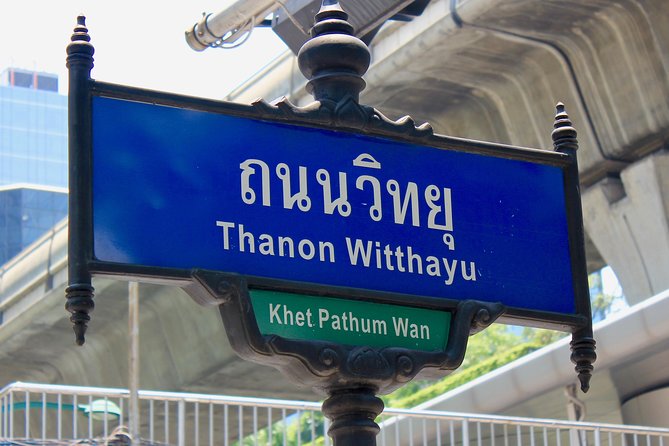
One of the most interesting stops is where the story crosses from diplomacy to everyday life. The audio includes a moment where you hear how a shopping mall grew out of the grounds of the British Embassy.
This kind of transformation is exactly what makes Wireless Road a good “listen while walking” corridor. You’re not just seeing buildings—you’re seeing layers. An embassy property doesn’t vanish in a vacuum. When land changes use, the neighborhood memory changes too. The audio helps you spot how that shift shaped the feel of the street.
What I’d watch for here is the contrast between scale and function. Embassies and shopping areas sit on the same geography but serve different roles. The tour’s job is to connect those differences to Bangkok’s development—so later, when you see a big site repurposed, you’ll know how to read the context instead of just noticing the surface.
Nai Lert and the rain trees: the shade story behind this neighborhood

Bangkok’s walking comfort isn’t only about sidewalks. It’s also about shade. This tour gives you a specific reason to look up: entrepreneur Nai Lert is credited with responsibility for the rain trees that cover parts of this area.
That stop matters because rain trees are more than pretty street canopy. In hot cities, shade affects comfort, and comfort affects how people move. The audio frames the trees as part of how the neighborhood gained its green character, not as an afterthought.
When you’re walking near the rain trees, listen for how the story explains the tree presence as something that developed over time. Then take a moment to notice the street rhythm under the canopy—where people slow down, where the walkway feels more pleasant, and how that greenery supports a more people-friendly environment.
If you like your city tours grounded in real names and real causes, this is one of the strongest parts of the experience.
The Green Mile: a pedestrian link between Lumphini and Benjakiti
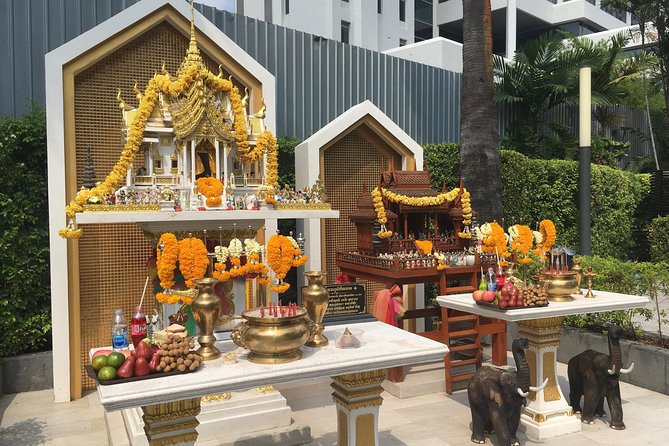
Another stop that turns into a highlight fast is the Green Mile special pedestrian pathway, connecting Lumphini Park and Benjakiti Parks.
Why this is valuable: it turns a route into a feeling. A lot of Bangkok walking is point-to-point. A named pedestrian corridor encourages you to treat it like a destination. The audio helps you understand what that connection means in the city layout—two parks linked for walking rather than only for sightseeing.
Practical tip: this portion is ideal if you want a calmer stretch during your walk. Even within an urban area, walking paths between parks often feel more like a slow stroll than a commute. The audio keeps you busy, but the path does the visual work too.



Trimurti shrine and the Hindu symbols you’ll start recognizing
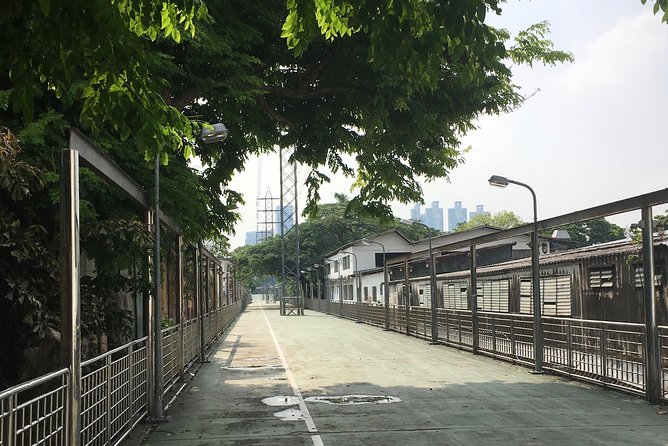
The tour includes a walk through a shrine to the Hindu god Trimurti. This is where the audio does something useful for first-timers: it helps you recognize that religious symbols in Bangkok are not random decorations. They’re part of a belief system people encounter in daily life.
You’ll also hear about other religious and symbolic pieces along Wireless Road, like Hindu gods, spirit houses, and the meaning behind things that might otherwise look like “just street details.”
What to do on this part of the walk:
- Take your time at the shrine location
- Listen to the explanation before moving on
- Look for surrounding cues the audio connects to belief and everyday practice
If you enjoy understanding what you’re actually seeing—rather than just ticking off landmarks—this segment gives you that “aha” moment. It makes the city’s spiritual presence feel legible.
The details that make Wireless Road feel like a story (not a checklist)

The stops you can point to—parks, shrines, major sites—are only part of it. The audio tour also zooms in on everyday objects and street patterns that are easy to ignore when you’re rushing.
From the tour description, you can expect explanations tied to things like:
- groups of motorcycle taxis
- convenience stores and what they signal in daily routines
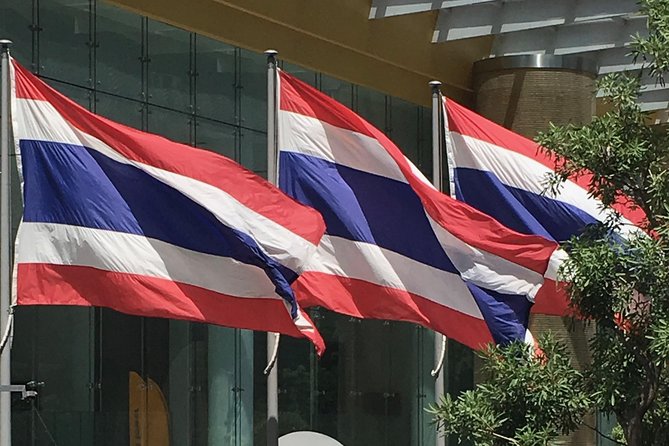
- the Thai flag
- the number nine
- and other symbols and landmarks that carry meaning for Thais
This is the heart of why self-guided audio works well on Wireless Road. You’re walking through a place where the city’s identity is visible at multiple scales: from big official spaces to small daily rhythms.
Also, the way the audio frames food and color is a clever touch. Bangkok isn’t just a place you visit with your eyes. You’ll keep noticing the colors and patterns after the walk, because you now know they aren’t only aesthetic. They connect to local habits and belief.
One more point: the tour says hundreds of people have loved the live version of it before becoming an on-demand audio experience. That matters because it suggests the pacing and story structure were designed for walking first—not bolted on later for people staring at screens.
Price and value: is $7.99 reasonable for an hour in Bangkok?
At $7.99 per person, this is priced like a budget-friendly add-on, not a pricey attraction. The value comes from what you get for that price:
- a guided narrative by Paul Jorgensen
- a route you can follow in about 50 minutes to 1 hour
- lifetime access to the audio tour
- offline access to audio, maps, and geodata through the VoiceMap app
You’re not paying only for a one-time experience. You’re paying for a repeatable walking guide you can return to on another trip or use to refresh your memory after. That’s the difference between a quick audio clip and something you can live with.
The trade-off is also clear: this isn’t bundled with transport or entry tickets. Since it is self-guided, you’ll supply the basics—walking shoes, your phone, and any food plans you want. But because the tour ties directly into BTS access at Phloen Chit, your transportation plan can stay simple.
If you like city context more than museum hours, and you’re comfortable walking a short loop, this price-to-time ratio is hard to beat.
Offline VoiceMap tips: making the tech disappear
The tour is designed around VoiceMap’s offline mode. That’s a real advantage in Bangkok, where data signals can be unpredictable and it’s easy to burn phone battery fiddling with screens.
To make it feel smooth:
- Load the tour through VoiceMap before you head out (so audio and maps are ready offline)
- Bring your earphones
- Start the tour in the app and follow the GPS-timed prompts
- Put your phone away when you can, then pull it out only if you need to reorient
Because the audio triggers at specific times and places, your attention will shift from navigation to listening. That’s the goal: you get to be in the neighborhood, not at the map.
Also, the tour ends back at the meeting point. That keeps the logistics clean. You can line it up with other plans at Phloen Chit without worrying about a far-off drop.
Who should book this Wireless Road audio walk
This tour fits best if you want:
- a self-guided way to learn the meaning behind what you see
- an easy, low-commitment walk that still covers real stories
- cultural context you can carry to other parts of Bangkok later
It’s also a smart first-trip choice if you like learning how a neighborhood formed, not just what it looks like today. Wireless Road is a place where Bangkok’s official and everyday sides overlap, and the audio helps you read that overlap.
If you dislike walking loops or prefer a strictly indoor tour, you might find it less satisfying. But if you’re happy with about an hour outside and you enjoy getting explanations as you go, it’s a great fit.
Should you book the Bangkok Wireless Road audio tour?
Book it if you like your Bangkok guided by context, names, and symbolism—not just photos. The combination of GPS-timed audio, an identifiable guide voice (Paul Jorgensen), and stops that connect embassies, parks, and religious symbols makes this feel like a city lesson you can walk through.
Skip it if you want a tour that includes transport, meals, or entrance tickets. This one is purely the audio walk experience, and you’ll handle everything else.
One more practical note: it’s often booked about 26 days in advance, so if your dates are fixed, don’t leave it to the last minute. That said, once you’ve booked, the main win is that you can repeat the walk later thanks to lifetime access.
If you’re building a short Bangkok plan and you want a high-impact hour of learning in the middle of real neighborhoods, this Wireless Road audio tour is a solid bet.
FAQ
How long is the Bangkok’s Wireless Road self-guided audio tour?
It takes about 50 minutes to 1 hour.
Where does the tour start and end?
It starts at Phloen Chit BTS Station and ends back at the same meeting point.
Does the VoiceMap audio work offline?
Yes. The VoiceMap application includes offline access to audio, maps, and geodata.
Do I need a smartphone to do the tour?
Yes. A smartphone is listed as not included, and the tour uses the VoiceMap app.
Is this a group tour?
It is listed as a private tour/activity, meaning only your group participates.
Can I get a refund if I cancel?
No. The experience is non-refundable and cannot be changed for any reason.