REVIEW · GENOA
Finance and Nobility: Explore medieval Genoa on a self-guided audio tour
Book on Viator →Operated by VoiceMap Audio Tours · Bookable on Viator
One windy street can change everything. This self-guided audio tour threads through Genoa’s medieval core with stories about nobility, merchants, and explorers, plus practical guidance to help you find the key sights. I love the offline setup (no SIM card needed), and I also like the flexible pacing—there’s no clock chasing you. One drawback: if you wander far off the location prompts in tight lanes, the tour may lose track and you could miss later alerts.
You’ll start near the port at Palazzo San Giorgio and work your way through historic squares and cathedral areas at a tempo you control. The narration focuses on how wealth, power, and trade shaped Genoa, so it’s not just a list of buildings—it’s a story that makes the streets feel purposeful. Just keep in mind you’ll need your own phone and headphones to hear it.
The route takes about 40 minutes to 1 hour, and it ends at Piazza Raffaele De Ferrari, a great place to continue strolling. It’s also available in English, with lifetime access, so you’re not paying just for a one-time experience. For the best results, plan to download the app ahead of time and follow the walking route closely when you can.
In This Review
- Key Points at a Glance
- Why This Offline Audio Walk Works in Medieval Genoa
- Starting at Palazzo San Giorgio by the Port
- The Filled-Bay Square: Where Port Expansion Reshaped the City
- Following the Money: Traders, Moneychangers, and Street-Level Genoa
- Pausing for Views: A Short Break in the Middle of It All
- Outside San Lorenzo Cathedral (and a Choose-Your-Own-Interior Moment)
- Palace Walks and Palazzo Ducale Surroundings
- A Beautiful Church Stop: When You Want to Go Inside
- Ending at Piazza Raffaele De Ferrari: A Clean Finish for Your Stroll
- Price and Value: Why $11.99 Can Make Sense
- How Long It Takes, and How to Start Smoothly
- Where the Tour Can Frustrate You (So You Can Avoid It)
- Who This Self-Guided Tour Fits Best
- Should You Book It?
- FAQ
- How long is the Finance and Nobility audio tour in Genoa?
- Is the tour available offline?
- What language is the tour offered in?
- Where does the tour start and where does it end?
- Do I need tickets to visit San Lorenzo cathedral or the churches?
- What should I bring?
- Is this tour refundable if my plans change?
Key Points at a Glance
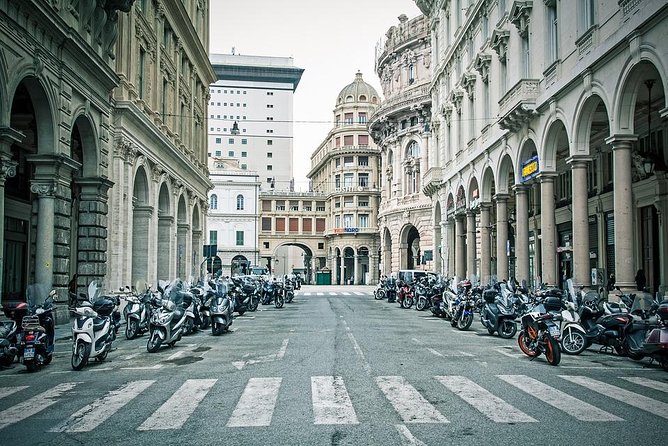
- Offline access means you can use maps and audio without data roaming
- Stories of money and power connect palaces, churches, and squares to Genoa’s trade world
- Self-paced timing helps you pause for photos or detours without feeling rushed
- Simple start and finish: Palazzo San Giorgio near the port to Piazza Raffaele De Ferrari
- You choose inside visits for places like San Lorenzo when you want to slow down
- One potential snag: location-guided alerts can get confused if you stray into narrow streets
Why This Offline Audio Walk Works in Medieval Genoa
Genoa is made for walking, but it’s also made for getting turned around. The practical win here is how the tour keeps you moving through the right areas while letting you stop when you want—perfect for lanes that suddenly slope, curve, or vanish around a corner. Instead of trying to memorize names, you get a guided storyline that helps you connect what you’re seeing to who was running the city.
The biggest value for your wallet and sanity is the offline design. You’re not hunting for signal in a warren of streets, and you don’t need to manage a separate map app just to hear the next chapter. That matters in Genoa, where the best views often happen in the less-obvious turns.
One more reason this works: it’s built around wealth and influence—palaces, merchants, and the port economy—so the tour feels like it has a point. You’ll understand why certain streets and institutions ended up where they did, not just what they look like today.
Starting at Palazzo San Giorgio by the Port
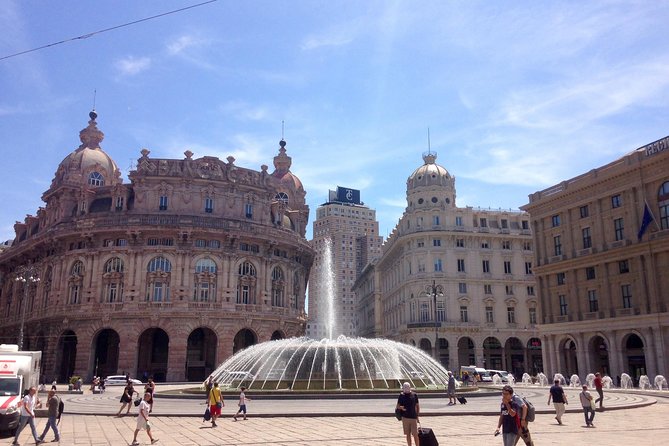
Your tour begins at Palazzo San Giorgio near Via della Mercanzia (right by the port zone). This is a strong opening because it frames Genoa as a trading city from the first minute. Instead of starting deep in a museum district, you start where commerce and money-making would naturally have concentrated.
From there, the narration sets you up to look at the surroundings differently. Even before you reach the main squares, you’ll hear how the city’s elite and business class shaped what got built and how people moved. That early context makes later stops feel less like separate attractions and more like connected pieces of one system.
Practical note: since the tour ends with one final public square, your start location is useful for planning. You can combine it with a longer waterfront stroll afterward without needing transport right away.
The Filled-Bay Square: Where Port Expansion Reshaped the City
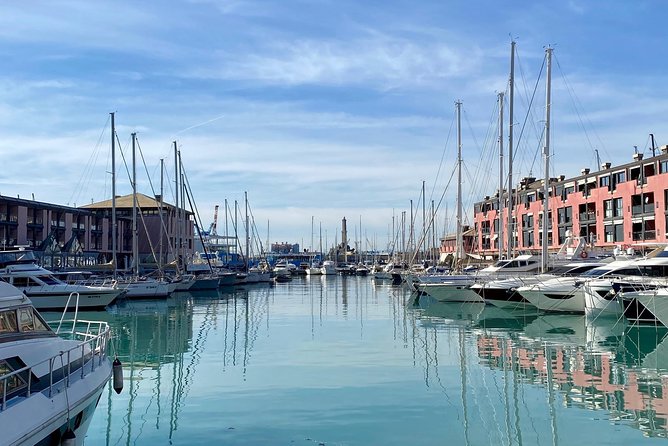
Next comes a short stop at a square that was created artificially around the 16th century by filling part of the bay to gain more land for port operations. That’s the kind of detail that changes how you interpret Genoa. When you learn the ground itself was extended for trade, the city starts making sense as an engineered platform for business, not just a pretty backdrop.
This is also a good moment to slow down and look around. Artificial land reclamation often leaves subtle clues in how areas feel wider or differently planned compared to older street networks. Even if you don’t spot those clues instantly, the narration gives you a lens.
If you like history that affects daily life—streets, access, building sites—this stop is a strong payoff. You’ll likely find yourself looking at the space like a working port district rather than a leftover plaza.
Following the Money: Traders, Moneychangers, and Street-Level Genoa
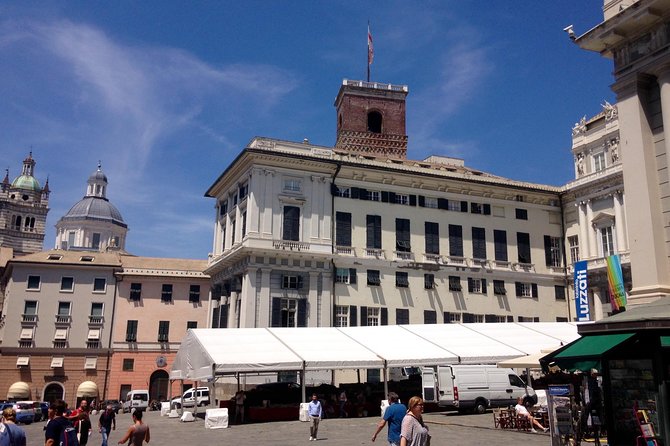
After the bay-filling square, you walk through an ancient area tied to tradesmen and moneychangers. This is where the tour becomes more than scenic sightseeing. Genoa wasn’t just about ships arriving—it was about converting goods, managing risk, and keeping credit flowing. Hearing that while you’re physically in the older fabric of the city makes the whole place feel more believable.
Expect the route to emphasize the human layer of trade: people who needed services, paperwork, exchange, and deals. Even when you’re just walking past stone walls and doorways, the narration keeps you thinking about what those spaces were for.
This part of the walk is also a practical test of your phone setup. Since it’s location-driven, staying reasonably close to the route helps you catch the next prompt on time—especially as streets tighten and turn.
Pausing for Views: A Short Break in the Middle of It All
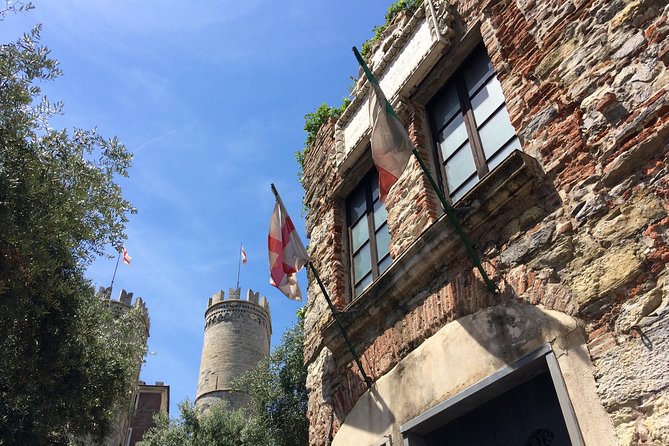
There’s a brief stop in another square where you can admire the surroundings and learn more about the area. Don’t treat this like wasted time. These short pauses are built to help you reset your bearings and take in the geometry of Genoa—how streets funnel into open spaces, and how those spaces act like stage sets for civic life.
If you’re traveling with someone who gets tired of constant walking, this is a useful point to regroup. Even if you’re solo, it’s a good place to compare what the narration told you about trade and influence with what you can see from your spot.
Outside San Lorenzo Cathedral (and a Choose-Your-Own-Interior Moment)
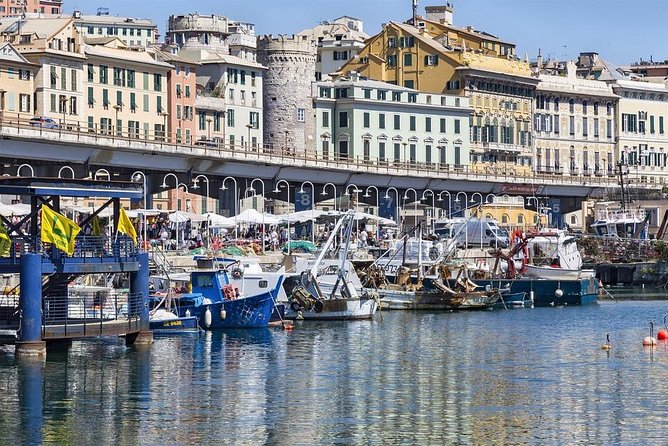
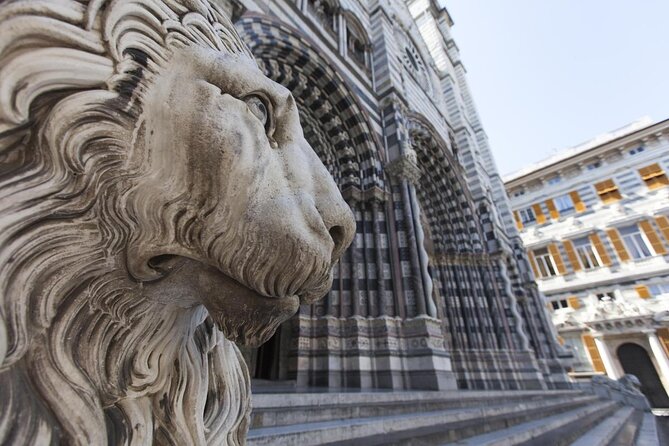
You’ll stop outside San Lorenzo cathedral, with the option to visit the interior if you want. The tour keeps you outside by default, which is helpful because cathedral lines and visiting conditions can vary. But it also gives you the freedom to decide: if the mood strikes, you can go in; if you’re short on time or energy, you don’t lose the rest of the route.
This stop is valuable because it anchors the story in an institution tied to status and identity. In a trading city, religion and civic power often intertwined in very visible ways. Even without going inside, you’ll get context for why the cathedral area matters to Genoa’s story of wealth.
Keep in mind: tickets or entrance fees are not included, so you’ll want to budget for any on-site costs if you choose to enter.
Palace Walks and Palazzo Ducale Surroundings
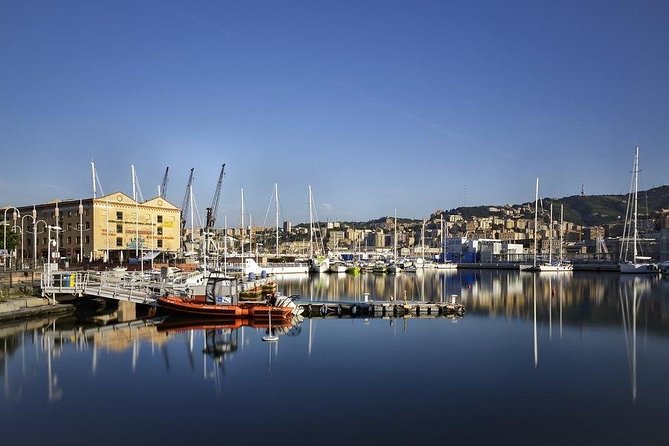
As you continue, you’ll walk around the area linked to Palazzo Ducale and the wider story of Genoa’s power. Even if you don’t step into a museum, the exterior-focused narration helps you see the palace zone as a political center, not just an impressive building on a postcard.
This section works well when you like architecture paired with function. You’ll hear stories tied to the people who benefited from trade and governance, which makes the palace landscape feel intentional. It’s also a nice stretch because the route keeps moving while still letting you slow down when something catches your eye.
If you enjoy city photos, this is a good time to frame street lines and palace facades. Genoa’s angles can look accidental from a distance, but up close they often read like design choices.
A Beautiful Church Stop: When You Want to Go Inside
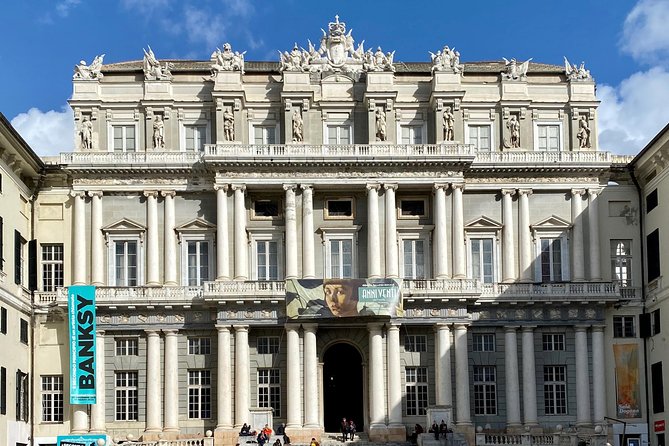
Later, you’ll see a church from the outside and get the chance to go inside. Like the cathedral option, this is a choose-your-own-moment stop, so you’re not forced to commit if the timing doesn’t work for you.
This part is best if you like mixing street-level history with the feel of sacred space. Even just a short interior visit can change your understanding of what the city invested in beyond commerce. If you do go in, remember that entrance costs are not included.
If you’re sensitive to crowds, arriving and deciding quickly may help. The tour’s structure is flexible enough that you can pause briefly or keep the pace.
Ending at Piazza Raffaele De Ferrari: A Clean Finish for Your Stroll
The tour ends at Piazza Raffaele De Ferrari. Ending in a major open space is a smart move. You get a clear finish point, and you’re placed near the kind of public square where it’s easy to continue walking, grab a bite, or link up with other parts of Genoa.
This ending also gives you a mental closure: you’ve moved from port-adjacent power and trade into the civic heart. Once you’re done with the audio, the city doesn’t disappear—it just becomes yours to explore without prompts.
Price and Value: Why $11.99 Can Make Sense
At $11.99 per person, this tour sits in a sweet spot for a guided-by-a-story experience without the higher costs of live guides. The reason the price feels fair is the lifetime access. You’re not renting a single walk—you’re getting an audio route you can repeat later when you return to Genoa or when you’re in the mood for a refresher.
You’re also getting more than narration: offline access to audio, maps, and geodata helps you actually use it in the real street environment. That practical offline feature is where the value hits for cities with spotty coverage.
One small caution from experience with this kind of purchase: check your group plan before everyone pays separately. If you’re traveling with friends or family, it’s worth understanding how codes are meant to be used so you don’t end up duplicating charges.
Finally, budget time and phone supplies. You’ll need your own smartphone and headphones, and tickets for cathedral/church interiors aren’t included. Once you factor those, the tour still tends to be a strong value for a solo or small-group walk.
How Long It Takes, and How to Start Smoothly
The audio run time is about 40 minutes to 1 hour. That timing is realistic for a concentrated route through key spots without turning it into an all-day project. It’s a good choice if you have one half-day in Genoa, or if you want something structured that still feels free.
Because it’s offline, your best move is to download and test everything before you begin—especially since getting the app set up can take some time. Give yourself a little buffer so you’re not standing at Palazzo San Giorgio fiddling with downloads while the route is already starting.
Also, bring headphones before you reach the first stop. The tour won’t magically play through your speaker, and speakers can be a noisy mess in a crowded historic area.
Where the Tour Can Frustrate You (So You Can Avoid It)
One key consideration is how location prompts behave in narrow medieval lanes. If you stray far off the expected path or get swept into side streets, the tour may lose your position and stop delivering updates. The result is annoying: you can end up walking on your own with less context than you expected.
Your workaround is simple: when you notice the audio is quiet or you’re at a decision point, check your map within the app and move back toward the guided area. Staying close to the route line is the difference between a clean walkthrough and a scattered experience.
If you’re the type who loves long side trips, you may want to treat this as your main backbone. Detours are great, but hop back to the route for the next prompt so you don’t miss sections.
Who This Self-Guided Tour Fits Best
This tour is a great match if you like:
- History with real-world context, like how money, trade, and power shape the city
- A self-paced walk where you can pause in squares and decide about church interiors
- Visiting major sights like San Lorenzo while still getting a story thread
It also fits well if you’re traveling with one or more people who want to move at similar speeds but don’t want the rigidity of a timed group tour. Since it’s a private activity with only your group participating, you can keep things calm and flexible.
If you hate app-based, location-guided experiences or you know you’ll wander deep into alleys constantly, you might find it less satisfying. In that case, you could still use the route, but plan to rely more on landmarks than prompts.
Should You Book It?
I’d book it if you want a low-cost way to understand medieval Genoa’s power story—nobility, merchants, and explorers—without paying for a live guide. The offline setup and lifetime access are the real reasons this is worth your attention, especially for a city where signal can be unpredictable and streets are easy to misread.
Skip it only if you strongly dislike location-guided audio, or if you know you’ll frequently wander far from the route and ignore prompts. Otherwise, this is a solid, practical way to see Genoa’s highlights with meaning—not just names.
FAQ
How long is the Finance and Nobility audio tour in Genoa?
The tour runs for about 40 minutes to 1 hour.
Is the tour available offline?
Yes. Audio, maps, and geodata are available offline, so you do not need a SIM card.
What language is the tour offered in?
The tour is offered in English.
Where does the tour start and where does it end?
It starts at Palazzo San Giorgio on Via della Mercanzia, 2, Genova, and ends at Piazza Raffaele de Ferrari in Genova.
Do I need tickets to visit San Lorenzo cathedral or the churches?
Tickets or entrance fees are not included. The tour offers you the opportunity to visit inside if you want, but any entry costs are on you.
What should I bring?
Bring your smartphone and headphones. Transportation and food are not included.
Is this tour refundable if my plans change?
No. It is non-refundable and cannot be changed for any reason.