REVIEW · ATHENS
Ancient Agora Self-Guided Tour with 3D & Audio (No Ticket)
Book on GetYourGuide →Operated by Culture App · Bookable on GetYourGuide
Wondering what the Agora looked like back then? The Ancient Agora Self-Guided Tour turns Athens stone and scrub into a story you can follow with audio, text, and 3D reconstructions—all timed to real places on-site. It’s a budget-friendly way to explore the political and everyday heartbeat of ancient Athens without waiting for a group.
I like that it’s genuinely practical: once you download, the app works fully offline, so you’re not stuck hunting Wi‑Fi or paying for roaming while you stand in the sun. I also like the way the guide supports multiple languages with both audio narration and on-screen text, plus visuals like 3D models, panoramas, and 360° views.
One watch-out: the experience can feel a bit fiddly at the start. Some people found it confusing to match the audio to the right monuments, and you may need large downloads before you go.
In This Review
- Key things I’d pay attention to
- Ancient Agora Athens, explained in your own footsteps
- Price and what you still need to buy onsite
- Preparing your phone: offline downloads and practical limits
- How the self-guided format changes the Agora experience
- Landmarks that matter: democracy, philosophy, and everyday Athens
- The birthplace of democracy
- Socrates and the philosophers’ teaching spaces
- Temples, stoas, and civic life
- Temple of Hephaistos: the stop that makes it click
- The audio experience: GPS support, but don’t expect zero friction
- Where the content shines—and where it may feel thin
- Who this self-guided Ancient Agora tour suits best
- Should you book this Ancient Agora self-guided tour?
- FAQ
- Is the entrance ticket included?
- Does the tour work offline?
- How long is the access window?
- What languages are available for the audio and text?
- How much storage does the app need?
- What phone requirements are there?
Key things I’d pay attention to

- Offline mode after download so you can wander without signal anxiety
- 3D + audio to help you picture what’s missing in ruins
- Multi-language support (English, Greek, German, Spanish, Italian, French, Dutch, Chinese)
- GPS-based audio selection that can help you line up narration with your location
- Entrance ticket not included, so budget for that onsite
- 5-day access from first activation for a slower, flexible pace
Ancient Agora Athens, explained in your own footsteps

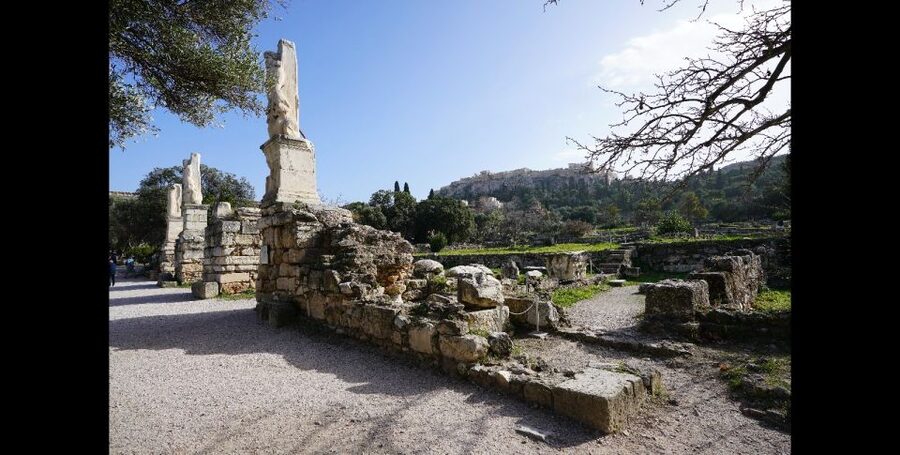
The Ancient Agora is where you go when you want Athens to feel real. Not postcard Athens. Not “I saw a ruin” Athens. This is the political, administrative, and commercial hub—one of those places where different parts of daily life overlapped on the same ground. A self-guided format makes sense here, because you’ll probably want to pause, look, and walk the paths again at your own speed.
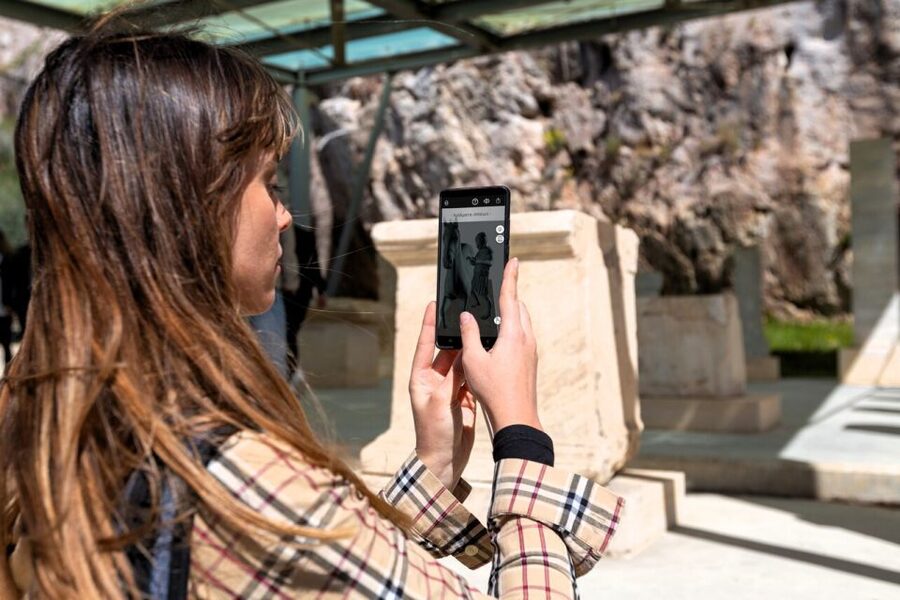
This tour’s real strength is that it helps you read the site. Even if you don’t know a thing about ancient Athens, the guide is built to connect what you’re seeing now with what the Agora likely looked like in the past. You get audio narration plus text, supported with 3D reconstructions, short videos, and 360° views. That matters because many areas are fragmentary: stones remain, but the original scale and shape can be hard to imagine.
You’ll also appreciate the flexibility. It’s not a fixed schedule. You can start, stop, and linger. That’s a big deal in the Agora, where the best “learning moments” often come when you slow down—especially near major landmarks like the Temple of Hephaistos.
You can also read our reviews of more tours and experiences in Athens.



Price and what you still need to buy onsite
The price is $8 per person, and the access window is valid for 5 days from your first activation. That makes it a low-cost add-on to your Athens plans, especially if you’re already paying for museum entry elsewhere.
The main financial catch is straightforward: the entrance ticket is not included. The Ancient Agora of Athens ticket is listed as 20€ full or 10€ reduced. So your practical total is the app price plus the site ticket.
Is that a deal? Usually, yes—if you’ll actually use the app. If you’re the type who takes a quick photo and moves on, you might feel like you paid for something you didn’t fully activate. But if you’re the kind of person who likes to understand why a place matters before you walk away, the pricing works. You’re essentially buying interpretive help, not access.
Also, the offline design can save money in a sneaky way: you don’t need internet for the tour content after downloading, which helps if you’re traveling with limited mobile data.
Preparing your phone: offline downloads and practical limits

This is a smartphone tour, so your experience starts before you even arrive. After you book, you’ll get an email from the provider (Culture App) with instructions on downloading the content. Check your spam folder, just in case.
Plan your download carefully. The app works offline after content is downloaded, but you’ll want to download while you’re on Wi‑Fi unless you have enough data. The app needs about 200MB of storage. That’s not enormous, but it’s enough that you shouldn’t assume you have space.
Device requirements are also clear: iOS 11.0 or later and Android 5.1 or later. Audio delivery depends on the phone being charged too, so bring a fully charged battery and your own earphones. This is not the kind of site where you want to stop mid-sentence to find charging.
One small practical tip: before you step into the Agora, do a quick test. Start the audio once in a calmer area nearby, so you know your volume is right and the phone is behaving normally. It sounds basic, but it prevents that annoying moment where you’re standing in front of a landmark while the app is buffering.
How the self-guided format changes the Agora experience
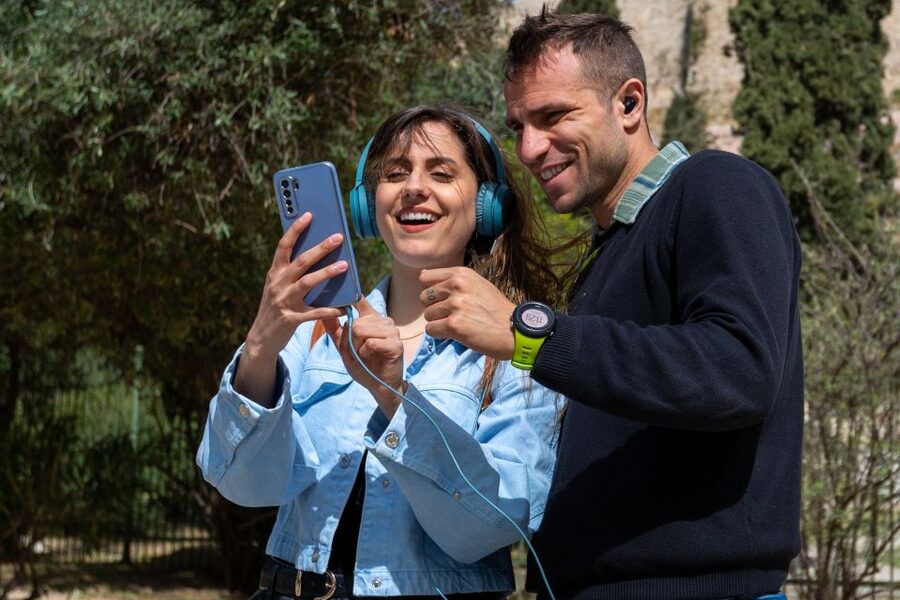
With a traditional guided tour, you accept someone else’s pace. Here, you’re steering the day. That’s not just comfort—it changes what you notice.
The guide is designed to cover both the big ideas and the small details. It focuses on:
- political, administrative, and commercial life
- the place where democracy was first established
- philosophical teaching areas associated with Socrates and other philosophers
- how daily life played out around temples and stoas
When you control the pace, you can do the learning “in layers.” For example, you might first walk through the site with the audio turned on, then return to specific points to look at architectural details without narration. The tour’s visuals—3D reconstructions and 360° views—make that second pass more meaningful, because you’re comparing “then” and “now.”
The flexibility is also useful for crowds. The Agora can feel busy, and fixed-group tours often pressure you to keep moving. With this format, you can wait for an opening, take a breath, and then step into the narration when the view is actually worth it.
Landmarks that matter: democracy, philosophy, and everyday Athens
The highlights point you toward the themes that most people come to the Agora for: democracy, philosophy, and daily civic life.






The birthplace of democracy
You’ll want to aim your listening around the areas connected with the earliest democratic process in Athens. Even if you know the headline idea, it helps to hear how governance and public life physically connected—where people gathered, how decisions were made, and why the spaces mattered.
This is the kind of story that’s easier when the audio describes context. Stone ruins don’t always broadcast what they were used for. The text and audio here are meant to bridge that gap so you can understand why people cared so much about these spaces.
Socrates and the philosophers’ teaching spaces
The Agora is also tied to philosophical teaching, including the world around Socrates and other thinkers. This part can be especially effective on a self-guided tour, because philosophy is about attention. If the narration helps you set the scene, you’re more likely to pause and think instead of walking past.
One caution: philosophical sites can be less visually obvious than big temples. If you rely on your eyes alone, you might miss the “where the conversation happened” feeling. The app’s GPS-based approach can help you keep narration lined up to where you are, but it’s still worth staying alert when you move between nearby areas.
Temples, stoas, and civic life
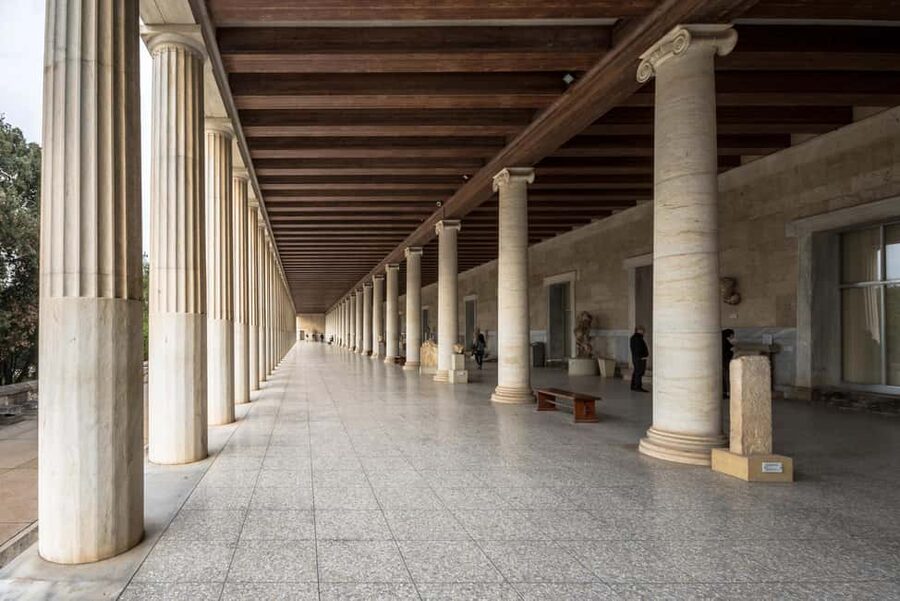
The guide also covers temples, stoas, and how everyday Athenians lived through public spaces. That’s important because the Agora wasn’t only for speeches and ideas. It was also for commerce, practical decisions, and the rhythms of daily movement.
If you listen to these sections in order, you’ll start seeing how the Agora functioned like a living system: religious buildings, covered walkways (stoas), and open gathering zones all supporting the same civic community. That’s the kind of connection that’s hard to pull from a quick guidebook skim.
Temple of Hephaistos: the stop that makes it click

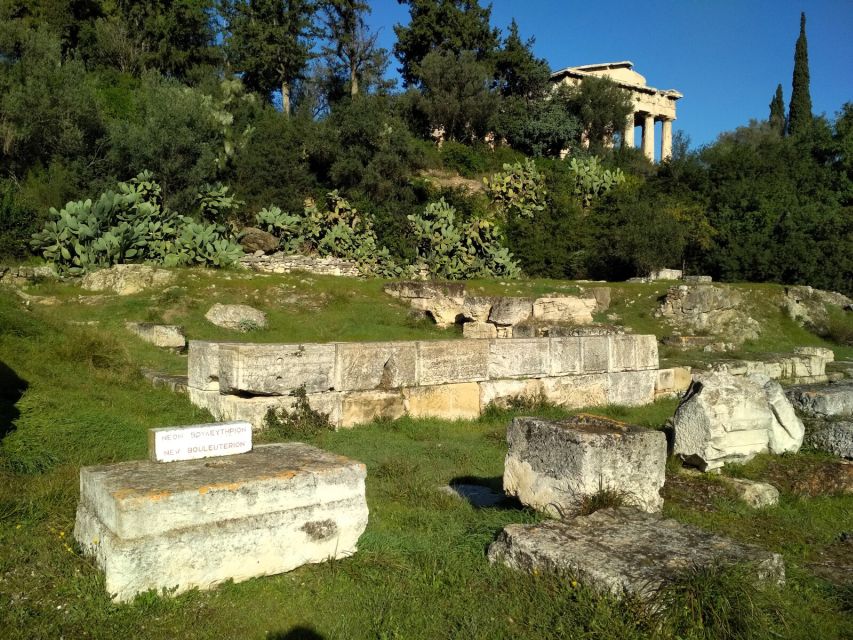
The Temple of Hephaistos is singled out in the highlights, and it’s easy to see why. Compared with many ruins, this temple is well preserved, which makes it a natural anchor for the tour.
If you’re worried the audio might feel vague, this is where it can become satisfying. A preserved structure gives you something solid to “attach” the narration to. You can better sense scale and architectural details, and then the tour’s 3D reconstructions and visuals help you imagine what the surrounding complex may have looked like in its original context.
This is also the kind of landmark where you can test your own learning. Listen to the audio once, then look again with no audio for 30 seconds. If the place feels like it makes sense afterward, the tour is working for you.
In general, the best payoff from this self-guided format comes when you use it to confirm what your eyes can’t fully explain.
The audio experience: GPS support, but don’t expect zero friction

The app is designed to guide you by location, and one key feature mentioned is that GPS tracking can work to select the correct audio for the site area you’re standing in. That’s helpful because the Agora is spread out and the landmarks can look similar at a quick glance.
Still, don’t assume it will be perfectly seamless every time. Some users found it confusing to determine which audio belongs to which monument, especially when they tried to jump selectively rather than following the most obvious path. If you enjoy spontaneous detours, you might occasionally feel like you’re playing match-the-audio.
Downloads can add to the stress if you didn’t prepare ahead. If the experience expects big chunks of content and you’re forced to wait or restart, you’ll lose momentum. That can be the difference between a smooth history walk and an irritated “I just want to press play” moment.
So here’s the practical approach: before you enter, download everything you plan to use. Then, let the app guide your order rather than fighting it mid-walk. If you do want to skip around, do it slowly—take one extra look at the screen before moving.
Where the content shines—and where it may feel thin
The tour is rated 3.9 out of 5 from 59 reviews, which is a nice signal of overall usability at the price point. The most praised elements include clear explanations, the value for money, and the way visuals help you understand what you’re seeing—especially the feeling that the tour helps you picture the site in ancient times.
But there’s also a realistic concern: some people felt the guide can feel superficial. If you want a deep academic walkthrough, this may not replace a historian or an expert live guide. At $8, you’re buying interpretive orientation plus visuals, not a full lecture series.
You might also run into gaps where information doesn’t match what’s physically present on-site, like when signage is vague and the guide doesn’t seem to address that exact moment. That’s not unusual in self-guided apps, but it’s worth noting.
A smart way to handle this is to treat the tour as a “first understanding.” Use it to build a basic map of meaning. Then, later in the trip, decide what you want to research more—whether that’s democracy, stoas, or the philosophical culture tied to the Agora.
Who this self-guided Ancient Agora tour suits best
This works well if you:
- like learning while walking instead of waiting for a group
- want offline audio so you don’t rely on signal
- enjoy visuals like 3D models and 360° views to make ruins understandable
- prefer flexible pacing, especially in a site that can get busy
You might want to think twice if you:
- hate dealing with smartphone apps while you travel
- expect an ultra-detailed, monument-by-monument expert narrative
- haven’t downloaded the content ahead of time and would rather not handle large downloads
It’s also a good choice for multi-language travelers, since you’ll have English and Greek plus several European languages and Chinese available in the app. That’s handy if you’re traveling with someone who prefers a specific language.
Should you book this Ancient Agora self-guided tour?
If you’re coming to the Ancient Agora and you want more than a quick walk-through, I think it’s worth considering. The combination of offline audio, 3D reconstructions, and flexible pacing gives you a lot of value for a low app price. The Temple of Hephaistos is a strong anchor point that can help the guide “click” in your mind.
But if you’re the type who wants depth from the first minute, or if you’re the sort of traveler who gets annoyed when apps don’t match perfectly to what you see, you may feel let down. Your best move is to download on Wi‑Fi, bring earphones, and plan to follow the app’s flow rather than jumping around constantly.
If those conditions fit your style, this is a practical way to experience Athens at street level, with the ancient meaning attached.
FAQ
Is the entrance ticket included?
No. The Ancient Agora of Athens entrance ticket is not included. The listed ticket prices are 20€ full or 10€ reduced.
Does the tour work offline?
Yes. After downloading the content, the app works offline, with no internet needed on site.
How long is the access window?
Your access is valid for 5 days from your first activation.
What languages are available for the audio and text?
The audio guide and text are available in English, Greek, German, Spanish, Italian, French, Dutch, and Chinese.
How much storage does the app need?
You need about 200MB of storage space on your phone.
What phone requirements are there?
The app requires iOS 11.0 or later or Android 5.1 or later.