St. Augustine keeps changing its story. This self-guided audio walk strings together pirates, founding plans, faith, and civil rights as you move from landmark to landmark. I like how the route links each stop to what you’re looking at in real time, and I like that you get offline access so you’re not hunting signal across old streets.
At $38 for about 2 hours 30 minutes, it’s a strong deal if you want structure but still like to wander. The main drawback: you’ll need to bring your smartphone and headphones, and because it’s GPS-based, you’ll want your phone charged.
In This Review
- Key points worth knowing before you go
- How the offline audio GPS tour really helps in St. Augustine
- Entering at Old City Gates and catching the founding storyline
- Oldest Wooden School House: early daily life, not just big names
- Pirate and Treasure Museum stop: Matanzas Bay as the backdrop
- Castillo de San Marcos: the fort story that actually feels strategic
- Huguenot and Tolomato cemeteries: quiet places with heavy context
- Faith stops: Cathedral Basilica, St. Photios, and Father Pedro Camps
- Monson Motor Lodge Pool to Peña-Peck: civil rights and cultural institutions
- Villa Zorayda, Ponce de Leon Hall, Casa Monica: architecture with a point
- Finishing at Plaza de la Constitución on St. George Street
- Is it worth $38 for an audio walk with lifetime access?
- FAQ
- Do I need headphones for this audio tour?
- Where does the tour start?
- Where does the tour end?
- How long is the tour?
- What’s the price?
- Is it self-guided?
- Is the audio available offline?
- Does the tour work on a phone without changing settings after download?
- Can I replay the tour later?
- Is the tour private?
- Can I get a refund if I cancel?
Key points worth knowing before you go
- Offline audio + offline maps means you can keep going even if your phone signal is shaky.
- Lifetime access lets you replay the walk later, or revisit stops when you want more time.
- St. George Street routing keeps the walk intuitive, with a clear start at Old City Gates and an end at Plaza de la Constitución.
- You get a mix of eras: Spanish founding, pirate-era coastal life, fort defenses, and later American history.
- Some stops are pass-by moments, so you’ll mostly look and listen instead of paying admission at every site.
How the offline audio GPS tour really helps in St. Augustine
This tour is built for independent walking, but it’s not the frustrating kind where you’re constantly checking a map. You use an app on Android or iOS, and you get offline audio, maps, and geodata, which is exactly what you want in an older historic area where reception can be uneven.
What I like is the pacing. You’re not trapped in someone else’s schedule. You choose when to pause, take a photo, or step aside while the story catches up with the view. That matters in St. Augustine, because the differences between periods are written into the buildings and street corners.
The other value is time. For about 2 hours 30 minutes, you can hit major themes—founding, invasion threats, coastal conflicts, faith, and community memory—without spending your whole day inside paid attractions. You’re also set up to re-listen later, since the tour is available with lifetime access in English.
You can also read our reviews of more tours and experiences in St Augustine.
Entering at Old City Gates and catching the founding storyline
You start at the Old City Gates area on St. George St. (tour start is listed at 12 St George St, and the first stop is at 2 St George St). This is a great opener because it frames St. Augustine as an outpost with a plan from day one.
From the start, the audio focuses on Pedro Menéndez de Avilés and the founding father type of thinking—how you place a settlement, how you defend it, and why this coast mattered. Even if you’ve seen St. Augustine in photos before, this kind of beginning helps the rest of the walk feel linked rather than like a random list of stops.
Practical tip: when you begin, stand still for a minute and let the audio start at the right moment. On a street like St. George St, it’s easy to wander half a block and end up hearing a part of the story that doesn’t match what’s around you.
Oldest Wooden School House: early daily life, not just big names
Next you walk along St. George Street to the Oldest Wooden School House. This stop is a smart change of pace because it shifts away from crowns, battles, and famous leaders. Instead, you’re pointed toward education and daily routines—what people did when the city was still forming.
I like schoolhouse stops because they’re human-scale. A fort can explain power, but a school explains continuity. It’s also one of the easiest places for younger listeners to latch onto, since education is a topic that feels familiar even centuries later.
One consideration: if you’re hoping for deep interior access, the tour’s wording suggests a landmark approach (walk up, look, listen). You’ll get the context, but you might not get the same level of detail you would from a dedicated schoolhouse visit on its own.
Pirate and Treasure Museum stop: Matanzas Bay as the backdrop
The tour includes a stop near the St. Augustine Pirate & Treasure Museum. Even though you’re passing by, this is where the story starts stretching toward sea life—privateers, pirates, and coastal conflict tied to the Matanzas Bay area.
This works well because it adds stakes to the later fortress story. You understand that the fort isn’t just a dramatic wall; it’s a response to repeated pressure from the sea. It’s the kind of narrative link that makes the Castillo feel less like a photo-op and more like a tool used in real fights.
If you’re short on time later, this is also a good moment to decide whether you want to return and add a museum visit. The audio gives you a direction; you can follow it if you want more.
Castillo de San Marcos: the fort story that actually feels strategic
The big anchor stop is the Castillo de San Marcos National Monument. This is one of those sites where the building makes sense even before the story starts—thick walls, clear defensive intent, and the sense of a place built for survival.
What makes it work in an audio format is that you’re guided to think beyond the walls. The narration connects St. Augustine’s survival to strategic location and battle-tested endurance. If you already know about Spanish fortifications in Florida, you’ll still enjoy hearing how St. Augustine’s particular threats shaped how the city held on.
How to get more out of it: spend a little extra time at key viewing points around the fort. The audio is timed to the route, but you can pause and walk back a few steps to re-match what you hear to what you see. That one habit turns a good stop into a memorable one.
Huguenot and Tolomato cemeteries: quiet places with heavy context
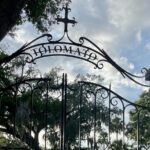
Then the tour shifts into an emotionally calmer, reflective mode at the Huguenot Cemetery and Tolomato Cemetery. Cemeteries aren’t only about names and dates. They’re about who was here, who stayed, and how different communities formed within the same city.
The Huguenot Cemetery stop is presented as a way to understand diverse early settlers. The Tolomato Cemetery, dating back to the colonial era, adds another layer and helps you see St. Augustine not as a single cultural line, but as overlapping identities.
A practical note: these are tranquil outdoor stops, so keep your pace slow and listen properly. The audio here is doing tone-setting work. If you rush through, you miss the reason these places are on a tour titled Twisted History.
Faith stops: Cathedral Basilica, St. Photios, and Father Pedro Camps
One of the strengths of this walk is how it keeps returning to faith—both as architecture and as community memory.
You’ll pass by St. Photios Greek Orthodox National Shrine, then you reach the Cathedral Basilica of St. Augustine. The cathedral stop is described as a symbol of faith and resilience, and the audio framing helps you see why this kind of landmark can carry centuries of meaning.
Nearby, there’s also a memorial stop for Father Pedro Camps. I like adding memorials because they connect a religious institution to actual people, not just style and stonework. It helps the walk feel personal instead of purely historical.
Monson Motor Lodge Pool to Peña-Peck: civil rights and cultural institutions
The tour includes the Monson Motor Lodge Pool, now a Civil Rights Monument. This is a powerful shift, because it reminds you that St. Augustine’s history isn’t frozen in Spanish-era defenses. It continues into modern struggles over equality and recognition.
Then you pass by the Peña-Peck House and Woman’s Exchange of St Augustine, which highlights preservation and cultural traditions through institutions that keep local stories alive. This pairing—civil rights marker followed by a cultural preservation stop—makes the “history keeps going” theme land clearly.
If you care about how the past gets remembered, these middle-to-late stops deliver. They aren’t only about what happened. They’re about what the city chooses to preserve and teach.
Villa Zorayda, Ponce de Leon Hall, Casa Monica: architecture with a point
Later in the walk, you shift into a visual tour of changing styles and changing fortunes.
You’ll pass by Villa Zorayda Museum, described as an architectural gem inspired by Moorish heritage from southern Spain. You’ll also pass Ponce de Leon Hall, linked to the Ponce de Leon Hotel and Henry Flagler’s Gilded Age vision. Finally, you’ll pass Casa Monica Resort & Spa (the tour notes you won’t visit the spa as part of the route).
Here’s what I like about this segment: it shows how St. Augustine marketed itself to new eras. After survival and community memory, you get to see how the city presented itself when money, tourism, and grand hotels became part of the story.
Heads-up: because these are mainly pass-by moments, don’t expect a deep architectural lecture from inside rooms. You’ll get the context through the audio, then you can choose whether you want to return independently if something catches your eye.
Finishing at Plaza de la Constitución on St. George Street
You end the walk at Plaza de la Constitución, in front of the statue of Don Juan Ponce de Leon. Ending in a public square is a smart move, because it lets the stories feel communal. You’re not leaving history behind; you’re stepping into where city life continues.
Before the end, you’ll spend time on St. George Street, with shops and attractions along the way. The tour uses that stretch to keep you moving while the audio ties older events to the present-day streetscape.
If you want a simple next step after the tour, plan to browse slowly near the plaza for a while. Even if you don’t go in anywhere, just staying in the area a bit helps the walk’s timeline feel complete.
Is it worth $38 for an audio walk with lifetime access?
For many St. Augustine visitors, the biggest value is not adding another ticketed entry. At $38, you’re buying structured storytelling for about 2 hours 30 minutes, with offline audio and maps and lifetime access. That means you can use it on your first pass, then replay it later when you have more time to linger at specific places.
This is a good pick if you:
- Want a route with clear stops and themes
- Like learning at your pace instead of following a group
- Prefer offline reliability while walking
- Are traveling with kids or mixed interests and need content that moves quickly from one topic to the next
Skip it (or plan differently) if:
- You don’t want to manage your own phone and headphones
- You prefer a fully guided, in-person conversation at every site
- You expect every landmark to come with paid interior access
FAQ
Do I need headphones for this audio tour?
Yes. The tour data says the smartphone and headphones are not included, so you’ll need to bring your own.
Where does the tour start?
The listed start point is A Ghostly Encounter at 12 St George St, St. Augustine, FL 32084, with the first story stop at the Old City Gates area on St. George St.
Where does the tour end?
The tour ends at Plaza de la Constitución on St. George St, in front of the statue of Don Juan Ponce de Leon.
How long is the tour?
The duration is listed as about 2 hours 30 minutes.
What’s the price?
The price is listed as $38.
Is it self-guided?
Yes. It’s a self-guided GPS tour with mobile audio.
Is the audio available offline?
Yes. You get offline access to audio, maps, and geodata.
Does the tour work on a phone without changing settings after download?
It’s designed for offline use through the app, which is available for Android and iOS. You’ll still want a charged phone for the full walking time.
Can I replay the tour later?
Yes. The tour offers lifetime access to the English version on your phone, including access before your booking date and after it.
Is the tour private?
Yes. It’s listed as a private tour/activity, meaning only your group participates.
Can I get a refund if I cancel?
No. The experience is non-refundable and cannot be changed for any reason, based on the tour’s policy details provided.
Should you want one more layer of help—like a suggested order if you want to add Fort time on your own—tell me what day/time you’re going and whether you’ll have a spare museum budget.