REVIEW · UTAH
Zion National Park Self-Guided Driving & Shuttling Tour
Book on Viator →Operated by Travel with Action · Bookable on Viator
Zion, with your own tempo. This self-guided Zion National Park driving and shuttling route uses location-triggered storytelling with offline maps and hands-free audio, so you can stop for photos or keep rolling without waiting on a group. I love that you get a route built for quick park moments that still feels like a real tour. The trade-off is you’re relying on your phone setup: if you don’t download properly on strong Wi‑Fi first, or if the app doesn’t resume cleanly after you pause, you might lose your place.
You’ll like the flexibility: this works while you’re driving, riding a shuttle, or even cycling parts of Zion. It’s designed around a self-paced flow, with most stops feeling like short “pull over and learn” breaks rather than a grind.
One big planning reality: for many dates (March–November), private cars aren’t allowed on Zion’s valley floor Scenic Drive, so you’ll need to use the park shuttle and listen with headphones. Also, some of Zion’s headline hikes have permit rules, so check what you want to do before you go.
In This Review
- Key things to know before you go
- Price and value: $16.99 per group, not per person
- Before you hit the road: offline download, phone pairing, and permits
- From Zion Canyon Visitor Center to Canyon Junction Bridge: where the tour begins
- Pa’rus Trail and Watchman Trail: easy walks, big payoff
- Court of the Patriarchs: iconic peaks and the park’s visitor story
- Emerald Pools and Angel’s Landing: water, elevation, and permit reality
- Grotto Picnic Area to Weeping Rock: short stops that feel worth it
- Big Bend Viewpoint, Temple of Sinawava, and East Temple: the Narrows corridor vibe
- Zion Scenic Drive viewpoints: learning why people call this place Zion
- Zion–Mount Carmel Tunnel and Canyon Overlook: easy timing, strict rules
- Altar of Sacrifice and Checkerboard Mesa: reading shapes and stories
- Best ways to use this tour: car, shuttle, or a bike-friendly mindset
- Common app issues I’d plan for (based on real-use patterns)
- Who this tour fits best
- FAQ
- Do I need a park pass for Zion?
- Can I use this audio tour offline?
- How long is the tour?
- Where do I start and end?
- Does a guide meet me at the start?
- Will it work if private vehicles can’t use the valley floor Scenic Drive?
- Are there places on the route that require permits?
- Should you book this Zion Self-Guided Driving and Shuttling Tour?
Key things to know before you go
- Offline-first touring: download the tour on strong Wi‑Fi/cellular so narration keeps working in signal-poor canyons
- About 25 miles, 30+ stories: built for a practical 1–2 hour loop, with optional extra walking time
- Location-triggered audio: the stories play based on where you are, so you don’t need to babysit the screen
- One purchase per group (up to 4): good value if you’re traveling together in a single car
- Shuttle-compatible: works while you’re on the Zion shuttle, but phone-to-audio syncing can be fiddly if you’re using earbuds
- Start at Zion Canyon Visitor Center: no meet-up. You begin by entering the first story point yourself
Price and value: $16.99 per group, not per person
At $16.99 per group (up to 4 people), this tour pricing makes sense if you’re traveling with a small crew. Paying per car rather than per person is what turns an audio tour into a real bargain—especially in a place where you’re already paying for entry, parking (or shuttle access), and food.
The tour itself is short enough to fit into a day, but it’s not so short that you feel like you just skimmed the park. With 30+ audio stories along a route over 25 miles long, you’ll spend your time on what matters: scenic viewpoints and the exact trailheads/pull-offs that draw you in.
You can also read our reviews of more tours and experiences in Utah.

Before you hit the road: offline download, phone pairing, and permits
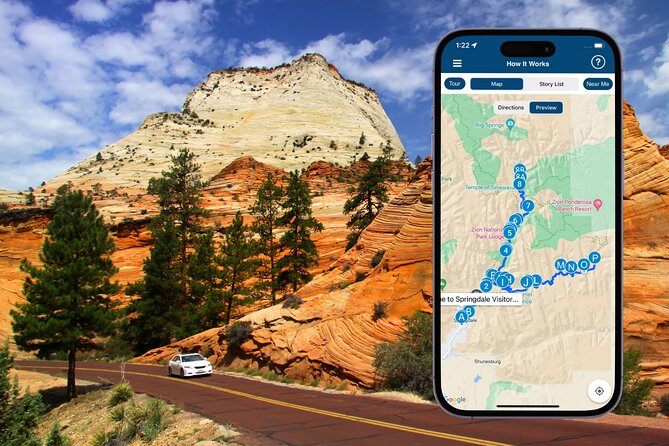
This is a smartphone-first experience. After booking, you get a password and setup instructions by email and text, and you’re meant to use the separate Action’s Tour Guide App. The key line: you must download the tour while you’re on strong Wi‑Fi/cellular. Once it’s downloaded, it works offline—important in Zion, where cell service is spotty.
On top of that, Zion has real operational rules. From March to November, private vehicles aren’t allowed on the valley floor Scenic Drive, so you’ll ride the park shuttle there. Headphones help a lot. Also, Angels Landing requires a permit via lottery, and some popular hikes like the Narrows and the Subway also require permits. This audio tour can still guide you to lookouts and trail starts, but it won’t replace permit access for the hikes themselves.
From Zion Canyon Visitor Center to Canyon Junction Bridge: where the tour begins
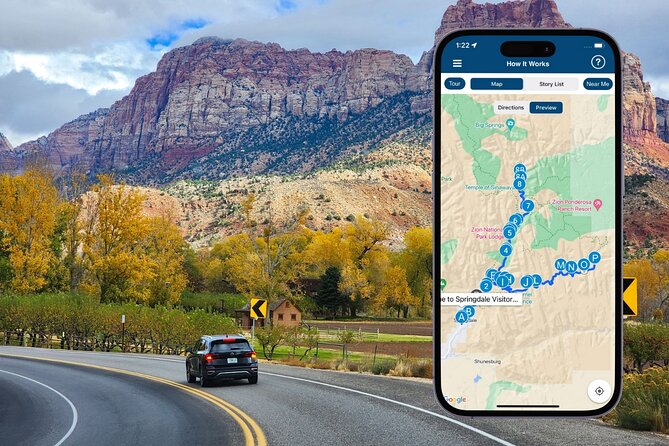
You start and end at the Zion Canyon Visitor Center (1 Zion Park Blvd, Springdale). No ranger meets you with a clipboard. You just open the app at the starting point, and the audio begins automatically at the first story.
Canyon Junction Bridge is the first “pay attention” moment. Come back later if you can—this is a strong sunset spot. If you can find parking, stop for views toward the Watchman and surrounding mountains. The audio also cues you to the big fork: you’ll turn left if you want to follow the Scenic Road direction toward places like the Narrows, Angel’s Landing, and Emerald Pools.
Pa’rus Trail and Watchman Trail: easy walks, big payoff
Right around this area, the tour points you to the Pa’rus Trail (path on the left just before the bridge) and the Watchman Trail (another path just after the bridge). These are popular options if you want movement without committing to the park’s most intense hikes.
Also, early in this drive you get the “what you’re really standing in” stories. You’ll hear about Ice Age hunters, then later settlement around 300 BCE, including farming and the Fremont people’s drought- and cold-resistant corn that could grow at higher altitudes. It’s not just trivia. It helps you read the park like a landscape shaped by people and climate, not just a set of photo backdrops.
Court of the Patriarchs: iconic peaks and the park’s visitor story
The Court of the Patriarchs is the classic three-mountain lineup. The narration explains the story behind the name: a local Christian minister labeled them after Abraham, Isaac, and Jacob from the Bible.
Then the tone shifts from geology to management. You’ll hear how the park service balances protecting a natural place with handling huge demand—over 4 million visitors each year. The tour also touches on the early 1900s when lack of awareness meant lack of revenue, which led to development. It’s a useful reminder: Zion’s current feel didn’t happen by accident.
Emerald Pools and Angel’s Landing: water, elevation, and permit reality

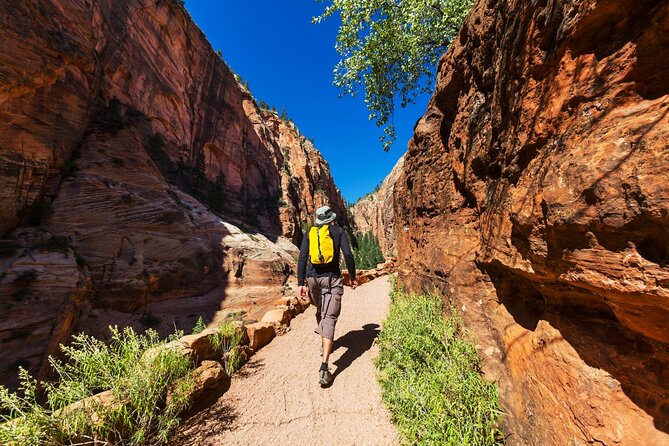
This is where practical advice starts getting loud. At Emerald Pools, the tour keeps pushing two essentials: bring lots of water and don’t overtax yourself. Zion heat can turn a “quick walk” into a health problem fast, and elevation adds extra effort.
You’ll also hear this is a place where waterfalls and a hanging garden are part of the experience. That matters because it changes how you pace yourself. If you’re thirsty before you reach the pools, you’ll want to turn around early. If you manage your water and energy, you’ll enjoy the payoff.
Then comes Angel’s Landing. The narration frames it as a once-in-a-lifetime hike for many people—breathtaking views and a serious adrenaline rush. Just be honest with your planning: this is not a casual “stretch legs” outing. If you’re targeting Angels Landing, budget time and check permit requirements before you go, since the lottery system is part of the deal.
Grotto Picnic Area to Weeping Rock: short stops that feel worth it

If you want quick breaks without giving up on the scenery, these stops deliver.
At the Grotto Picnic Area, the audio points out the basics that help you reset: picnic tables, restrooms, and fire grates. But the real reason to stop here is nearby trail scenery. It’s the kind of place where you can eat something simple and then get right back to walking.
Next, the Weeping Rock Trail is one of those Zion moments that changes your focus from looking outward to noticing the details of water. You’ll hear about the continuous stream trickling down its face from a stream far above. It’s short. It’s memorable. And it’s a nice contrast to the drier, hotter parts of the canyon drive.
Big Bend Viewpoint, Temple of Sinawava, and East Temple: the Narrows corridor vibe

At Big Bend Viewpoint, the audio cues you to major visual anchors: the Great White Throne and the towering peak of Angel’s Landing. This is a great “let your brain catch up” stop. You see the big shapes, then the rest of the day clicks into place.
The tour then guides you toward the Temple of Sinawava Trail area. To reach the Narrows, you follow the paved Riverwalk to the end. The narration calls it flat and easy, which is exactly what you want if you’re saving your legs for wading later. Expect greenery and those towering canyon walls that feel like natural skyscrapers.
Then you get East Temple, described as a towering summit around 1,700 feet. One of the better parts of the narration here is the clue about color: the cliff isn’t one solid shade. Different rock layers from different earth-history eras create that pattern. If you look at the cliffs once the audio explains that, you start seeing the park like a timeline.
Zion Scenic Drive viewpoints: learning why people call this place Zion

The tour includes multiple scenic pull-offs. At the second Zion scenic drive viewpoint, you’ll reach a hairpin turn with a pull-off where the views can be excellent if there’s room. While you’re stopped, the audio explains why Mormons called this place Zion. That detail may not change the view, but it changes how you understand the people who shaped regional names, not just the rocks.
Zion–Mount Carmel Tunnel and Canyon Overlook: easy timing, strict rules
Zion’s Mount Carmel Tunnel is where you’ll want your headlights ready. The narration specifically reminds you that stopping inside the tunnel is strictly prohibited. That’s important because it prevents a common mistake: trying to squeeze photos where you shouldn’t.
Right after that, Canyon Overlook Trail is positioned as one of East Zion’s best short walks. It’s described as short and easy, with spectacular views from the top. This stop is great if you want movement but don’t want to gamble on a long hike. You also get a nice “reward to effort” balance here.
Altar of Sacrifice and Checkerboard Mesa: reading shapes and stories
At the Altar of Sacrifice, the tour highlights rusty red streaks that early Mormon pioneers interpreted as blood. You’ll get a less gruesome explanation in the narration, which helps you see the same rock features through a scientific lens instead of a legend.
Then comes Checkerboard Mesa. The audio gets you looking for the grid-like criss-cross lines. The name comes from that checkerboard look as you get closer. This is the kind of stop where you might think, sure, I’ll glance at it, and then two minutes later you’re staring because the pattern actually becomes clear.
Finally, the tour wraps at the East Entrance Ranger Station, giving you a sense of closure: you’ve heard about formation, plus the people who lived here over time. If you’re heading onward to other Southwest parks, this also sets you up to keep noticing how naming, geology, and human history overlap across the region.
Best ways to use this tour: car, shuttle, or a bike-friendly mindset
This route is designed for different ways of getting around. Driving gives you the most control: you can stop on your own schedule and use Bluetooth/USB/AUX or your car’s setup to keep audio clear. If you’re using a phone in the car, the tour’s app is compatible with Apple CarPlay, and Android Auto support is on the way.
If you’re taking the Zion shuttle part of the day, you’ll still hear the stories. You’ll just want to pay attention to audio setup. One review pointed out some awkward syncing when switching between shuttle and phone audio, especially when trying to use two pairs of earbuds at once. My practical advice: if you’re traveling as a pair and you care about sound quality, use one of these simple setups:
- car speakers or one connected audio device for the phone
- or one set of earbuds and one speaker, if you can both hear well
Common app issues I’d plan for (based on real-use patterns)
This tour’s biggest strength is offline reliability after download. The common failures are mostly avoidable.
First: app sync can be slow if you restart. A few people described audio repeating sections or feeling out of sync after they stopped and restarted. The fix is boring but effective: don’t kill the app if you can avoid it, and when you resume, choose the option that continues where you left off (not start over). If you lose the location trigger, give it a minute while you follow the route at a normal speed limit pace.
Second: wrong assumptions about cell service. Yes, cell signal can be bad inside the park. But several users still had the tour work fine once downloaded. So I’d treat cell service as backup only.
Third: earbuds and Bluetooth multipairing. If you’re trying to connect two earbuds to one phone, test at home first. If it’s annoying once you’re in a canyon, you’ll lose more time than you saved.
Fourth: closures can cut the route. At least one person found that park rangers had closed off parts of the scenic drive, which limited the amount of narration they could access. Check Zion’s day-of updates and accept that your exact route might be adjusted by operations.
Who this tour fits best
You’ll enjoy this most if you like:
- stopping often for views and quick walks
- learning while you drive instead of joining a full guided group
- having something that keeps working even when signal is weak
It’s also a good fit if your hiking ambitions are mixed. You can do the easy trails, watch the scenery from pull-offs, and still aim for one bigger hike if permits and energy line up.
If you hate phone setup, or you need perfect audio without any troubleshooting, this might feel like work. In those cases, a ranger-led or fully guided option could match your comfort level better.
FAQ
Do I need a park pass for Zion?
Park passes are not included. You’ll need to have your own entry/park pass for Zion National Park.
Can I use this audio tour offline?
Yes. The tour works offline after you download it while you’re on strong Wi‑Fi/cellular.
How long is the tour?
It’s designed to take about 1 to 2 hours to complete, based on the full route with its narrated stops.
Where do I start and end?
You start and end at the Zion Canyon Visitor Center.
Does a guide meet me at the start?
No. This is self-guided. You start the app at the first story point and follow the audio cues.
Will it work if private vehicles can’t use the valley floor Scenic Drive?
For March to November, private vehicles aren’t allowed on the valley floor Scenic Drive, so you’ll use the Zion shuttle there. The tour is described as usable while shuttling.
Are there places on the route that require permits?
Yes. Angels Landing requires a permit via lottery. Some popular hikes such as the Narrows and the Subway also require permits.
Should you book this Zion Self-Guided Driving and Shuttling Tour?
I’d book it if you want a low-stress, high-view-value way to experience Zion without coordinating a group. The offline design and hands-free audio are exactly what you want in signal-poor canyons, and the price works well for up to four people traveling together.
I’d think twice if you’re likely to arrive without downloading on strong Wi‑Fi/cellular, or if you’re the type who hates any app syncing drama. Also, if your main goal is doing Angels Landing, Narrows, or the Subway, make sure you handle permits first, since this tour can guide you, but it won’t replace access to permit-required hikes.