REVIEW · WASHINGTON DC
Washington DC Monuments self-guided walking tour & scavenger hunt
Book on Viator →Operated by Tourist Scavenger Hunt · Bookable on Viator
A walking game makes the National Mall feel brand-new. This self-guided route strings together major monuments from the Ellipse to the Washington Monument, using a phone scavenger hunt to turn sightseeing into a puzzle. I like that it keeps you moving at your own pace while still steering you toward big landmarks and museums.
I also like the variety of stops packed into about 3 hours, including White House area views, the Vietnam memorials, and the Lincoln-Jefferson stretch. It is a fun fit for groups and families who want to learn without sitting through a lecture.
One thing to consider: the hunt depends on your phone, and internet access is required. If you hate reading clues on-screen or you get frustrated by challenge questions, this style may not feel “interactive” enough for you.
In This Review
- Key points before you go
- The Ellipse-to-Washington-Monument idea: sightseeing as a scavenger hunt
- Price and value for a group up to six
- What 3 hours really feels like on the National Mall
- Starting at the Ellipse Visitor Pavilion: your first mission
- The White House area and Constitution Hall: views plus questions
- Art Museum of the Americas and Constitution Gardens: the “museum-meets-memorial” stretch
- Vietnam Women’s Memorial and Vietnam Veterans Memorial: where the clues hit harder
- Lincoln Memorial and Korean War Veterans Memorial: a big landmark day without feeling endless
- Jefferson Memorial and National World War II Memorial: connecting the dots
- National Christmas Tree season, film clues, and the fun extras
- The biggest potential problem: reading on your phone (and app quirks)
- What to bring so you don’t lose the hunt
- Who this tour is best for (and who should skip it)
- Should you book this monuments scavenger hunt?
- FAQ
- How long is the Washington DC Monuments self-guided walking tour & scavenger hunt?
- Where does the tour start and end?
- How much does it cost?
- What do I need to complete the scavenger hunt?
- How many challenges are included?
- Is the tour private?
- Can I cancel and get a refund?
Key points before you go

- Phone-based scavenger hunt with 20+ challenges that guide where you look next
- West-half National Mall route that hits the Ellipse, multiple war memorials, and ends at Washington Monument
- Great for pacing your own day, since you can slow down at stops that grab you
- Movie location clues add a fun layer without requiring a tour guide voice
- Be ready for tricky questions and occasional app quirks, based on past experiences
The Ellipse-to-Washington-Monument idea: sightseeing as a scavenger hunt
This is not a traditional guided tour where someone talks at you the whole time. Instead, you follow a set path across the west side of the National Mall and answer challenges on your mobile phone. Think of it as a guided walk where the guidance is in the form of puzzles and prompts.
That approach matters because Washington, DC’s monument layout can feel repetitive if you treat it like a checklist. A game helps you notice details—angles, inscriptions, surroundings—and it nudges you to slow down at spots you might otherwise rush past.
You’ll also cover a lot of ground in a short window. The route is designed to connect major memorials and nearby museum areas, so you get an “orientation sweep” of the National Mall without needing to plan a complicated subway-and-walk itinerary.
You can also read our reviews of more tours and experiences in Washington DC.


Price and value for a group up to six
At $44.85 per group (up to 6 people), the price is actually easier to think about than a per-person tour. If you go with friends or family, you can spread the cost across multiple people and still keep the experience private.
For me, the best value here is not just the route—it is the structure. You get a self-guided walking tour plus a scavenger hunt with 20+ challenges. You are essentially paying for convenience and direction: the route and the phone game do the heavy lifting.
If you are traveling solo or as a couple, you will pay the full group price anyway. In that case, it is still worth it if you know you will engage with phone puzzles and you like walking.
What 3 hours really feels like on the National Mall
About 3 hours is a solid target for monument hopping, but the real variable is pace and how long you pause for each clue. The National Mall is mostly flat, yet it is long. You’ll be stopping frequently, which can make the walk feel longer than the clock.
A helpful way to picture it: you are not doing a speed run from one icon to the next. You are doing a series of mini-missions. Some stops will be quick if the clue clicks. Others can take longer if the question is challenging or you need to re-check what you’re looking at.
Plan your timing with DC crowds in mind. If you go in spring or fall, you are more likely to enjoy the walking without peak heat or harsh cold. (And if you do hit crowds, the scavenger format helps you keep moving with purpose instead of getting stuck in sightseeing paralysis.)
Starting at the Ellipse Visitor Pavilion: your first mission
Your tour begins at the Ellipse Visitor Pavilion at 15th and E St NW. Starting there is smart because it sets you up near the White House corridor and a major open space right away.
At the Ellipse, you will learn what the Ellipse is and what its purpose is—and you will also see the national Christmas tree when it is in season. You also start solving challenges immediately, so you are not left wandering until the game “gets going.”
This first stop is where you’ll decide how you feel about the experience style. If you like prompt-and-answer games and you are comfortable reading on your phone outdoors, you’ll likely sail through the early points. If you prefer a more human-guided flow, you may feel impatient with the screen time early on.
The White House area and Constitution Hall: views plus questions

Next comes the White House stop, a classic DC anchor. You’ll get the big-sightseeing moment, but the hunt framing pushes you to look for specific details tied to challenges.
From there you head toward Constitution Hall. The tour’s structure pairs sightseeing with historical and architectural notes delivered through the phone. That combination can be satisfying: you stand in front of the structure, then you answer a question that forces you to connect what you see with what you just read.
The main practical drawback here is also simple: you are relying on your device. If your phone is slow, your battery is low, or your connection is spotty, you can lose the momentum of the game. The fix is basic preparedness, which I cover later.
Art Museum of the Americas and Constitution Gardens: the “museum-meets-memorial” stretch

As you move along, you reach the Art Museum of The Americas and then Constitution Gardens. These stops help balance the day, because not every stop is a memorial wall. You get a more park-and-building mix, which can break up the intensity of the war memorial portion.
What I like about these stops in this kind of self-guided hunt is that they offer visual variety. In a three-hour window, variety keeps your brain engaged. The game keeps you from turning this area into just more photos and more walking.
If you enjoy people-watching and open-space views, Constitution Gardens can be a welcome pause zone. If you dislike reading while you walk, you may find these stops feel slower than expected because the phone prompts you to absorb information.
Vietnam Women’s Memorial and Vietnam Veterans Memorial: where the clues hit harder
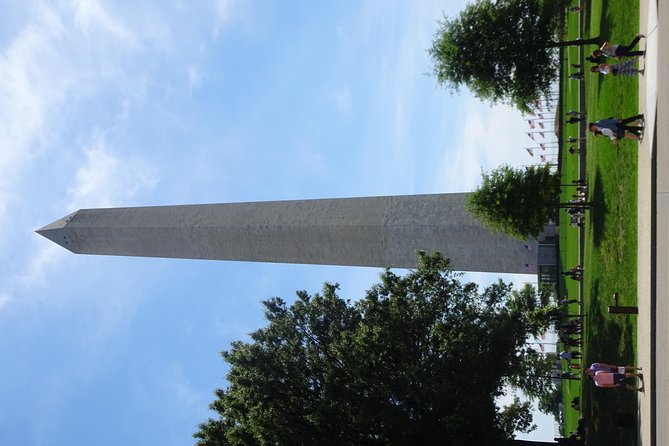
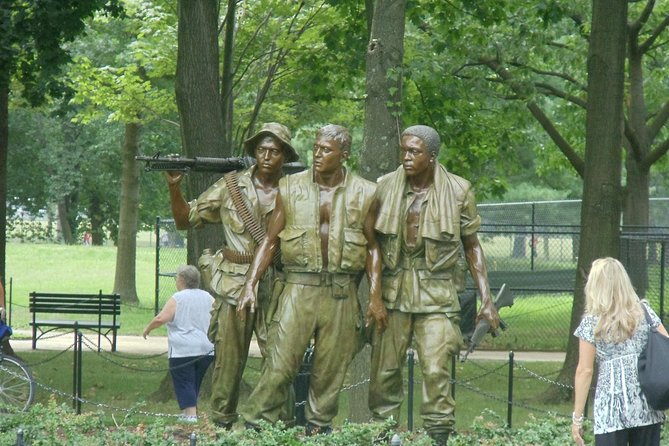
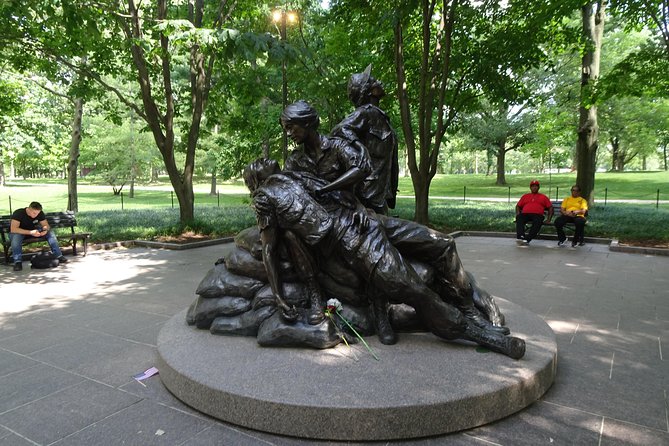
Then the route turns into the memorial stretch, starting with the Vietnam Women’s Memorial and Vietnam Veterans Memorial. This is where the scavenger hunt style can feel most meaningful, because you are not just looking—you’re processing.
Even when you do not agree with a question right away, the game nudges you to take time on the details the designers want you to notice. That “forced pause” is one of the best parts of the scavenger approach. Without it, it’s easy to breeze past memorials and just move on to the next big landmark.
One heads-up from real-world experience with this style: the questions can be tough. If you hit a challenge you cannot solve quickly, give yourself a minute to re-check the clue context rather than rushing on and missing the chance to learn something you’d otherwise skip.
Lincoln Memorial and Korean War Veterans Memorial: a big landmark day without feeling endless
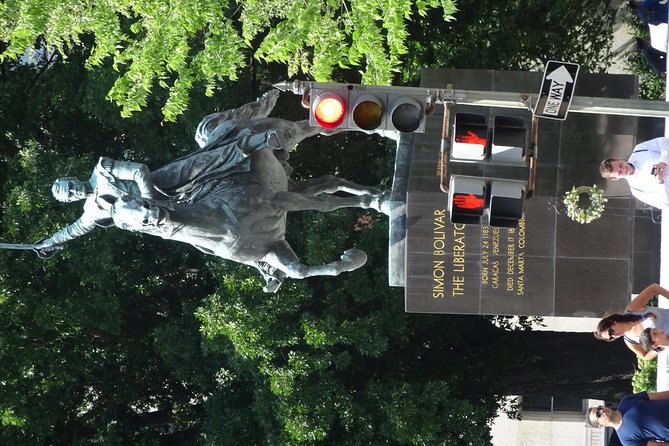
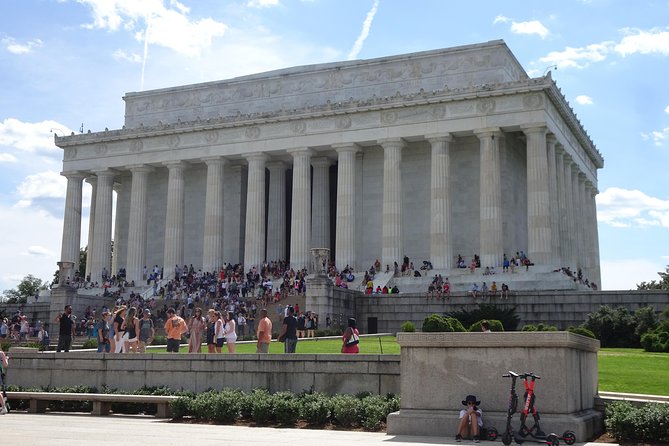
After the Vietnam memorials, you reach the Lincoln Memorial. This is a natural “anchor moment” in the route—people come here for a reason. With this tour, you experience it with mission-based breaks instead of a long guided talk.
Next is the Korean War Veterans Memorial. In practical terms, this pairing works well because it keeps you from settling into only one type of sightseeing. One stop is a massive focal point; the other is a more targeted memorial experience that still fits the same game flow.
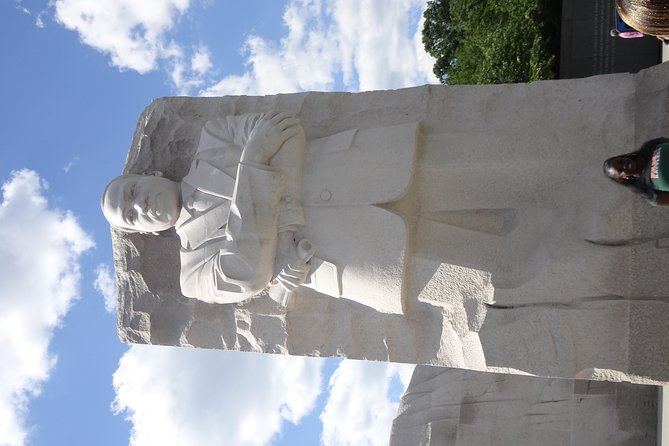
One review highlight was the MLK Memorial being a standout moment, so if that area falls along your path on the day you play, treat it like a bonus. In any case, the general takeaway is that one or two stops can really land emotionally, even when you are chasing answers on a screen.
Jefferson Memorial and National World War II Memorial: connecting the dots
Next up is the Jefferson Memorial, followed by the National World War II Memorial. This part of the route can feel especially “DC,” since you get both the classic architecture and the memorial-focused storytelling.
In a normal sightseeing day, war memorial clusters can blend together. The scavenger hunt format helps prevent that by giving each location its own set of prompts. You end up with separate moments rather than one long, identical walk.
This is also where you should watch for fatigue. Not because the walk is extreme, but because repeating walking + reading for several stops in a row can wear you down. If you start flagging, slow down anyway. The game only works if you’re there to look at what the clue is pointing to.
National Christmas Tree season, film clues, and the fun extras
A couple of details make this tour feel more playful than a standard monuments walk. The Ellipse stop can include the national Christmas tree (seasonal), and you’ll have clue prompts tied to movie film locations—four spots tied to some of your favorite movies.
You do not need to be a movie superfan to enjoy this. It is mostly there to add a second layer of interest: you see familiar-looking spots, then you get the “why this scene exists here” feeling through the phone clues.
If you like the mix of pop culture and place-based facts, these extras are a big reason to choose this format over a plain walking map.
The biggest potential problem: reading on your phone (and app quirks)
This is a scavenger hunt, so you should expect a lot of screen reading. If you want real-time interaction with a person—someone to explain, guide, and adjust—that is not what this is built for.
One group quit early because they felt the clues turned into constant phone reading with little real interaction. Another group enjoyed it, but found the questions challenging. A couple of people also flagged minor system issues where correct answers were marked wrong.
So here’s my practical advice: go in with patience. If you need to, move forward to the next clue rather than getting stuck on one question for too long. And make sure your battery and connection are strong enough that you can keep playing.
What to bring so you don’t lose the hunt
The tour requires internet access to complete the activity, and WiFi is not included. That means you should treat cellular data and phone charging as part of your planning, not an afterthought.
Bring:
- A smartphone with enough battery for a few hours of map prompts and question screens
- A reliable data plan (or a strong cellular signal where you’ll be walking)
- Comfortable walking shoes—this is a monument circuit
Also, if your group includes kids or people who hate reading outdoors, consider doing it as a team. One person reads, another person looks, everyone guesses. It keeps the game moving and avoids the “everybody staring at one screen” problem.
Who this tour is best for (and who should skip it)
I think this works best for:
- Adventurous walkers who want structure without a rigid group schedule
- Families looking for a way to keep kids engaged while still seeing major DC landmarks
- Groups up to six who want a private, self-guided activity with plenty of stops
I would skip it if:
- You strongly dislike phone-based scavenger games
- You need frequent human explanation rather than on-screen clues
- You have unreliable data coverage or low phone battery habits
If you’re the type who likes learning by doing—looking, answering, moving—you’ll probably enjoy it.
Should you book this monuments scavenger hunt?
Book it if you want a fun, game-style way to explore the west half of the National Mall, especially if you’re traveling with a group and you can keep your phone powered and connected. The value is strongest when up to six people share the group price and enjoy solving challenges together.
Skip it if you want a classic guided storytelling experience. This is more about your attention and your phone than about a guide talking you through every stop. And remember: the internet requirement is real—if your connection is shaky, your hunt can stall.
If you’re okay with that trade-off, you’re likely to come away feeling like you saw the monuments and did something with them.
FAQ
How long is the Washington DC Monuments self-guided walking tour & scavenger hunt?
It takes about 3 hours.
Where does the tour start and end?
It starts at the Ellipse Visitor Pavilion at 15th and E St NW, Washington, DC 20500, USA, and it ends back at the same meeting point.
How much does it cost?
It costs $44.85 per group (up to 6 people).
What do I need to complete the scavenger hunt?
You need a mobile phone and internet access is required to complete the activity.
How many challenges are included?
The tour includes 20+ challenges to solve.
Is the tour private?
Yes. It is a private tour/activity, and only your group participates.
Can I cancel and get a refund?
You can cancel up to 24 hours in advance for a full refund.