REVIEW · BRASOV
Medieval Brașov: Interactive City Game & Walking Tour
Book on Viator →Operated by Questo · Bookable on Viator
Puzzles turn Brașov into a treasure map. This interactive city game turns a normal walk into a guided-feeling mission where you follow clues, solve quick puzzles, and learn what you’re actually looking at. It’s a self-paced route (about 1 hour 50 minutes) that still feels structured, with a clear start and finish.
I like two things most: the route hits major sights without making you hunt for information, and the stops are scheduled so admission tickets are free at each listed location. I also appreciate the practical setup—your phone is the guide, and there’s 24/7 support if something goes sideways.
One possible drawback: this is phone-first and puzzle-based. If you want a long, spoken-history tour with slow explanations and zero tech fuss, you may find the game style a bit too hands-on.
In This Review
- Key Things I’d Plan Around Before You Go
- Medieval Brașov: Interactive Game Starts at Poarta Schei
- How the Questo App Turns Sightseeing Into a Mission
- Price and Value: What $5.41 Buys in Real Terms
- The Walk From Poarta Schei to Rope Street (Stops 1–3)
- Weavers Bastion and the Trade-Name Walls (Stops 4–6)
- A Catholic Church Stop for a Reset (Stop 7)
- Finish at Sergiana: The Best Kind of Ending (Stop 8)
- When to Play: Daylight Helps, Night Works Too
- Getting the Most From a Puzzle Walk (Practical Tips)
- Who This Experience Fits Best (and Who Might Not Love It)
- Should You Book Medieval Brașov: Interactive City Game & Walking Tour?
- FAQ
- How do I start the game?
- What does the experience include?
- Is there a physical tour guide?
- How long does it take?
- Where does the route end?
- Is this private or shared?
- Can I get a full refund if I cancel?
Key Things I’d Plan Around Before You Go
- Quick puzzle steps keep you moving, so you don’t end up staring at buildings with no clue what matters.
- Free entry at the planned stops means you spend money on the experience, not on tickets.
- Bastions with trade names (weavers, undertakers, and more) make the medieval walls feel personal.
- Strada Sforii and the Rope Street Museum give you context for one of Brașov’s most distinctive lanes.
- Private-by-your-group format lets you play at your own pace without other teams crowding your photos.
- Questo app + 24/7 support reduces stress if your phone battery, data, or timing gets messy.
Medieval Brașov: Interactive Game Starts at Poarta Schei
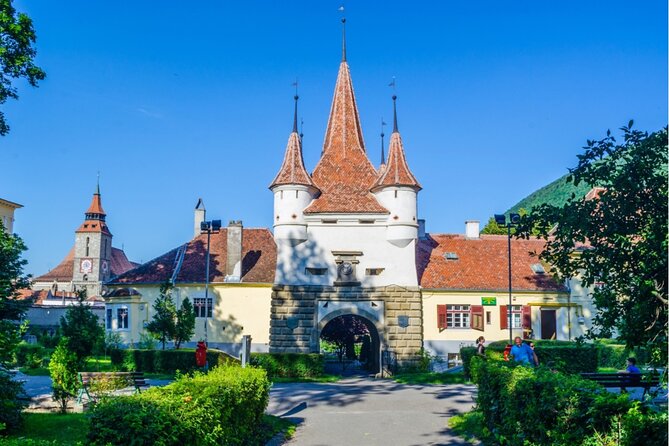
Brașov can feel like a postcard city—until you start walking and suddenly it’s all textures, towers, walls, and street names. This experience is built to help you notice those details fast. You begin right at Strada Poarta Schei 4, and instead of meeting a guide at a corner and listening to a monologue, you start by following a clue.
From there, the game asks you to solve a puzzle. That’s the whole trick: it gets your brain working while your legs do the easy part. You arrive at Poarta Schei 4, and the game gives you indications for what comes next, plus explanation for what you’ve just found.
That approach changes how you experience the old town. Rather than asking, What am I looking at? you’ll start thinking, Why is this here, and what did people do here? It’s a small shift, but it makes the route feel like you’re learning by discovery, not by instruction.
You can also read our reviews of more tours and experiences in Brasov.
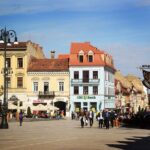
How the Questo App Turns Sightseeing Into a Mission
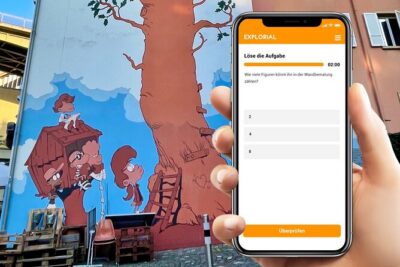
You’ll use the Questo app on your phone as your main guide. Your ticket is mobile, and the route is designed around stopping points where the game prompts you, then moves you on. The experience is offered in English, so you don’t need to translate street signs to understand what matters.
Practically, this means you’ll want to plan like a tech user, not like a museum visitor. Charge your phone. Bring a small power bank if you’re even mildly unsure. Also check your data situation before you start. The game is not described as fully offline, so it’s smart to assume you’ll need connectivity for smooth prompts and loading.
The best part is that you still get the structure you’d normally rely on a guide for. You’re not wandering blindly. At each stop, the game gives you indications on where to go next and shares what you should notice right there—then you move on.
And if you hit a snag, you have 24/7 customer support. That matters more than it sounds. When you’re walking, time gets lost fast—one wrong turn can turn a fun plan into a scramble. Support helps keep the day calm.
Price and Value: What $5.41 Buys in Real Terms
At $5.41 per person, you’re not paying for a classic guided tour with a dedicated person shepherding you mile by mile. You’re paying for access to the city exploration game and the app-based route experience.
That can be a great deal—especially in a city where you want to spend your time walking anyway. For this price, you get:
- A route with multiple historic stops
- A puzzle-and-clue format that helps you understand what you’re seeing
- Free admission at the planned locations
- The option to play privately with just your group
If you’re the type who likes to read, look closely, and figure things out, you’ll likely feel like you got more than you paid for. If you’re the type who wants someone to answer every question on the spot, this may feel a little minimalist—though the support system and in-game explanations are meant to cover that gap.
The Walk From Poarta Schei to Rope Street (Stops 1–3)
The first leg sets the tone: quick, puzzle-driven learning at historic landmarks. Your first stop is Poarta Schei 4. You reach it by following a clue and solving a puzzle, and when you get there, the game tells you what to do next and what you’ve discovered.
This is a good start point because it gets you grounded immediately. Instead of jumping straight into the biggest landmark, you build context step by step. And since entry is listed as free for this stop, you don’t have to budget time for ticket lines or figuring out where to go.
Your second stop is Rope Street, Strada Sforii. This is the moment where the route stops feeling like abstract history and starts feeling like real urban Brașov—tight streets, steep angles, and a place that locals actually use. Again, you arrive by following a clue, then the game guides your attention to what’s notable.
The third stop is Rope Street Museum. If Strada Sforii is where you see the lane in the street-level world, the museum stop is where you get a bit more framing. The listed admission is free, so you’re not forced to pick between learning and staying in motion.
One small consideration: Rope Street areas can be busy, and narrow streets mean you might want to time your game steps so you’re not trying to solve puzzles while shoulder-to-shoulder. If you’re sensitive to crowds, pause for a moment, then continue when you have a little space.
Weavers Bastion and the Trade-Name Walls (Stops 4–6)
Now you reach one of the smartest parts of this route: the bastions. Your fourth stop is Weavers Bastion (Bastionul Tesatorilor). This is where the medieval walls stop being just stone and start being connected to real people. A trade name like weavers makes the wall feel tied to a workforce, not just military defense.
Your fifth stop is Undertakers Bastion. That’s a striking name, and it’s the kind of detail that makes the route memorable even after you leave the city. The game doesn’t just point you toward the structure—it’s designed to help you interpret what you’re seeing.
Your sixth stop is Bastionul Postăvarilor. Another trade association here. Together, these bastions help you understand Brașov’s medieval organization: different groups involved in the city’s life and defense, with strong links between everyday work and how a city protected itself.
Why this part works for you: a lot of walking tours hit big monuments. This route uses the walls and bastions to give you a story pattern. Once you understand how the bastions are labeled and what that implies, the city stops being random. You start seeing how Brașov structured roles, neighborhoods, and responsibilities.
Drawback to keep in mind: bastions usually mean uneven ground and more walking. The route is only about 1 hour 50 minutes, but you are doing it on foot and solving puzzles along the way. If your feet tire easily, plan for short pauses between stops.
A Catholic Church Stop for a Reset (Stop 7)
At Biserica Romano-Catolică Sf. Ioan Botezătorul, the game gives you a pause from walls and fortifications. Churches are often useful on routes like this because they reset your senses—new sound, new architecture rhythm, new scale of space.
The listing shows the stop as 10 minutes, and you arrive by following a clue and puzzle. That keeps the flow consistent, but the content likely feels different. Instead of trade names and defense lines, you’re shifting toward faith, architecture, and how different communities shaped Brașov.
If you’re traveling with kids or you get bored when a walk turns into yet another landmark stop, this church stop can be a helpful breather. Even if you just take a few minutes to look calmly, you’ll come away with a clearer mental map of the city’s layers.
Finish at Sergiana: The Best Kind of Ending (Stop 8)
Your route ends at Sergiana, at Strada Mureșenilor 28. This is a nice finish because Sergiana feels like a destination area where you can stop and regroup after the puzzle loop.
Ending matters. When a walk has a defined finish, you can relax afterward and keep the rest of your day simple. You don’t have to wonder where your route technically ends or whether you’re “supposed” to keep going.
Also, having a final stop gives your brain closure. You’ll likely remember the sequence—Poarta Schei, Strada Sforii, the Rope Street Museum, then the trade bastions, and finally the church—because the game built it into a coherent arc.
When to Play: Daylight Helps, Night Works Too
One practical advantage: the experience can be done both day and night. That’s not just a comfort perk. Daytime makes it easier to spot details on stone, signage, and street geometry. Nighttime can feel more atmospheric, especially when you’re walking the tight old lanes and bastion edges.
If you’re unsure what to choose, here’s a simple rule: if you care about visual detail, play in daylight. If you want a calmer vibe and you’re comfortable with a more atmospheric walk, night can work well.
Keep in mind the stated availability window is 5:00 AM to 11:00 PM (within the overall validity dates). That gives you flexibility for timing with meals, museums, or just your own energy level.
Getting the Most From a Puzzle Walk (Practical Tips)
This isn’t a tour where you can half-listen and still get the value. You’ll do better if you treat it like a scavenger hunt with explanations built in.
Here are a few things that help:
- Pause and read prompts fully before you walk. The game moves you quickly once you solve.
- Take photos after you understand the point, not before. The route is designed to teach you what’s worth noticing.
- Don’t sprint between stops. Solving puzzles while rushing usually slows you down.
- Use the free admission stops wisely. If the game suggests extra time, don’t treat it like a checklist. Let it sink in.
Also, since it’s a private activity and only your group participates, you can choose a pace that suits you. That’s a big deal if you want time for photos, a bathroom break, or a slower puzzle tempo.
Who This Experience Fits Best (and Who Might Not Love It)
You’ll likely love this if you:
- Enjoy solving small puzzles and using your phone as a guide
- Want an organized walking route without relying on a live guide
- Prefer “learn as you go” instead of a lecture format
- Like seeing medieval Brașov from street level and wall level, not just from big-viewpoints
It may not be the best fit if you need:
- A full-time human narrator for every question
- A totally hands-off experience with no puzzle steps
- Long dwell time at each stop with deep speaking explanations
Still, the structure helps. The duration is just under two hours, so even if you decide it’s not your style, you’re not stuck for a half day.
Should You Book Medieval Brașov: Interactive City Game & Walking Tour?
I’d book it if your goal is to get your bearings fast and learn the city in a fun way without spending extra on tickets. The low price makes it easy to justify, and the mix of Strada Sforii, the Rope Street Museum, and trade-named bastions gives you variety rather than repeating the same kind of landmark.
Skip it only if you’re strictly after a traditional, human-led tour where you’re told everything and allowed to relax. This experience asks you to participate a bit. If that’s your kind of travel, it’s a very good deal.
FAQ
How do I start the game?
You start at Strada Poarta Schei 4, Brașov, Romania. You follow a clue and solve a puzzle to reach the first stop.
What does the experience include?
It includes a city exploration game on your phone (Questo app) and 24/7 customer support.
Is there a physical tour guide?
No physical tour guide is listed as included. You’ll use the phone game to guide you between stops.
How long does it take?
The tour lasts about 1 hour 50 minutes.
Where does the route end?
The experience ends at Sergiana, Strada Mureșenilor 28, Brașov 500030, Romania.
Is this private or shared?
It’s private—only your group participates.
Can I get a full refund if I cancel?
Yes. You can cancel up to 24 hours in advance for a full refund. Canceling within 24 hours is not refundable.