REVIEW · NEW ORLEANS
New Orleans Esplanade Ridge: A Self-Guided Audio Tour
Book on Viator →Operated by VoiceMap Audio Tours · Bookable on Viator
Oaks shade your history lesson.
This New Orleans Esplanade Ridge self-guided audio tour strings together Faubourg St. John, the Creole Garden District, and St. Louis Cemetery #3 through story-rich narration. I like that you can pause, replay, and linger right on the sidewalk instead of keeping step with a group.
I also like the practical offline setup: download the audio, maps, and geodata, then use it even if your signal is spotty. One thing to consider: you’ll need a smartphone, and museum entrance tickets (when you want to go in) aren’t included.
In This Review
- Key things to love about Esplanade Ridge
- Esplanade Ridge in 1 hour 15 minutes: why this route works
- VoiceMap on your phone: offline use and how you’ll actually listen
- Stop 1: Museum of the Free People of Color and the stories that hit
- Stop 2: The Creole Garden District’s mansions, shops, and parks
- Stop 3: St. Louis Cemetery #3 (Angel Cemetery) and the strange origins
- Walking plan: pace, stops, and how to use the pause button well
- Price and value: is $9.99 actually fair?
- Getting there and finishing well: start and end points that matter
- Who should book this tour, and who might not love it
- Should you book the Esplanade Ridge audio tour?
- FAQ
- How long is the Esplanade Ridge audio tour?
- Is the tour available offline?
- How much does it cost and what’s included?
- Do I need museum tickets for the stops?
- Where does the tour start and end?
- Is the tour refundable if I cancel?
Key things to love about Esplanade Ridge

- Self-paced walking that lets you stop for details without rushing
- Offline audio and maps through the VoiceMap app
- Creole Garden District context for how the neighborhood formed from 1832–1900
- Museum of the Free People of Color stop with powerful slavery-to-freedom-era stories
- St. Louis Cemetery #3 background tied to leprosy burial grounds and later yellow fever needs
- Lifetime access to the tour after purchase
Esplanade Ridge in 1 hour 15 minutes: why this route works
Esplanade Ridge is the kind of New Orleans walk that rewards slow attention. You’re moving through a neighborhood shaped by newcomers, community life, and major crises—and the audio keeps those threads clear as you go.
The route is designed for a self-guided experience, so your pace is the plan. That matters, because New Orleans street beauty comes in layers: a gate, a mansion facade, a quiet block that doesn’t look like much until you know what happened there.
You also get variety in just a little over an hour. One moment is the history of free people of color, then you shift to the Garden District’s old homes and streets, and you end with the cemetery’s unusually layered past.
You can also read our reviews of more tours and experiences in New Orleans.



VoiceMap on your phone: offline use and how you’ll actually listen

This tour runs through the VoiceMap application. You buy it once, and then you get lifetime access to the audio experience, which is great if you come back to New Orleans or want to re-walk the route with fresh eyes.
Before you start, you can use the offline tools included with the tour. That means audio, maps, and geodata can be downloaded ahead of time, so you’re not hunting for signal while you’re trying to follow the route. For New Orleans, where cell reception can be unpredictable block to block, that’s not a small detail.
Also, this is not a live, guided show. There’s no staff member you meet at the corner, and that’s part of why the experience works for solo travelers and small groups. You’re in charge of when you start, when you pause, and when you replay a section you care about.
One practical note: the tour description is English-only, so if that’s a limitation, you’ll want to plan around it.
Stop 1: Museum of the Free People of Color and the stories that hit
The tour begins at 2023 Esplanade Ave and the first stop is the Museum of the Free People of Color. The museum’s focus is the 300-year history and culture of free people of color in New Orleans, beginning as far back as 1708.
What I love about this start is that it frames multiple eras in a way that’s hard to catch when you only skim major dates. The front gallery covers the first 100 years, including the period under Spanish rule from 1763 to 1800, when enslaved people were sometimes allowed to purchase their freedom.
Then the audio points you toward one of the museum’s most moving exhibits: a floor-to-ceiling petition to President Abraham Lincoln, dated Jan. 5, 1864, created by 1,000 free men of color who were New Orleans property owners.
If you’re the type who wants to see artifacts up close, here’s the key practical consideration: entrance tickets are not included. So if you want to go inside the museum while you’re at this stop, you’ll need to handle tickets separately and account for opening hours on the day you visit.
Even without stepping in, this is a powerful way to set the tone for the rest of the walk. The audio doesn’t treat the neighborhood as a postcard; it explains why certain communities could exist, fight for rights, and build lives in the middle of oppression.
Stop 2: The Creole Garden District’s mansions, shops, and parks
Next you move into the Garden District, where the audio helps you read what you’re seeing on the street. The neighborhood is described as a collection of well-preserved historic mansions built by wealthy newcomers to New Orleans.
Development is placed between 1832 and 1900, and that timeline matters because it turns the area from just attractive architecture into a story about growth and status. As you walk, you’ll also hear how the neighborhood ended up with a mix of uses that still feel everyday: antique shops, bars, cafes, gardens, parks, and restaurants.
This stop is often where the tour becomes fun in a different way. Instead of only listening for big events, you start paying attention to details and surroundings. That’s where the self-guided format shines. If you want to pause for a minute in front of a mansion facade or take in a small garden view, you can.
From a comfort perspective, this is also a good stretch for a “rolling pace.” You can walk briskly if you’re trying to stay on schedule, or slow down if you’re taking photos or just enjoying the canopy.
And there’s an extra layer here: one of the highlights from past experiences with this tour is how the narration includes lesser-known sidestories, including references like the Luling Mansion. That’s exactly the kind of detail that makes you feel you’re getting more than generic facts.
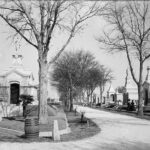
Stop 3: St. Louis Cemetery #3 (Angel Cemetery) and the strange origins
The final stop is St. Louis Cemetery #3, also known as the Angel Cemetery. The tour places it on ground with a difficult origin story: land that was once home to a leper colony.
The audio explains that Louisiana hosted communities for people affected by leprosy for a long time, and this cemetery began as a burial ground for those who died of the disease in New Orleans. That’s heavy material, but it’s the kind of context that keeps a cemetery from being only a photo stop.
Then the story expands to the 1854 yellow fever epidemic. A devastating outbreak left New Orleans in need of another 8,000 burial plots, and the priests at St. Louis Cathedral purchased the land for a Catholic cemetery.
This is where I think the audio format is especially useful. Cemetery spaces can feel confusing if you don’t know what’s behind the walls. With the narration guiding you, you’re not just looking at stones—you’re understanding why this particular place exists.
Practical consideration: the tour’s “end” point is listed at 3202 Grand Rte Saint John St, so plan on finishing the walk there, not back at the first stop. If you’re heading to dinner or drinks after, you’ll want to line that up based on where you’ll exit.

Walking plan: pace, stops, and how to use the pause button well
This is listed at about 1 hour 15 minutes. In real life, that timing works best when you treat stops as short moments with listening, not long museum-style sessions. If you choose to step inside buildings along the way, plan extra time.
The biggest advantage is how easy it is to control your attention. You’re not stuck with a fixed script length. You can stop the audio, start it again, and replay sections you want to understand better. That helps a lot with dense topics like freedom petitions, Spanish-era legal conditions, or why a cemetery was established in stages.
This is also a good tour whether you’re traveling on foot, by bicycle, or even by car, because you’re not required to follow a human guide’s walking speed. One of the strengths of the design is that it can match your movement style without breaking the story flow.
One more pro-tip: if you care about photos, save your best snapshots for the moments when the audio has given you a reason to look. Architecture and street scenes become more interesting when you know what to notice.
Price and value: is $9.99 actually fair?
At $9.99 per person, this tour is priced like a budget-friendly add-on that still wants to be thoughtful. The part that justifies the price is not only the route—it’s the way you get access and re-access.
You’re getting lifetime access to the audio tour plus the VoiceMap application and offline support for audio, maps, and geodata. If you’ve ever paid for a guided walking tour that only works once, this is a different model. You can use it on one visit, then reuse it later when you want to compare neighborhoods again.
Also, you’re not paying for museum tickets or transportation here. That means your money stays focused on the walking experience itself. For some travelers, that’s ideal because it keeps costs predictable.
The main tradeoff is the lack of a live guide. If you enjoy asking questions, you won’t have a person to bounce questions off. But if you like to control timing and revisit sections, the self-guided setup becomes the point.
Getting there and finishing well: start and end points that matter
Your starting point is 2023 Esplanade Ave. The tour ends at 3202 Grand Rte Saint John St. That matters because you don’t want to plan your transport assuming you’ll return to the original corner.
The tour is described as near public transportation, which is helpful if you’re using transit to reach Esplanade Ave and then walking between stops. It also notes service animals are allowed, which can make planning easier for travelers who need that accommodation.
Timing-wise, the listed hours are open every day, from 12:00 AM to 11:59 PM within the listed date range. In plain terms: you can choose the time that fits your day and still use the tour.
The one thing you must plan around is your phone. A smartphone is not included, and you’ll want it charged, with the offline download done before you start.
Who should book this tour, and who might not love it
This tour is a strong fit if you want:
- A self-paced walk in a historic neighborhood
- A story-first route through Faubourg St. John and the Garden District
- Offline audio so you’re not dependent on signal
- Lifetime access to replay or revisit
It’s especially good if you prefer solo or small-group travel, because the experience is private in the sense that only your group uses it.
You might want to think twice if:
- You need tickets included for museum interiors
- You want a live guide to answer questions in real time
- English narration isn’t a good match for your language needs
One more balanced note: since this is an app-only experience, there’s no human at a meeting point. If you’re someone who likes face-to-face help when plans change, you’ll want to rely on your own troubleshooting skills.
Should you book the Esplanade Ridge audio tour?
I’d book it if you’re drawn to New Orleans neighborhoods that go beyond scenery and into community history. The combination of the Museum of the Free People of Color, the Garden District’s growth from 1832 to 1900, and the cemetery’s origins tied to leprosy and the 1854 yellow fever crisis gives you a tour with real weight and real variety.
It’s also a smart choice for value. At $9.99, with offline audio and lifetime access, you’re paying for a tool you can use on your schedule, not just a one-time guided event.
If you’re not interested in history that can be emotional, or if you want museum entry bundled into one price, you may feel the gaps. But for most walkers who enjoy learning at their own speed, this one is easy to recommend.
FAQ
How long is the Esplanade Ridge audio tour?
It’s listed at about 1 hour 15 minutes.
Is the tour available offline?
Yes. The package includes offline access to the audio, maps, and geodata through the VoiceMap app.
How much does it cost and what’s included?
The price is $9.99 per person. It includes lifetime access to the Esplanade Ridge: The Creole Garden District tour, the VoiceMap application, and offline access. A smartphone is not included.
Do I need museum tickets for the stops?
Tickets or entrance fees are not included for museums or other attractions along the route. If you want to enter a place, you’ll need to arrange that separately.
Where does the tour start and end?
The tour starts at 2023 Esplanade Ave, New Orleans, LA 70116, USA, and ends at 3202 Grand Rte Saint John St, New Orleans, LA 70119, USA.
Is the tour refundable if I cancel?
No. This experience is non-refundable and cannot be changed for any reason.