REVIEW · MISSISSIPPI
Vicksburg Battlefield Self-Guided Driving Audio Tour
Book on Viator →Operated by Action Day Trips · Bookable on Viator
Vicksburg sounds big. This self-guided driving audio tour helps you make sense of the siege and memorials without feeling lost. You’ll roll past key points tied to Lincoln, Grant, and the hard math of why this bend in the Mississippi mattered so much.
I really like that the app is hands-free and plays stories automatically as you move, so you can focus on what you’re seeing instead of reading every sign. I also like the value setup: it’s $16.99 per group (up to 4) and works on your schedule for about 1–2 hours, with lifetime access so you can reuse it on another trip.
One thing to consider: it’s a lot of stops and memorials close together, and your pacing depends on the park roads and any closures. If you want long, slow museum-style hangs at every monument, you may find the drive is quicker than you’d like.
Best bits at a glance
- Offline, location-triggered audio means you won’t need cell service for the stories to play
- 44+ audio stories over 15 miles gives you more battlefield context than a quick drive-by
- Memorial stops explain the symbolism, like the peace figures and state emblems
- You control the pace: start anytime, pause, and skip what doesn’t interest you
- Useful fallback for closures since you can stop, walk short sections, and continue as you can
In This Review
- Why Vicksburg’s Battlefield Feels Different From the Driver’s Seat
- Price and Value: $16.99 Per Group vs. the $35 Park Entrance
- How the Offline Audio Tour Works in Real Life
- Your 1–2 Hour Drive: The 19 Stops That Build the Siege Story
- Stop 1: Vicksburg National Military Park
- Stop 2: Memorial Arch (1917 reunion)
- Stop 3: Minnesota Memorial
- Stop 4: Michigan Memorial
- Stop 5: Illinois Memorial (names inside)
- Stop 6: Logan’s Approach (mine tactic)
- Stop 7: Wisconsin Memorial and Old Abe
- Stop 8: West Virginia Monument (Major Azra Goodspeed)
- Stop 9: African American Monument
- Stop 10: Major General Ulysses S. Grant Memorial
- Stop 11: 106th Illinois Volunteer Infantry Regiment Monument
- Stop 12: U.S. Navy Monument (the tallest)
- Stop 13: Vicksburg National Cemetery (17,000 Union soldiers)
- Stop 14: Fort Hill (river view, no land battle)
- Stop 15: Missouri State Memorial (divided loyalties)
- Stop 16: Mississippi Monument (peace-and-reconciliation figure)
- Stop 17: Alabama Monument
- Stop 18: Fort Garrott (sniper moment)
- Stop 19: Kentucky Monument (Lincoln and Davis together)
- What Makes These Monuments Worth Your Time (Even If You Hate Statues)
- A Smart Plan for Road Closures and GPS Timing
- Who This Vicksburg Audio Drive Fits Best
- Should You Book This Vicksburg Battlefield Self-Guided Driving Audio Tour?
- FAQ
- Do I need a parking ticket or entrance fee for the battlefield?
- How long is the driving route, and how much is there to listen to?
- Does the audio tour work without cell service?
- Can I listen while driving using my car speakers?
- Will someone meet me at the start?
- What if roads are closed during my visit?
Why Vicksburg’s Battlefield Feels Different From the Driver’s Seat
Vicksburg National Military Park is one of those places where the story is spread out. If you try to do it all with just roadside signs, you end up speed-reading history while your car is rolling forward. With this tour, the audio does the organizing for you.
The result is a smoother kind of learning. You don’t just see “a monument.” You hear why that spot mattered, what tactic happened there, and how the memorial design connects to the people it honors. It’s still self-guided, so you’re free to pull over, look longer at the moments you care about, and move on when you don’t.
And yes, there’s a lot to absorb. The park leans heavily into memorials, statues, and state-by-state commemoration. That can be powerful, but it also means you’ll want a plan for how long you’re willing to sit in the car and how many stops you want to fully take in.
Price and Value: $16.99 Per Group vs. the $35 Park Entrance
Let’s do the math plainly. The audio tour costs $16.99 per group up to 4 people. The Vicksburg Battlefield park entrance fee is $35.00 per booking, and it’s not included in the audio price.
So what’s the value? The audio part is where you’re getting the upgrade: offline maps, auto-playing stories tied to your location, and the ability to reuse the tour anytime with new lifetime access. If you’re traveling with a partner or family, the per-car pricing is the big win. For a single person, it can still be fair, but the pricing really shines when you can spread it across up to four riders.
Also, the tour doesn’t ask you to hire a guide for every mile. You get a structured route and storytelling that would normally cost more in a guided format. If you’re the type who likes to think independently—stop where you want, skip what you don’t—this style tends to work.
You can also read our reviews of more tours and experiences in Mississippi.

How the Offline Audio Tour Works in Real Life
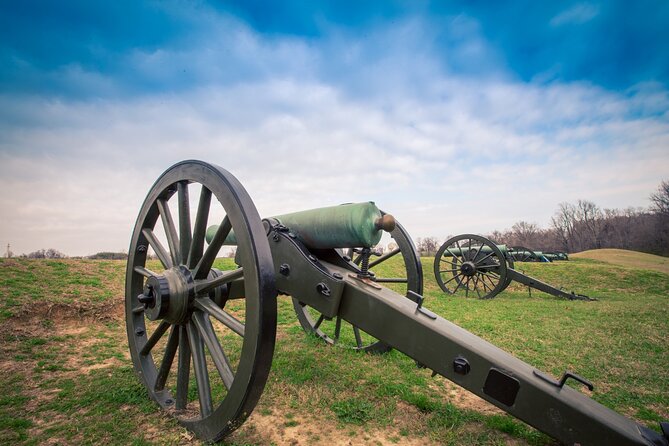
This tour is built around GPS-triggered audio. That’s great when things are working normally, because stories start when you reach each stop and you don’t have to tap anything. The catch is also simple: you need the tour downloaded first, and you need to follow the route and speed limits for the best timing.
Here’s the practical setup that matters most:
- Download the tour while you have strong Wi‑Fi or cellular, because you must have it stored for offline use.
- Use your phone with your car stereo via Bluetooth, USB, or AUX for driving playback.
- If you step out to walk, consider headphones so the audio stays clear without car noise.
- Playback is compatible with Apple CarPlay, and Android support is on the way.
In the park, signal can be spotty, and there’s no guarantee you’ll have coverage everywhere. The good news: once downloaded, the audio route is designed to work even when you’re off the grid.
Starting is also straightforward. There’s no guide meeting you. You drive to the Vicksburg National Military Park Visitor Center (3201 Clay St), then begin at the first audio point and follow the prompts to the next stories.
Your 1–2 Hour Drive: The 19 Stops That Build the Siege Story
This route stretches about 15+ miles and runs roughly 1–2 hours depending on how long you stop for photos and quick walks. There are 44+ audio stories, so you’re not just visiting monuments—you’re getting narrative glue between them.
Below is how the tour feels as a sequence. I’m focusing on what you’ll notice at each stop and the kind of payoff you get for pulling over.
Stop 1: Vicksburg National Military Park
Start by grounding yourself. This is where the audio frames the battle as the “big key” to the Civil War outcome—why this place mattered to Abraham Lincoln and why Jefferson Davis also treated it like a critical prize. You’ll hear the political stakes alongside the battlefield logic, so the rest of the memorials don’t feel random.
Tip: If you can, start with a minute of patience here. It helps you understand what you’re driving toward next.
Stop 2: Memorial Arch (1917 reunion)
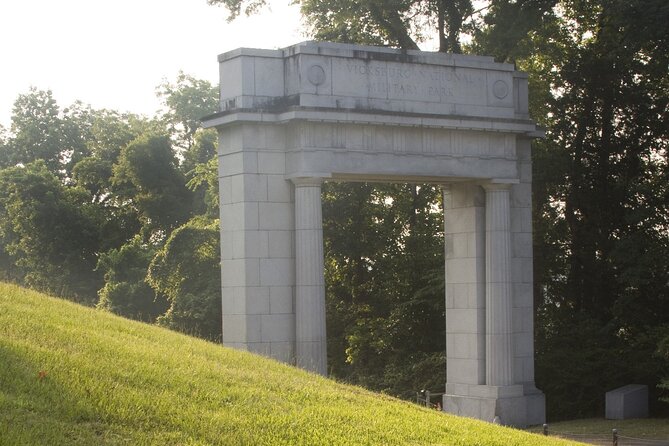
Not all commemoration is about rage. The Memorial Arch ties to a reunion held in 1917, when former soldiers from both sides sat side by side for a four-day event. The tone shifts from war to memory, and the audio helps you see the bittersweet intent behind the structure.
Stop 3: Minnesota Memorial
This one is about symbolism. The Minnesota marker includes a peace statue with sword and shield laid down by both armies, meant to prevent future battles on this soil. If you’ve ever wondered why some memorials look more like “guardians” than “soldiers,” this gives you the answer.
Stop 4: Michigan Memorial
The Michigan Memorial is a tall obelisk type of marker, and the story connects the monument to a specific moment of leadership. The audio notes that Captain Samuel DeGolyer was mortally wounded near this area during fighting on May 28—a detail that makes a big stone shape feel human.
Stop 5: Illinois Memorial (names inside)
Illinois takes the “temple” idea and leans into it. The designer, W. L. B. Jenney, was a veteran who fought here, and the audio explains his purpose as more than a memorial—it was meant to function like a tribute space. The monument also includes the names of Illinois soldiers who fought here.
Tip: Even if you don’t read every name, it’s worth stopping long enough to understand what the memorial is trying to do: preserve identities, not just dates.
Stop 6: Logan’s Approach (mine tactic)
Now you get action. The audio describes Logan’s Approach and a trench tactic used to advance toward a Confederate position. Union engineers dug a trench, placed a mine with 2,200 pounds of gunpowder, and ignited the fuse under General Grant’s orders.
This stop is where the tour stops being “pretty stones” and starts being “how people actually tried to win.”
Stop 7: Wisconsin Memorial and Old Abe
Wisconsin’s monument brings in a famous character: Old Abe, the war eagle and mascot for the 8th Wisconsin Infantry. The audio notes Old Abe was real, served in 42 battles, and even received an honorable discharge in 1864.
The best part here is that the tour doesn’t treat the bird as trivia. It connects the mascot to morale and identity—the kind of small detail that sticks in your head long after you leave.
Stop 8: West Virginia Monument (Major Azra Goodspeed)
This memorial spot honors Major Azra Goodspeed, born in Ohio but serving and dying under West Virginia’s flag. The audio also explains how some men from Ohio and Pennsylvania fought under West Virginia because of recruitment numbers and available positions.
It’s a useful reminder: states weren’t always neat boxes on the battlefield. People moved based on enlistment needs as much as ideology.
Stop 9: African American Monument
This stop is emotionally heavy, and the audio treats it carefully. It honors thousands of African-American soldiers who fought for the Union and for freedom—but also explains the unfair reality inside the Union army. Units were segregated, Black soldiers were paid less, and often had worse equipment.
Then it brings you back to the essential point: they still fought shoulder to shoulder in the heat of battle.
Tip: If you’re doing this with kids, this is a good moment to pause and decide how much detail you want to cover in the car.
Stop 10: Major General Ulysses S. Grant Memorial
This is the big recognizable statue moment: Ulysses S. Grant on horseback. The audio frames him as the central battlefield commander in the siege, and it helps you connect the memorial sequence back to the main campaign arc you started with.
Stop 11: 106th Illinois Volunteer Infantry Regiment Monument
This small granite obelisk is easy to miss if you’re scanning too fast. The audio ties it to training in Lincoln, Illinois, where Abraham Lincoln once worked as a lawyer.
That’s a neat “wait, really?” connection: the battlefield isn’t isolated from the people and places that shaped leadership.
Stop 12: U.S. Navy Monument (the tallest)
This is a major value stop. The audio explains why the Navy matters here. Grant’s army gets much of the credit, but the tour emphasizes naval support: gunboats bringing Grant’s men down the Mississippi, sneaking past rebel defense lines at night, and ferrying the army across the Mississippi at Bruinsburg.
If you only remember “Grant the commander,” this stop fills in the teamwork piece.
Stop 13: Vicksburg National Cemetery (17,000 Union soldiers)
This is one of the most sobering stops: the cemetery holds the final resting place for 17,000 Union soldiers. The audio explains that for many, this was a second burial ground—comrades first dug graves near the action with simple wooden crosses, then later the government worked to relocate and provide more proper burials.
If you only have time for a few stops, you’ll want to include this one.
Stop 14: Fort Hill (river view, no land battle)
The audio points out why Confederates fortified Fort Hill: open views of the river and a bend that slowed warships down. It also notes that Fort Hill was secure enough that no land battle took place there.
So you get a different type of history: not “who fought here,” but “how the terrain controlled the fight.”
Stop 15: Missouri State Memorial (divided loyalties)
Missouri’s story is complicated, and the monument reflects that. The audio notes that Missouri was divided, with both Union and Confederacy recognizing it as their own. The numbers shared here are 109,000 joining the Union and 30,000 joining the Confederacy.
The tour uses this to show how neighbors turned against each other, not in a vague way, but with specific recruitment outcomes.
Stop 16: Mississippi Monument (peace-and-reconciliation figure)
The Mississippi monument includes a woman at the base. The audio explains the role of women on Civil War memorials as protective figures, modeled after Greek or Roman goddesses representing peace and reconciliation.
This stop helps you “read” the design language of the park. After hearing it once, you’ll notice similar symbolism at other monuments.
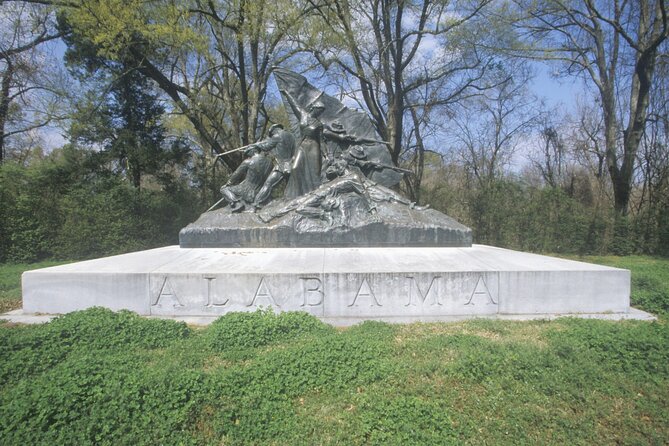
Stop 17: Alabama Monument
Alabama’s monument uses a similar idea: troops led forward by a woman representing Alabama itself. The audio keeps it grounded in state identity, so it feels less like fantasy and more like how communities wanted to be remembered.
Stop 18: Fort Garrott (sniper moment)
This stop adds a sharp, specific tragedy. The audio identifies Fort Garrott and explains it was named for Colonel Isham W. Garrott. It describes how Union snipers hid for signs of movement, and how Garrott moved one day and was killed by a bullet—then the audio notes he never lived to learn about a promotion to Brigadier General.
It’s brief, but it hits.
Stop 19: Kentucky Monument (Lincoln and Davis together)
You end with a big symbolic pairing: the Kentucky monument includes Abraham Lincoln and Jefferson Davis because both were born in Kentucky. The audio frames it as a state choosing to honor both sides through shared origins.
If you like a closing message that’s more reflective than triumphant, this is a good bookend.
What Makes These Monuments Worth Your Time (Even If You Hate Statues)

I get it: memorials can feel repetitive. But this tour’s design makes it easier to stay interested because each stop has a distinct job.
A few examples of the tour’s smartest storytelling angles:
- Symbolic figures: the peace-reconciliation women and the idea of “guardianship” connect design to intent, not just aesthetics.
- State identity: Wisconsin’s Old Abe and Illinois’s Jenney show how communities built identity into commemoration.
- Uncomfortable truth: the African American monument doesn’t skip the unfair realities in the Union army.
- Military mechanics: Logan’s Approach and the Navy’s role bring you back to how campaigns actually moved.
So even if you’re not a “monument person,” you’re still learning something. You’re picking up the battle’s logic and the memorials’ purpose.
A Smart Plan for Road Closures and GPS Timing

Vicksburg can throw curveballs. Some parts of the park may be closed due to conditions like road damage, and that can affect how the audio triggers at each stop.
Your best approach is simple:
- Download before you go, so you’re not stuck troubleshooting connectivity.
- Stay within the tour route when possible and follow the speed limit.
- If a closure forces you to detour, you might not hit every audio cue in the perfect order—but you can still stop and play what you can.
This is where a self-guided audio tour beats a fixed bus route. You can adjust on the fly, pull over to walk short areas, and keep your day moving instead of waiting around.
Who This Vicksburg Audio Drive Fits Best
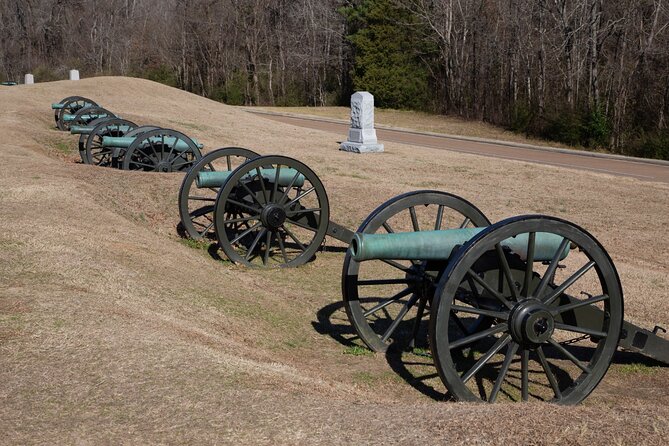
This is a strong match if you want:
- A structured route through a big park without needing a group bus
- Hands-free storytelling while you drive, plus the option to step out
- A tour you can repeat later thanks to lifetime access
It’s also a good choice for families, because you can pause for snacks and photos without breaking someone else’s schedule.
If you’re someone who hates stopping frequently, you’ll feel that here. This isn’t a one-viewpoint tour. It’s a stop-and-go drive with lots of monuments. You’ll probably enjoy it most if you’re okay with walking a little and letting the audio steer the pace.
Should You Book This Vicksburg Battlefield Self-Guided Driving Audio Tour?
I’d book it if you want a guided-feeling battlefield day without paying for a formal guide. The combo of offline GPS audio, 44+ stories, and per-group pricing up to four makes it a practical value—especially if you’re traveling with someone who doesn’t want to spend the whole day reading plaques.
Skip it only if you know you dislike memorial-heavy routes or you want a long, slow, sit-down experience. In that case, you may get more satisfaction from a smaller number of stops with extra time at the spots that matter most to you.
If you do book, do one thing that makes a big difference: download the tour before you arrive. It’s the difference between a smooth drive and a frustrating day spent trying to fix audio in spotty service areas.
FAQ
Do I need a parking ticket or entrance fee for the battlefield?
The tour audio price does not include the park entrance. The Vicksburg Battlefield entrance fee is listed separately as $35.00 per booking.
How long is the driving route, and how much is there to listen to?
The tour covers over 15 miles with more than 44 audio stories and takes about 1–2 hours depending on how long you stop.
Does the audio tour work without cell service?
Yes. You should download the tour first when you have strong Wi‑Fi or cellular. After downloading, it works offline.
Can I listen while driving using my car speakers?
Yes. The setup supports connecting your phone to your car stereo using Bluetooth, USB, or AUX, and audio playback is compatible with Apple CarPlay.
Will someone meet me at the start?
No. This is self-guided. You’ll go to the starting point at the Vicksburg National Military Park Visitor Center and start at the first audio location.
What if roads are closed during my visit?
If parts of the park are closed, your route and audio cue timing may change. Since the experience is self-guided, you can adjust by stopping when you can, exploring on foot where possible, and continuing as the route allows.