REVIEW · COLORADO
Mesa Verde National Park Self-Guided Driving Audio Tour
Book on Viator →Operated by Guide With Action · Bookable on Viator
Turn your car into a Mesa Verde guide. This self-guided hands-free audio tour adds story and context to the park’s overlooks and cliff dwellings, and the “when you’re here” timing helps you follow along without guesswork. My favorite part is the lifetime access: once you buy it, you can use it on this trip or a future one. One thing to plan for: you’ll still need your own Mesa Verde park entrance pass, and several stops include hikes with real elevation.
I also like the value. At $16.99 per group (up to 4), it’s paid for per car, not per person—so a family or pair traveling together usually does better than with guided options. The route is long enough to feel like a full Mesa Verde day (about 30+ miles), yet it’s designed so you can stop, photograph, and move at your pace without hiring anyone.
In This Review
- Key things I’d actually care about before you go
- Why Mesa Verde feels different with a self-guided audio loop
- Price and value: $16.99 per group can work out surprisingly well
- Setup that matters: offline maps, location-based audio, and car audio options
- Stop 1: Mesa Verde entrance sign and the first “story cue”
- Stop 2: Mancos Valley Overlook and Point Lookout’s switchback reality
- Stops 3–5: Montezuma Valley Overlook, Knife Edge views, and Park Point altitude
- Stop 6–7: Long House and Step House detour (and why you’d add it)
- Stops 8–13: Far View, Coyote Village, Megalithic House, and the tower story
- Stop 14–16: Petroglyph Point Trail to Spruce Tree House and Cliff Palace
- Stops 17–19: House of Many Windows, Hemenway House, and Balcony House details
- Stop 20–21: Soda Canyon Overlook Trail and the pithouse time jump to 600 C.E.
- Stops 22–27: Canyon viewpoints, Square Tower’s height, and Sun Temple math
- Practical tips so you don’t lose time (or signal) on this drive
- Who this tour is best for (and when to choose a different option)
- Final call: should you book this Mesa Verde driving audio tour?
- FAQ
- How much does the Mesa Verde self-guided driving audio tour cost?
- How long does the tour take?
- Is the audio available in English?
- Does it work without cell service?
- Where do I start and where do I end?
- Do I need a park pass?
- Can I pause or skip parts of the route?
Key things I’d actually care about before you go
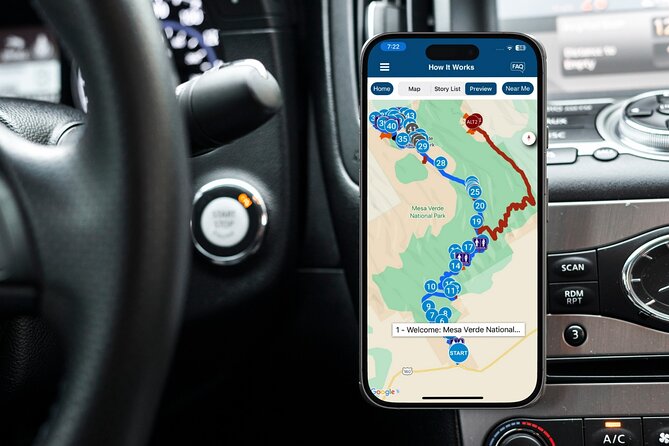
- GPS-triggered, hands-free audio plays based on your location so you don’t need to push buttons every stop.
- 2–3 hours for a long route (over 30 miles) with 52+ audio stories covering overlooks, ruins, and trail options.
- Download-first, offline-friendly setup with offline maps; you’ll want strong signal before entering the park.
- A detour that’s worth it for walk-through structures: Long House and Step House add about an hour of driving in total.
- Cliff dwellings in a logical order: from Spruce Tree House and Cliff Palace to Balcony House and more mesa-top sites.
- Hikes match your energy: Point Lookout and Petroglyph Point are moderate, while Soda Canyon is an easier add-on.
Why Mesa Verde feels different with a self-guided audio loop
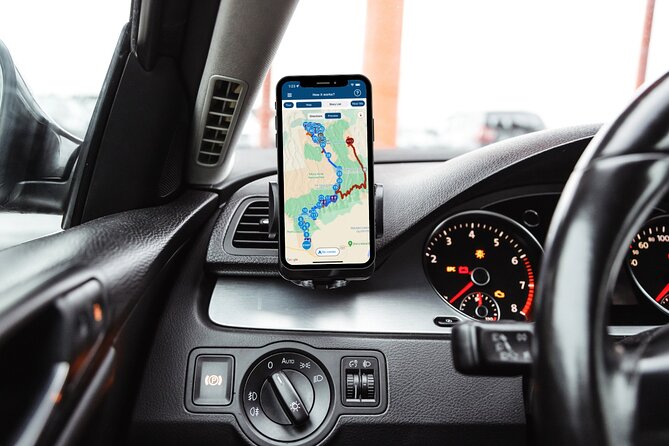
Mesa Verde can be awe-inspiring even when you’re just driving and snapping photos. The difference here is that the audio gives you a way to “read” what you’re seeing—why a kiva matters, what a tower was for, and how the dwellings relate to each other.
This style of tour also fits how you’ll actually spend time in the park. You can linger at an overlook, step out for a quick walk, or skip a hike if your legs say no. The stories are meant to keep pace with where you are, which makes the experience feel ordered without feeling rushed.
You can also read our reviews of more tours and experiences in Colorado.

Price and value: $16.99 per group can work out surprisingly well
Let’s talk math the practical way. At $16.99 per group (up to 4), the cost is spread across your car, not your family count. If you’re two people splitting a rental car anyway, this can be one of the cheapest ways to add solid interpretation to the day.
You’re also getting lifetime access. That matters if you’re the type who wants a second look at a place (or you’re planning a return trip someday). A normal guided tour is a one-and-done expense; this one is more like you’re buying a tool you can reuse.
The tradeoff is that you’re in charge. There’s no ranger pacing you, and you’ll need to manage your own stops, parking, and trail time.
Setup that matters: offline maps, location-based audio, and car audio options

Mesa Verde is famous for no-cell moments, so the “download before you enter” part is not optional. You’ll get instructions by email/text with a password, and you’ll download the tour through Action’s Tour Guide App while you’re in strong wifi/cellular. After that, it works offline.
Once you’re onsite, you open the app and start the correct tour version for your planned start and direction. Then you go to the first story point (starting at the Mesa Verde entrance sign), and the audio should begin automatically, matching the next stop as you drive.
For sound, you can connect your phone to your car stereo using Bluetooth, USB, or AUX. If you take breaks on foot, you might prefer headphones so the trail areas stay clear. The good news: the tour is built for hands-free listening, with audio that plays when you arrive at the corresponding story locations.
Stop 1: Mesa Verde entrance sign and the first “story cue”
The tour starts right at the Mesa Verde National Park entrance sign. If it’s your first time driving into the park, it’s a handy moment to get your bearings fast and capture the iconic shot before you commit to the route.
What I like about this opener is that it frames the experience as more than a list of ruins. It’s setting expectations for what Mesa Verde is—sacred land for the Ancestral Puebloans—and it gives the day a tone before you hit the first big overlook.
Stop 2: Mancos Valley Overlook and Point Lookout’s switchback reality
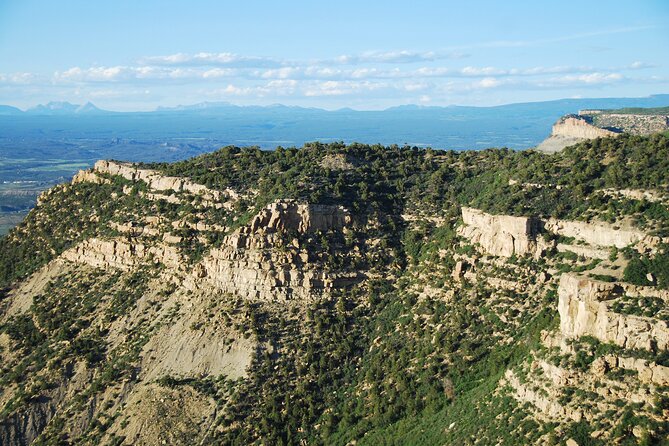
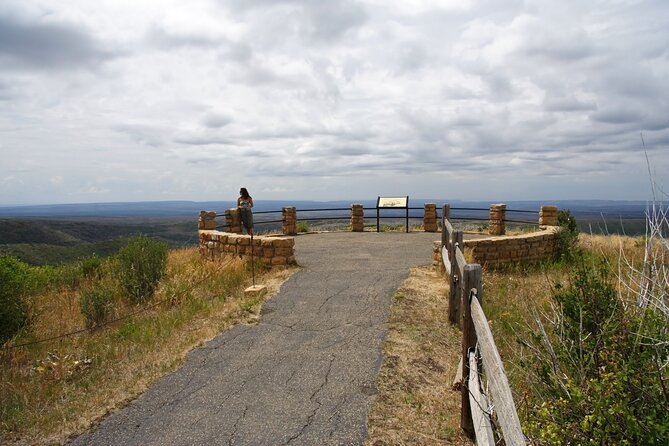
Next up is Mancos Valley Overlook. You’ll get an expansive view down into the valley and out toward the mountains, plus a quick guide to how the vegetation changes with elevation. Lower slopes show a shrub-steppe mix, with plants like sagebrush and rabbitbrush. Higher up, you move into pinyon-juniper woodland, sometimes called a “pygmy forest” because those trees often stay under about 30 feet tall.
Then comes the detour opportunity for Point Lookout Trail. It’s only about 2 miles, but it climbs roughly 500 feet, mostly with switchbacks and then a little flatter work up to the butte edge. The tour rates it as moderate and says it can take up to about two hours, so be honest about your hike timing if you plan to do multiple trails.
If you’re short on time, you can treat Point Lookout as the one hike you do well, then keep the rest of the day focused on driving stops.
Stops 3–5: Montezuma Valley Overlook, Knife Edge views, and Park Point altitude
Montezuma Valley Overlook gives you another big-picture moment around Ancestral Puebloan life. The audio ties the view to time—around 1200 C.E., when up to 35,000 people lived in the region (more than the number living there today). You’ll also see the Knife Edge rock formation, a jagged triangular spit across the landscape.
Then you reach Park Point, the park’s highest point at 8,572 feet. The advice built into the tour is simple: if you’re visiting on a hot day, Park Point may feel cooler and breezier. That’s one of those practical details that makes a difference when you’ve been climbing all morning.
Finally, Geologic Overlook is there to reset your thinking from “ruins first” to “the rock underneath.” You’ll be shown four distinct stone layers that accumulated over time to create much of what Mesa Verde looks like today.
Stop 6–7: Long House and Step House detour (and why you’d add it)
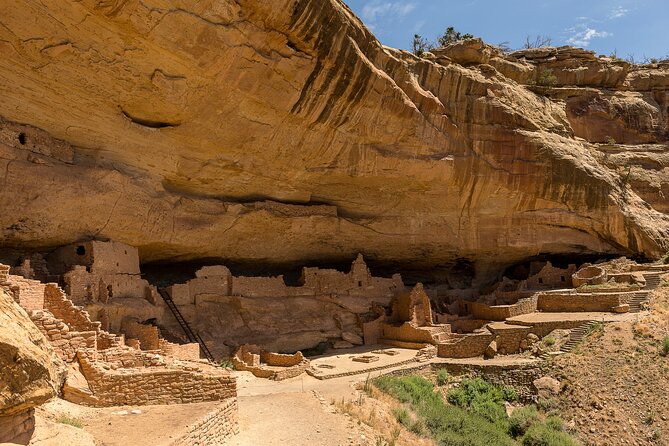
You’ll get a choice here. The main route takes you to famous places, but the tour also offers a detour option to Long House and Step House. The key detail is that you can actually walk through these historic sites.
The detour adds about an hour of driving total. I’d call that a reasonable “pay for value” decision: if you like being closer to the architecture instead of only seeing overlooks, this is the part that gives your day a more hands-on feel.
Stops 8–13: Far View, Coyote Village, Megalithic House, and the tower story
After the detour, you start moving through the middle of the mesa story with a string of features that connect people, buildings, and daily survival.
- Far View Reservoir explains how water shaped life.
- Far View House (built around 1000 C.E.) becomes a center for dense Puebloan life.
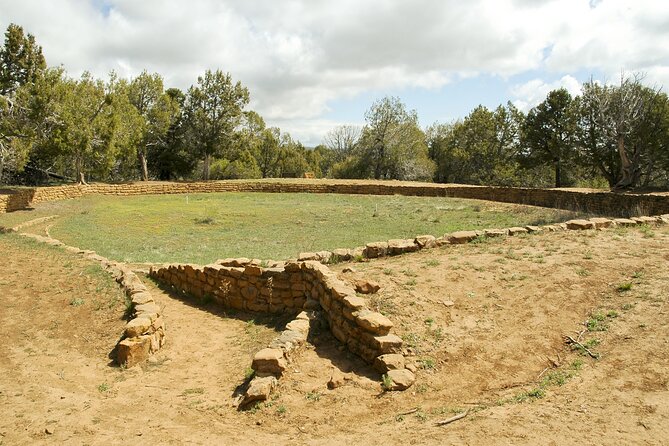
- Coyote Village continues the pattern, including dwellings organized around circular kivas.
- Megalithic House shifts the social picture: one extended family lived there with multiple generations under the same roof, showing that not every Puebloan home-base was a big multi-family complex.
- Far View Tower introduces the watchtower idea—watchers scanning for enemies, herds, and bad weather.
- Cedar Tree Tower adds another explanation: these towers were close to kivas and may have had both observation and ceremonial roles, plus they could help communicate between settlements.
This section is where the audio really helps you connect dots. Instead of treating each stop as a separate postcard, you start seeing Mesa Verde as a network of housing, storage, water use, communication, and defense.
Stop 14–16: Petroglyph Point Trail to Spruce Tree House and Cliff Palace
Next comes a hike option: Petroglyph Point Trail. It’s about 2.5 miles, rated moderately difficult, and takes around two hours. The route is a loop through Spruce Canyon and the tour points out that the path follows an ancient Puebloan foot trail—so you’re walking a route tied to older connections between communities.
After that, you park in the Spruce Tree House area and access the trail and museum viewpoints. The audio notes you’ll pass the Chapin Mesa Archaeological Museum and then reach overlooks for your first proper cliff dwelling: Spruce Tree House.
Then you hit the headline: Cliff Palace. The tour describes it as the largest cliff dwelling in Mesa Verde and highlights its grandeur. It’s the kind of stop where the audio helps you see what you’re looking at—more than “big and old,” it gives you a sense of scale and why it was built where it was.
Stops 17–19: House of Many Windows, Hemenway House, and Balcony House details
At House of Many Windows, the tour explains a common confusion: many of the “windows” aren’t windows at all—they’re doors. From the overlook, you’ll see a low dwelling tucked into Cliff Canyon, tied to a large family unit and preserved well by the cliff’s shelter.
Then you move to the Hemenway House overlook, a precarious cliff dwelling. The story here includes the funding connection—Mary Hemenway of New York helped support early archaeological work in Mesa Verde.
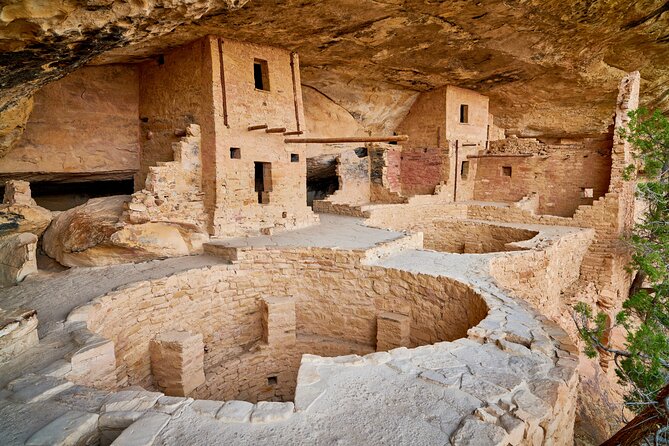
Next is Balcony House, and the tour gets specific about naming and orientation. It’s named for the balcony railing separating the steep cliff face from the alcove. One of the most interesting details is that it faces northeast, which is unusual for cliff dwellings, and the audio explains that this meant the residents wouldn’t get much winter warmth. For you, that detail turns a viewpoint into a clue about how people managed seasons.
Stop 20–21: Soda Canyon Overlook Trail and the pithouse time jump to 600 C.E.
If you want a break from the steeper hike options, Soda Canyon Overlook Trail is listed as easy: about 1 mile, around half an hour. It winds through juniper and pinyon trees on the cliff sides and includes multiple overlooks with canyon views. At the end, you’ll also get an even better view of Balcony House than from earlier.
Then comes Pithouse, which shifts the time frame. The tour describes it as one of the earliest permanent structures in the park, with pithouse living around 600 C.E. This is a useful contrast after the cliff dwelling era. You’ll finish feeling like you saw the evolution, not just the final big highlight.
Stops 22–27: Canyon viewpoints, Square Tower’s height, and Sun Temple math
The final stretch is a series of short stops where the audio helps you interpret what you’re seeing quickly.
- Navajo Canyon View is a photo-friendly viewpoint you’re encouraged to stop for.
- Square Tower House is described as the tallest structure standing in Mesa Verde, with four stories and about 27 feet tall. You’ll also see vertical rectangular cutouts that might have served as windows, though the audio notes archaeologists can’t say for certain.
- Sun Point Pueblo leads you into the Mesa Top Sites area.
- Sun Point View is the “wow” moment: from this spot alone, the tour says you can see over 30 cliff dwellings filling the cliff face.
- Oak Tree House explains adaptation in alcoves. The alcove has two layers, with storage in the outer alcove and habitation structures in the inner alcove, including some rooms rising up near the ceiling.
Finally, Sun Temple wraps up the day with a “how did they know that?” angle. The audio says construction evidence points to sophisticated geometric concepts, including the pythagorean theorem, and mentions a standardized measurement system where one unit was about 30 centimeters. That’s the kind of detail that makes the ruins feel less like “old buildings” and more like real engineering decisions.
Practical tips so you don’t lose time (or signal) on this drive
- Download the tour before entering. The app is built for offline use after download, but you need strong wifi/cellular to get the content onto your phone.
- Plan one real hike (Point Lookout or Petroglyph Point) and keep the rest flexible. The driving stops are packed tightly, and it’s easy to overbook yourself if you chase every trail.
- Connect your phone to car audio before you start. Bluetooth pairing or cable fiddling mid-route is the fastest way to waste a good story window.
- Use the stop/start control if you need it, especially with a group. The tour is designed for your pace, not a fixed bus schedule.
Who this tour is best for (and when to choose a different option)
This driving audio tour is a great match if you want control. It’s ideal for couples, families, and road-trip groups who like the idea of pausing for viewpoints, doing hikes that fit their energy, and skipping stops when needed.
It’s also smart if you’re the type who learns better by moving. Instead of sitting through a lecture, you get to hear the context right at the overlook, then walk a trail with that understanding in your head.
If you’re looking for hands-on Q&A, or you want someone to manage timing, crowds, or interpret tricky archaeology on the spot, you might prefer ranger-led talks. But for most people who just want a well-timed, history-forward route without a hefty price tag, this hits the sweet spot.
Final call: should you book this Mesa Verde driving audio tour?
I’d book it if you want value per car, a route with real variety, and a way to understand what you’re seeing without racing a schedule. The best reason to choose it is the mix of driving stops and optional hikes, all tied together by location-triggered storytelling.
I’d think twice if you’re the kind of visitor who forgets to download offline content, or if you’re hoping for zero walking beyond the viewpoints. Mesa Verde rewards effort, and this tour leans into that with trails like Point Lookout and Petroglyph Point.
If you’re prepared with your park pass and your phone setup, this is a solid way to turn a scenic drive into a full-day learning experience.
FAQ
How much does the Mesa Verde self-guided driving audio tour cost?
It costs $16.99 per group, and the group limit is up to 4 people per purchase.
How long does the tour take?
The tour is listed as taking about 2 to 3 hours to complete.
Is the audio available in English?
Yes, the tour is offered in English.
Does it work without cell service?
Yes. It includes offline maps, and the tour content is designed to work without cellular or wifi after you download it.
Where do I start and where do I end?
Start at the Mesa Verde National Park Entrance Sign (Mancos, CO 81328) and the tour ends at Mesa Top Loop (Mesa Verde, CO 81330).
Do I need a park pass?
Yes. Park passes are required to visit Mesa Verde National Park, and they are not included with the tour.
Can I pause or skip parts of the route?
Yes. You can start anytime and pause anywhere, and you can skip anything you don’t care about while still using the tour at your pace.