REVIEW · HAARLEM
Discover Haarlem with a self-guided Outside Escape city game tour
Book on Viator →Operated by Outside Escape · Bookable on Viator
Haarlem feels like a puzzle made for walking. This self-guided city game leads you along canals and landmarks like Bakenessergracht, with short stops that turn typical sightseeing into problem-solving. I also like that the route is built around big, clear historical anchors—Bakenesserkerk with its white tower, and the old Amsterdamse Poort city gate—so you always know what you’re chasing.
The only real drawback is that you’re on your own. If the direction clues or photo prompts don’t click fast, the game can slow you down when you’re unsure which way to go.
In This Review
- Key highlights you should know before you play
- Why Haarlem’s self-guided escape game feels so good
- Starting at Haarlem Station: fast to begin, easy to orient
- Bakenessergracht canal moments: where the game starts to feel like a story
- Bakenesserkerk and its white tower: the stop that gives you a landmark to trust
- Amsterdamse Poort (1486) and Haarlem’s old gate story
- Pavilion Welgelegen: neoclassical contrast in a North Holland power spot
- North Holland Archives: where the province’s paper trail lives
- Scheepmakersdijk: a street name that carries the sound of old shipyards
- De Waag (1595) at the Spaarne: the game’s payoff and a practical end point
- Price and value: $30.10 per group can be a bargain
- How to get the best experience out of a puzzle route
- Who should book this Outside Escape Haarlem game (and who might not)
- Should you book this Haarlem escape game?
- FAQ
- Where does the self-guided game tour start?
- Where does the tour end?
- How long does the Haarlem Outside Escape city game take?
- Is the experience offered in English?
- How much does it cost?
- Is this a private tour or shared with others?
- What main stops are included on the route?
- Can most people participate?
- Are service animals allowed?
- What is the cancellation policy?
Key highlights you should know before you play
- A short-stops route built for 1 to 2 hours so you’re not stuck wandering for half a day
- Real Haarlem anchors like Bakenesserkerk, Amsterdamse Poort, North Holland Archives, and De Waag
- Photo and facade-style puzzles that reward careful looking, not speed
- Free entry at every named stop, so your time goes to the streets, not ticket lines
- Ends with an easy win at De Waag (1595), right by the Spaarne for a post-game drink
Why Haarlem’s self-guided escape game feels so good
This is a private, self-guided way to see Haarlem, priced per group (up to 6). That matters because you can go at the pace your feet and attention span allow, without matching step with a guide or a crowd.
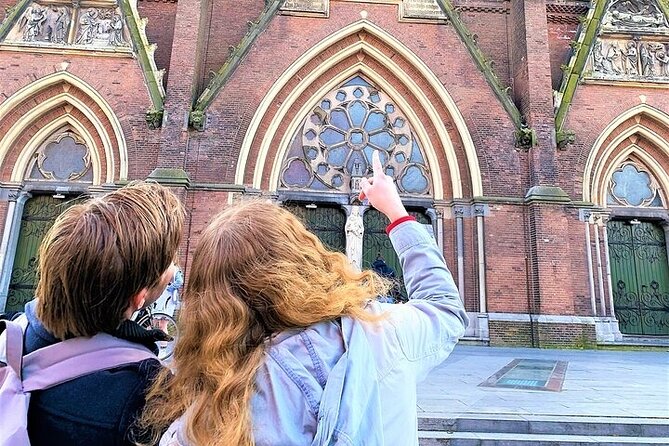
I like how the game format encourages slow looking. Instead of just walking past buildings, you’re nudged to notice details—especially at facades and along the route—so the city starts to feel like it has clues in plain sight.
You can also read our reviews of more tours and experiences in Haarlem.


Starting at Haarlem Station: fast to begin, easy to orient
You start at Stationsplein Haarlem Station (Stationsplein 9b). That’s a smart choice because Haarlem Station is a reliable landmark, and you’re dropping into the historic core without a long preamble.
From there, the route walks you toward the river Spaarne area, ending at Spaarne 28 by De Waag. If you’re planning your day, I’d think of this as a “core city loop” that fits nicely between other plans, rather than a full-day production.
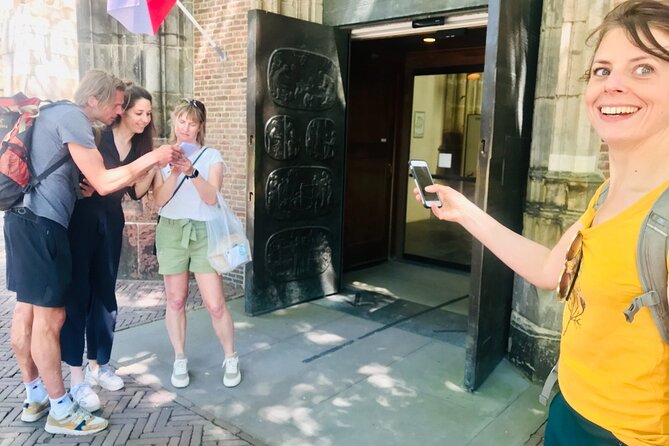
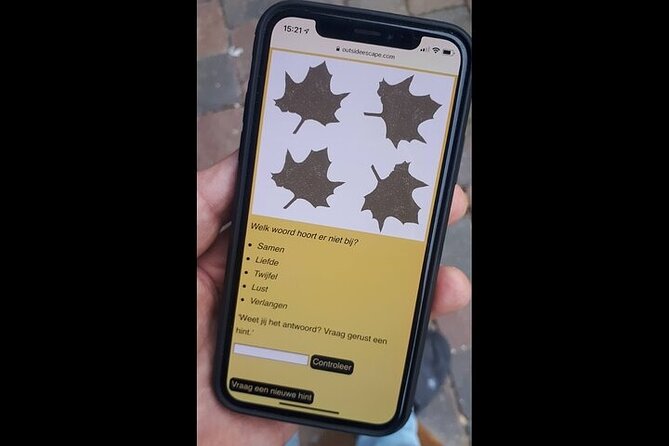
One small practical note: because this is game-style and self-guided, you’ll want your phone ready. Your biggest risk isn’t distance—it’s missing a turn or misreading a clue and losing time.
Bakenessergracht canal moments: where the game starts to feel like a story
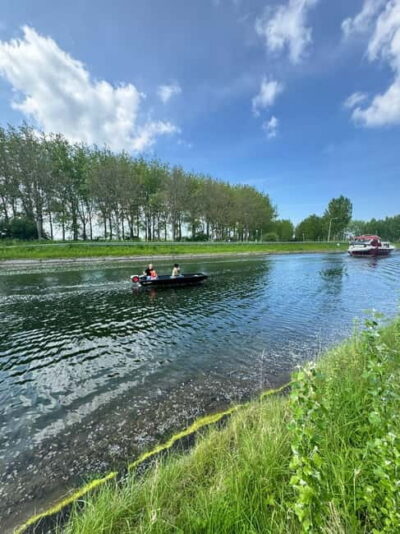
Your first stop is Bakenessergracht. This canal is described as picturesque, with monuments along the banks, and that’s exactly the kind of place that works for a puzzle opening: clear landmarks, lots of visual material, and an easy atmosphere to get into.
You’re scheduled for about 5 minutes here, and that’s perfect for a warm-up. In a short window, you can read the clue, try a couple of approaches, and move on before the game starts to feel like homework.
If you’re the type who likes “see it, then learn it,” this is a good first move. The canal gives you immediate Haarlem vibes before the route tightens into specific buildings.
Bakenesserkerk and its white tower: the stop that gives you a landmark to trust
Next is Bakenesserkerk, a church with a striking white tower. Even if you’ve never been to Haarlem, that kind of vertical landmark helps you re-orient fast if you drift even slightly while solving.
This stop is also around 5 minutes, so think of it as a quick reset. In practice, it’s useful when you’re running on a tight attention loop: you solve a prompt, check the tower area, then immediately continue.
The tower also makes the game feel grounded. Instead of only chasing text clues, you’re anchored by something you can point to across the street.
Amsterdamse Poort (1486) and Haarlem’s old gate story
You’ll hit Amsterdamse Poort. The gate dates to 1486, and it’s the only remaining gate out of the original twelve city gates. You also get the context that it sat at the end of the old route from Amsterdam to Haarlem.
What I like here is the way the route uses the gate as a narrative hinge. Haarlem wasn’t just pretty buildings; it was a walled city with a defined approach, and that gate marks where travel and trade squeezed into the town.
You see Amsterdamse Poort more than once on this route. That’s not a problem—it’s helpful. If you lose a bit of time the first time, the second pass gives you another chance to line up your bearings.
If architecture and urban layout interest you, this is one of the most rewarding stops. The gate turns the walking route into something with direction and history.
Pavilion Welgelegen: neoclassical contrast in a North Holland power spot
A key mid-route stop is Pavilion Welgelegen. It’s a historical building that currently houses offices for the provincial executives of North Holland, and it sits at the north end of a public park.
The architecture detail matters: it’s neoclassical and designed by Abraham van der Hart, and the style is described as unusual for the Netherlands. So you’re not just doing a photo check—you’re getting a real contrast point against what you might expect to see in this country’s city streets.
You’re allotted about 10 minutes here, which is plenty for reading the cues, looking up at details, and then moving on. If you’re tired of purely canal-and-church sightseeing, this is a nice change of pace. It also gives your brain a different kind of task: spotting style differences rather than just landmarks.
North Holland Archives: where the province’s paper trail lives
Next up is the North Holland Archives. It’s described as the Regional Historic Center of North Holland, Kennemerland, and Haarlem, and it contains historical records of the entire province.
You get about 10 minutes at this stop. Even if you just look around and take in the purpose of the building, it changes how you interpret what you’ve already seen. You start thinking: the canal houses and gate weren’t just scenery; they’re part of a documented story.
For game-style sightseeing, archives can be a good moment. The setting naturally slows you down, so you’re less likely to rush through clues like you might in a more “grab-and-go” area.
The only thing to consider is expectations. This stop is for context and place-reading more than ticketed museum time, since the listed entry is free and the route keeps moving.
Scheepmakersdijk: a street name that carries the sound of old shipyards
Then you walk to Scheepmakersdijk. The street is named for the ship wharfs and ship builders that used to be located along this dyke, even though those facilities are no longer there.
This is a subtle but satisfying stop. Haarlem’s waterfront areas often feel calmer than their history suggests, so a signpost like this nudges you to imagine what used to happen in the same physical space.
You’re given about 10 minutes. Use it like a mini-act of history thinking: look for the dyke shape, note how the street meets the water area, and connect the name to what the city relied on.
If you like urban history that you can read on the street without buying a ticket, you’ll likely enjoy this one.
De Waag (1595) at the Spaarne: the game’s payoff and a practical end point
Your finish is De Waag, a former weighing house from 1595 that’s now a café for tourists. It’s listed as located by the river Spaarne, right at the end of the 16th-century riverside world you’ve been walking through.
This ending matters for two reasons. First, it’s a clear win: the game ends at a place you can recognize and sit down. Second, De Waag is specifically positioned for recovery after walking and puzzle-solving.
The listed hours for De Waag are 7:00 AM to 10:00 PM (daily) during the provided date range, so it’s a flexible finish. If you need a cold drink, a coffee, or just a place to recharge your legs, you’re not scrambling for the nearest option.
I also like that the tour doesn’t leave you hanging. Many city games end in a random intersection; this one ends where you can actually linger.
Price and value: $30.10 per group can be a bargain
The price is $30.10 per group for up to 6 people, with a total duration of about 1 to 2 hours. When you split that, it’s about $5 per person if you fill the group size.
That pricing fits this kind of experience because:
- Most named stops are free (so you’re paying for the game experience and route design, not admissions)
- You’re getting a structured way to see several key Haarlem landmarks without booking a full guided tour
- The time window is realistic for short visits and layover-style days
You don’t need to think of it as a replacement for everything else in Haarlem. I treat it like a high-effort way to get your bearings fast, then I build the rest of the day around whatever you enjoyed most.
How to get the best experience out of a puzzle route
Since this is self-guided, your success comes down to how you play. Here’s what works well based on the style of the route and the way the prompts are described.
First, take a quick breath at each stop before you start clicking through clues. It’s easy to rush and then realize you walked past the exact facade details the game expects you to notice.
Second, if a clue involves photos or choosing a direction, slow down and compare what you see in front of you to the landmark you’re near. A small hesitation now can save a bigger loop later.
Third, don’t be afraid to keep moving if you stall. Haarlem doesn’t punish you for walking a few extra minutes, and the route is laid out with multiple recognizable anchors. The goal is to finish, not to get stuck in one spot for too long.
The best part of city games is that they turn normal wandering into attention. You’ll likely start noticing Haarlem’s canal edges, gate framing, and building proportions in a way you wouldn’t otherwise.
Who should book this Outside Escape Haarlem game (and who might not)
This tour suits you if you:
- Want a 1 to 2 hour activity that still feels like a full experience
- Like puzzles, photo prompts, or tasks that reward careful looking
- Prefer something flexible and private for your group
- Want free entry stops rather than paying for multiple attractions
You might choose a different kind of tour if you:
- Know you get frustrated when directions are unclear
- Prefer a live guide to explain everything right away
- Want museum time rather than street-level landmark reading
For families or mixed-age groups, it can work well because you can regroup at each landmark and handle the game in a way that matches who’s willing to solve what.
Should you book this Haarlem escape game?
I’d book it if your idea of a great trip includes walking with purpose. Haarlem is compact enough that you can enjoy the canals and gates without feeling trapped, and this route gives you a satisfying loop that ends with a real-world reward at De Waag.
If you’re the type who loves solving clues at facades and city corners, the format clicks quickly. If you’re worried about getting turned around, I’d treat it as a “take your time” experience, not a race.
The value is strong for a group—especially with the free entry stops and the fact it’s designed to fit into a short window.
FAQ
Where does the self-guided game tour start?
The start point is at Haarlem Station’s Stationsplein, listed as Stationsplein 9b, 2011 LR Haarlem.
Where does the tour end?
The tour ends at Spaarne 28, 2011 CH Haarlem, at De Waag.
How long does the Haarlem Outside Escape city game take?
It takes about 1 to 2 hours.
Is the experience offered in English?
Yes, it’s offered in English.
How much does it cost?
It costs $30.10 per group for up to 6 people.
Is this a private tour or shared with others?
It’s private. Only your group participates.
What main stops are included on the route?
The route includes Bakenessergracht, Bakenesserkerk, Amsterdamse Poort, Pavilion Welgelegen, North Holland Archives, Scheepmakersdijk, and De Waag (1595).
Can most people participate?
Most travelers can participate.
Are service animals allowed?
Yes, service animals are allowed.
What is the cancellation policy?
You can cancel for a full refund if you cancel at least 24 hours in advance of the experience’s start time. Free cancellation is available, and changes within 24 hours are not accepted.