REVIEW · TRONDHEIM
Trondheim’s Inner Circle: A Self-Guided Audio Tour
Book on Viator →Operated by VoiceMap Audio Tours · Bookable on Viator
History, wooden buildings, and a GPS voice. This self-guided audio walk threads Vikings, kings, and sacred sites through Trondheim’s core, and I like that you get lifetime access plus offline audio once you download. You’ll hit major highlights like Stiftsgården, Kristiansten Fortress, and Nidaros Cathedral on a route that fits a relaxed afternoon, but there’s one consideration: you need your own smartphone to run the VoiceMap app.
The audio format is the point here. Instead of waiting on a group, you can slow down by the riverfront, linger at a church doorway, or power-walk when the weather turns.
This is also a good match for independent travel style—no fixed pace, and no guiding voice telling you to move when you’re not ready.
In This Review
- Key things that make this Inner Circle walk work
- Price and value: what $7.99 buys you in Trondheim
- What you should budget for
- Before you start: the VoiceMap setup that affects your day
- Entering Trondheim’s story: Viking roots to royal power
- Olav Tryggvason: why the audio starts with a king who mattered
- Practical note while you listen
- Munkegata and Stiftsgården: the wooden palace moment
- Why this stop is worth slowing down for
- The 1681 fire and the Baroque rebuild you can still feel
- Old Town Bridge: the gate of happiness detail that adds meaning
- Kristiansten Fortress: city views, survival tactics, and wartime tragedy
- How to handle this emotionally (and still enjoy it)
- Archbishop’s Palace grounds: a quieter, reflective stretch
- Nidaros Cathedral: the northernmost Gothic finale
- Should you go inside?
- Getting the most out of a self-guided audio walk
- Timing: how to fit 1 to 1.5 hours into a Trondheim day
- Who this self-guided tour suits best
- Quick value check: why this is a smart way to see Trondheim
- Should you book Trondheim’s Inner Circle with VoiceMap?
- FAQ
- Is the Trondheim Inner Circle tour self-guided or do I meet someone?
- How long does the Trondheim Inner Circle audio tour take?
- What language is the audio narration in?
- Do I need an internet connection during the walk?
- Can I use the audio tour again later?
- What does the tour cost?
- Where does the tour start and end?
- Do I need to bring a smartphone?
- Is the tour private for my group?
- Are service animals allowed?
- What’s the cancellation rule?
Key things that make this Inner Circle walk work
- Lifetime, offline-ready audio so you can reuse it later and don’t worry about cell service
- One-hour to 90-minute loop that packs the biggest Trondheim landmarks without a long day plan
- English narration with clear historical context tied to what you’re seeing
- Map + geodata guidance that helps you recover if you drift off the route
- Iconic stop selection: Stiftsgården, Kristiansten Fortress, and Nidaros Cathedral anchor the walk
Price and value: what $7.99 buys you in Trondheim
At $7.99 per person, this is one of the more budget-friendly ways to tour Trondheim’s center—mainly because you’re not paying for staff time. You’re paying for a guided experience you control.
The best value signal is the lifetime access claim paired with offline access to audio, maps, and geodata. That matters in Norway, where your data plan might not love roaming or where your phone battery becomes the boss. If you download once, you can replay later or re-walk if you miss a viewpoint the first time.
You also get a tight duration: about 1 to 1.5 hours. That’s perfect if you’ve got limited time but still want the city’s story—not just a photo stop parade.
What you should budget for
Food and transport aren’t included, and admission fees aren’t included if you choose to enter museum or cathedral spaces during your visit. That’s a normal setup for self-guided tours, so I’d plan to pair it with a couple paid stops only if you’re genuinely interested.
Before you start: the VoiceMap setup that affects your day
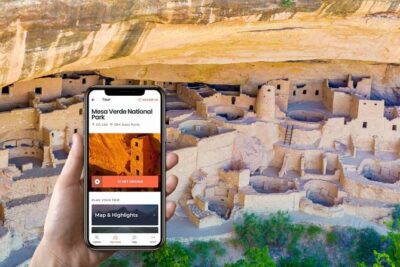
This experience runs through the VoiceMap application on your phone, with audio plus offline maps. The tour is private for your group (so you won’t be blended into strangers), and service animals are allowed.
Two practical tips make a big difference:
Download before you go. At least in principle, this should be a simple offline setup. Still, one frustration you can run into with any audio app is download trouble. If your connection is slow, do it where Wi-Fi is strong, not while you’re standing at a street corner freezing your fingers.
Be ready if the GPS gets finicky. The app uses geodata, and sometimes GPS can drift—especially near walls, buildings, or temporary fenced areas. If the app tells you you’re off route even when you feel you’re correct, don’t panic. Open your map inside the app and get back to the route line.
Entering Trondheim’s story: Viking roots to royal power
The Inner Circle concept is simple: follow a walking route that links key sites together so Trondheim doesn’t feel like disconnected landmarks.
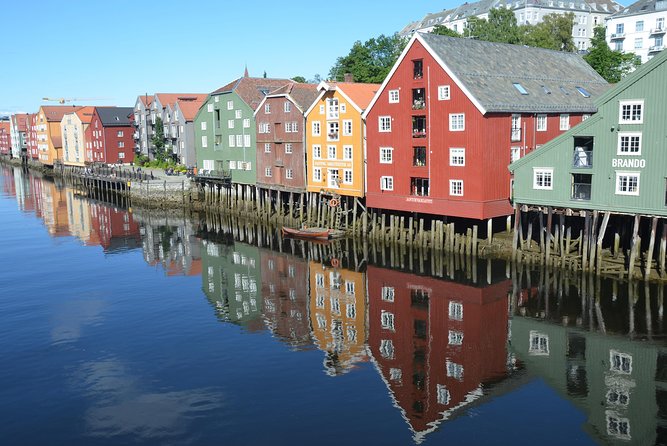
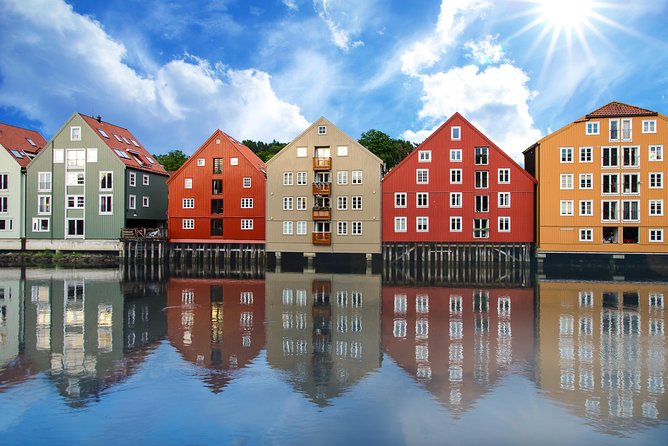
From the start, the narration frames Trondheim as a place where Viking heritage and royal history intersect. You’re walking through the inner center where wooden buildings, riverfront wharves, and religious sites sit close enough that the stories flow from one era into the next.
I like that this isn’t only “big names.” The audio connects people and events—like founding legends and major rebuilding—to the streets you’re standing on. It’s a way to turn a walk into a timeline.
Olav Tryggvason: why the audio starts with a king who mattered
One of the early stops centers on Olav Tryggvason, king of Norway from 995 to 1000 AD, credited with founding Trondheim in 997. The narration highlights his role in building the first Christian church in Norway.
If you’ve read Old Icelandic sagas, Olav’s name shows up again and again. Even if you haven’t, hearing the story this early helps you understand why Trondheim’s churches and sacred sites aren’t just architecture—they’re part of a long national thread.
Practical note while you listen
When the audio mentions founding dates and early Christian history, look up as you walk. Trondheim’s center has plenty of spots where the built environment feels layered—medieval bones under later styles. Even if you don’t “see” 997 AD, the narration gives your eyes a reason to notice.
Munkegata and Stiftsgården: the wooden palace moment
A major stretch of the walk runs down Munkegata, past Stiftsgården. This is the standout stop for a lot of people because it’s not subtle. Stiftsgården is described as the largest wooden palace in Northern Europe and it has been the official royal residence since 1906.
The building’s scale is what you feel first: more palace than house, baroque in style, and designed for a life of power and social importance. The audio also gives you a clear “who built it” story: it was constructed between 1774 and 1778 for Lady Cecilie Christine Schøller, widow of chamberlain Stie Tønsberg Schøller. The narration also notes she was a prominent figure of the city’s social elite.
Why this stop is worth slowing down for
If you rush, you miss what makes the building special: it’s wooden, it’s royal, and it’s massive. Take a few extra minutes here to look at the frontage and how it sits in the street. The audio’s details make it easier to read the building like a historical document instead of only a pretty facade.
The 1681 fire and the Baroque rebuild you can still feel
A big part of Trondheim’s story in this walk is the devastating fire of 1681 and what came after. The narration explains that the city was reconstructed in a Baroque direction.
This is the kind of historical link you normally hear in a lecture, not on a street walk. But when you’re standing in the center of the city, it makes more sense. Fires change cities. Rebuilds change design choices. And in Trondheim, you can hear the timeline as you move from one stop to the next.
If you’re the type who likes to know why a building looks the way it does, this is one of the best parts of the audio route.
Old Town Bridge: the gate of happiness detail that adds meaning
As you continue, the audio points out the Old Town Bridge, known as the gate of happiness.
That kind of nickname might sound like a marketing flourish, but on foot it helps you remember that bridges aren’t just crossings here—they’re landmarks in the city’s everyday movement. When you reach it, pause and let the audio frame what you’re seeing in a more human way than “historic structure.”
Kristiansten Fortress: city views, survival tactics, and wartime tragedy
Now you shift from royal buildings to defense and survival. The audio mentions Kristiansten Fortress perched on the hillside and then zooms in on its role.
Key points the narration covers:
- The fortress was built after the 1681 fire to keep watch over the city.
- It had a strategic military position and helped save Trondheim from conquest by Sweden in 1718.
- During World War II, it was taken over by the Nazis, and 23 Norwegian patriots were executed inside.
- Today it’s a museum, and the tour notes a dungeon that you can view.
There’s also a practical cue: if a flag is waving, it means the fortress is open to the public.
How to handle this emotionally (and still enjoy it)
This stop carries heavy content. If you like to keep a steady pace while walking, you might still want to slow down at the fortress area because the audio is doing more than explaining dates. It’s connecting the city’s safety—and its suffering—to a physical structure you can actually see.
Archbishop’s Palace grounds: a quieter, reflective stretch
The walk continues through the grounds of the Archbishop’s Palace. The narration gives you background on its role and history while you’re moving through the area.
This section is a nice contrast to the fortress stop. Fortress history is about strategy and crisis. The palace grounds are more about long-term authority and church power—another reminder that Trondheim’s importance wasn’t only political. It was religious and administrative too.
If you’re someone who enjoys pauses, this is where you can take them without feeling like you’re falling behind.
Nidaros Cathedral: the northernmost Gothic finale
The Inner Circle audio route ends at Nidaros Cathedral, the northernmost Gothic cathedral in the world, built over the tomb of St. Olav.
The audio closes with a sense of completion: you’ve moved through founding stories, royal settings, and defensive history, and you arrive at a spiritual anchor that ties it together.
Should you go inside?
Your ticket decision is yours. The walk brings you right to the cathedral area, and the cathedral itself is where your time can turn from listening to actually seeing the space up close. If you’re short on time, you can still enjoy the exterior approach and skip entry. If you love cathedrals, this is your moment.
Getting the most out of a self-guided audio walk
This kind of tour succeeds or fails based on how you handle the phone.
Here’s how to make it easier:
- Check the start location in the app before you commit. If you’re too close to barriers or temporary setup in the area, you might not be able to start where you expect.
- Use the app’s “force start” prompt if needed. There’s a reported fix for situations where the audio won’t trigger because of fencing.
- When the GPS voice complains, verify with your map. The app can drift off the route line even when you’re on track. Treat it like a suggestion, not an accusation.
And if you finish the route and still feel curious, good news: because you have offline access and lifetime availability, you can revisit key areas later without repaying for another guide.
Timing: how to fit 1 to 1.5 hours into a Trondheim day
A 1–1.5 hour walk is flexible. I’d place it:
- early in your visit if you want the city to make sense afterward
- late afternoon if you want softer light around the waterfront and cathedral area
- any time if you’re balancing other activities and want a “low effort, high context” segment
Because you’re walking, weather matters. If rain hits, you may not want extra stops at the fortress viewpoint. On dry days, you’ll probably enjoy lingering by the hillside and riverfront sections.
Who this self-guided tour suits best
This Inner Circle audio walk is a strong choice if you:
- want an easy way to connect Trondheim’s story across Viking-era roots, royal life, and major historical events
- prefer pacing that fits you, not a group
- enjoy historical context without needing a live guide
It’s also ideal for solo travelers and small groups because it stays private and self-directed. If you’re uncomfortable with downloading and running an app, you’ll want to plan extra time to get it working before you start.
Quick value check: why this is a smart way to see Trondheim
You’re paying for a guided route that includes:
- multiple major landmarks in one loop
- clear English audio narration
- offline maps and geodata
- lifetime access after download
For $7.99, the value isn’t the price number. It’s that you’re turning a walk through Trondheim’s center into a structured learning experience you can repeat.
Should you book Trondheim’s Inner Circle with VoiceMap?
If you want a straightforward, historical walking route with offline audio and lifetime replay, this is an easy yes. It’s also a good pick when you’ve only got a limited window and still want the city’s main anchors—Stiftsgården, Kristiansten Fortress, and Nidaros Cathedral—connected by story.
If you hate apps or you know you’ll struggle with phone setup, then consider a guided alternative. This tour runs on your smartphone, and on a walk, setup friction can ruin the mood faster than you’d expect.
FAQ
Is the Trondheim Inner Circle tour self-guided or do I meet someone?
It’s self-guided. You use the VoiceMap application on your smartphone to listen to the audio as you walk, and only your group participates.
How long does the Trondheim Inner Circle audio tour take?
The duration is approximately 1 hour to 1 hour 30 minutes.
What language is the audio narration in?
The tour is offered in English.
Do I need an internet connection during the walk?
The tour includes offline access to audio, maps, and geodata, so you can download content ahead of time.
Can I use the audio tour again later?
Yes. The tour provides lifetime access, and once downloaded, it never expires.
What does the tour cost?
It costs $7.99 per person.
Where does the tour start and end?
It starts in Trondheim, Norway, and it ends at Nidaros Cathedral, listed at Kongsgårdsgata 2, 7013 Trondheim, Norway.
Do I need to bring a smartphone?
Yes. A smartphone is not included, and the tour uses the VoiceMap application.
Is the tour private for my group?
Yes. It’s described as a private tour/activity where only your group participates.
Are service animals allowed?
Yes. Service animals are allowed.
What’s the cancellation rule?
Free cancellation is available up to 24 hours in advance for a full refund. If you cancel less than 24 hours before the start time, the amount paid is not refunded.