REVIEW · TRIESTE
Trieste Bus Tour with Audio Guide
Book on GetYourGuide →Operated by HopTour - Yestour srl · Bookable on GetYourGuide
Trieste hits different when you learn the city’s shape fast. This bus tour mixes route-synced audio with a comfortable ride so you can clock the waterfront and old-city landmarks without burning hours walking. Two things I really liked were the on-board audio guide in multiple languages and the practical hop-on hop-off freedom with a 24-hour ticket. One thing to factor in: the bus can’t always drop you right at doorsteps, and the Miramare area includes a walk that can feel long on hot days.
You’ll board at the waterfront near Molo Audace and roll through Trieste’s highlights at a pace that works for short visits. The audio is paired with what you’re seeing, and the staff offer help onboard—handy when you’re trying to plan which stops are worth your time. Also, if you’re traveling with a pet, it’s allowed only with a muzzle.
In This Review
- Key highlights at a glance
- A comfortable triage tour of Trieste’s main sights
- Price and what you actually get for about $19
- Where you board: starting at Molo Audace and Unità d’Italia Square
- The waterfront openings: Molo Audace, Unità d’Italia, and the Mandracchio Shore
- Salone degli Incanti and the Eataly area: quick hits near the water
- Lighthouse and the Campo Marzio zone: La Lanterna Baths and the Sea Museum area
- Grumula, Venezia Square, and the shift toward ancient Trieste
- Roman Theatre and Santa Maria Maggiore: one stop that teaches the whole center
- The Orthodox Temple complex and Sant’Antonio Nuovo: Trieste’s cultural mix
- Vittorio Veneto Square, the Grande Canal, and Ponterosso Square
- Piazza della Borsa and the commercial heart vibe
- San Giusto Hill: the castle-and-church payoff
- Goldoni Square, Carducci Boulevard, and Oberdan Tram Station
- Libertà Square train station and the Old Port hydrodynamics pass
- Barcola Pine Forest, Barcola Beach, and the longish Miramare walk reality
- Tre Novembre Shore and the Greek Orthodox Church of Saint Nicholas
- Getting the most out of hop-on hop-off without wasting time
- Comfort details that actually matter on a waterfront route
- Who this Trieste bus tour is best for
- Should you book this Trieste bus tour?
Key highlights at a glance

- Route-synced audio guide so the story matches the street you’re rolling past
- Hop on and hop off at stops, then catch the next bus if there’s a seat
- Air-conditioned ride that’s a real relief in summer heat
- USB charger and on-board assistance for day-one comfort
- Waterfront-to-hills route, from Molo Audace to San Giusto Hill and back
A comfortable triage tour of Trieste’s main sights
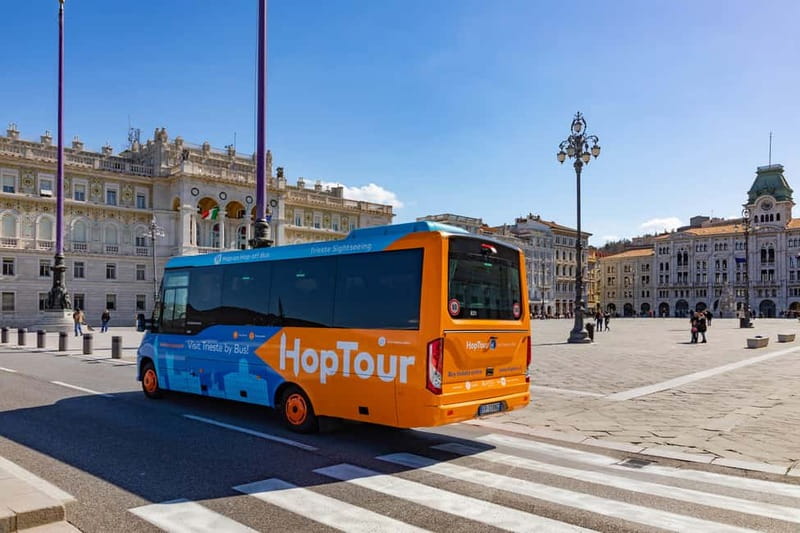
Trieste can feel spread out—sea one minute, hills and churches the next. This bus tour is built for that reality. You get an organized circuit that introduces you to the city’s layout quickly, with an audio guide that’s synchronized to the route, so you’re not just staring out a window.
Two practical perks make this work well for real trips: first, it’s easy to get your bearings (where the big landmarks sit relative to each other). Second, it’s not time-trapped. Your ticket is valid for 24 hours, so if you hop off at a stop you love, you can come back later and continue when you’re ready.
The main consideration is that hop-on hop-off is flexible, but it still depends on seat availability for the next bus. And at certain points—Miramare is the standout example—you’ll likely walk from the closest stop to the sights.
You can also read our reviews of more tours and experiences in Trieste.

Price and what you actually get for about $19
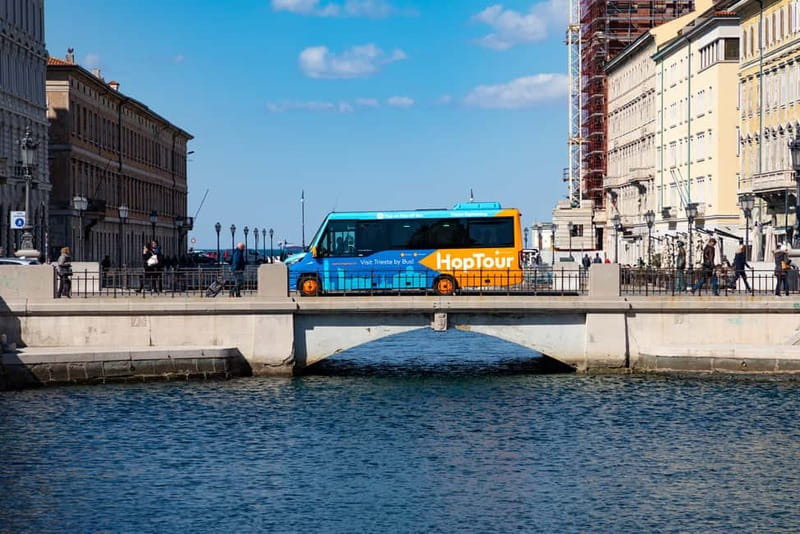
At around $19 per person, this is the kind of ticket that makes sense when you have limited time. You’re paying mostly for three things: transport around town, a working audio guide (in Italian, English, German, and Spanish), and the simple ability to jump off and explore without studying maps for hours first.
Because entrance tickets to attractions aren’t included, think of this as your orientation + scenic circuit, not a ticket to everything. If you want to go inside castles, museums, churches, or specific viewpoints, you’ll still need to buy separate entry tickets on your schedule.
For short visits, though, the value is strong: you can see a lot of Trieste’s signature landmarks in about 1.5 hours of ride time, then stretch it with extra stops thanks to the 24-hour ticket validity.
Where you board: starting at Molo Audace and Unità d’Italia Square
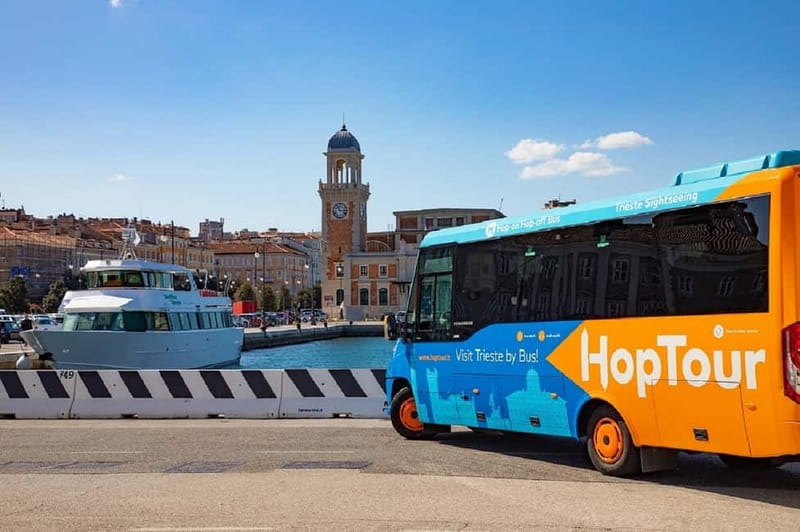
Board at Molo Audace, in front of Piazza Unità d’Italia. This matters more than it sounds. Starting at the waterfront puts you in the right mood immediately, and it also helps you understand the city’s logic: the sea promenade and old port area lead into the rest of the center.
This is also where the tour loops back to, so your day stays simple. If you’re arriving by train or staying around the center, you can plan your “first big orientation ride” without getting lost.
The waterfront openings: Molo Audace, Unità d’Italia, and the Mandracchio Shore
Right away, you’re looking at Trieste’s relationship with the water. You pass Molo Audace, including the story behind the pier’s setting on older shipwreck material. That kind of detail is the audio guide’s sweet spot: it turns a familiar seafront view into something you can picture in context.
From there, you’re rolling past the Mandracchio area near Piazza Unità d’Italia. Even if you don’t get off immediately, the ride helps you understand why Trieste feels different from many Italian cities. It’s coastal, industrial in places, and shaped by its port life.
Tip: If you’re the kind of person who likes to choose later, stay onboard for the first pass—then get off at the stops you keep thinking about.
Salone degli Incanti and the Eataly area: quick hits near the water
As you move along the Nazario Sauro shoreline, you’ll pass Salone degli Incanti – Eataly. This is one of those stops where the architecture and the setting make you stop noticing where you are and start noticing how the city looks.
Because this is a hop-on hop-off setup, you can treat it like a “maybe later” marker. If you’re hungry or want to browse before walking further, you’ve got an easy moment built into the circuit.
Why I like this segment: it keeps the tour from feeling like only old stone and churches. Trieste has a modern commercial layer, and the route reflects that.
Lighthouse and the Campo Marzio zone: La Lanterna Baths and the Sea Museum area
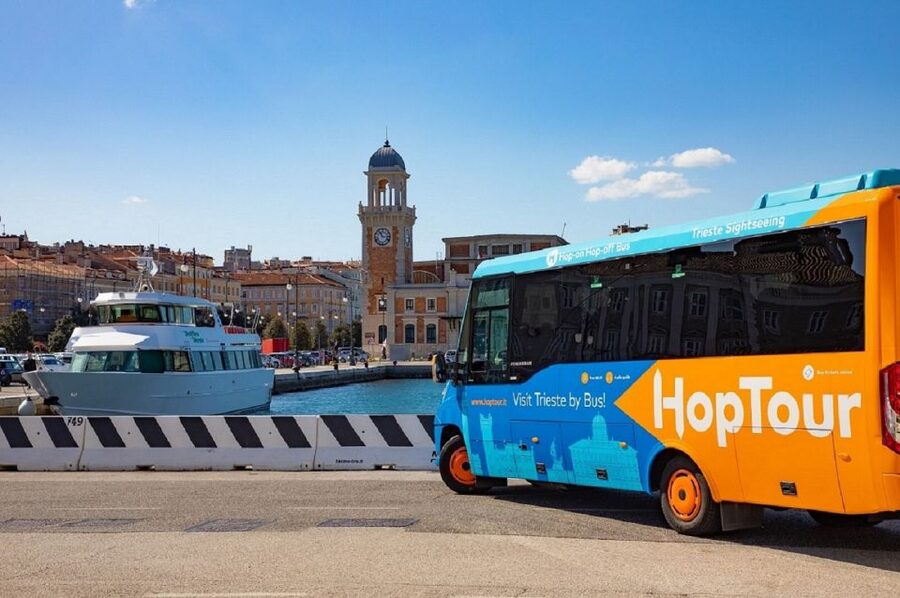
Next comes Via Ottaviano Augusto, where you pass the lighthouse and La Lanterna Baths area near Campo Marzio Station. The audio helps you read what you’re seeing beyond the obvious landmark silhouettes.
Then you move through Campo Marzio Street, passing the Sea Museum. Even if you don’t go inside, it’s a good reminder that the maritime story isn’t just scenery—it’s part of what Trieste is built on.
Practical angle: If you’re someone who likes museums but you don’t know which ones fit your interests, hopping off around this area for a quick look at the Sea Museum district can help you decide later.
Grumula, Venezia Square, and the shift toward ancient Trieste
You’ll pass Venezia Square along the Grumula shoreline. At this point, the tour begins to feel like it’s transitioning from the port’s big open views into the more tightly packed historic core.
That shift matters because Trieste’s best walks often require short bursts of orientation. Once you’ve seen where the squares sit and which way the hills run, your later wandering feels less random.
Roman Theatre and Santa Maria Maggiore: one stop that teaches the whole center
One of the most meaningful segments is the approach to Roman Theatre of Trieste on Teatro Romano Street, with Santa Maria Maggiore Church nearby. You get the Roman layer without forcing a long museum detour, and the audio guide helps you connect the dots between architecture and time.
Consideration: if it’s hot or you’re moving slowly, don’t try to do every single stop off the bus right away. This is a perfect stop to get off for 20–40 minutes, then decide if you want to keep going or cool down onboard again.
The Orthodox Temple complex and Sant’Antonio Nuovo: Trieste’s cultural mix
As you head toward Saint Spiridione Street, the audio highlights Maria Teresia and passes Saint Spyridon Orthodox Serbian Temple, followed by the area around Saint Antonio Square and Church of Sant’Antonio Nuovo.
This section is where Trieste stops being “just another Italian city.” You’re seeing a real pattern: different communities, different faiths, different architecture, all within the same urban fabric.
If you care about cities shaped by borders and trade routes, this is one of the most rewarding passes. Even if you don’t step inside, the bus route gives you a map of where the key buildings are clustered.
Vittorio Veneto Square, the Grande Canal, and Ponterosso Square
At Piazza Vittorio Veneto, you pass toward the Grande Canal area and on to Ponterosso Square (along Roma Street). The audio guide helps you understand why waterways matter here—beyond the obvious scenery.
This is also a good moment for people who like photos. The bus makes it easy to capture the layout quickly, without trying to reposition across town repeatedly.
Piazza della Borsa and the commercial heart vibe
You’ll pass along Italia Boulevard and reach Piazza della Borsa. This stop signals the city’s economic center and helps you see Trieste as both a historic port and a business hub.
I like that the tour isn’t only sentimental. It mixes the big landmark stories with the practical city-life angles.
San Giusto Hill: the castle-and-church payoff
When the route climbs to Saint Giusto Hill, you pass San Giusto Castle and Church. This is the payoff area for many first-time visits because it gives you the sense of elevation and defense, plus the visual anchor for the whole center.
If you want a classic “Trieste moment,” this is a strong place to consider getting off—if time and heat allow. The tour helps you learn the vantage point logic even when you’re not going far on foot.
Goldoni Square, Carducci Boulevard, and Oberdan Tram Station
Then you move through Piazza Carlo Goldoni and along Via Giosuè Carducci and Carducci Boulevard. Nearby you’ll pass Piazza Guglielmo Oberdan and the Tram Station.
This segment is good for understanding how Trieste moves today. It’s not only a museum city. You’ll see the everyday transit infrastructure that keeps the historic center connected.
Tip: If your day is short, treat this part as “look and memorize,” then return later to the one or two areas you want to explore longer.
Libertà Square train station and the Old Port hydrodynamics pass
As you approach Piazza della Libertà, you pass the Train Station. From a planning perspective, it’s useful: you can sanity-check your route back to where you need to be.
Next you pass Central Hydrodynamics of the Old Port of Trieste. The name sounds technical, but the context from the audio helps you see why it fits the city’s identity. Trieste’s port isn’t just scenery; it’s infrastructure and engineering.
Why this matters: it turns your ride into a story you can repeat when you’re back walking around—especially when you spot old structures and realize they’re part of a bigger system.
Barcola Pine Forest, Barcola Beach, and the longish Miramare walk reality
As the route moves to Barcola, you pass the Pinewood of Barcola and Barcola Beach. These are your open-sky moments—good for photos and good for taking a break from dense streets.
Then comes one of the most discussed stops: Miramare Castle. The bus passes Miramare Boulevard and the Barcola Crossroads area, plus Topolini Baths along the seafront.
Here’s the honest consideration: even when you’re close on the route, you may still need to walk to Miramare. On hotter days, this can feel tiring, especially if you’re carrying bags or you’re with someone who tires quickly. It’s still worth it for many people—but plan your time with that in mind.
Tre Novembre Shore and the Greek Orthodox Church of Saint Nicholas
After Miramare, you pass Tre Novembre Shore, including the Greek Orthodox Church of Saint Nicolò. This helps round out the cultural picture the tour already started with earlier in the ride.
If your brain likes patterns, you’ll notice how Trieste’s religious and architectural landmarks keep showing up along the route like markers, each adding a different piece to the city’s identity.
Getting the most out of hop-on hop-off without wasting time
The tour is designed so you can hop on and off at any stop, then catch the next bus if there’s a seat. The ticket is valid for 24 hours, which is great if you want a second loop later—or if you want to wait out weather.
Two practical things to keep in mind:
- Your seat is guaranteed for the course you booked. When you get off, your next ride depends on availability.
- Reboarding works best when you connect with the staff/on-board guide for guidance. One review note highlights that it can be limiting if you don’t confirm your plan before stepping back on.
Best strategy for first-timers: Start early, stay onboard through the first major landmarks, then pick just a couple of stops to explore deeper. Use the rest as your city map.
Comfort details that actually matter on a waterfront route
This is an air-conditioned bus with a decent setup for sightseeing. You also get a USB charger, which is surprisingly useful if you’re taking photos, checking maps, or translating on your phone.
On-board audio guide options include Italian, English, German, and Spanish. The audio system is synchronized to the route, so you’re not left guessing when the guide is talking about something you haven’t reached yet.
And there’s on-board assistance. In practical terms, it means you’re not fully on your own if questions pop up about timing or what you should do with your hop-on hop-off time.
Who this Trieste bus tour is best for
This is a strong fit if:
- You have a short stay and want a fast first-pass overview
- You enjoy learning city context through stories, not just sightseeing
- You want a break from walking, especially on hot or rainy days
- You’re traveling with family members who benefit from comfort and rest stops
It may be less ideal if:
- You plan to do lots of inside visits during the bus window (since entry tickets aren’t included)
- You hate walking from bus stops to major sights—Miramare is the key case to think about
Should you book this Trieste bus tour?
Yes, if you want a smart orientation in 1.5 hours and you’ll actually use the flexibility of the 24-hour ticket. For the price, the mix of transport + route-synced multilingual audio + stop-by-stop access is a convenient way to see Trieste’s main landmarks without over-planning day one.
I’d book it especially if this is your first time in Trieste and you want to decide what to revisit afterward. Just go in with the mindset that it’s for seeing and learning the city’s layout first, then picking your favorites for deeper exploration on foot.