REVIEW · ROME
The Colosseum’s Attic with 3rd, 4th & 5th Levels with Audio Guide
Book on Viator →Operated by Roman Tours · Bookable on Viator
Sky-high views above the Colosseum change everything. This experience shines because you get to visit the rare attic levels (3rd, 4th, 5th) and ride a glass panoramic lift to reach tiers many people never see. I also like that the route pairs the Colosseum with Roman Forum and Palatine Hill so you’re not just collecting a view, you’re stepping through the city’s power center too.
My one watch-out is the self-guided audio. One common hiccup is that the audio guide can feel light on location cues, and the directions for which lift to use for attic access could be clearer—so you’ll want to pay attention at the start and give yourself a little buffer.
In This Review
- Key Highlights You’ll Notice Fast
- Why the Colosseum’s Attic Tour Feels Like a Different Place
- Price and Value: What Your $71.89 Covers
- Start at Piazza del Colosseo and Don’t Rush the First Decision
- Entering the Colosseum: First and Second Floors
- The Glass Panoramic Lift: Built for Access (and Great Photos)
- Intermediate Gallery: Original Plaster and Ancient Marks
- Fourth and Fifth Tiers: Where the Views Get Real (and Stairs Matter)
- Palatine Hill in 45 Minutes: Imperial Ruins and Gardens
- The Roman Forum: Major Temples and the Via Sacra Route
- Audio Guide Reality Check: Self-Guided Works Best When You Stay Alert
- Who This Tour Suits (and Who Should Reconsider)
- Timing and Booking: Plan for Popular Demand
- Should You Book This Colosseum Attic Experience?
- FAQ
- How long is the Colosseum Attic tour?
- What language is the audio guide?
- Where do I meet for the tour?
- Is food included?
- What sites are included besides the Colosseum?
- How physically demanding is it?
- Is this a guided tour?
Key Highlights You’ll Notice Fast
- Rare attic access on the 3rd, 4th, and 5th levels, including the exclusive fifth-level attic area
- Panoramic glass lift that takes you up to the third tier (helpful for mobility needs compared with stairs-only routes)
- Original plaster and faint ancient marks in a preserved intermediate corridor between levels
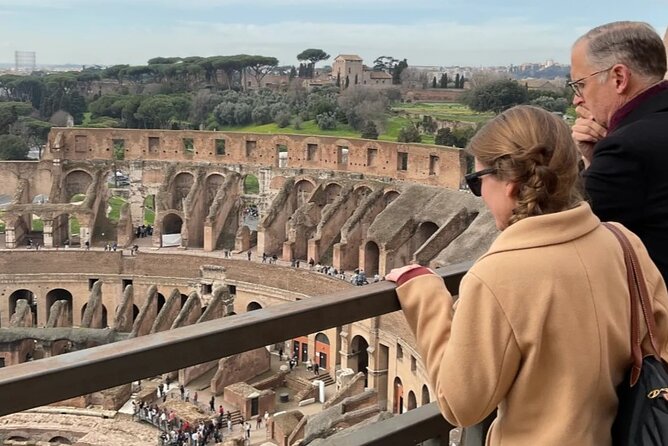
- Fourth and fifth tiers for big views of the Colosseum interior and the surrounding city
- Small-group feel with a maximum of 6 travelers, which can make the upper levels feel less hectic
- Forum-Palatine combo with entry to major temples and major imperial sites, plus S.U.P.E.R. sites and any ongoing exhibitions
Why the Colosseum’s Attic Tour Feels Like a Different Place
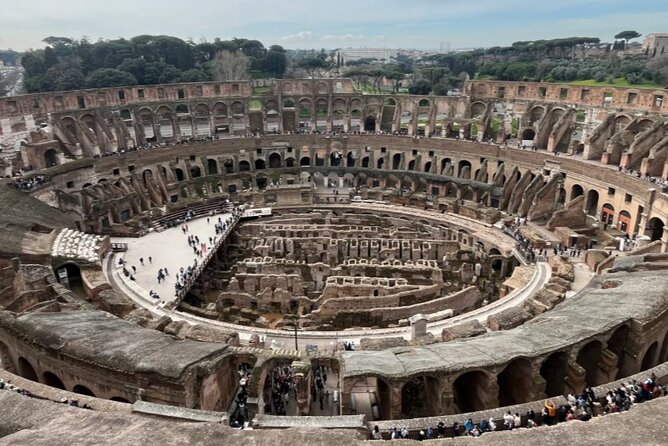
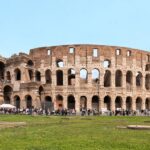
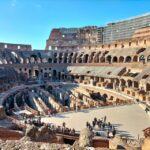
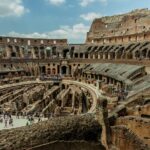
The Colosseum is impressive from the ground, but the attic levels change how you understand the whole arena. Up high, you see the structure the way spectators would have experienced it: rows stacked above rows, with the city wrapping around the monument.
Two things make this tour a strong pick. First, the upper-tier access is the whole point—especially the rare fifth-level attic area. Second, you’re not left “only” with the Colosseum; the same ticket package includes the Roman Forum and Palatine Hill, so you get the nearby storylines that make the Colosseum matter.
There’s also real value in the pacing. This is built as about 3 hours total, with about 1 hour 30 minutes in the Colosseum, then time for Palatine Hill (45 minutes) and the Roman Forum (45 minutes). If you want a focused trip that doesn’t sprawl into a half-day wandering mess, that timing helps.
You can also read our reviews of more tours and experiences in Rome.


Price and Value: What Your $71.89 Covers
At $71.89 per person, you’re paying for more than a ticket. The package includes Colosseum admission specifically tied to the attic area (valued at €18 per person) plus a reservation fee (valued at €2 per person). On top of that, you get Roman Forum and Palatine Hill access, entry to the Imperial Fora areas built by emperors, and S.U.P.E.R. sites, plus access to any ongoing exhibitions in the Colosseum or Forum–Palatine area.
For me, the value calculation is simple: the Colosseum’s upper levels are hard to get, and they’re the part that turns a standard visit into something you can’t replicate on a casual day. You’re also buying time efficiency. Instead of hunting multiple separate entries, you’re bundling major sites into one flow that fits within three hours.
One thing to remember: it’s self-guided with an audio guide, not a guided walk. That can be a plus if you like independence—but it also means you should expect to manage your own route and timing.
Start at Piazza del Colosseo and Don’t Rush the First Decision
The meeting point is straightforward: Colosseum, Piazza del Colosseo 1, 00184 Roma RM. Since the experience ends back at the same area, you can plan your day around returning there without a complicated finish.
This is also near public transportation, so you don’t need to make Rome harder than it already is. Still, I’d treat arrival timing seriously. One detail that shows up in real-world experience: if you miss the intended time slot, you may get turned away, so it’s smart to arrive with enough breathing room before you start queuing.
Here’s the key practical tip. This attic access involves an extra step after you enter the main Colosseum screening area: you’ll need to get to the additional lift for attic access. If you don’t catch that early, it can cost time and create that annoying scramble moment—especially on a route where some parts are stair-based.
Entering the Colosseum: First and Second Floors
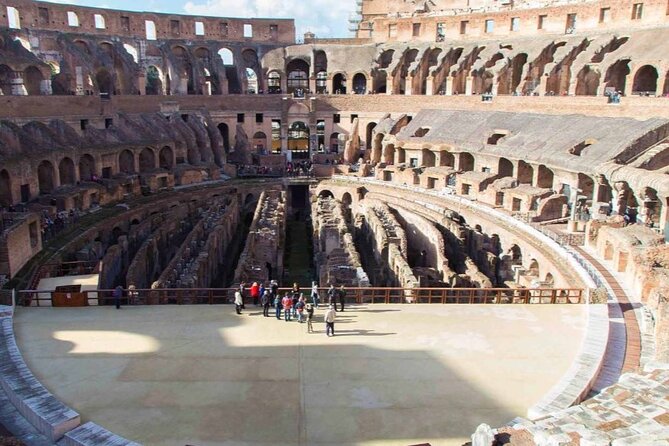
Once inside, you start on the first and second floors. Think of this as your “orientation layer.” You’re getting your bearings before you climb into the parts that feel more like a backstage route than a typical viewing deck.
From there, the tour shifts into the standout feature: moving upward by a panoramic lift. I like starting lower because it makes the upper views feel earned. It also helps you understand the arena bowl before you see it from above.
If you’re someone who prefers a quiet, step-by-step transition, this structure works. You’re not dropped directly into the most crowded zone first; you’re guided by the route into the attic sequence.
The Glass Panoramic Lift: Built for Access (and Great Photos)
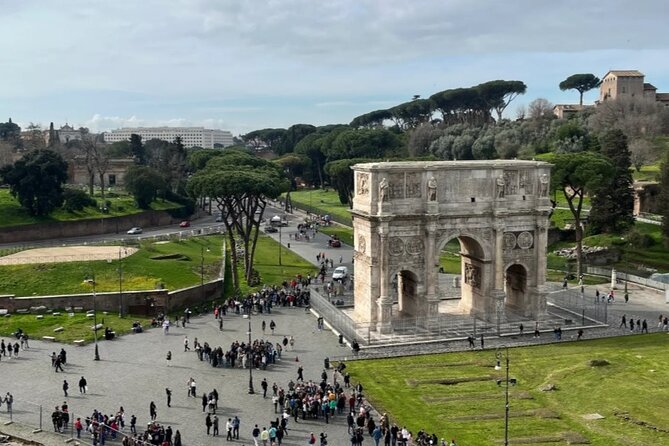
The panoramic lift is a big reason this experience is worth the premium. A glass elevator transports you to the third tier, and that matters for two groups: people who want upper-level access without a stairs-only slog, and people with mobility limitations who can manage the lift-to-floor transitions.
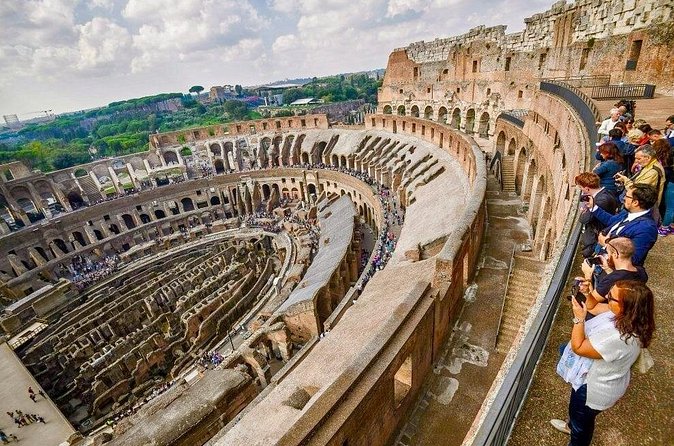
That same third-tier moment is also when the views start to feel big. From up here you can look across the Colosseum interior and get a clearer sense of how the arena fits into its urban setting.
Practical note: the lift is a win, but don’t assume you won’t still have to move. The later levels involve steep staircases, so if your knees are sensitive, pace yourself and use the railings.




Intermediate Gallery: Original Plaster and Ancient Marks
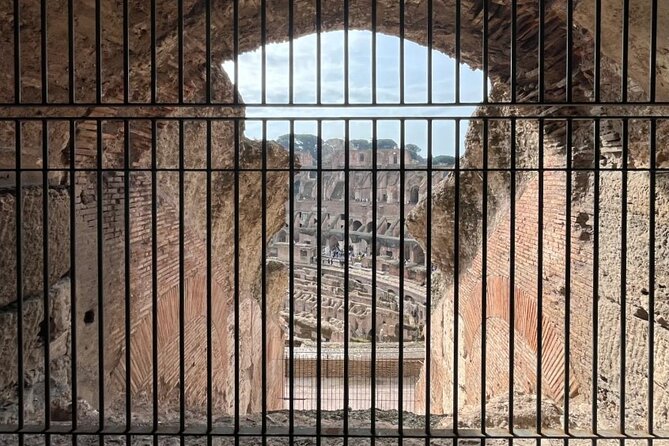
Between the second and third levels, there’s a well-preserved corridor that tends to be the quiet favorite for people who like detail. You get original white plaster with traces of ancient inscriptions and drawings—the kind of material that makes the Colosseum feel like it was lived in, not just photographed.
This is where you can slow down. Even if you don’t love architecture, these preserved surfaces give you a different kind of connection: you’re looking at evidence of human presence rather than just the monument’s shape.
If you’re using the audio guide, this is a good place to pause and listen because the physical clues are right in front of you. If the audio feels vague elsewhere, the preserved marks in this corridor give you something concrete to anchor the explanations.
Fourth and Fifth Tiers: Where the Views Get Real (and Stairs Matter)
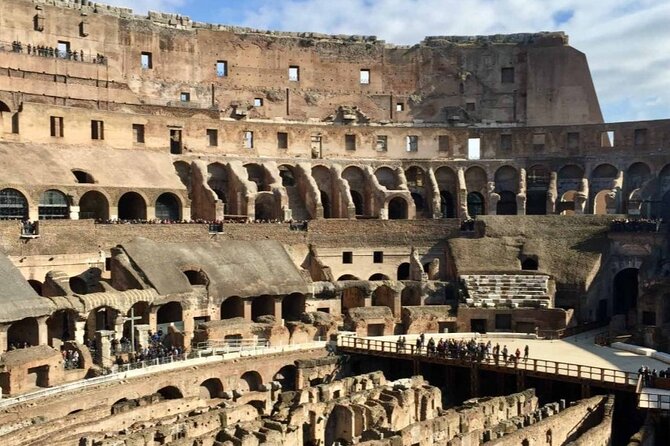
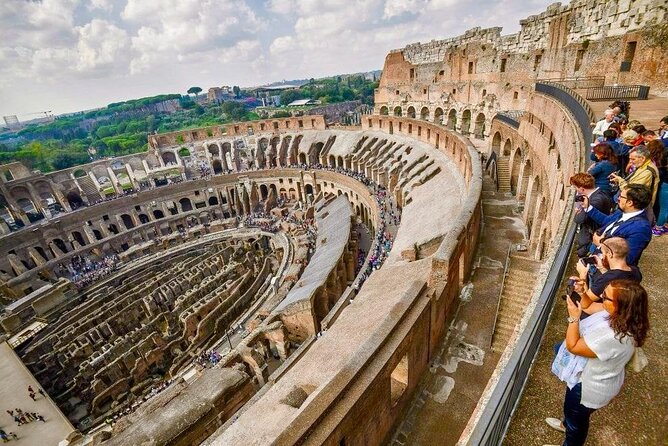
The fourth and fifth tiers are accessed by steep staircases. That’s the trade-off: it’s harder to get to, but the payoff is real. Once you’re up there, you can see the Colosseum’s interior from a higher perspective and look out toward the surrounding cityscape.
This is also where the experience becomes more emotional. Standing near the top, you’re forced to picture the scale from the spectator side—crowded seating, shifting light, and all those stacked rows.
One consideration: the route is not ideal if you fear heights. Also, steep stairs mean moderate physical fitness is required. The tour is still described as suitable for people with moderate fitness, but this is the segment where you’ll feel it.
Palatine Hill in 45 Minutes: Imperial Ruins and Gardens
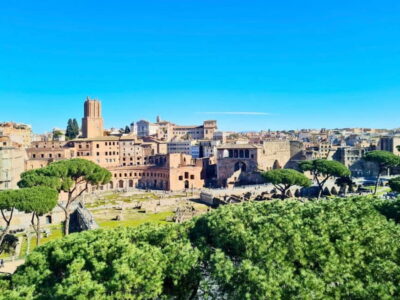
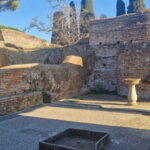
After the Colosseum, you shift to Palatine Hill for about 45 minutes. This is a smart pairing because Palatine is where the “so what” of Roman power becomes visible: ruins of the Imperial Palace areas and a set of gardens that give your brain a breather after the arena.
The highlight here is the combination of views and ruins. You’re not only looking at stones; you’re looking out over a landscape of Rome that helps you understand why emperors wanted this area. Even with limited time, Palatine’s perspective makes the Colosseum stop feel less random.
If you like a calmer pace, the gardens can help. If you love pure ruins, keep your focus on the palace ruins zones rather than getting pulled into every side path.
The Roman Forum: Major Temples and the Via Sacra Route
Next is the Roman Forum for about 45 minutes. This portion is structured around key sights: the Temple of Julius Caesar via the Sacra, the Temple of Saturn, the Temple of Vesta, and the Temple of Romulus and Temple of Antoninus.
I like this lineup because it gives you variety without overwhelming you. You get political-religious symbolism (temples and sacred routes) plus the story of Roman life centered around civic space.
In a short visit, your goal should be orientation. With Forum stops, it’s easy to feel lost if you’re trying to read everything at once. Use the audio guide to connect what you’re seeing to what the buildings were for, and don’t try to chase every corner.
Also, since the package includes entry to the Imperial Fora and S.U.P.E.R. sites, you might find that there are additional optional areas available while you’re in the broader Forum–Palatine zone. You can choose to stick to the best-known temples or branch into special stops if the timing works.
Audio Guide Reality Check: Self-Guided Works Best When You Stay Alert
This is a self-guided experience with an audio guide in English. That can be great—no waiting, no group herding, and you can spend extra time where you care most.
The catch is accuracy of location cues. One issue that shows up is that the audio tour isn’t always strongly location-specific, so you might hear a description and have to figure out where you are in the sequence. Another problem point: clearer instructions for the correct elevator for attic access would help.
My practical fix is simple. Before you move into the lift sequence, take a moment to confirm you’re in the right route. Then, while in each section, watch for physical cues—stair access, corridor changes, and signage—so the audio content has something to “snap” to.
If you’re the kind of person who likes a tight plan, you’ll get more out of this than someone who wants everything to be effortless and frictionless.
Who This Tour Suits (and Who Should Reconsider)
This works especially well if you want something specific: upper-level Colosseum access plus a solid connection to Forum and Palatine within a three-hour window.
I’d especially recommend it for:
- People who hate crowded viewpoints and want the attic experience where capacity is controlled
- Photo lovers who want a new angle—top views look different from the standard photo spots
- History fans who like architectural details such as preserved plaster and wall marks
- Anyone who wants a more independent pace with an audio guide
I’d be more cautious if:
- You’re uneasy about heights or steep staircases (the fourth and fifth tiers are stair-based)
- You need crystal-clear, step-by-step guidance at every turn (audio cues may need your attention)
- You expect a fully guided tour with a person leading you from stop to stop (this one is self-guided)
Timing and Booking: Plan for Popular Demand
This experience is commonly booked about 62 days in advance on average. That’s a sign it’s not a last-minute type of ticket, especially if you want a specific day or a time when you can arrive early and stay unhurried.
Because the group size is capped at 6 travelers, availability can tighten quickly. If you already know your dates, booking ahead tends to reduce stress.
In the Colosseum area, the easiest way to have a smooth day is to treat your first decision—where you’re going after entry—as the most important one. Once you’re on the correct attic lift route, the rest flows more naturally.
Should You Book This Colosseum Attic Experience?
If your goal is to see the Colosseum from the kind of height most people never reach, this is a very strong pick. The biggest reason is the combination of rare attic access and panoramic lift options, plus the fact that you’re also getting Roman Forum and Palatine Hill entry in the same package. You’ll come away with more than photos—you’ll understand the monument’s scale and Roman context in one tight loop.
Book it if:
- You want the upper tiers and don’t mind steep stairs for the very top
- You’re comfortable with self-guided pacing using an English audio guide
- You care about getting away from the busiest viewing zones
Skip or reconsider if:
- Heights and steep stairs are a deal-breaker
- You need audio to be perfectly location-predictable from the start
If you can handle that stair segment and you’re okay staying alert in the first part of the route, this one is a smart, high-value way to do the Colosseum beyond the obvious.
FAQ
How long is the Colosseum Attic tour?
It’s about 3 hours total.
What language is the audio guide?
The experience includes an English audio guide.
Where do I meet for the tour?
You meet at Colosseum, Piazza del Colosseo 1, 00184 Roma RM, Italy.
Is food included?
No. Food and drinks are not included.
What sites are included besides the Colosseum?
You also get access to the Roman Forum and Palatine Hill, plus entry to the Imperial Fora and S.U.P.E.R. sites, and any ongoing exhibitions in the Colosseum or Forum–Palatine area.
How physically demanding is it?
It’s recommended for people with moderate physical fitness, and the 4th and 5th tiers involve steep staircases.
Is this a guided tour?
It’s self-guided, with an audio guide provided.