REVIEW · PISA
The best of Pisa: a self-guided audio tour from Tuttomondo to the Leaning Tower
Book on Viator →Bookable on Viator
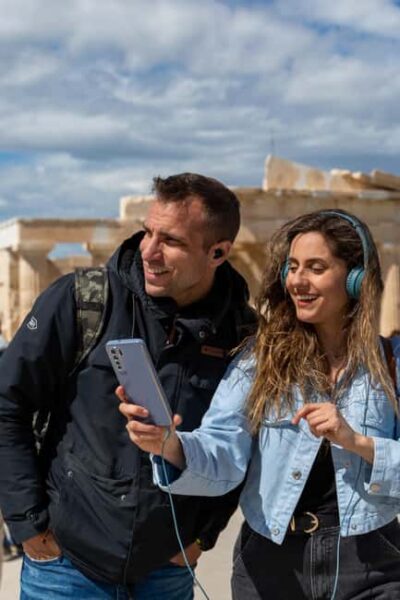
Pisa is better when you control the pace. This self-guided audio tour lines up the city’s top sights—from Keith Haring’s Tuttomondo mural to the Leaning Tower—without herding you along. I especially like the offline access (audio + maps) and the fact that you can do it fast (about 40 minutes) or linger (up to an hour) at the spots that catch your eye. The main thing to watch is the download: if you show up with no internet and you never downloaded the tour, you can’t magically stream it.
Here’s the bonus: the route is designed to help you get oriented in Pisa quickly. You’re not buying museum tickets or signing up for a long guided lecture, and you still get clear storytelling along the way. One more consideration: you’ll need your own phone and headphones to listen, and the ending is outside the Leaning Tower area, so you don’t get an included tower visit.
In This Review
- Key Highlights at a Glance
- How the Tuttomondo to Leaning Tower Audio Walk Fits Your Day
- Start at Monumento a Vittorio Emanuele II: Get Your Bearings Fast
- Keith Haring’s Tuttomondo: A Modern Warm-Up in Pisa
- Palazzo Gambacorti and Ponte di Mezzo: The Walk Through Pisa’s Center
- San Michele in Borgo and Torre del Campano: When the Route Gets Character
- Piazza dei Cavalieri and the Università di Pisa: Landmarks That Feel Purpose-Built
- Finishing Outside the Leaning Tower: What You Do After the Audio Ends
- Price and Value: Why $8.99 Makes Sense for a First-Time Orientation
- The Practical Stuff That Can Make or Break Your Experience
- Who This Tour Is Best For (and Who Might Want Something Else)
- Should You Book This Self-Guided Pisa Audio Tour?
- FAQ
- How much does the Pisa self-guided audio tour cost?
- How long does the tour take?
- Where does the tour start and end?
- Is the tour available at any time during the day?
- Is audio available offline?
- What app do I use for the tour?
- Does this tour include museum tickets or entrance fees?
- Do I need to bring my own headphones and smartphone?
- Can I start at my own pace and stop for photos?
- Is the tour only for my group?
Key Highlights at a Glance
- Offline audio and mapping so you’re not stuck hunting for data
- Flexible timing: start at any time and finish in 40–60 minutes
- Tuttomondo by Keith Haring kicks off the route with something modern
- Pass-by route through Pisa’s core so you can keep walking without stress
- English lifetime access with the VoiceMap app for Android and iOS
- Ends outside the Leaning Tower at the Piazza del Duomo to cap it all off
How the Tuttomondo to Leaning Tower Audio Walk Fits Your Day
This tour works like a well-planned walk you can drive yourself. You follow prompts and listening tracks on your phone, and you’re free to stop for photos, slow down for views, or just keep moving. The total time is flexible—about 40 minutes to 1 hour—so it fits neatly into a half-day in Pisa.
You can also start whenever your schedule allows. The tour is listed as operating all day, so you don’t need to build Pisa around a tight appointment time. That’s a real advantage if your train arrives late, you’re recovering from jet lag, or you just don’t want your plans locked to a tour group.
The other big benefit: it’s built to reduce friction. Instead of navigating alone with a map app and guessing what you’re looking at, the commentary helps you understand the route as you walk. That makes the walk feel less like “circling landmarks” and more like “connecting the dots.”
You can also read our reviews of more tours and experiences in Pisa.

Start at Monumento a Vittorio Emanuele II: Get Your Bearings Fast
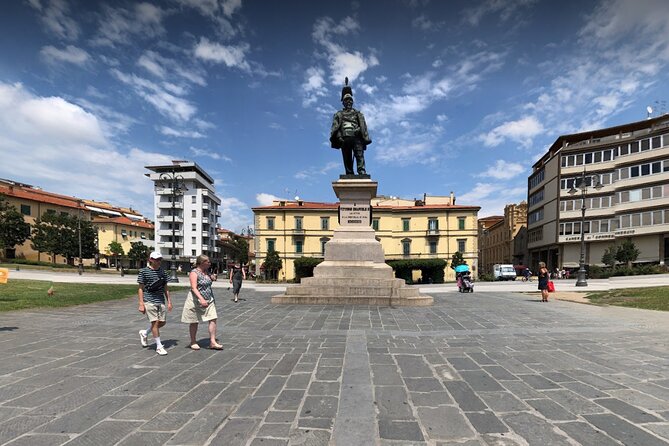
Your walk begins at Monumento a Vittorio Emanuele II, 56125 Pisa. This matters more than you’d think. Having a clear start point near public transportation helps you drop into the center without wandering in circles.
From the start, you’re aiming for Pisa’s main historic core—so you’ll spend your time on the parts that feel most “Pisa.” I like starting here because it puts you immediately into a walkable rhythm. You’re not hunting for where to begin, and you don’t have that awkward moment where you realize you missed the first stop.
Also, this is a private tour/activity in the sense that only your group participates. You’re not waiting around for strangers or dealing with someone else’s pace. If you like traveling with your own tempo—silently fast, chatty slow, or somewhere in between—this setup fits.
Keith Haring’s Tuttomondo: A Modern Warm-Up in Pisa
The first stop is Tuttomondo by Keith Haring. This mural is one of those Pisa moments that instantly breaks the “only old buildings” mood. It’s a strong way to begin because it makes the city feel layered: yes, Pisa’s famous for medieval stone, but it also has a contemporary pulse.
The audio here gives you context so you’re not just snapping photos and moving on. What I like about using the mural as the kickoff is that it trains your eyes. After you see that burst of color, the rest of the walk feels like a comparison: modern art versus classic architecture, street-level energy versus landmark gravitas.
Don’t rush this part. Even if your whole tour takes only an hour, give yourself a few minutes to look closely. The best part of self-guided audio tours is that you can pause your listening and take a real look without anyone tapping their foot.
Palazzo Gambacorti and Ponte di Mezzo: The Walk Through Pisa’s Center
Next, the route passes Palazzo Gambacorti. Then you go over Ponte di Mezzo. Both are “pass by” stops, which is actually a smart way to structure an audio walk. You get the storytelling without being forced to enter something or wait in line.
For the palazzo section, the point is orientation: it helps you notice what kind of buildings you’re seeing and why they matter in the city’s story. Since tickets aren’t included, you’re not losing time to museum logistics. You’re simply learning as you go.
Then there’s Ponte di Mezzo, a bridge stop that helps shift your perspective. Bridges do that naturally—you see the city at a different angle, and your brain gets a fresh spatial reference point. Even when you’re not staying still long, a bridge break is good travel chemistry. It resets your walking rhythm and gives you a moment to reframe the city.
If you like photography, this is where your phone camera will earn its keep. If you’re traveling with kids or anyone who gets restless, this is also a good “movement checkpoint” because it gives a clear reason to look up.
San Michele in Borgo and Torre del Campano: When the Route Gets Character
As you continue, you pass San Michele in Borgo and Torre del Campano. These are the stops that help the walk feel distinctly Pisa rather than “generic Italy square hopping.”
Churches and towers are often the hardest part of DIY travel to appreciate, because they’re easy to overlook when you’re moving fast. The audio gives you a narrative thread so you’re not just noticing shapes—you’re understanding why they’re there and what role they play in the overall scene.
Here’s the practical benefit: these stops are spaced so you get small payoffs along the way. Instead of one big thrill at the end, you get a steady flow of “oh, so that’s what I’m looking at.” That’s what keeps a 40–60 minute self-guided route from feeling like empty walking.
And if you’re the kind of traveler who likes to linger, these are natural places to slow down. You’ll likely want a pause for photos, and you might even want a quick moment just to stand and take in the details while the narration fades in and out at the right time.



Piazza dei Cavalieri and the Università di Pisa: Landmarks That Feel Purpose-Built
Next up, the route passes Piazza dei Cavalieri and Università di Pisa. These stops are the ones that often make Pisa feel more like a working city and less like a postcard.
Piazzas are social spaces, and universities tend to bring people to them. Even without getting into buildings, you can feel that energy in the layout. The audio helps you connect the dots so you understand the significance of what you’re seeing—without forcing a time-consuming entry ticket you didn’t plan for.
I also like that the route keeps you walking through the everyday fabric of the city. Some Pisa tours focus almost entirely on the Big Icon. This one still delivers that, but it earns the ending by letting you experience how the city functions around the landmarks.
One nice extra: a positive note from a past guest called out that the gelato recommendation was spot on. So if the audio nudges you toward a sweet stop, take it seriously—you’ll save time sorting out where to go and you’ll avoid random-hit-or-miss choices.
Finishing Outside the Leaning Tower: What You Do After the Audio Ends
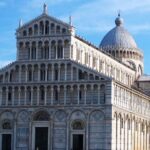
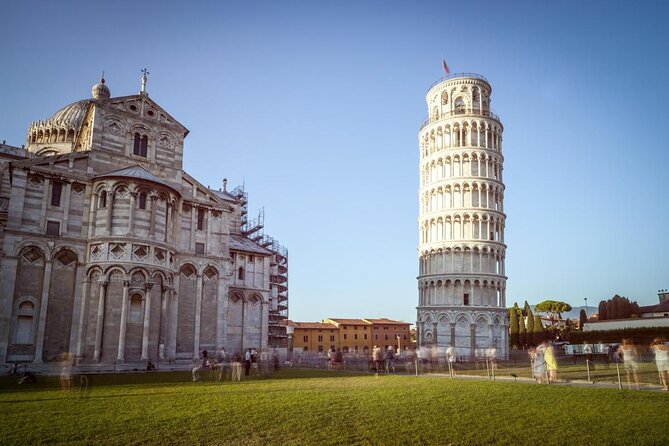
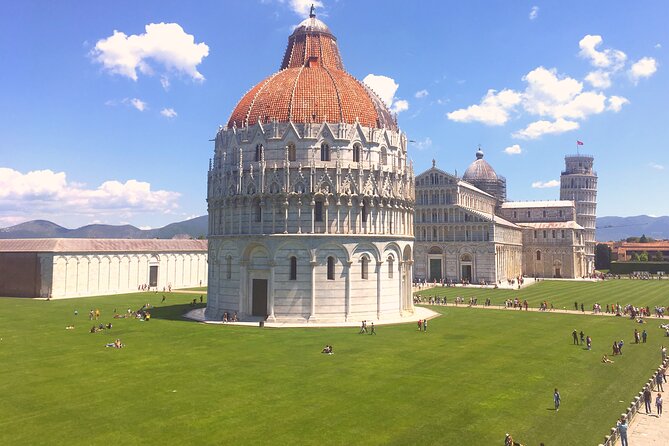
The tour ends outside the Leaning Tower of Pisa in Piazza del Duomo. That last detail is important: you’re not automatically getting tickets or access to climbing or entering any sites along the way. Tickets or entrance fees are not included.
What you do get is a strong finishing moment. By the time you reach this area, you’re likely already in the right mindset: you’ve seen the surrounding landmarks, you understand you’re in a historic zone, and you’ve had time to set up your best photo angles.
If your plan includes seeing more at the Piazza del Duomo complex, treat the audio ending as your launching point. You’ll know where you are, why it matters, and where to head next.
Price and Value: Why $8.99 Makes Sense for a First-Time Orientation
At $8.99 per person, this is priced like a low-stress add-on that turns into a useful guide. What makes it good value isn’t just the cost—it’s what you get for that price.
You receive lifetime access to the tour in English, and the VoiceMap app provides offline access to the audio, maps, and geodata. Offline matters in Italy because it can save you data (and stress) in areas where you’d otherwise be relying on a weak connection. It also means you can keep moving even if your phone’s signal is spotty.
And because this is self-guided, you’re not paying for time you don’t use. You can finish closer to 40 minutes if you’re efficient, or stretch it near an hour if you’re stopping for photos and absorbing the details.
So yes, it’s inexpensive. But it’s also structured. That’s what makes it feel fair: you’re paying for a route, audio guidance, and offline tools—not just generic directions.
The Practical Stuff That Can Make or Break Your Experience
This is where I’d be careful, because the tour depends on your phone. The negative experience I’ve heard about this kind of audio tour is simple: someone arrives without downloading first, has no internet, and can’t get the content to play. The tour is designed to be fully offline after downloading, but that initial download step is crucial.
So do this before you leave:
- Download the tour while you have Wi-Fi (or any reliable connection).
- Bring headphones (they aren’t included).
- Bring a phone charge you can trust. One hour of audio and GPS can still be a battery drain.
Another practical point: the tour is “private” for your group, but it’s still a walk. Comfortable shoes are a must, especially if you’re doing it on a busy day or during warmer weather.
Also, if you don’t want to think about anything, remember this is a walking route with narration. It doesn’t include transportation, food, museum entry, or tickets. That’s a plus for some travelers and a minus for others, depending on what you want Pisa to feel like.
Who This Tour Is Best For (and Who Might Want Something Else)
This tour is ideal if you:
- Want a quick Pisa orientation without locking yourself into a group schedule
- Like walking and reading the city through a guided narrative
- Appreciate offline audio and maps so you’re not tied to data plans
- Are traveling as a group that wants its own pace
It’s also great if you’re balancing time with other cities. Pisa can be easy to “rush,” but with a self-guided route you can make it feel complete without turning your day into a checklist.
You might want a different option if you:
- Prefer a live guide who can answer questions in real time
- Want included entry into museums or the tower area (not included here)
- Don’t want to deal with phone setup and downloading before you go
Should You Book This Self-Guided Pisa Audio Tour?
If you’re the kind of traveler who enjoys walking, wants a clear route, and likes to stop when something grabs your attention, I think this is a smart booking. The $8.99 price is hard to argue with when you get lifetime English access and fully offline audio/maps. And the route’s flow—from Tuttomondo’s Keith Haring mural to the Leaning Tower area—makes it feel like you’re seeing Pisa in the right order.
The only reason I’d hesitate is if you’re not comfortable with the “download first” rule. Do the download before you head out, bring headphones, and you’re set.
If you can manage that, this tour is a solid way to get your bearings fast and still enjoy Pisa like you actually have time.
FAQ
How much does the Pisa self-guided audio tour cost?
It costs $8.99 per person.
How long does the tour take?
Plan for about 40 minutes to 1 hour.
Where does the tour start and end?
It starts at Monumento a Vittorio Emanuele II in Pisa and ends outside the Leaning Tower of Pisa in Piazza del Duomo.
Is the tour available at any time during the day?
Yes. The tour is listed as open daily from 12:00 AM to 11:59 PM.
Is audio available offline?
Yes. The tour includes offline access to the audio, maps, and geodata.
What app do I use for the tour?
You’ll use the VoiceMap app on Android and iOS.
Does this tour include museum tickets or entrance fees?
No. Tickets or entrance fees for attractions are not included.
Do I need to bring my own headphones and smartphone?
Yes. A smartphone and headphones are not included.
Can I start at my own pace and stop for photos?
Yes. The tour is self-guided, and you can take pauses as you like.
Is the tour only for my group?
It’s listed as a private tour/activity, so only your group participates.
—
If you want, tell me your travel dates and whether you’re doing Pisa as a day trip. I can suggest a simple timing plan to pair this walk with whatever you want to see at the Piazza del Duomo area next.