REVIEW · PISA
Pisa: Camposanto and Cathedral Entry Tickets and Audio Guide
Book on GetYourGuide →Operated by D'Uva · Bookable on GetYourGuide
Pisa rewards patience, but this one helps you beat the clock. You get skip-the-line access to the Camposanto and an official audio guide that keeps the pace moving through the Cathedral and the Monumental Cemetery. I like that you can choose from five languages, and I also like how the audio guide is built around a simple route so you’re not stuck guessing what you’re looking at. The main drawback is that the audio experience may feel a bit confusing in the Camposanto if you’re trying to figure out where you are while you listen.
This is a good, time-smart way to do two big sights in Piazza dei Miracoli without burning an hour in ticket lines. It’s not a guided walking tour with a live human explaining everything word-for-word. It’s more of a smart self-guided circuit, and that’s a plus if you like independence.
In This Review
- Key Things I Think You’ll Notice Right Away
- Skip the Line at Piazza dei Miracoli: How the Ticket Combo Actually Helps
- Collecting Your Audio Guide at the Desk Near the Sinopie Museum
- Your 1-Hour Self-Guided Circuit: What You’re Really Doing
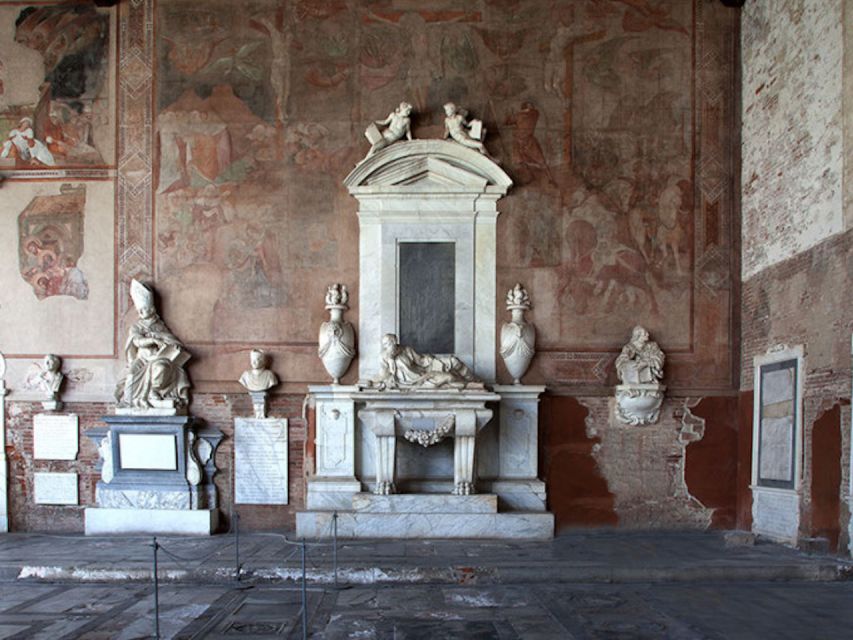
- Camposanto Monumental Cemetery: Roman Sarcophagi, Frescoes, and Art
- Pisa Cathedral Free Access: What the Audio Guide Adds
- Two Italian Romanesque Architecture Masterpieces: Why the Audio Route Makes Sense
- Languages, App Feel, and Real-World Usability
- Value for $23: What You’re Paying For (and What You’re Not)
- Who This Is Best For (and Who Should Consider Something Else)
- Should You Book This Pisa Camposanto + Cathedral Audio Ticket?
- FAQ
- FAQ
- Where do I collect the tickets and audio guide?
- Where do I show my reservation?
- How long does the experience take?
- What’s included with this ticket?
- Which languages are available for the audio guide?
- Do I need to pay extra for the Cathedral entry?
- Does this help avoid long waits?
- What should I bring with me?
- Are there any dress restrictions?
- What’s the cancellation policy and payment option?
Key Things I Think You’ll Notice Right Away
- Skip-the-line Camposanto entry, so you can start fast at Piazza dei Miracoli
- Audio guide in 5 languages (Italian, English, Spanish, French, German)
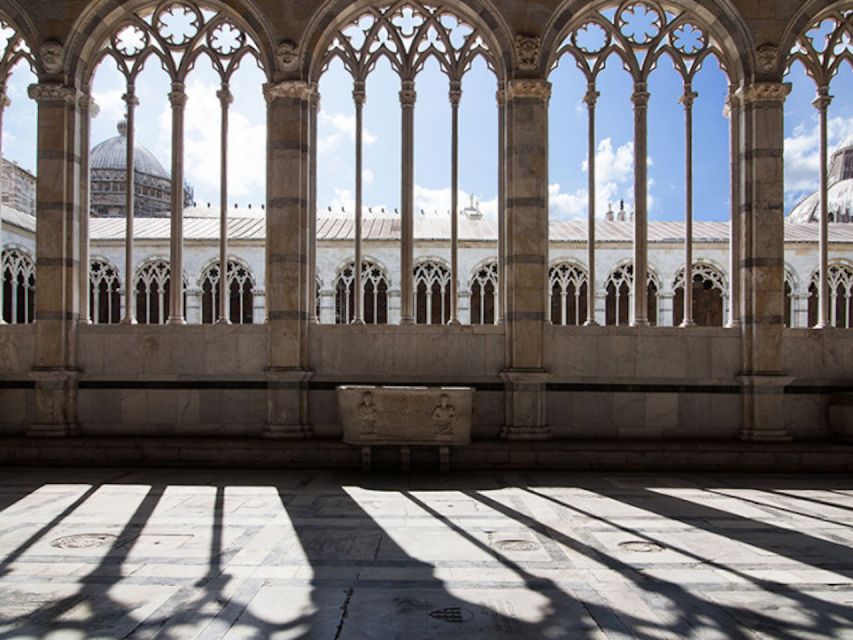
- Roman Sarcophagi and frescoes in the Monumental Cemetery area
- A route designed to show you the Camposanto + Cathedral in the easiest order
- Two Italian Romanesque architecture masterpieces highlighted by the audio route
- A simple collection point at the Audioguide Desk before you go in
Skip the Line at Piazza dei Miracoli: How the Ticket Combo Actually Helps
Piazza dei Miracoli is one of those places where everything is close together, but the lines can still eat your time. This ticket set targets that frustration. You collect your materials at the Audioguide Desk in Piazza dei Miracoli, then you use the separate entrance to get into the Camposanto without lining up at the regular ticket office.
It’s also built for a tight window. The whole experience is scheduled for about 1 hour, and that matters in Pisa because you’ll often want time afterward for wandering around the square, photos, and the rest of your day. If your schedule is packed, this combo is a practical way to avoid turning Pisa into a queue simulator.
One small practical note: dress code matters in this area. Shorts and skirts aren’t allowed. If you’re visiting in warm weather, plan for light layers that still pass the rules.
You can also read our reviews of more tours and experiences in Pisa.

Collecting Your Audio Guide at the Desk Near the Sinopie Museum
Before you start, you’ll pick up your reservation at the Audioguide Desk in Piazza dei Miracoli. The key detail is where to show your reservation: the desk is by the entrance to the Sinopie Museum.
Bring a passport or ID card. That’s the only “paperwork” you’re asked to have, but it’s required, so don’t show up with just your phone and hope.
Then you’ll be ready to enter the Camposanto with the skip-the-line ticket. The Cathedral is included too, with free access as part of the package. So instead of paying separately for each place, you’re buying one focused circuit: cemetery-first, then Cathedral time (following the audio route).
Your 1-Hour Self-Guided Circuit: What You’re Really Doing
This experience is self-guided, with an audio guide giving you a route through both the Camposanto and the Cathedral of Pisa. The audio guide isn’t just random facts in the background. It’s designed as a track so you know what to look for as you move.
That’s why it’s such good value for the price. You’re paying for three things in one: skip-the-line entry (time saved), Cathedral access (included), and an audio guide (context so your visit isn’t just eyeballing stone).
Still, you should match your expectations to the format. Reviews point out that the Camposanto can feel a bit hard to navigate while listening. If you’re the type who needs constant orientation cues, you might want to pause occasionally and check where you are rather than trying to walk and listen at the same time.
Camposanto Monumental Cemetery: Roman Sarcophagi, Frescoes, and Art
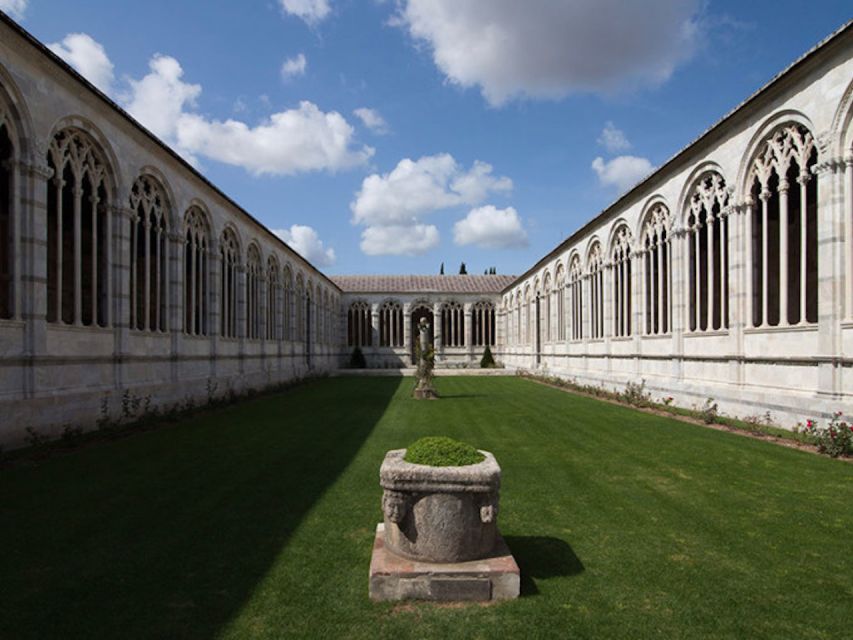
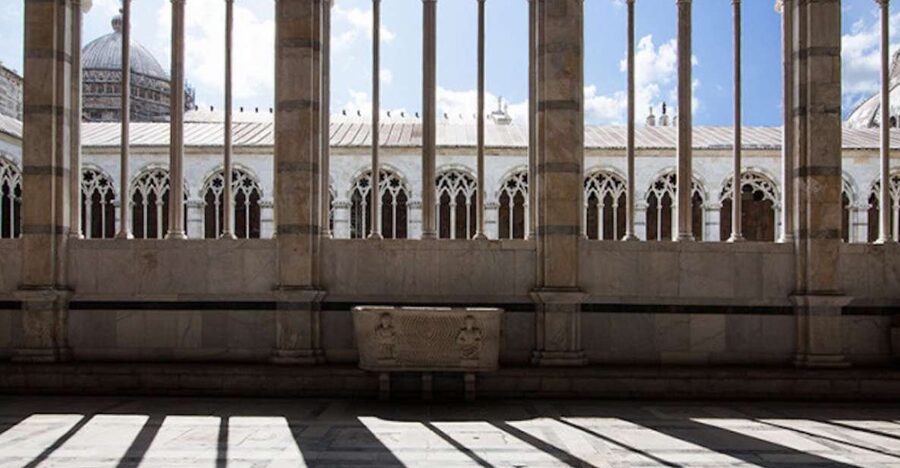
The Camposanto is what many people come to Pisa for—partly because it’s visually stunning, and partly because it feels quieter and more contemplative than the main square. Once you enter with your ticket, the audio guide takes you through the areas you should focus on in sequence.
What makes this place special is what you can actually see there:
- Roman Sarcophagi (so you’re looking at ancient sculpture and funerary history)
- Frescoes and artworks
- A concentrated “museum-like” atmosphere inside the cemetery setting
The audio guide route is built around these key features, so you can spend your time looking at the right things rather than wandering until you stumble on the highlights.
A real-world caution: a couple of comments note the audio experience can be a little hard to follow if you’re unsure where you are within the complex. In plain terms, don’t treat this like a turn-by-turn GPS. It’s more like interpretive guidance. If you want the visit to feel smooth, take a moment at the start to orient yourself, then follow the audio.
Pisa Cathedral Free Access: What the Audio Guide Adds
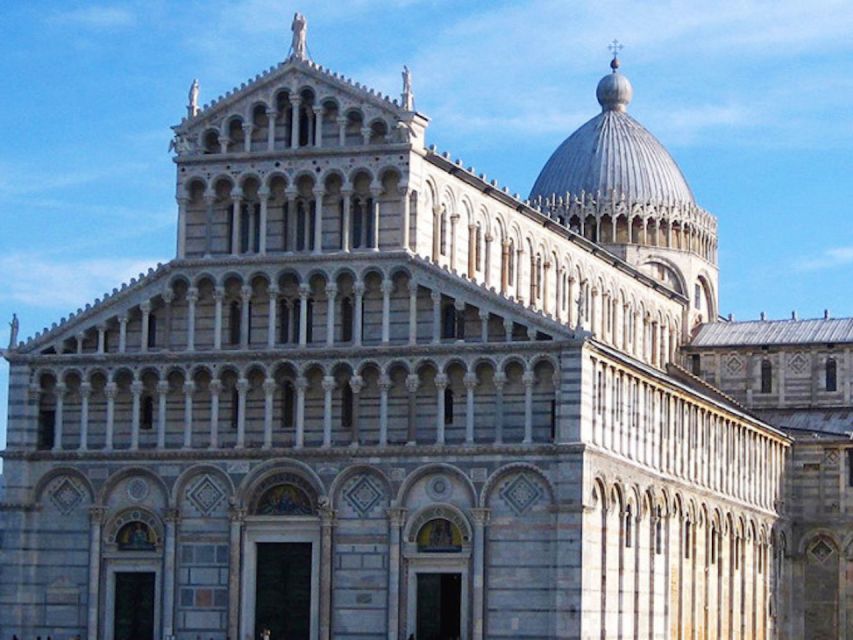
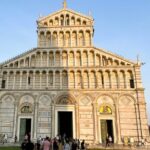
The package includes free access to the Cathedral of Pisa, and the audio guide covers both exterior and interior elements. That’s important because Pisa’s Cathedral isn’t just something you look at from outside. The inside is where you can slow down and notice the architecture and artworks in a more personal way.
Because the audio guide is part of your route, it helps you connect what you’re seeing across spaces. You’re not just switching tickets—you’re moving through one narrative: cemetery art and ancient materials, then the Cathedral’s Romanesque character and interior details.
One practical thing to keep in mind: if your chosen entry time overlaps with a service, parts of the Cathedral may be accessible only in part. I’d plan for the possibility that you might not have full freedom to explore everything at every moment. If your trip timing is flexible, aiming for a window when you’re less likely to run into a ceremony can improve your experience.





Two Italian Romanesque Architecture Masterpieces: Why the Audio Route Makes Sense
The description promises two masterpieces of Italian Romaneque architecture, and that’s exactly how the audio route is structured: it’s meant to help you understand the architecture you’re looking at without needing a lecture.
Even without getting lost in technical language, Romanesque architecture is all about recognizable patterns—massive form, strong structure, and a visual weight that feels different from later styles. The value here is that the audio guide keeps your attention on what makes these buildings tick aesthetically and historically, instead of letting the sites blur together.
For me, the biggest win is pacing. You do both the Camposanto and Cathedral while your attention is still sharp. One hour is tight, but it’s long enough for a meaningful look at the key features, especially when you’re guided by narration rather than guesswork.
Languages, App Feel, and Real-World Usability
Audio guides sound simple until you actually use them. Here, the format is meant to be straightforward: you can pick from Italian, English, Spanish, French, and German, and the device supports your language choice on-site.
Some feedback is positive about how practical and simple the audio guide feels to use. Others say the experience wasn’t as informative as expected or was difficult to follow. That tells me you should come into this with a willingness to be flexible. If you prefer highly structured commentary from a live guide, you might find the self-guided pace a little less satisfying.
My suggestion: if you’re concerned about “being in the right place,” do a quick visual scan before pressing play. Then let the narration help you identify what you’re already seeing, rather than trying to figure out your bearings while listening.
Value for $23: What You’re Paying For (and What You’re Not)
At about $23 per person for roughly an hour, you’re not buying a full guided tour with a live escort. You’re buying three practical benefits:
- Skip-the-line entry to the Camposanto
- Cathedral access included (so you’re not paying separately)
- An audio guide route in your chosen language
In many Pisa itineraries, the Camposanto is the piece that can slow you down. Saving time there is real value, especially if you only have one day or you’re squeezing Pisa between trains and other Tuscan stops.
The only “cost” is attention. You’ll need to listen and move with purpose. If you want a hands-on guided experience, this may feel a bit hands-off. But if you like self-guided travel—just with good context—this pricing structure makes sense.
Who This Is Best For (and Who Should Consider Something Else)
This is a great fit if you:
- Want to beat lines without adding complexity
- Like audio guidance and self-paced exploration
- Want to see both Camposanto and Cathedral during a short visit window
- Prefer language options and a clear route
It may be less ideal if you:
- Strongly prefer a live, talk-to-you guide
- Need very explicit navigation help while moving through the cemetery spaces
- Are hoping for a hyper-detailed, stop-by-stop lecture experience rather than a route-based audio track
Should You Book This Pisa Camposanto + Cathedral Audio Ticket?
I’d book it if you want a smart, time-aware Pisa plan. The skip-the-line part is the headline, and the audio guide adds the missing ingredient: meaning. With Roman Sarcophagi, frescoes, and the Cathedral’s interior and exterior highlights covered by narration, you’ll likely leave feeling like you “got it,” even if you didn’t spend all day there.
I’d think twice if you hate audio formats or if you need help staying oriented inside the Camposanto. In that case, a different style of guided visit might suit you better. Also, if you’re traveling during a period when you might hit services, build in flexibility for partial Cathedral access.
FAQ
FAQ
Where do I collect the tickets and audio guide?
You collect your reservation at the Audioguide Desk in Piazza dei Miracoli.
Where do I show my reservation?
You present your reservation at the Audioguide Desk by the entrance to the Sinopie Museum.
How long does the experience take?
The planned duration is about 1 hour.
What’s included with this ticket?
It includes skip-the-line tickets for the Camposanto, free access to the Cathedral of Pisa, and an audio guide with a route covering both areas.
Which languages are available for the audio guide?
The audio guide is available in Italian, English, Spanish, French, and German.
Do I need to pay extra for the Cathedral entry?
No. Cathedral access is included as part of this activity.
Does this help avoid long waits?
Yes. You use a separate entrance to skip the line for the Camposanto.
What should I bring with me?
Bring a passport or ID card.
Are there any dress restrictions?
Yes. Shorts and skirts aren’t allowed.
What’s the cancellation policy and payment option?
Free cancellation is available up to 24 hours in advance for a full refund, and you can reserve now and pay later.