REVIEW · SEQUOIA AND KINGS CANYON NATIONAL PARK
Sequoia & Kings Canyon NP Self-Guided Driving Audio Tour
Book on Viator →Operated by Adventures with Action · Bookable on Viator
A drive through giant trees can feel random. This one has a self-guided audio route with location-based playback, so you stop where the park gets good. You’ll hear stories and directions as you go, plus the app is built for offline use in remote areas.
Two things I really like: the lifetime access model (download once, use again on future trips) and the hands-free style where the audio plays as you reach each point. One drawback to plan around: you’ll still need a park entrance pass (not included), and if you don’t download ahead in strong Wi‑Fi/cellular, the audio can fail where cell service disappears fast.
In This Review
- Key things to know before you start
- How a location-triggered audio drive works in remote parks
- Price and value: $16.99 per group is the whole trick
- Tunnel Rock to Marble Falls: starting with a weird passage and waterfall energy
- Giant Forest Museum and Generals Highway Lookouts: quick stops that stack up
- Moro Rock stairs and the cabin history stops
- General Sherman to General Grant: the big-tree corridor you came for
- Kings Canyon viewpoints and the “extra stops” sequence
- Timing: why 2–3 hours can turn into a whole day
- The small print that affects your day: entrance passes and cashless payment
- Should you book the Sequoia & Kings Canyon self-driving audio tour?
- FAQ
- How much does the Sequoia & Kings Canyon self-guided driving audio tour cost?
- How long is the driving audio tour?
- Does the tour work without cell service or Wi‑Fi?
- Are park entrance tickets included in the price?
- What do I need to do after I book to start the tour?
- How do I start listening once I’m onsite?
- Can I play the audio through my car stereo?
- What language is the tour offered in?
- What are the opening hours for the activity?
- Can I get a refund if I cancel?
Key things to know before you start
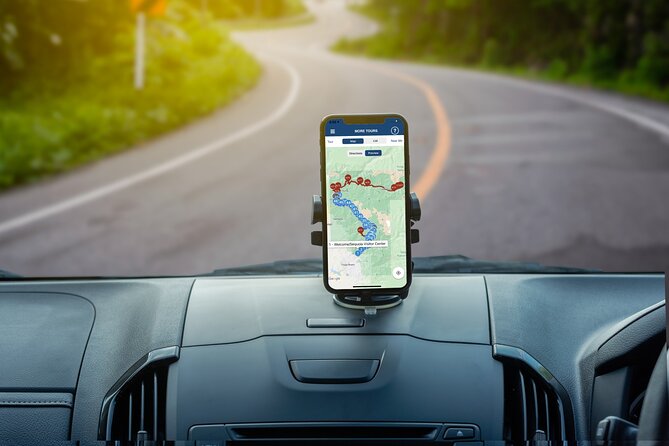
- GPS-triggered audio means you don’t have to keep tapping the screen
- Offline maps and offline playback help you in areas with no signal
- One purchase per group/car (up to 4) is where the value really shows
- 70+ audio stories across a route over 60 miles, aimed at a 2–3 hour plan
- Connect phone to your car via Bluetooth, USB, or AUX for easy listening
How a location-triggered audio drive works in remote parks
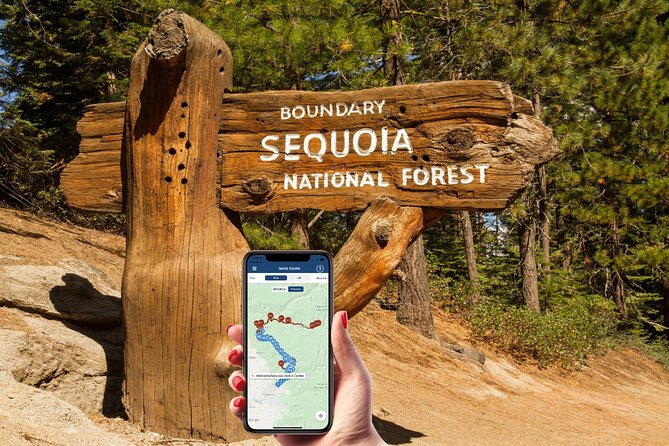
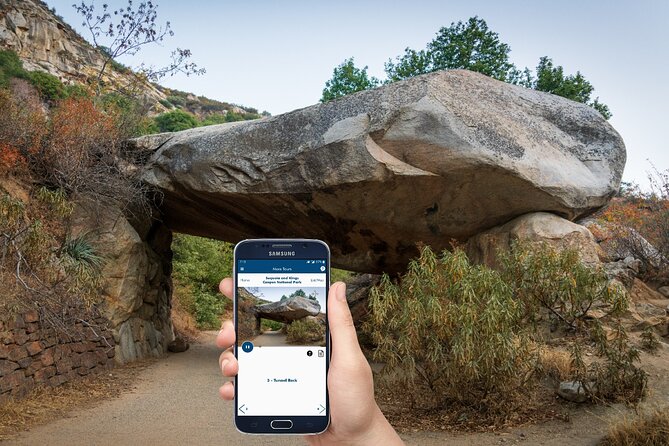
This tour is built around your phone knowing where you are. Once you load it onsite, the audio stories start on their own as you reach each stop. That’s the whole appeal in Sequoia & Kings Canyon: you can keep your eyes on the road and still catch the history, geology, and “why-this-place-matters” notes.
It also helps that the audio is designed to work when reception is poor. You’ll get offline maps and you’re instructed to download the tour while you’re on strong Wi‑Fi/cellular. After that, the park’s mountains can do what they do best—block signal—while your tour keeps rolling.
If you want car-ready sound, you can connect your phone to your stereo using Bluetooth, USB, or AUX. If you’re getting out to walk (and most stops are quick walks), headphones can be nice for clearer audio—especially near traffic or when you’re letting others enjoy the view too.
Price and value: $16.99 per group is the whole trick
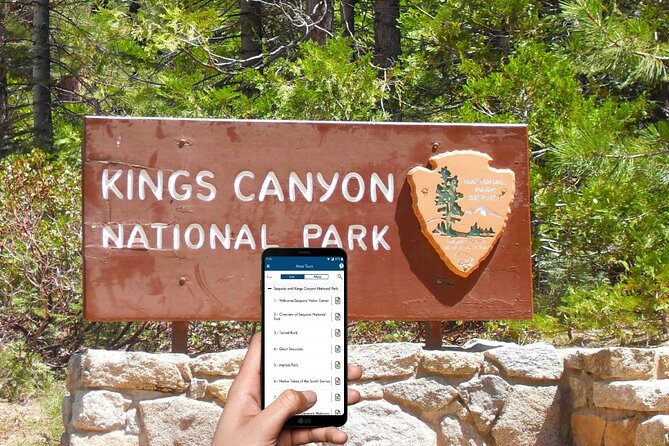
At $16.99 per group (up to 4), this isn’t priced like a per-person attraction. It’s priced like a car accessory. For families or small groups, that can make a big difference compared with bus tours or guided options.
The other value lever is that the tour isn’t just “names of places.” It’s structured to guide you through a long drive with directions, prompts, and stories across major sights. The route is listed as over 60 miles with 70+ audio stories, and it’s estimated at about 2–3 hours. If you treat it like a true drive-with-stops plan, it’s a solid buy for the time you save Googling between overlooks.
Tunnel Rock to Marble Falls: starting with a weird passage and waterfall energy
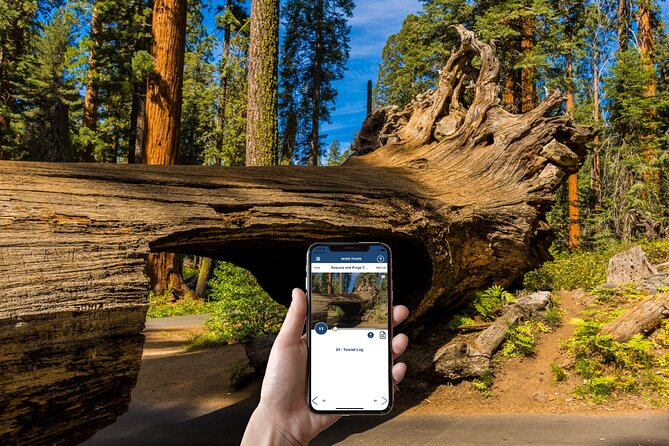
Your first big moment is Tunnel Rock, an unusual natural tunnel that once served as the only way into the park. Even if you’ve seen lots of “cool rock” before, this one has that slightly eerie feel of a landscape that determined your route. The audio here also sets the tone: you’re not just visiting trees. You’re driving through a shaped world.
Next comes Marble Falls, along (or near) the Marble Falls Trail—a flower-lined mountain canyon path leading to a strong waterfall. This is a great “stretch your legs” stop, because the payoff is visual and the walking is the kind of add-on that fits a short break.
Then you’ll reach your first main viewpoint: Amphitheater Point, with sweeping valleys far below. If you’re the type who likes a payoff view without a long hike, this is one of the early wins.
Optional detour: Crystal Cave. It’s described as a marble karst cave and aimed at intrepid explorers. If cave time appeals to you, the audio makes it easier to decide on the spot. If not, you can skip it and keep moving.
Practical tip: the audio is meant to guide you along a route. Try not to wander too far off plan, unless you’re okay with the tour not matching your exact position.
Giant Forest Museum and Generals Highway Lookouts: quick stops that stack up
Your next major “trees + information” anchor is the Giant Forest Museum. It’s paired with one of the park’s largest trees and a quick, easy trail, so it’s a good place to reset—bathroom break, photo buffer, then back into the car.
After that, head to a popular view stop on Generals Highway: Generals Highway Lookout (listed as Vista Point). This is a classic “pull over, look out, breathe” spot. You’ll get panoramic views with short time cost, which matters because the route is long.
If you’re the sort who gets annoyed by tours that force long museum detours, you’ll appreciate this structure: quick stops, then more driving, then another payoff.
Bonus practical note from real-world usage: there are shuttles from the Museum area and one of the shuttle options goes to Moro Rock. If you want to save time or reduce walking, that shuttle can help you keep the day on schedule.
Moro Rock stairs and the cabin history stops

Right beyond Hanging Rock Trail, you’ll hit Moro Rock, one of those places that always sounds better when you’re standing in front of it. The big feature is the set of stairs carved into the rock to reach an overlook. It’s not just a viewpoint. It’s a short effort that changes your angle on everything around you.
After Moro Rock, the route includes trails tied to historic structures: Squatter’s Cabin and Tharp’s Log—both long abandoned but still full of story. These stops can be surprisingly satisfying if you like how national parks preserve more than nature. They preserve the human layers too—who lived here, how they used the land, and how time erased the rest.
If you’re trying to keep kids or a mixed group happy, this is a good spot to mix views with “look at this old thing” energy.
General Sherman to General Grant: the big-tree corridor you came for
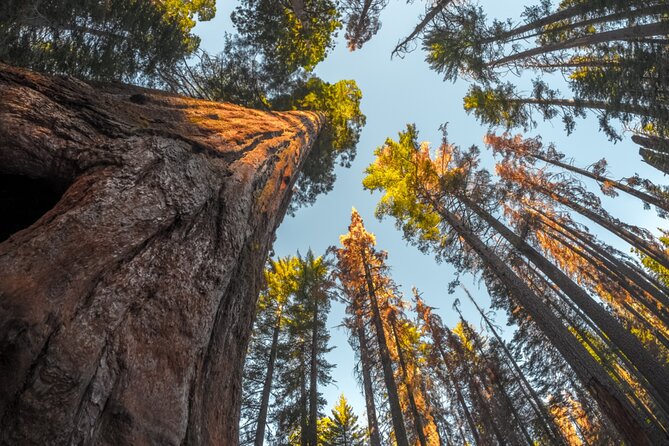
This is the part of the drive where Sequoia steals the show. You’ll follow the audio through several classic big-tree stops, including chances to hike short segments or at least step out and take in the scale.
The headline is General Sherman, described with specific stats: 275 feet tall and over 36 feet in diameter. Even with all the numbers, what hits you is how “wrong” it feels that something that big could be real. The audio here helps you frame the experience so you’re not just staring, you’re noticing details.
Nearby is the trailhead to Big Baldy, which overlooks Redwood Canyon. It’s a different kind of payoff than the giant tree itself—more of a “look into the depth” moment.
You’ll also get a chance to hike the Congress Trail, another route near General Sherman that leads you to an impressive grove. That’s the idea of this section: if you want more than photos, you have options without needing a whole separate half-day plan.
Then comes Redwood Mountain Overlook, described as looking across one of the largest redwood groves in the world. The audio framing matters here because you’re not just seeing trees—you’re seeing how the park holds different forests in different pockets.
Next, the route includes a trailhead to General Grant Tree, another must-see giant. If General Sherman is the headline, General Grant is the supporting star that reminds you: this park doesn’t do “one giant.” It does a whole system of them.
Kings Canyon viewpoints and the “extra stops” sequence
The tour continues toward the Kings Canyon side with another set of memorable overlooks and side interests.
You’ll reach King’s Canyon Overlook, described as offering unbeatable views of King’s Canyon. This is where the drive feels like it shifts from “massive trees” into “massive space.” If you like when scenery changes tone, this section delivers.
In Sequoia National Park, the route is said to conclude with Panoramic Point. If you want more adventure, you can keep going into Kings Canyon.
Then you get several distinctive, slightly different attractions from typical “tree-only” itineraries:
- Chicago Stump: a 20-foot high remnant of a once-mighty 3,200-year-old sequoia
- Boyden Cavern: a marble cave with unique mineral formations
- Zumwalt Meadow: a scenic contrast to the rock formations, lush and especially splendid in summer and fall
This mix is one reason the tour feels worth doing even if you’ve already read about the big names. You’re not stuck in one kind of scenery.
Timing: why 2–3 hours can turn into a whole day

The route is estimated at about 2–3 hours and runs over 60 miles. That’s a solid planning target if you treat each stop as a quick look.
But expect the real day to stretch if you do any extra walking. The tour includes viewpoint stops (often short), plus trails and detours (Crystal Cave, Congress Trail, and various cabin or cave interests). A “quick photo and back” strategy is what keeps it near the estimate.
Also remember: the audio prompts you to move along the route at a good pace, but you’re not locked into a schedule. You can pause for snacks or longer breaks, and the tour keeps your place so you don’t feel like you’re racing your own trip.
And if you’re driving with multiple people who all want control of the music and the brake pedal (it happens), this is still one of the easier ways to keep everyone engaged without a separate guide.
The small print that affects your day: entrance passes and cashless payment
Park entry is not included. You’ll need an entrance pass to visit Sequoia & Kings Canyon National Parks, and the parks are described as cashless—payment is via credit/debit cards or mobile payments.
That matters because a $16.99 tour can turn into a frustrating wait if you arrive without a pass. Plan to buy entry before you expect to start cruising.
Should you book the Sequoia & Kings Canyon self-driving audio tour?
I’d book it if you want an easy, structured way to see the park’s big sights without committing to a specific tour time. It’s especially worth it when you’re traveling by car and splitting cost across up to four people. The offline-ready design and GPS-triggered playback are exactly what you need for these mountainous parks where service can vanish.
Skip it (or at least be cautious) if you need heavy internet help onsite, or if you’re the type who expects every stop to be a long, lecture-style story. This tour is designed for movement: it gives you key context and directions, but you’ll still be the one turning that into depth through your own walking and looking.
If you want a self-drive that feels guided, with less effort than reading maps every five minutes, this is a strong fit.
FAQ
How much does the Sequoia & Kings Canyon self-guided driving audio tour cost?
It costs $16.99 per group, up to 4 people.
How long is the driving audio tour?
It’s estimated at about 2 to 3 hours to complete.
Does the tour work without cell service or Wi‑Fi?
Yes. After you download the app and tour content while you have strong Wi‑Fi/cellular, it includes offline maps and works offline in the park.
Are park entrance tickets included in the price?
No. An entrance pass is required to visit Sequoia and Kings Canyon National Parks, and it is not included.
What do I need to do after I book to start the tour?
You’ll receive setup instructions by email and text with a password. Download the separate Action audio tour app, then enter the password in the app while you have strong Wi‑Fi/cellular.
How do I start listening once I’m onsite?
Open the Action audio tour app at the starting point. Then choose the correct tour option (if there are multiple) and start at the first story point. The audio begins automatically.
Can I play the audio through my car stereo?
Yes. You can connect your phone to your car’s stereo via Bluetooth, USB, or AUX. Audio is also compatible with Apple CarPlay, and Android Auto support is described as on the way.
What language is the tour offered in?
It’s offered in English.
What are the opening hours for the activity?
It runs Monday through Sunday from 8:00 AM to 5:00 PM.
Can I get a refund if I cancel?
Yes. There is free cancellation up to 24 hours in advance for a full refund. If you cancel less than 24 hours before the start time, you won’t receive a refund.