REVIEW · ROME
Rome:Ostia Antica Skip-the-line Ticket & Audioguide
Book on GetYourGuide →Operated by Loving Rome · Bookable on GetYourGuide
Ancient Rome still has docks here. With skip-the-line entry and a self-paced phone audioguide, you can roam Ostia Antica’s streets without waiting around, while well-preserved ruins bring daily Roman life into focus. I also love how this site lets you see a real port city—homes, baths, marketplaces, and temples—right where ships would’ve brought goods and people.
The main heads-up: the downloadable audioguide is good, but it isn’t equally detailed for every stop. If you’re the type who wants narration at every corner, you may find yourself leaning on signs more than you expect.
In This Review
- Key points that make this ticket worth your time
- Ostia Antica: why this port city feels different than Rome
- Skip-the-line reality: when it saves time (and when it might not)
- Your self-guided route: Forum to Theater to Domus mosaics
- Using the downloadable audioguide on your phone
- How long should you plan: the 2-hour ticket vs real pacing
- What to bring and how to stay comfortable outdoors
- Price and value: what $31 buys you (and what costs extra)
- Who this experience fits best (and who should skip it)
- Should you book this ticket?
- FAQ
- What’s included with the Rome: Ostia Antica Skip-the-line Ticket & Audioguide?
- Do I need a live guide?
- Are headsets included?
- How do I receive my ticket?
- Where do I go on the day of the visit?
- What do I need to bring for entry?
- What languages are available for the audioguide?
- How long is the visit?
- Is the ticket refundable if plans change?
- Is this suitable for wheelchair users or people with mobility impairments?
Key points that make this ticket worth your time
- Skip-the-line entry through a separate entrance to avoid the entrance bottleneck.
- Phone audioguide (downloadable) with languages including English, Italian, French, Spanish, and German.
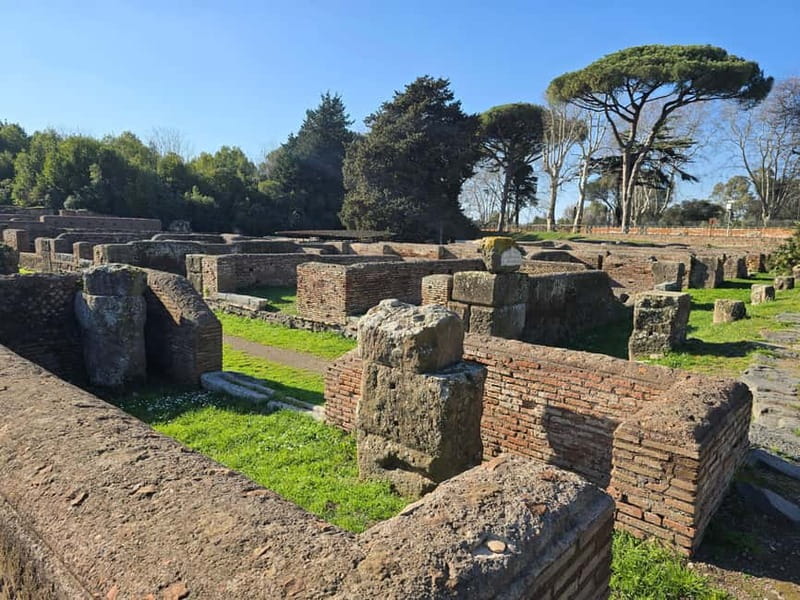
- One of Italy’s best-preserved Roman sites, far from Rome’s daily crowd chaos.
- A route that actually shows port-city life: commerce, maritime trade, homes, and public buildings.
- 2 hours is the posted target, but you’ll probably stretch it if you like looking closely at mosaics and street layouts.
Ostia Antica: why this port city feels different than Rome
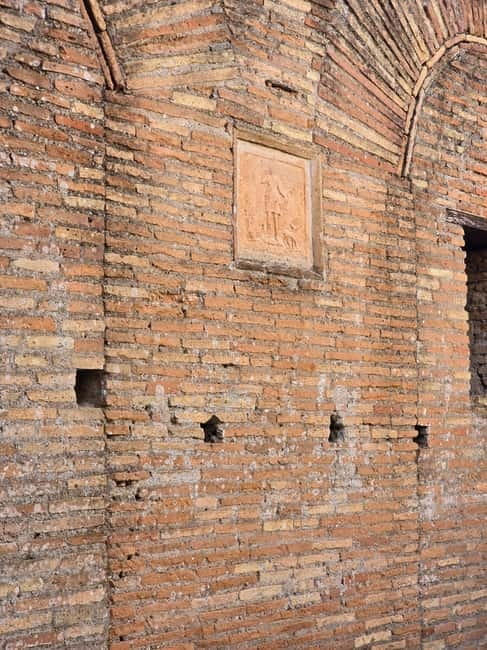
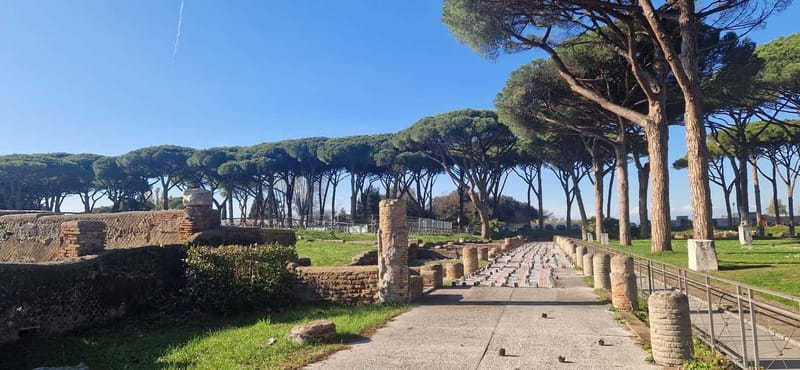
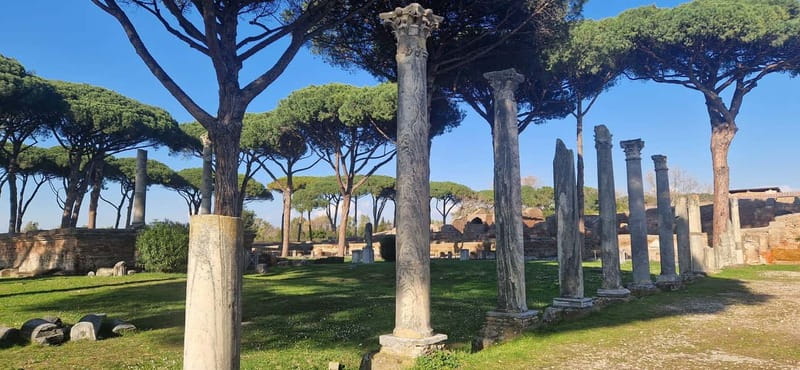
Rome gets all the headlines, but Ostia Antica is where you get the feeling of living next door to the action. This is the ancient port of Rome, with ruins that keep their shapes: houses, temples, baths, and market spaces lined up along the Mediterranean world of trade. Walking here, you’re not just viewing monuments—you’re moving through the everyday geometry of a working city.
What I like most is the way the site explains itself through context. You see the Roman Forum area and the Theater, then you’re back in residential and commercial zones, so the city reads as a system, not a series of separate sights. And because it’s an outdoor archaeological park, you can pace it like a neighborhood stroll—slower where mosaics catch your eye, quicker where you just need the broad idea.
One practical point: the ground is uneven and you’ll do real walking. The ticket is designed for people who can comfortably hike around an archaeological site on foot (and it isn’t suited for wheelchair users or mobility impairments based on the activity info).
You can also read our reviews of more tours and experiences in Rome.



Skip-the-line reality: when it saves time (and when it might not)
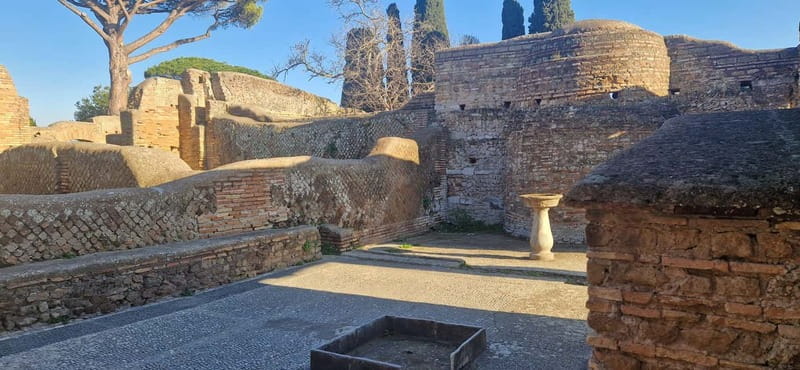
This ticket’s selling point is straightforward: you get skip-the-line access through a separate entrance. On busy days, that can be a big deal because even short waits can chew up sightseeing energy. When I’m choosing between options, I treat time as part of the price—if it helps you start earlier, it often improves the whole day.
That said, skip-the-line value depends on conditions. If you arrive when there’s no noticeable queue, you might find the premium less dramatic than expected. The good news is that the park has clear signage, so self-navigation is usually easy once you’re in.
If you want the skip-the-line to work for you, show up early. The activity instructions are clear that late arrivals or no-shows won’t be refunded, and they also warn you to arrive earlier to avoid entry issues. Build in buffer time, especially if your ticket email hasn’t shown up yet and you need to confirm it on your phone.
Your self-guided route: Forum to Theater to Domus mosaics
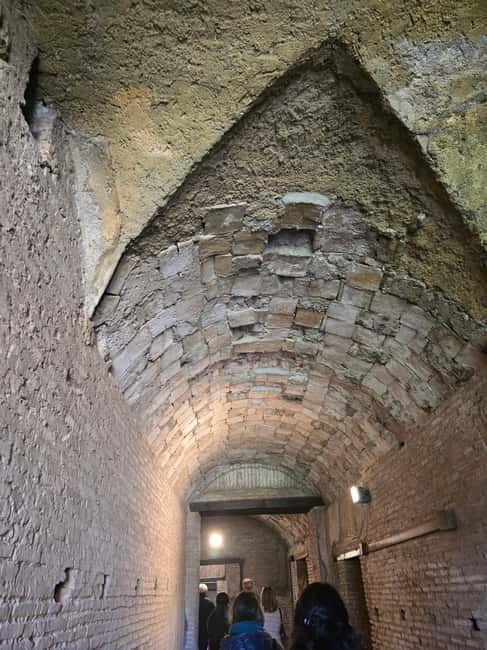
This is a self-guided visit, so your “itinerary” is really a walking plan. I suggest you pick a direction early, then move steadily from the more civic spaces toward the most visually detailed homes.
Start with the Roman Forum area if you want the big-picture story first. This is where the city’s public life comes through, and it helps you understand why Ostia wasn’t just a dockyard—it was a full municipal world. From there, look for the Theater, which gives you a sense of how entertainment and public gatherings fit into port-city routines.
Next, aim for the Domus zone, especially if you care about mosaics and domestic art. These homes help you picture social status and everyday tastes—what people ate, how they hosted, and how visual decoration expressed identity. Even if you don’t read every detail, the mosaics and architecture give you a quick lesson in how Romans lived inside their city.
As you wander between these anchor points, you’ll also pass through other building types: temples, baths, and marketplace areas. The city layout does a good job showing how religion, leisure, and commerce overlapped. And because Ostia Antica is a port, maritime trade is part of the narrative everywhere, not just at one “shipping museum” stop.
One extra option you might notice on site: there’s also a museum area. People who like modern presentation alongside ancient ruins tend to enjoy it, and there’s a café too, but it may have limited hours (including weekend-only operation). If food matters to you, bring water and snacks so you don’t have to gamble on what’s open when.
Using the downloadable audioguide on your phone
This experience includes a downloadable audioguide, not a live guide. In practice, that means your visit works best when you treat your phone like a companion, not like a last-minute fix.
Before you go, make sure you have the audioguide set up on your device and that you have headphones ready. The activity info is explicit that headsets are only needed for the audioguide, but you’ll want them—otherwise narration becomes just background noise you can’t use.
The audioguide languages include English, Italian, French, Spanish, and German. That’s a strong spread for a self-guided experience because you’re not forced into one language mode. It also means you can switch tactics: if one topic doesn’t grab you, you can jump to another part of the story without waiting for someone to catch up.
The user experience is also shaped by the site map/stop approach. Some visitors find it helpful because you can see where you are and what station might be next. My advice: don’t try to “race” station to station. Instead, use the guide to decide where to slow down—especially around mosaics and major public structures.
And here’s the big caution: the audioguide isn’t equally strong for every location. If you hit a spot where explanations feel thin or incomplete, rely on what you can see plus the signage on site. It’s still an excellent way to travel through the city, but your expectations should be “self-guided support” rather than “every stone has a perfect narrator.”
How long should you plan: the 2-hour ticket vs real pacing
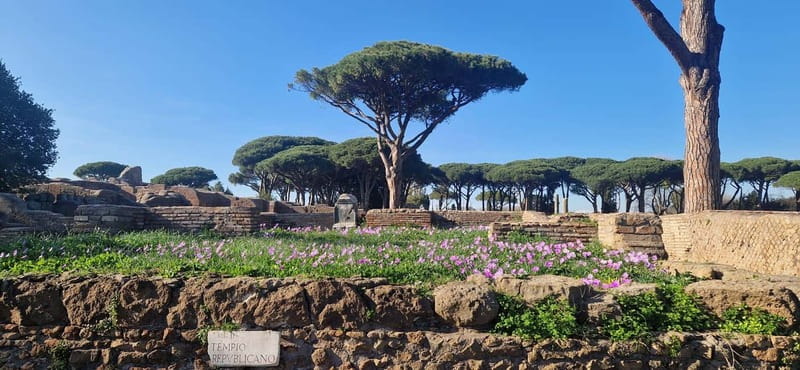
The activity lists a duration of 2 hours. That’s a solid baseline if you want a focused overview: enough time to cover the key civic spaces and at least one of the most visually striking residential areas.
Still, don’t be surprised if you need more. The site is large, and if you like mosaics, architecture details, and reading signage, you’ll likely extend your visit. A common rhythm is roughly 3–4 hours to see a lot without rushing.
Here’s how I’d plan your time so you don’t feel stressed:
- Give yourself enough time to reach the Forum and Theater without sprinting.
- Budget extra for the Domus/mosaic areas.
- Allow a buffer for weather changes, because this is an outdoor park and conditions can affect access.
If you only have a tight window, you can treat it like a highlight loop. If you have half a day, you’ll get more from the experience by slowing down and letting the city layout tell the story.






What to bring and how to stay comfortable outdoors
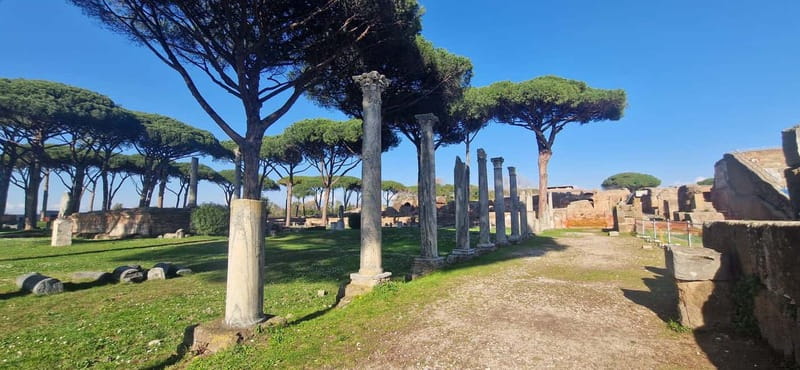
This is an outdoor archaeological park, so your comfort matters as much as your ticket. Here’s what you should plan around based on the practical instructions.
Bring a passport or ID card for verification. Wear comfortable shoes—this is walking-heavy, with uneven surfaces. Pack weather-appropriate clothing. On sunny days, bring a hat and sunscreen. And bring a charged smartphone plus internet access, since the guide experience depends on your device.
Also bring water and snacks. On-site options can be limited and may have restricted opening times, so having your own supplies turns an okay visit into a smooth one.
Safety and rules are straightforward: no luggage or large bags, no drones, no bikes, no weapons or sharp objects, and no pets. Smoking and littering are also not allowed. If you travel light, you’ll spend less energy thinking about what you can’t bring and more time looking at what’s in front of you.
Price and value: what $31 buys you (and what costs extra)
The listed price is about $31 per person, and the official ticket price is 18 euro for the attraction (under 18 is free). So what’s the difference? You’re paying for convenience: skip-the-line entry plus the downloadable audioguide.
Here’s how I think about value:
- If you’d otherwise lose time waiting at the entrance, the upgrade can be worth it fast.
- If you already know you can enter quickly without a line, the audioguide and its quality become the main reason to book.
- If the audioguide works smoothly for you, you get a lot of guided context without needing a live guide.
Based on how people experience the system, the audioguide feature is often praised, especially when it helps you follow the route on an interactive map. At the same time, you should know the audio coverage may not be equally detailed for every spot, and that can reduce the perceived value on a ticket that costs noticeably more than the official entry price.
My practical recommendation: treat it like a “time-and-support” purchase. If your schedule is tight and you want structure without a guide, this format makes sense. If you’re arriving when the site is quiet, consider whether you’d rather pay closer to the official entrance fee and rely more on on-site signage.
Who this experience fits best (and who should skip it)
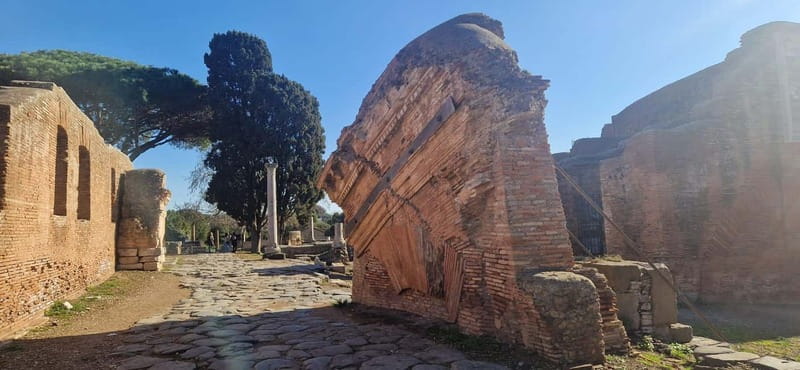
This works well if you want independence. You’re not locked into a group pace, and you can spend extra time where you care most—mosaics, domestic architecture, or public buildings like the Theater and Forum.
It’s also a strong match if you like learning through self-guided narration in your preferred language. With audioguide languages available, you can keep your experience in English or switch to French, Spanish, German, or Italian.
On the other hand, it’s not a good fit if you:
- rely on wheelchair access or need mobility accommodations (the activity info says it’s not suitable)
- want a live guide to answer questions on the spot (this option does not include one)
- need a perfectly detailed audio explanation at every single stop (coverage can be uneven)
If your ideal day in Italy is slow walking, good shoes, and learning at your own pace, Ostia Antica with this ticket format is a smart choice.
Should you book this ticket?
Book it if you want a smooth start, like self-guided structure, and plan to use your phone audioguide as your main storytelling layer. The skip-the-line entrance plus multi-language downloadable audio can make a big difference—especially on busy days.
Don’t book it (or at least reconsider the premium) if you expect low crowds and you’d rather save money and navigate with signage. The site is well marked, and if there’s no line, the main advantage fades quickly.
Either way, go in with realistic expectations. You’re visiting a large outdoor archaeological park where comfort, pacing, and a charged phone matter. If you do that, you’ll come away with a vivid sense of how Roman daily life worked at the empire’s port—people, commerce, public spaces, and homes all in one walkable world.
FAQ
What’s included with the Rome: Ostia Antica Skip-the-line Ticket & Audioguide?
You get a skip-the-line entry ticket and a downloadable audioguide.
Do I need a live guide?
No. This experience does not include a live guide or a guided tour.
Are headsets included?
Headsets are not included. You only need them if you want to use the audioguide, and you should bring headphones.
How do I receive my ticket?
Your entry ticket is delivered via email used during booking (and/or WhatsApp), within 24 hours prior to the activity.
Where do I go on the day of the visit?
Go directly to the entrance of the attraction using the meeting point address provided. There is no need to go to a ticket office.
What do I need to bring for entry?
Bring a passport or valid ID. Also bring comfortable shoes, a charged smartphone, headphones, and weather-appropriate clothing.
What languages are available for the audioguide?
The audioguide is available in English, Italian, French, Spanish, and German.
How long is the visit?
The duration is 2 hours, depending on availability and starting times.
Is the ticket refundable if plans change?
Yes. Free cancellation is available up to 24 hours in advance for a full refund.
Is this suitable for wheelchair users or people with mobility impairments?
No. The activity information says it is not suitable for wheelchair users or people with mobility impairments.