REVIEW · MIAMI
Self-Guided Audio Tour in Florida Keys
Book on Viator →Operated by GuideAlong (GyPSy Guide) · Bookable on Viator
You can turn a long Keys drive into a story route. This self-guided audio tour uses GPS-triggered commentary so the sound follows your location, not some rigid bus schedule. I like that it gives you both history and practical “stop here” ideas as you cruise from Miami toward Key West.
Two things I really like: offline listening after you download, and the way the tour lets you control pace with start, stop, and resume. One possible drawback is tech variability—one review flagged choppy audio and issues on the return drive, so you’ll want a fully charged phone and a stable setup before you hit the road.
In This Review
- Quick hits worth planning around
- Price and value for a self-guided Keys road trip
- Getting the audio to work offline in the Keys
- Using the tour routes: Miami start, Key West end, and flexible stops
- Road-trip itinerary highlights: beaches, museums, reefs, and wildlife
- Bahia Honda State Park: one of the best beach breaks
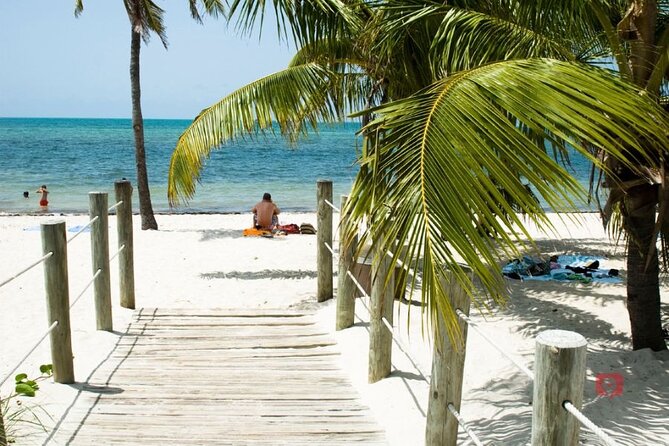
- Anne’s Beach on Lower Matecumbe Key: calm water and a boardwalk
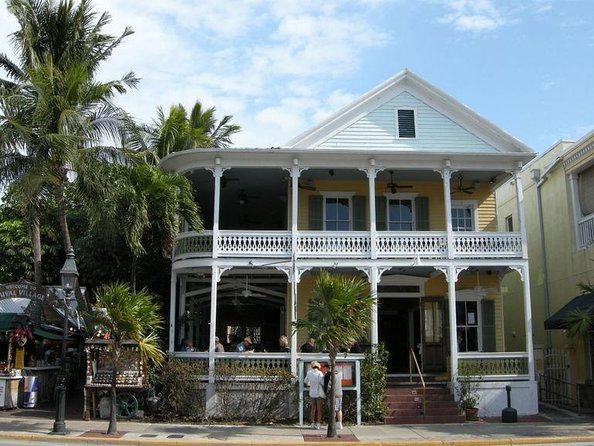
- Ernest Hemingway Home and Museum in Key West: polydactyl cat stories included
- Key Deer and Big Pine Key driving zones: wildlife lessons on the road
- Key West: compact island, huge variety of things to do
- John Pennekamp Coral Reef State Park: the first undersea park in the US
- Pigeon Key: Overseas Railway history, island scale, and a ferry bonus
- Seven Mile Bridge: longest route views plus a new walking option
- Turtle Hospital on Marathon: why the first one matters
- Key Largo: the first big Key you hit from the mainland
- What to watch for: tickets, timing, and tech issues
- Who this self-guided audio tour fits best
- Should you book this Florida Keys GPS audio tour?
- FAQ
- How much does the Florida Keys audio tour cost?
- How long is the tour?
- Does it work offline?
- How does the audio playback work?
- What language is the audio available in?
- Can I start or end anywhere along the route?
- Are there entrance fees at the stops?
- Are tolls included?
- What if I need help starting the tour?
- Is the purchase refundable?
Quick hits worth planning around
- GPS location-based stories: commentary auto-plays as you drive, so you don’t have to stare at a screen
- Offline tour access: download ahead so you can listen even with spotty Keys service
- Big-name Stops in one pass: Bahia Honda, Key West, John Pennekamp, Turtle Hospital, Hemingway, Seven Mile Bridge
- Flexible routing: suggested half-day or full-day plans, or make your own route based on timing
- Family-friendly pacing: it’s easy to stop for beaches and museums, then jump back in where you left off
Price and value for a self-guided Keys road trip
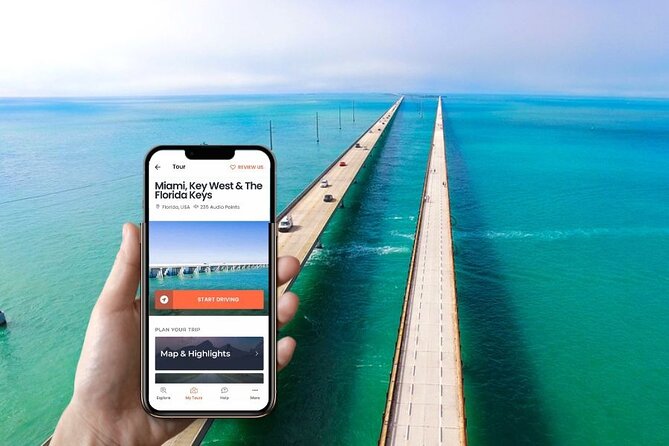
At $16.99 per group (up to 8), this is priced like a bargain if you’re traveling with others in one car. For that cost, you get a single audio purchase that covers everyone riding with you, which matters because the Florida Keys can get pricey fast once you start adding park fees and museum tickets.
What you’re really paying for isn’t just “fun facts.” It’s time-saving direction. Instead of guessing which pull-offs are worth it, the tour builds an order of stops around the route and then gives you context when you arrive. That turns a drive you might otherwise rush through into something you can enjoy without a guide’s leash.
The other value lever: it includes 230+ audio points plus trip planners (in-app, web, and PDF). If you’re the kind of person who plans lunch first and sightseeing second, having planning tools helps.
You can also read our reviews of more tours and experiences in Miami.
Getting the audio to work offline in the Keys
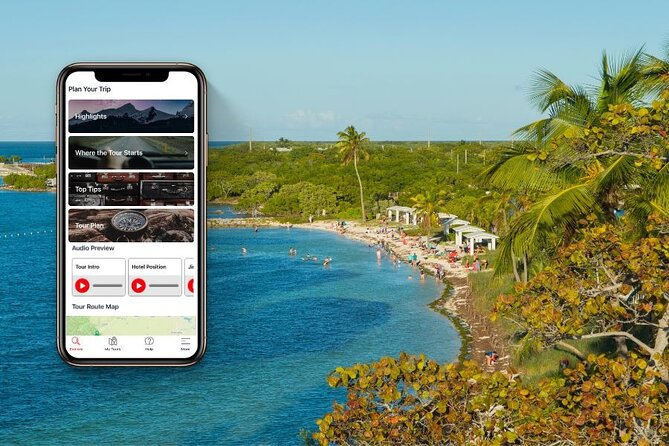
The tour runs on the GuideAlong app (GuideAlong / GyPSy Guide). After booking, you’ll get email/text instructions to download and redeem your voucher code, then download the tour under My Tours. Do this over Wi‑Fi or cellular, then keep listening without needing internet—handy because service can be uneven once you’re out on the islands.
Here’s the practical approach I recommend:
- Start with a full charge and bring a USB/C car charger
- Download the tour before you drive south
- Use your phone’s GPS so location-based playback can trigger at the right places
One review mentioned CarPlay support with Google Maps visible while listening, plus a smoother audio/music transition. That’s a nice bonus if you like navigation on screen and narration in your ears.
Using the tour routes: Miami start, Key West end, and flexible stops
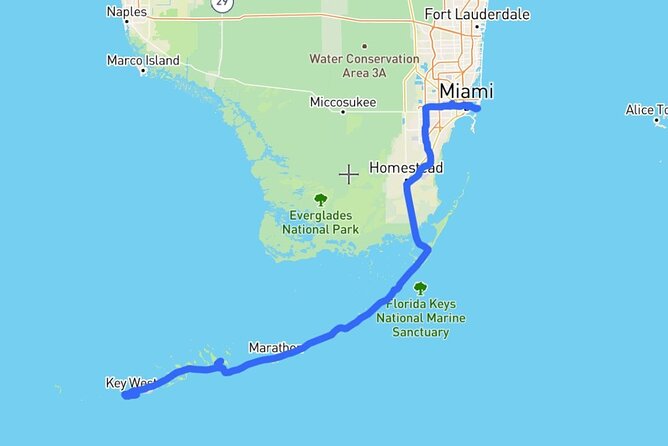
The meeting points list a start in Miami Beach (33139) and an end in Key West (33040). But the tour’s real power is flexibility: commentary plays automatically based on your location, and you can start and end anywhere along the route. That’s great if you’re staying in a different part of Miami, arriving late, or deciding on the fly to turn around.
Duration is listed as about 1 day (approx.). In practice, that usually means one strong driving loop with a couple of beach breaks and at least one museum stop—unless you’re the “pull over for everything” type.
Road-trip itinerary highlights: beaches, museums, reefs, and wildlife

This route is built around the classic Keys rhythm: drive the Overseas Highway, pause for beaches, get culture in Key West, then shift toward parks and wildlife as you move along.
Below are the standout stops included on the route, plus what each one tends to deliver and what to watch for.
Bahia Honda State Park: one of the best beach breaks
Bahia Honda is the kind of stop that makes the drive feel worth it. It’s widely viewed as the best beach in the Florida Keys and ranked in the top 10 of beaches in the USA. On a warm day, it’s perfect for a cooling swim or a slow walk with sand under your toes.
Time listed: about 1 hour.
Ticket note: admission fee not included.
What to plan: if the weather is good, Bahia Honda can turn into a longer hangout fast. Give yourself time to park, wade in, and still make the next stop without feeling rushed.
Anne’s Beach on Lower Matecumbe Key: calm water and a boardwalk
Anne’s Beach is a quieter, Lower Matecumbe Key stop. The highlight here is the newly replaced 300-foot boardwalk, which helps you reach different parts of the beach. The water is often warm, clear, and calm—exactly the kind of conditions you want for an easy swim.
Time listed: about 20 minutes.
Ticket note: admission free.
Even if you don’t swim, it’s a strong photo stop. This one works well when you need a short break that doesn’t derail your whole day.
Ernest Hemingway Home and Museum in Key West: polydactyl cat stories included
If you’ve ever heard the legends around Hemingway, this is where they become real. The Ernest Hemingway Home and Museum sits in Old Town Key West. Hemingway called Key West home for 10 years, and the tour inside the house and gardens gives you details about his books, family life (including 4 wives and children), and the famous cat story.
A big specific draw: you can see 40 polydactyl cats (descendants of Snow White, Hemingway’s white six-toed cat). That cat detail alone is worth setting aside time.
Time listed: about 1 hour.
Ticket note: admission not included.
What to plan: give it a full hour, not 30 minutes. If you rush, you’ll miss the atmosphere and the stories that make the museum more than a quick photo stop.
Key Deer and Big Pine Key driving zones: wildlife lessons on the road
The tour includes a Key Deer segment because this tiny endangered animal is found exclusively in the Florida Keys. The tour notes they’re good swimmers and survived major storms in the past, but today the biggest threat is vehicle collisions.
You’ll see slow driving zones to protect them, especially around Big Pine Key. It’s the kind of detail that changes how you drive: you slow down because you understand why the road rules exist.
Time listed: part of the route (no fixed minutes given in the outline).
Ticket note: no separate admission mentioned.
What to plan: drive slower than you think you need. If you’re tempted to “make up time,” this is where the Keys remind you that you’re sharing space.
Key West: compact island, huge variety of things to do
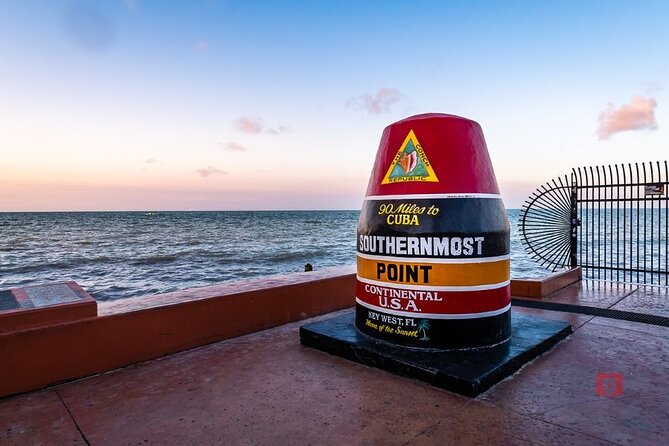
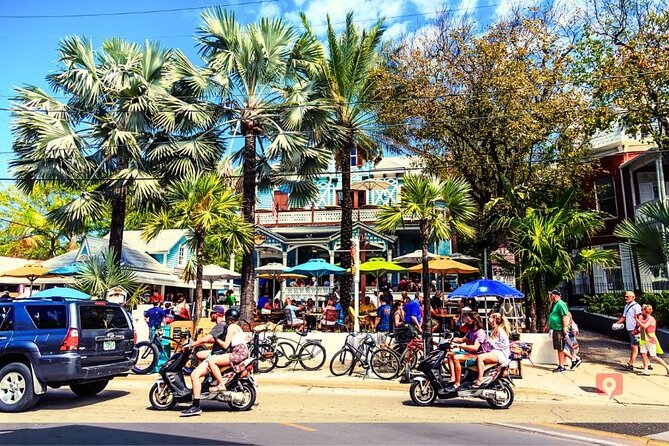
Key West is the cultural anchor of this route. The tour notes it was once the largest city in Florida and describes the island’s unique mix of American, Cuban, and Latino culture, shaped by its proximity to Cuba (about 90 miles away) and major shipping routes from South America. If you want architecture to go with your coffee stops, this is a good place for it.
Time listed: about 4 hours.
Ticket note: free time block.
What to do with that time: use the tour’s built-in stop suggestions as a framework, then pick the ones that match your mood. Key West is compact, so you can see a lot without commuting long distances—just plan for walking and parking reality.
John Pennekamp Coral Reef State Park: the first undersea park in the US
This stop shifts you from land sightseeing to what’s happening under the surface. John Pennekamp Coral Reef State Park is described as the first undersea park in the United States. It covers about 70 nautical square miles, ranging from mangrove swamps to shallow coral and deeper reefs.
You don’t need to be a diver to enjoy it. The tour mentions snorkel opportunities with multitudes of fish, plus sights like the Christ of the Deep Statue and even remnants of an old Spanish shipwreck.
Time listed: about 2 hours.
Ticket note: admission not included (listed as $8.00 per booking).
What to plan: treat this as a “stop and enjoy the water world” block. If you’re squeezing it between other museum stops, you might end up rushing the best part.
Pigeon Key: Overseas Railway history, island scale, and a ferry bonus
Pigeon Key is tiny—listed at 5 acres—but it carries big historical weight tied to railroad workers building the final stages of the Florida East Coast Railway’s Overseas Railway project. The plan was to connect passengers from New York to Key West, and even continue by boat to Havana, without leaving the rail carriage.
The tour outline adds that the old Seven Mile Bridge passed right through the island and that it served as worker homes and a camp. After Hurricane Irma, bridge reconstruction continues, and access involves a short ferry boat ride starting from the visitor center in Marathon (access is described as an added bonus).
Time listed: about 1 hour.
Ticket note: admission not included (listed as $15.00 per booking).
What to plan: if ferry schedules and timing matter to you, check when you’ll arrive and build buffer. Island history is fun, but you don’t want to get trapped by timing.
Seven Mile Bridge: longest route views plus a new walking option
Seven Mile Bridge is part of the Overseas Highway story, and it’s described as the longest of the bridges on the route. The tour suggests you’ll feel like you’re floating over the water, making it a strong photo stop—especially from the Marathon side. It also serves as a way to catch views of historically significant Pigeon Key as you pass.
The outline also mentions it was recently reopened for walking, biking, and fishing.
Ticket note: free (no admission listed).
Time listed: not fixed, but plan for a photo/quick break.
What to plan: weather matters. If it’s windy or too bright for comfort, you’ll appreciate extra time at other stops instead of fighting the elements.
Turtle Hospital on Marathon: why the first one matters
The Turtle Hospital is described as the world’s first dedicated turtle hospital, created on Marathon by converting an old motel. The tour’s focus here is practical: turtles get rescued from boat collisions, plastic bags, and other threats, then are treated with the goal of releasing them back into the ocean in most cases.
Time listed: about 1 hour.
Ticket note: admission not included (listed as $25.00 per booking).
What to plan: this is a “care and science” kind of stop. If you like hands-on conservation stories, it’s one of the most meaningful parts of the drive.
Key Largo: the first big Key you hit from the mainland
If you extend the day or you’re starting earlier, the tour includes Key Largo. It’s listed as the longest of the Florida Keys and the first Key you arrive on when leaving the mainland. It also points to popular stops like the Caribbean Club, John Pennekamp, and the African Queen, with notes that some have had Hollywood inspiration.
Time listed: about 1 hour.
Ticket note: free time block.
This works best when you want more than just the Key West-focused day. It also pairs well if you want extra time around coral and boat-related stories.
What to watch for: tickets, timing, and tech issues
This tour is a smart tool, but it works best when you plan around how audio travel fits into real life.
1) Admission fees can add up fast if you do everything.
The tour itself is $16.99 per group, but some stops aren’t free:
- Pigeon Key: $15.00 per booking
- Turtle Hospital: $25.00 per booking
- John Pennekamp Coral Reef State Park: $8.00 per booking
Those add-ons don’t make the tour overpriced; they just mean your “true cost” depends on how many paid stops you choose.
2) You need phone power.
Offline listening is a big deal, but your phone still needs battery. Bring a charger. If your battery drops, your audio stops.
3) Audio continuity can vary.
Most feedback highlights the GPS sync and how easy it is to stop and restart. Still, one low rating complained the audio felt brief and not continuous, and another noted choppy playback and repetitive content on the return portion. If audio quality is mission-critical for you, test your headphones/speaker setup and keep expectations realistic.
4) Build time for the stops you love.
Even with an efficient route, Bahia Honda can turn into a longer beach break, and Key West can eat up time with walking and coffee. The tour gives you structure, but your schedule decides how much you get to enjoy.
Who this self-guided audio tour fits best
This is a great fit if:
- You’re driving the Keys and want more meaning per mile
- You like beaches and want history without paying for a private guide
- You want to stop when you want, not when a group schedule demands it
- You’re comfortable using a phone app with GPS while you travel
It’s also a solid choice for families. Short beach stops, clear museum timing, and the ability to pause and resume are useful when kids get restless—or when adults want a break from driving.
If you hate apps, or you prefer everything to be arranged for you with no device management, you might find this approach a bit hands-on. The payoff is real, but so is the phone setup.
Should you book this Florida Keys GPS audio tour?
I’d book it if you’re doing a Key West-centered road trip and want your drive to feel purposeful. At $16.99 per group, the value is strong, especially when you use the suggested stops and let the GPS trigger the right stories. Offline listening and flexible starting/ending points also make it easier to match your plan, not fight it.
Skip it (or be cautious) if you’re sensitive to audio glitches. While many comments praise accurate syncing and easy stop/restart control, the negative notes about choppy playback on the return drive are worth taking seriously. If you do book, charge your phone fully, download the tour ahead of time, and give yourself a little buffer time at the paid stops so you’re not stressed.
FAQ
How much does the Florida Keys audio tour cost?
It costs $16.99 per group, up to 8 people.
How long is the tour?
The duration is listed as approximately 1 day.
Does it work offline?
Yes. After you download the tour, you can listen without internet or cell service.
How does the audio playback work?
Commentary plays automatically based on your phone’s GPS location, so it follows where you are along the route.
What language is the audio available in?
The tour is offered in English.
Can I start or end anywhere along the route?
Yes. The tour is location-based, so you can start and end your listening anywhere along the tour route.
Are there entrance fees at the stops?
Some stops are free, but several are not included. The outline lists Pigeon Key ($15.00 per booking), The Turtle Hospital ($25.00 per booking), and John Pennekamp Coral Reef State Park ($8.00 per booking).
Are tolls included?
No. Tolls are not included.
What if I need help starting the tour?
After booking, you’ll receive email/text instructions to download and redeem your voucher code. The support team is available daily by toll-free phone, chat, and email.
Is the purchase refundable?
No. The experience is non-refundable and can’t be changed for any reason.