REVIEW · MIAMI
Big Cypress National Preserve Self Guided Driving Audio Tour
Book on Viator →Operated by Drive with Action · Bookable on Viator
A swamp story on wheels. This self-guided driving audio tour turns Big Cypress into an easy, do-it-your-way route with offline maps and location-triggered narration. I like that you can go at your own pace, including hanging longer at the boardwalks and trails, and I also love the lifetime access so you can reuse it on future trips. One drawback: parts of the route can feel rough, so you’ll want to drive with extra care on uneven road surfaces.
You’ll start in Miami, then follow a signposted route with audio cues that tell you where to go next. The tour works in English, uses a separate Action’s Tour Guide App, and is designed so you’re not stuck hunting for the next stop. If you want a more hands-off wildlife outing with a little history and a lot of boardwalk time, this fits well.
In This Review
- Quick hit highlights
- Price and timing: a full-year ticket for one car
- Getting started in Miami: Action’s Tour Guide App and offline audio
- US Highway 41 to Miccosukee Indian Village: culture first, then swamp
- Tree Snail Hammock Trail and H.P. Williams Roadside Park: short walks, big odds of wildlife
- Loop Road and County Road 94: the engineering story behind Big Cypress
- Gator Hook Trail and Kirby Storter Roadside Park: wet feet are part of the deal
- Big Cypress National Preserve essentials: visitor center, Ochopee post office, and Big Cypress Bend
- Wildlife, water depth, and rough-road reality: practical tips before you go
- Who this Big Cypress self-guided audio tour is best for
- Should you book it? My take on value
- FAQ
- How long does the Big Cypress self-guided driving audio tour take?
- Does this audio tour work without cell service?
- How many people can use one purchase?
- Is the tour available only on certain dates?
- Where does the tour start?
- What language is the audio available in?
Quick hit highlights
- Offline-first setup: download once on strong Wi‑Fi/cellular, then use it with no signal
- Location-triggered audio: stories play automatically as you move between stops
- Value for groups: one price covers up to 4 people (per group/car)
- Big Cypress essentials by car: from roadside boardwalks to the visitor center area
- Old swamp + human history: Native culture, the Loop Road engineering idea, and the jetport-that-could-have-been story
Price and timing: a full-year ticket for one car

At $16.99 per group (up to 4), this is priced like a budget-friendly outing that you can share. The practical win is that you’re not paying per person, so a small family or a carload of friends gets much better value than most guided options.
Timing is also flexible. The core drive is about 2 to 3 hours, and the full tour length is over 42 miles (with a longer version noted around 48 miles). You’ll get the best feel for Big Cypress if you treat it as a menu: drive between stops, then linger only where you want the extra minutes.
The other big value point is the new lifetime access, no expiry. You’re not locked into one day or one weather window. If you come back to South Florida later, you can run the audio again instead of paying twice.
You can also read our reviews of more tours and experiences in Miami.
Getting started in Miami: Action’s Tour Guide App and offline audio
This is a self-guided experience, so there’s no ranger or guide waiting at the start. Your job is simple: download and launch the tour app, then follow the first story point on site.
You’ll receive setup instructions by email and text, including a password to enter into the Action app. There’s one detail that matters: the app needs to be downloaded while you’re on strong Wi‑Fi/cellular, since it’s meant to work offline afterward.
Once you’re moving, audio playback is designed to be hands-free. Stories play based on your location, so you’re not constantly tapping your phone just to keep going. If you want car audio for driving segments, you can connect your device to the stereo using Bluetooth, USB, or AUX. The tour is also compatible with Apple CarPlay, and Android Auto support is noted as coming.
Practical tip: keep an eye on your start direction. If the app offers multiple tour versions, choose the one that matches your planned starting point and direction so the story flow stays clean.
US Highway 41 to Miccosukee Indian Village: culture first, then swamp
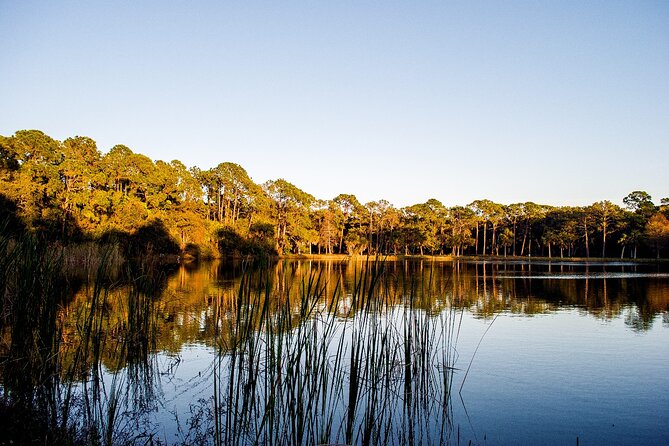
The tour’s opening is history with a reason. Starting on US Highway 41, the narration sets context for how South Florida was home to multiple Native peoples, including the Calusa, and later the Seminole, described as descendants of the Creek people from Georgia. This matters because Big Cypress isn’t just scenery. It’s a lived-in place with layers.
Right after that, you reach Miccosukee Indian Village, run by members of the Miccosukee tribe. This is a great stop if you want more than roadside facts. The village includes Native arts and crafts shopping and a museum focused on Miccosukee history. The description also highlights an important chapter from the 1800s, when many Miccosukee people fled into the Everglades to avoid capture during the Indian Wars.
What I like about this order is that it gives you a clearer lens before you spend hours looking for wildlife and reading the land. The drawback is also simple: if you’re arriving expecting only nature, you may feel the first stretch is slower. Give it the time anyway; the rest of the day reads better with this backdrop.
Tree Snail Hammock Trail and H.P. Williams Roadside Park: short walks, big odds of wildlife
After the cultural start, the tour flips into nature with two very doable stops.
First is the Tree Snail Hammock Trail, a quarter-mile loop through hardwood forest. It’s described as roughly five minutes if you’re only stretching your legs, but longer if you’re hoping to spot the tree snail. Even if you don’t catch sight of one right away, the point is that the trail is short enough that you can try without losing your whole day.
Next comes H.P. Williams Roadside Park, built for wildlife viewing. There’s a boardwalk along a waterway where you can look for alligators, turtles, and even the occasional snake. You can also watch for birds like herons and egrets, plus hawks perched in surrounding trees.
This is one of those stops where timing and stillness help. You’re not trekking deep into the preserve here, so you can make it work even if you’re visiting with people who don’t want a long hike. The trade-off is that wildlife sightings aren’t guaranteed; you’re looking and waiting.
Loop Road and County Road 94: the engineering story behind Big Cypress
Two of the drive segments turn into mini lessons on how people tried to reshape this part of Florida.
The Loop Road stop includes the story that in 1915, Miami businessman James Jaudon had an idea: a highway cutting across the swamp to make transport easier. You’ll travel this road segment as part of the self-guided route, but the narration helps you notice how “simple driving” often comes from complicated decisions.
Then you roll toward County Road 94, where the tour explains how Big Cypress became a national preserve. The key thread is land protection. When the Everglades became a national park in the 1940s, the federal government couldn’t purchase certain private land, leaving some areas vulnerable. In the 1960s, a plan was introduced to build the Big Cypress Jetport, described at the time as possibly the largest airport in the world.
If you care about why protected areas exist, this segment pays off. You’ll understand the preserve not as random luck, but as the outcome of threats, politics, and planning—plus what ultimately got saved.


Gator Hook Trail and Kirby Storter Roadside Park: wet feet are part of the deal
This is where Big Cypress shifts from “look around” to “do a real walk.”
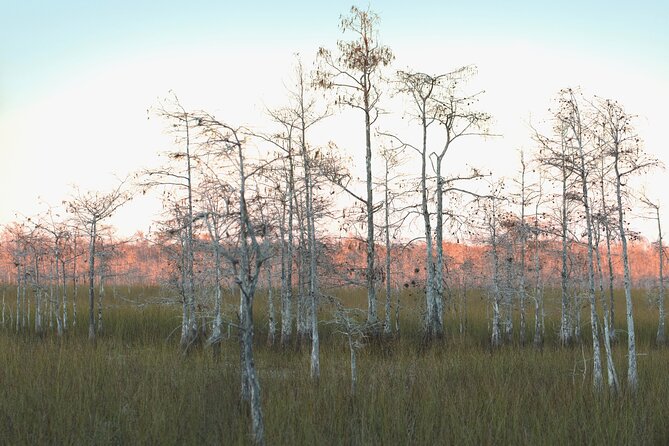
At Gator Hook Trail, the tour describes a moderately challenging hike: 5 miles round trip. The footing changes as you go. You start on dry land, then step into water that can be ankle-deep, then wading deeper until it reaches knees, and for shorter hikers possibly hips. Because the tour emphasizes the water depth change, I’d treat this as a trail where footwear choice matters more than usual.
One useful takeaway from real-world feedback is that you should not assume the wet sections will feel obvious until you’re there. If you’re thinking of doing this hike, bring the right shoes for wet areas. (This is exactly the kind of detail that makes the difference between enjoying the hike and rushing through it just to get back to dry ground.)
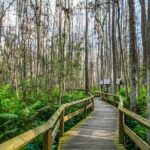
After that, you’ll head to Kirby Storter Roadside Park, one of the preserve’s standout boardwalk experiences. The main feature is a mile-long boardwalk through lush hardwood and cypress trees. The description highlights how shaded it feels and how green the scenery is as you walk.
What’s great here is variety. Gator Hook gives you a longer hike with changing water depth. Kirby Storter gives you a boardwalk where the focus is on watching the swamp up close at walking speed.
Big Cypress National Preserve essentials: visitor center, Ochopee post office, and Big Cypress Bend
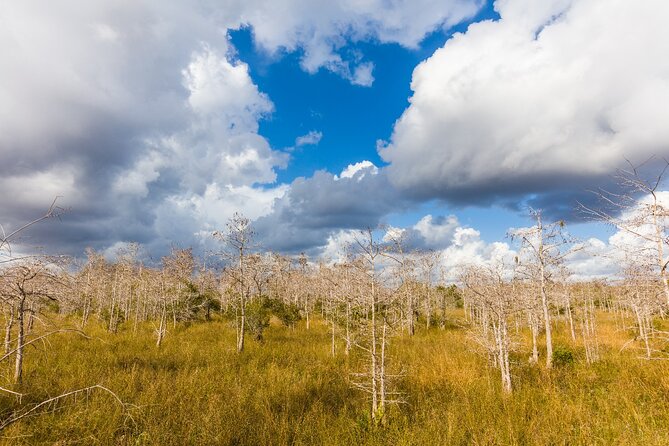
As you near the end of the drive, the tour starts tying key “main character” stops together.
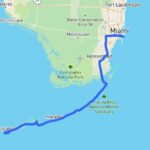
You reach the Big Cypress National Preserve area, with the tour starting point at 29701 Southwest 8th Street in Miami. The instructions mention looking for Buffalo Tiger’s boat shop on your right. This is where the day feels most official: you’re past the setup phase and into the preserve rhythm.
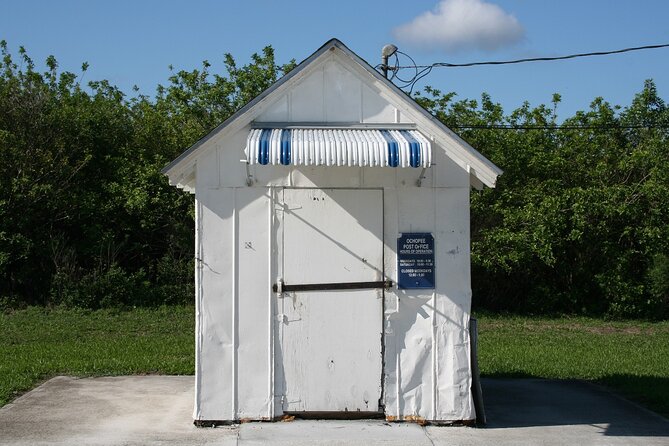
Then you’ll hit 38000 Tamiami Trl E, where the narration points out the Ochopee Post Office, described as the smallest post office in North America. If you want something fun and specific, this is it. The audio says they’re usually happy to help with postmarks, which makes for a souvenir that feels local rather than generic.
Next is the Nathaniel P. Reed Visitor Center, where the tour notes normal amenities plus artwork by Everglades artist Sam Vinikoff. The building is also described as designed with energy conservation in mind, so it’s not just a place to wait out weather. It’s also a place to understand the preserve and its culture through art and interpretive space.
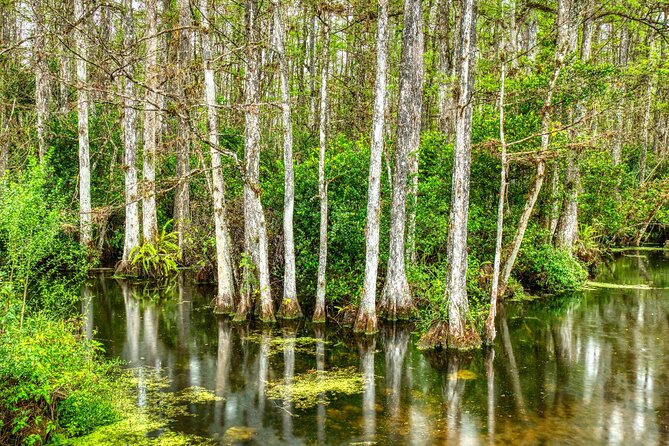
The day closes (after the visitor center area) with Big Cypress Bend Boardwalk, about ten miles from the visitor center. This one is a half-mile boardwalk through an old-growth cypress grove. It’s a strong final “slow walk” stop because you’re ending with scenery that’s meant to feel timeless and shaded.
The route ends back at your meeting point, so you’re not left planning your own return drive from a far-flung trailhead.
Wildlife, water depth, and rough-road reality: practical tips before you go
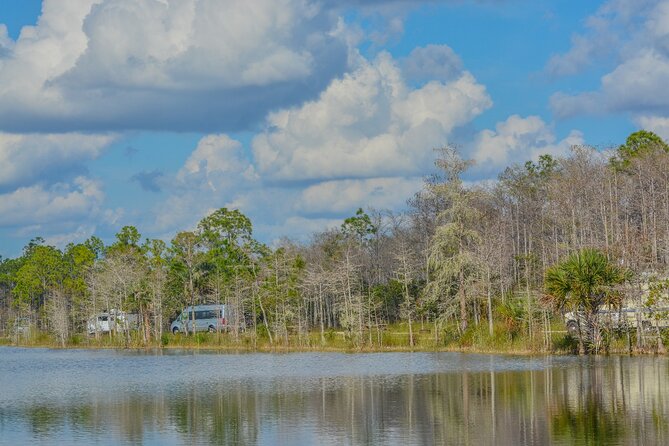
The tour is built for an easy, self-guided flow, but Big Cypress still comes with real-world conditions.
First, expect water on at least part of the hiking route. Gator Hook Trail is explicitly described as ankle-to-knee (or hip) wading. If you’re bringing the wrong footwear, you’ll spend your energy on comfort instead of enjoying the walk.
Second, be ready for road quality that isn’t city-smooth. One negative review centered on potholes and a bumpy drive. That doesn’t mean you can’t do the tour; it means you should take the roads seriously. Slow down, and treat the driving segments like the “nature road” part of your day, not like a highway transfer.
Third, use the audio system the way it was designed. Download the app on strong connectivity, start it onsite, and then let the location-triggered audio do the work. If you run into audio issues, the instructions say to contact support through the app.
Finally, match your pace to your interests. The structure encourages spending longer at stops that grab you, and skipping what doesn’t. If you’re boardwalk-first, spend extra time at Kirby Storter and Big Cypress Bend. If you’re trail-focused, plan more time for Gator Hook.
Who this Big Cypress self-guided audio tour is best for
This works best if you like independence without feeling lost.
- Small groups and families: the up-to-4 pricing is a real advantage, especially for car-based trips.
- Bird and wildlife watchers who want low stress: boardwalks at H.P. Williams and Kirby Storter keep the day structured without long hikes for everyone.
- People who like story-driven stops: the route mixes Native history, preserve protection history, and local landmarks like the Ochopee Post Office.
- Visitors planning a repeat trip: the lifetime access means you can return without repurchasing.
If you’re hoping for a guided lecture where someone stops the car and answers questions, you’ll want a different style of tour. This one is about clear self-navigation and listening as you go.
Should you book it? My take on value
Book this tour if you want a smart way to see Big Cypress essentials by car with audio that keeps you moving and helps you notice what you’d otherwise miss. The price is hard to beat for groups up to four, and the offline audio design is perfect for a place where cellular signal can be spotty.
Skip it only if you strongly dislike any chance of uneven roads or you’re not willing to plan around wet trail conditions. If those are dealbreakers, the experience might feel less worth it.
If you do book, go in with two simple expectations: you’ll get a mix of culture and swamp nature, and you’ll make the day yours by choosing how long to linger at each stop.
FAQ
How long does the Big Cypress self-guided driving audio tour take?
The tour is listed as about 2 to 3 hours, and the full route is described as over 42 miles. There’s also a note that a longer version covers the essentials in about 3 to 5 hours.
Does this audio tour work without cell service?
Yes. The tour includes offline maps, and after you download the tour while you have strong Wi‑Fi/cellular, it’s designed to work without signal or Wi‑Fi.
How many people can use one purchase?
It’s priced per group (up to 4). The savings tip also notes that buying per car can be more affordable than per person.
Is the tour available only on certain dates?
No. It’s described as new, lifetime access, no expiry, so you can use it anytime on any trip after purchase.
Where does the tour start?
The tour begins at 29701 Southwest 8th Street in Miami. The instructions say to look for Buffalo Tiger’s boat shop on your right, and the tour ends back at the meeting point.
What language is the audio available in?
The tour is offered in English.