REVIEW · SEATTLE
Seattle Time Travel Exploration Game and Tour
Book on Viator →Operated by Questo · Bookable on Viator
Seattle is full of big ideas, and this game turns them into a walk. You’ll follow story clues through iconic spots like the Space Needle area, plus a few quieter Seattle-style stops. I like that it’s self-paced (no guide herding you), and I like that it connects landmarks to the innovators who shaped the city.
What makes it feel worth it is the mix: major hits like the Space Needle and MoPOP, along with playful Seattle details such as the Anne Frank chestnut tree and Seattle Cloud Cover glass sculpture. One drawback to plan around: if the instructions don’t load clearly, the walk can run long, and you may end up doing extra backtracking before things click.
In This Review
- Key things to know before you start
- A Time-Travel Game That Starts by Elliott Bay
- Price, time, and what you really get for $7.20
- The big decision: do you want self-guided, phone-led walking?
- The Questo app setup: keep it simple before you leave
- Stop-by-stop route: from Father and Son to Pacific Science Center
- Seattle Center clues: Peace Garden and Sonic Bloom
- Space Needle to MoPOP: seeing more than the postcard
- Seattle’s modern power sites: Bill & Melinda Gates Foundation clue
- The final walk: Artist at Play Playground Center to International Fountain
- What I like most about this type of Seattle experience
- When this might frustrate you (and how to prevent it)
- Who should book this self-guided Seattle walk?
- Should you book the Seattle Time Travel Exploration Game and Tour?
- FAQ
- What is the Seattle Time Travel Exploration Game?
- Do I need a tour guide?
- How long does the experience take?
- What language is it offered in?
- Where do I start and where do I finish?
- Is a mobile ticket required?
- Is there customer support if I get stuck?
- Is it suitable for families or kids?
- Can I cancel, and is service included?
Key things to know before you start

- No guide needed: You solve clues at your own pace instead of following a fixed narration.
- Story clues at multiple landmarks: The route touches several Seattle Center and downtown icons.
- Self-correct with support: There’s 24/7 customer support if you hit a snag.
- Mobile ticket + phone app: You’ll rely on the Questo app and your phone to move forward.
- Family-friendly pricing: It’s free for kids, and group discounts can help your whole crew.
- Ends at a different spot: You start near Elliott Bay Trail and finish at the International Fountain.
A Time-Travel Game That Starts by Elliott Bay
This isn’t a sit-and-stand tour. It’s a city exploration game built around time-travel clues, and you move stop to stop by reading what’s on your phone. The start point is near Elliott Bay Trail at the Father and Son fountain, and you’ll finish around the International Fountain on 305 Harrison St.
The best part is the pacing freedom. You can linger outside the big photo spots, step into a nearby view point, or take a break without feeling like you’re slowing anyone down. That kind of flexibility matters in Seattle, where weather can change fast and sidewalks can get crowded.
You can also read our reviews of more tours and experiences in Seattle.



Price, time, and what you really get for $7.20
At $7.20 per person, this is priced like an activity, not a traditional guided tour. Duration is listed as about 1 hour to 1.5 hours, which is realistic only if everything loads cleanly and you don’t linger too long at each clue.
You’re paying for a guided-by-phone experience that points you across multiple landmarks (Space Needle, MoPOP, and other Seattle Center area stops), plus story prompts about the people who influenced Seattle. Since you’re not paying for a live guide, the value is in the routing and the built-in motivation to look at things you might otherwise speed past.
The big decision: do you want self-guided, phone-led walking?

This experience is private for your group, and it’s offered in English. That’s helpful if you want your own pace and your own group dynamics, especially with kids or friends who like to stop for photos often.
But it does place the “guide” function on your phone. You’ll need your mobile ticket and the Questo app to read clues and get directions to the next stop. If you prefer a more traditional human-led tour, this can feel like work instead of fun.
The Questo app setup: keep it simple before you leave
You start at the Father and Son fountain near Elliott Bay Trail. Before you step too far away from the start, make sure you can open the instructions and see the next clue without hunting around.
Here’s the practical takeaway: plan to use a single phone for the group if possible. Getting tangled in log-in steps or trying to switch who has the details can turn a short walk into an annoying scavenger hunt. The good news is that support exists, and it’s available 24/7, so you’re not stranded if you hit a wall.
Also, because the route goes through major attractions and plazas, expect some areas to change over time. A clue might point you toward a spot that’s partially controlled or fenced off at certain times. If that happens, don’t force it—use support and follow the updated path they give you.
Stop-by-stop route: from Father and Son to Pacific Science Center
Stop 1: Father and Son fountain (start clue).
You begin with a first clue that starts the story and hands you directions to the next stop. I like this style because it gets you moving immediately. It also helps you avoid the classic problem of arriving at a landmark without knowing what to look for next.
Stop 2: Around Pacific Science Center (second clue).
This segment gives you another clue while you explore near Pacific Science Center. Even if you don’t go inside, the surrounding area gives you lots to read visually: open plazas, views, and big modern Seattle landmarks. The key is to slow down just enough to notice what the clue wants you to connect.
The tradeoff is that self-guided routes can ask you to make sense of directions on the fly. If your phone navigation lags or the clue text is hard to find, you can lose momentum. If you want a smooth experience, keep your screen brightness up and don’t walk away from the app entirely.
Seattle Center clues: Peace Garden and Sonic Bloom
Stop 3: Around the Peace Garden (third clue).
You’ll get another puzzle prompt around the Peace Garden at Seattle Center. This is one of the more calming parts of the walk. It’s also a nice contrast: you’re still in the Seattle Center cluster, but you’re shifting from big landmark photography to quieter paths and thoughtful landscaping.
Stop 4: Around Sonic Bloom sculpture (fourth clue).
Next you’ll move to the Sonic Bloom sculpture area. This is one of those pieces that encourages you to look up, look around, and notice details you’d otherwise skip. The game format helps here because you’re not just sightseeing—you’re searching for the clue’s context.
Drawback to keep in mind: sculpture and art areas can have multiple viewing angles and paths. If the instructions tell you to keep going but you’re not reading carefully, it’s easy to take the wrong route and then have to correct later.
Space Needle to MoPOP: seeing more than the postcard
Stop 5: Around the Space Needle (fifth clue).
The Space Needle stop is the obvious headline moment. The interesting part is that the game route encourages you to treat it like a clue hub, not only a photo stop. You’ll spend time in the area long enough to notice how the grounds, surrounding plazas, and nearby viewpoints shape your perspective of Seattle.
I also appreciate that the highlights mention learning about thought pioneers and innovators who shaped Seattle. When a route does this well, it gives you a reason to look at the city as more than architecture. You’re connecting places to people, and that makes the walking feel more purposeful.
Stop 6: Around the Museum of Pop Culture (MoPOP) (sixth clue).
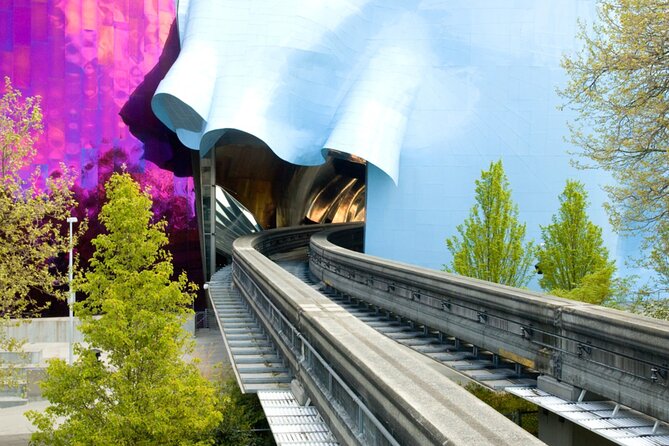
From the Space Needle area, you’ll head toward MoPOP. This is a fun shift because MoPOP is about creativity, music, film, design, and pop culture. If your group enjoys modern Seattle identity, this stop makes the whole walk feel current.
One caution: ticketing lines and controlled entrances can affect how close you can get to exactly where a clue expects you to be. If you’re blocked by barriers, don’t fight it. Step back, use the route directions you’re given, and let support clarify the closest accessible point.
Seattle’s modern power sites: Bill & Melinda Gates Foundation clue

Stop 7: Around the Bill & Melinda Gates Foundation (seventh clue).
This is a surprising and valuable addition. Not because you need to spend time inside, but because it changes the story. The route isn’t only about landmarks—it’s also about institutions and ideas that shaped Seattle’s influence beyond the city.
This part of the experience also highlights one of the practical realities of self-guided city games: some areas have evolving access rules. If you find yourself unable to reach a specific exact point, the best move is to pause and request help rather than looping around fences and public entries.
The final walk: Artist at Play Playground Center to International Fountain
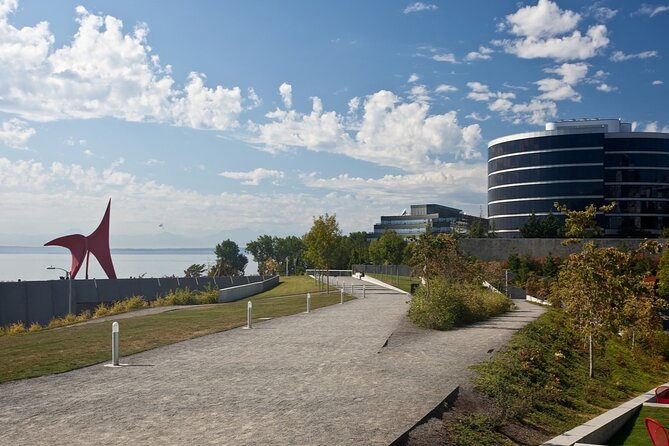
Stop 8: Around the Artist at Play Playground Center (eighth clue).
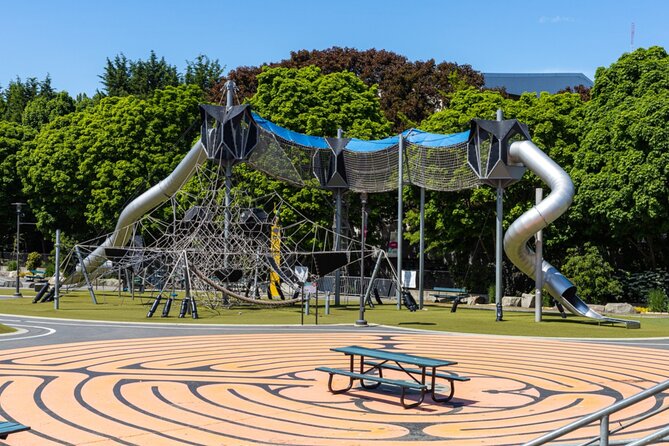
Near the end, the route hits the Artist at Play Playground Center area. This is a great tempo shift, especially if you have kids or anyone in your group who likes to burn off energy with playful surroundings. It also keeps the walk from feeling like only adult sightseeing.
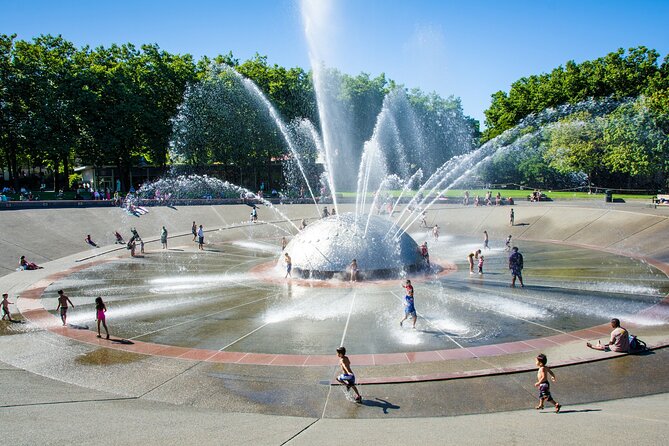
Finish: Around the International Fountain.
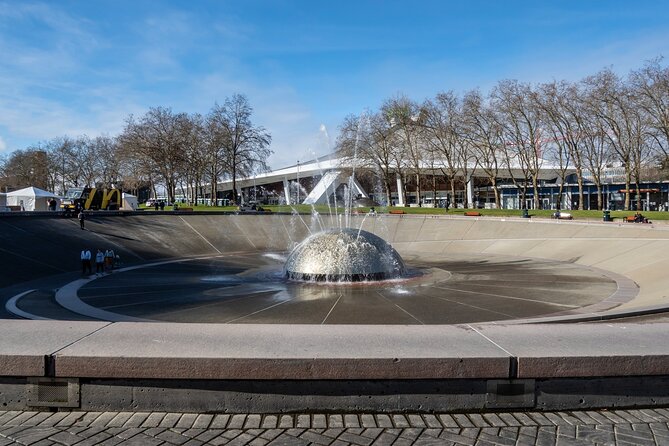
You wrap up around the International Fountain, where the story and exploration games end. I like finishing at a central, recognizable landmark because it gives you a clean end point for onward plans—dinner, transit, or simply wandering without the pressure of the next clue.
What I like most about this type of Seattle experience
The biggest strength is control. You decide how long to pause. You decide when to check the phone. You can snack, take photos, and re-read the clue text without a group waiting on you.
Second, the route blends the expected with the interesting. Space Needle and MoPOP are easy sells. Adding places like the Anne Frank chestnut tree and Seattle Cloud Cover means the game nudges you toward specific details that give Seattle its own personality.
Finally, the customer support model helps. If something breaks—directions, access, app loading—you’re not stuck alone. The experience includes 24/7 customer support, which matters for phone-based activities.
When this might frustrate you (and how to prevent it)
This is the part I want you to take seriously, because it can make or break the day.
The main risk is unclear instructions. If the directions are hard to find, you can lose an hour just trying to locate where to go next. Another risk is timing. Even though the duration is listed as 1 to 1.5 hours, delays from confusion, problem-solving, and detours can stretch the walk well beyond that.
You can reduce the odds of trouble with a few simple habits:
- Start with your app fully working at the first clue point, not five blocks later.
- Keep your phone charged and your screen bright.
- If you hit an access issue or barrier, pause and use support rather than guessing.
- Budget extra time if you’re moving slowly, traveling with kids, or visiting when areas are busiest.
Who should book this self-guided Seattle walk?
This works best for:
- Groups that like walking and solving puzzles together.
- Families, since it’s free for kids and includes flexible pacing.
- People who want landmark time without paying for a full guided program.
- Visitors who enjoy learning about Seattle’s innovators while they move around.
It may be a weaker fit for:
- Anyone who dislikes phone-led navigation.
- Travelers who want a strict schedule and zero uncertainty.
- Groups that don’t want any “problem-solving” moments at all.
Should you book the Seattle Time Travel Exploration Game and Tour?
If you like self-guided activities and you’re comfortable following a phone screen, this is a good-value way to see a concentrated chunk of Seattle Center and downtown icons for $7.20. The combination of big-name stops and lesser-known details is exactly the kind of mix that turns a normal sightseeing walk into something more memorable.
I’d only skip it if you need a guaranteed timeline with no app friction. The experience is designed to run by clues, and that means clarity matters. If you’re the type who will stay calm when a direction is confusing—and you’ll use support right away—this is likely to land well.
FAQ
What is the Seattle Time Travel Exploration Game?
It’s a city exploration game in Seattle that uses the Questo app to guide you through story clues and directions at multiple landmarks.
Do I need a tour guide?
No. It’s designed to be played without a tour guide, using the mobile game and clues instead.
How long does the experience take?
The duration is listed as about 1 hour to 1 hour 30 minutes.
What language is it offered in?
It’s offered in English.
Where do I start and where do I finish?
You start near Elliott Bay Trail at the Father and Son fountain, and you finish around the International Fountain at 305 Harrison St.
Is a mobile ticket required?
Yes. The experience uses a mobile ticket, and you’ll use it with the Questo app.
Is there customer support if I get stuck?
Yes. Customer support is available 24/7.
Is it suitable for families or kids?
Kids are free, and the experience says most travelers can participate.
Can I cancel, and is service included?
You can cancel for a full refund up to 24 hours in advance. Service animals are allowed, and it’s near public transportation.
If you’d like, tell me your travel month and whether you’re walking slowly or with kids, and I’ll suggest how much extra time to pad so the game stays fun instead of stressful.