REVIEW · SEATTLE
Seattle Downtown Quest: Self-Guided History Adventure
Book on Viator →Operated by Questo · Bookable on Viator
A puzzle walk through downtown Seattle. I love the self-guided setup that lets you wander at your own pace without a map or a guide, and I also like how the route threads 10 interactive puzzle challenges through real landmarks you can see and touch.
This kind of app-led quest is still dependent on what’s physically in front of you. My one big caution: if a clue spot is affected by construction or temporary refurbishment, you may need to use hints or improvise to keep moving.
In This Review
- Key things to know before you go
- A self-guided Seattle story you can pace yourself
- Price and value: $7.20 for 10 stops that actually move
- Getting oriented: Union Station start and Waterfront Park finish
- Stop-by-stop: what you’ll learn as you walk
- Klondike Gold Rush National Historical Park area: clues in the details
- Pioneer Square: Romanesque Revival streets and under-street Seattle
- Smith Tower: a fast lesson in early Seattle ambition
- Seattle Federal Office Building: the federal power story in brick and design
- Eyes on You medical center: local service history, not just trivia
- Seattle Art Museum (SAM): how the museum’s origin story fits the street
- Pike Place Market and Victor Steinbrueck Park: a neighborhood, not a postcard
- Beneath the Streets: the story layers under your feet
- The puzzles: how to solve without getting stuck
- Practical timing: how to do this like a local
- What kind of traveler will love it (and who should skip)
- Should you book Seattle Downtown Quest?
- FAQ
- Do I need a physical tour guide?
- How long does the Seattle Downtown Quest take?
- How much does it cost?
- What do I receive with the mobile ticket?
- Do I need maps or GPS?
- Can I pause and continue later?
- What language is available?
- Where do I start and where do I end?
- What are the operating hours?
- Is this a private activity?
- Are service animals allowed?
Key things to know before you go
- Union Station to Waterfront Park: a clear downtown-to-waterfront flow that feels like a mini “walkable story.”
- 10 puzzle challenges: short problem-solving stops designed to break up the walking.
- No guide, no GPS, no maps required: you follow the mobile experience rather than navigating streets.
- Pause and resume: ideal when you want breaks for coffee or photos.
- Downtown landmarks you can verify in real life: art museum, Pioneer Square, Pike Place area, and more.
- Best as a light activity: roughly 90 minutes, not a full-day tour.
A self-guided Seattle story you can pace yourself
This is the rare Seattle activity that feels built for real people with real schedules. You start at Union Station and end at Waterfront Park, and the game keeps you moving with a sequence of stops and challenges. It’s history learning through doing: look around, answer the prompt, and move on.
The best part for me is the freedom. There’s no need to wait for a guide, and there’s no pressure to keep up with a group. If you want to linger at Pike Place Market or take a minute inside the Seattle Art Museum area, you can. The quest is designed so you’re not stuck following someone else’s pace.
Price and value: $7.20 for 10 stops that actually move
At $7.20 per person for about 1 hour 30 minutes, this costs far less than a typical guided walking tour. The math only works if you treat it like an activity, not just a sightseeing checklist. Since you get 10 interactive puzzle challenges and storyline content tied to each location, you’re paying for the structure.
A key value point: you’re not just reading about Seattle in an abstract way. You’re required to look at what’s in front of you—architecture details, public spaces, and specific landmark context—so the downtown scenery has a job.
That said, I’d judge your expectations correctly. This isn’t a “hands-on exhibit” where everything is guaranteed to be available. It’s an outdoor game tied to real-world spots, so if something is temporarily unavailable, your experience can shrink a bit.
Getting oriented: Union Station start and Waterfront Park finish
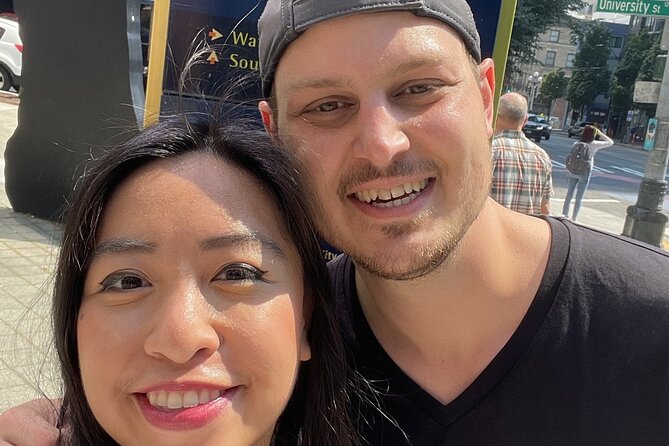
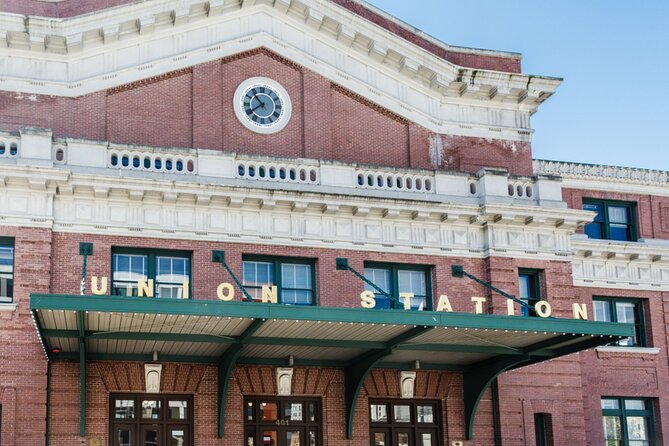
Your walk has a defined spine: start at Union Station (401 S Jackson St) and finish at Waterfront Park (1401 Alaskan Wy). That matters more than you might think. When a self-guided tour has a clear beginning and end, you’re less likely to waste time wandering in the wrong direction.
You also get flexibility. The tour is built so you can pause and resume anytime, which is handy in Seattle where the weather and your mood can change fast. If you stop for coffee near Pioneer Square or want a quick breather at the Pike Place side, you can.
One practical thing I like: the experience works without maps or GPS. That can make you feel less stressed on busy downtown blocks. You still need to pay attention to where you are, but the quest removes a lot of navigation friction.
Stop-by-stop: what you’ll learn as you walk
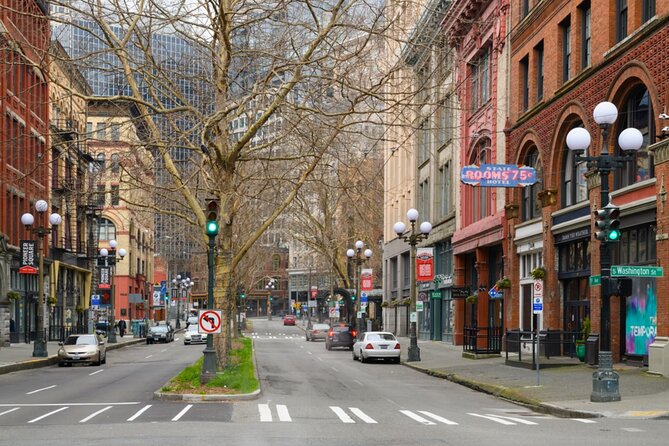
Below is what you’ll encounter along the way and what to pay attention to at each kind of stop. I’m keeping this real-world: what matters, what could be annoying, and why it’s worth your time.
Klondike Gold Rush National Historical Park area: clues in the details
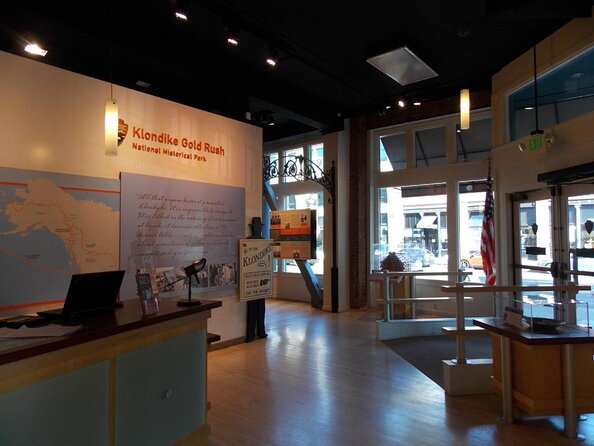
You start by moving into the Klondike Gold Rush National Historical Park area and solving a challenge that requires you to look around. This is where the quest’s “look closely, then answer” style really clicks.
You’ll also come across totem poles and woodcarvings connected to Duane Pasco (1970s). The quest context includes that they were donated by Richard White and installed in the 1980s. The story notes a few standout carvings:
- The tallest, Sun and Raven, tied to Raven’s theft of the moon, created for the 1974 Spokane World’s Fair
- Man Riding on Tail of Whale, carved in 1971
- Tsonoqua, described as a mythological giantess and a “nightmare bringer” invoked by North Coast mothers to frighten children into obedience
Two things to keep in mind. First, this is a cultural-history stop, so slow down and read the carvings when you can. Second, since these are physical objects, you may occasionally run into temporary issues if anything is being refurbished.
Pioneer Square: Romanesque Revival streets and under-street Seattle
Pioneer Square is the next vibe shift: you move into an area of late-1800s Romanesque Revival buildings, with art galleries, coffee shops, and trendy bars. Even if you’re not stopping for a drink, the architecture and street texture matter here because it’s part of the story the quest frames.
You’ll also get the connection to the famous Underground Tour theme. The narration ties back to Seattle’s roots in the Klondike Gold Rush era, and it positions Pioneer Square as a place where office workers unwind and visitors explore.
Look out for small public-space cues that match the setting. The background mentions Waterfall Garden Park and Occidental Square, including bistro-style seating and bocce courts. Those aren’t just cute details; they give the area a sense of how people actually use it now.
Smith Tower: a fast lesson in early Seattle ambition
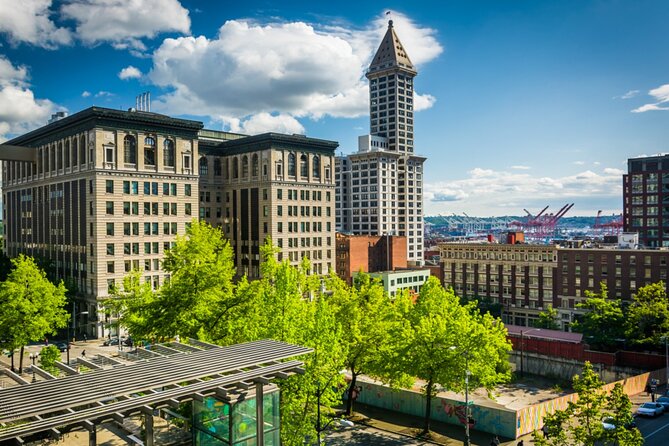
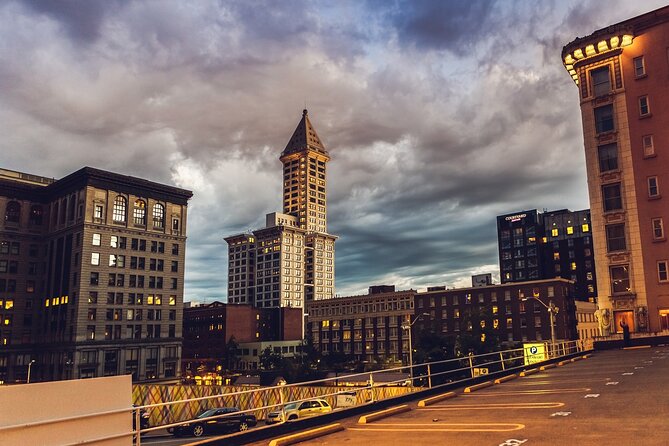
Smith Tower is one of those Seattle landmarks that makes you glance up. It was completed in 1914, stands 38 stories high, and reaches 484 ft. The story framing here highlights it as the oldest skyscraper in Seattle and among the tallest outside New York City at the time.
In a normal visit, you might just take a photo. In this quest format, you’ll likely use the tower’s presence as part of your clue-solving moment. My advice: when you reach this stop, take a second to orient yourself in relation to the tower before you focus on the puzzle.
Seattle Federal Office Building: the federal power story in brick and design
Next comes the Seattle Federal Office Building (FOB), constructed in 1933. This is described as the first Seattle building specifically designed for federal government offices. The quest context credits the designer of record as James A. Wetmore, with oversight by the Department of the Treasury’s Supervising Architect.
The information also notes early tenants—52 federal agencies—with the Department of the Treasury as the largest. This stop is a good reminder that Seattle’s growth wasn’t just trade and shipping. Government offices moved in and shaped the downtown core.
Eyes on You medical center: local service history, not just trivia
You’ll also stop at the Eyes on You medical center. The quest promises a “history you will want to know,” and that’s exactly how to treat it: as a local-services story that adds depth beyond monuments.
I like these kinds of stops because they keep the game from becoming purely “statues and plaques.” A working medical center is part of downtown Seattle’s real daily rhythm, and the puzzle format makes you pay attention long enough to absorb the background.
Seattle Art Museum (SAM): how the museum’s origin story fits the street
The Seattle Art Museum stop is built around the museum’s origins. You’ll see the connection to the Seattle Fine Arts Society (organized 1905) and the Washington Arts Association (organized 1906), which merged in 1917 while keeping the Fine Arts Society name.
The story continues with how the organization became the Art Institute of Seattle in 1931, and that the Art Institute housed its collection in Henry House on Capitol Hill. Henry House is tied to collector and founder Horace C. Henry (1844–1928).
In other words, this is not just about art on walls. It’s about how institutions form. If you’re the type who enjoys origin stories, you’ll likely find this stop a satisfying payoff.
Pike Place Market and Victor Steinbrueck Park: a neighborhood, not a postcard
Pike Place Market is described as more than a public market. In this quest, it’s treated as a living neighborhood made up of hundreds of farmers, craftspeople, small businesses, and residents. The storyline also mentions preservation of historic buildings across the nine-acre historic district and the market’s role as an incubator and supporter for smaller local creators.
One detail I appreciate: Pike Place Market is described as chartered by the City of Seattle to provide services for low-income individuals. That’s the kind of fact that gives the market more weight than the usual tourist talk.
Right after that, the quest includes Victor Steinbrueck Park at the north end of Pike Place Market. It frames the park as a place that’s busy on a summer afternoon—residents, visitors, tourists, and people working nearby—picnicking, sunbathing, and relaxing on benches and tables.
This is a great moment to slow down. Let the noise and movement do some of the teaching for you.
Beneath the Streets: the story layers under your feet
You’ll also encounter the Beneath the Streets focus: factual historical information about the city’s birth, 1890s architecture, and additional threads including the Klondike Gold Rush, Skid Row, and the Coast Salish Peoples who first inhabited the area.
I like this stop because it nudges you to think of downtown Seattle as layered. You’re not just looking at what’s there now; you’re getting prompted to remember what came before.
The puzzles: how to solve without getting stuck
The quest uses 10 interactive puzzle challenges and gives you a way to keep going when you hit a wall. In practice, the puzzles are the engine of the experience. If you rush, you’ll miss what the clue is pointing to.
Your best strategy is simple:
- Slow your eyes down at each stop
- Look for the specific object or detail the prompt nudges you toward
- Use hints if the app offers them, then get back to scanning
One caution I’d add from the kind of feedback this format attracts: some clue spots can be affected by construction or temporary changes. If the exact physical item you’re supposed to use is missing, don’t assume you’re doing everything wrong. Pause, check the hint option, and use the information the app provides rather than forcing it.
Also, make sure your phone is ready before you start. If the app doesn’t load smoothly, your momentum dies fast, and a self-guided game is only fun when it’s working.
Practical timing: how to do this like a local
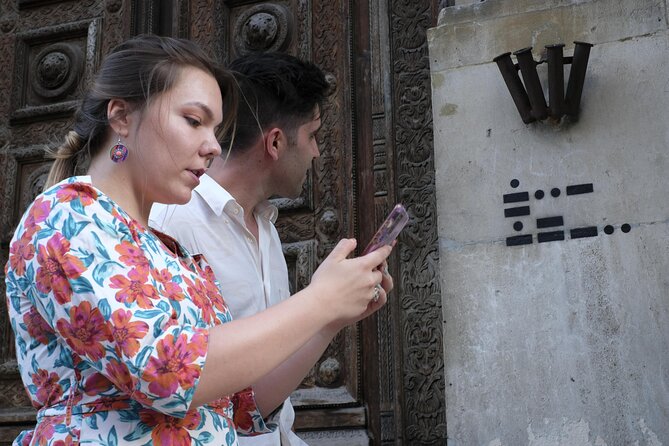
This takes about 1 hour 30 minutes on average, and it’s scheduled to run daily from 5:00 AM to 9:00 PM. That wide window is useful. You can fit it into early morning light, a midday pause, or an evening walk.
Because the route is downtown-heavy, I recommend you plan for steady walking. This isn’t a bus tour. If you’re hoping for a seated tour, you’ll probably end up standing and walking more than you expected.
One nice aspect for groups: the mobile format is built for personal devices, and it’s easy to cooperate. If you’re traveling with friends or family, decide ahead of time how you’ll share the phone screen and who gets to be the clue-reader.
What kind of traveler will love it (and who should skip)
You’ll probably enjoy this quest if you like:
- Exploring on foot and learning by doing
- Quick interactive activities that break up sightseeing
- A flexible plan where you can pause for coffee and photos
It’s less ideal if you:
- Want a fully guided, narration-by-a-person experience
- Need every single clue location to be perfectly unchanged
- Get frustrated with app setups or tech hiccups
In other words, treat it like a fun downtown challenge first, and treat the history as a bonus that comes from paying attention.
Should you book Seattle Downtown Quest?
If you want a low-cost way to turn downtown Seattle into an interactive game, I’d say it’s worth booking—especially because it’s priced at $7.20 and structured around 10 puzzle stops. It’s also a good pick when you want something flexible rather than a fixed guided schedule.
The “don’t miss” part is your expectations. This is not a guaranteed museum visit; it’s a self-guided game tied to real outdoor locations and real downtown conditions. If you’re okay using hints and adapting when a spot looks different than expected, you’ll likely have a fun, satisfying walk from Union Station to Waterfront Park.
FAQ
Do I need a physical tour guide?
No. This is a self-guided experience and does not include a physical tour guide.
How long does the Seattle Downtown Quest take?
It’s listed as about 1 hour 30 minutes (approx.).
How much does it cost?
The price is $7.20 per person.
What do I receive with the mobile ticket?
You get a mobile access code for the quest and the interactive content for the experience, including 10 puzzle challenges.
Do I need maps or GPS?
No. The experience is designed so no maps or GPS are needed.
Can I pause and continue later?
Yes. The quest supports pause and resume anytime.
What language is available?
The experience is offered in English.
Where do I start and where do I end?
Start: Union Station, 401 S Jackson St, Seattle, WA 98104.
End: Waterfront Park, 1401 Alaskan Wy, Seattle, WA 98101.
What are the operating hours?
The listed hours are 5:00 AM to 9:00 PM, Monday through Sunday.
Is this a private activity?
Yes. It’s listed as a private tour/activity, meaning only your group participates.
Are service animals allowed?
Yes. Service animals are allowed.