REVIEW · TENNESSEE
Shiloh Battlefield Self-Guided Driving Audio Tour
Book on Viator →Operated by Travel with Action · Bookable on Viator
Shiloh Battlefield gets a lot more understandable when the drive talks back. This self-guided audio tour strings together real battlefield landmarks into an easy 1–2 hour loop, with stories that kick in as you pass each stop. I like that it’s priced per car (up to 4), so the history cost doesn’t punish families or small groups.
I also love the practical setup: offline maps and hands-free playback mean you can keep your eyes on the road. A small heads-up: some parts are moment-to-moment with parking and turnoffs, so it helps if you’re comfortable driving slow and pulling over on schedule.
In This Review
- Key highlights to plan around
- Start at Shiloh Visitor Center, Then Let the Audio Run the Show
- Route Length and Timing: A 6-Mile Drive That Works Even If You’re Not in a Rush
- Price That Usually Feels Fair: $14.99 Per Group, Up to Four
- How the App Works on the Ground (And What to Do If Audio Gets Weird)
- Stop-by-Stop: What You’ll See and Why Each Marker Matters
- Iowa State Monument: Fame Carves Memory Into Granite
- Grant’s Last Line: The Desperate Push Near Dusk
- Michigan State Memorial: The Human Cost in One Soldier’s Left Turn
- Daughters of the Confederacy Monument: Albert Sidney Johnston in Bronze
- Shiloh Church and Cemetery: Old vs. New, With Sherman’s Camp Connection
- Seay Field: Prentiss Orders Men to Stand Fast
- Munch’s Battery (1st Minnesota Light Artillery): The Hornet’s Nest Set-Up
- Jones Field: Sherman Pressed Back, Then Joined by McClernand
- Tennessee State Memorial: Loyalty to the Dead
- Colonel Julius Raith Mortuary Monument: Cannonball Pyramids and a Parrott Rifle
- Texas State Monument: Johnston as a Born Texan Who Joined the Confederacy
- Shiloh Indian Mounds: An 800-Year-Old Layer Under the Civil War
- Shiloh National Cemetery: Aftermath, Mass Burial, and Unidentified Soldiers
- Pittsburg Landing: Buell’s Men Arrive to Save the Day
- Value Tips: How to Get the Most Out of Your 1–2 Hours
- Should You Book This Shiloh Self-Guided Driving Audio Tour?
Key highlights to plan around
- 34+ audio stories triggered by your location, so you don’t miss the plot
- Offline maps (no cellular or Wi‑Fi needed after download)
- 6+ miles of driving for a complete circuit that usually fits 1–2 hours
- Free parking pull-offs at major monuments, plus a stop at the church/cemetery area
- Pair your phone to your car stereo for an easier, keep-your-eyes-on-the-road experience
Start at Shiloh Visitor Center, Then Let the Audio Run the Show
Your tour begins at the Shiloh Battlefield Visitor Center, 1055 Pittsburg Landing Road, Shiloh, TN 38376. There’s no guide meeting you. You park, open the Action audio app once you’re onsite, and start at the first story point. From there, the audio plays automatically as you reach each location cue—hands-free, go-at-your-own-pace style.
This is a big deal at Shiloh because the battlefield has plenty of roads, pull-offs, and monuments that can blur together if you’re just sightseeing with no “next step” plan. With this tour, you’re not guessing what to look at or where to go next. You get a sequence, and that sequence helps you connect what you’re seeing to what’s being explained.
Practical tip: download the app while you’re in strong Wi‑Fi or cellular. One review noted trouble when Wi‑Fi wasn’t available, and the fix is to have the audio ready before you roll in.
You can also read our reviews of more tours and experiences in Tennessee.
Route Length and Timing: A 6-Mile Drive That Works Even If You’re Not in a Rush
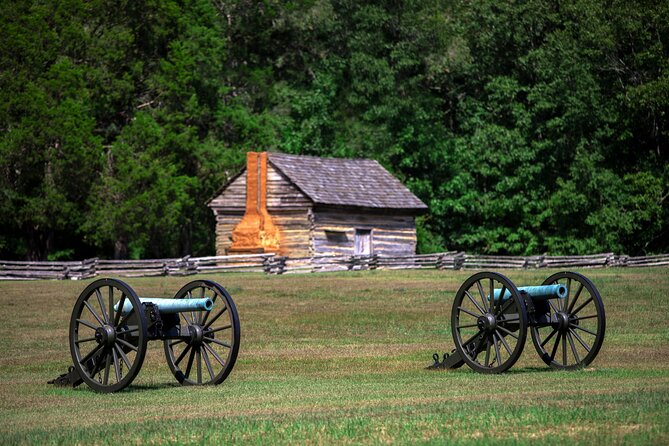
The route runs over 6 miles, and it’s built around more than 34 audio stories. Plan on about 1–2 hours, depending on how often you pull over for a closer look and how much you want to wander around the stop areas.
That timing matters. If you’re traveling with kids, you’ve got a time window for lunch. If you’re pairing Shiloh with other stops in the region, you want predictable logistics. This tour gives you that: it’s a true drive-with-stops experience, not a half-day scavenger hunt.
Also note the tour is private for your group—only your party participates—so you’re not waiting for anyone else to return to a van.
Price That Usually Feels Fair: $14.99 Per Group, Up to Four
At $14.99 per group (up to 4), the value is strongest when you’re splitting the cost across a small carload. If you’re traveling as a couple with a parent, a friend group, or a family of four, this format is built to keep spending sensible compared to bus-style tours that charge per person.
And because the access is lifetime with no expiry, you’re not forced into “use it today or lose it.” You can do it once on your first visit, then revisit later without repurchasing. That also helps if you’re the type who likes to re-read the same place after your brain fills in the story.
How the App Works on the Ground (And What to Do If Audio Gets Weird)
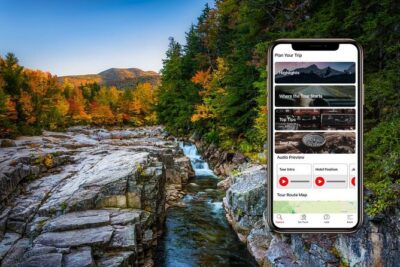
You’ll receive setup instructions by email and text after booking, including a password. The main idea is simple:
- Download the separate Action tour app while you have strong connectivity.
- Enter the password sent to you.
- When you arrive onsite, open the app and launch the correct tour starting point/version.
Once you start, the audio plays based on location cues. That makes it easy to use while driving. For sound, you can connect your phone to your car stereo via Bluetooth, USB, or AUX. If you’re getting out of the car to walk, headphones can help keep audio clear while you roam.
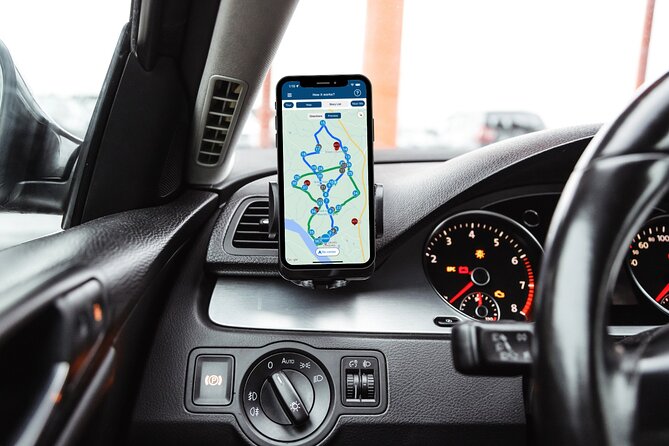
One more pro move from real on-the-road use: when the narrator isn’t speaking, use the app’s map to see how far you can drive before the next story and when you’ll need to turn. It saves time and stress, especially in a park with multiple side roads.
Stop-by-Stop: What You’ll See and Why Each Marker Matters
Iowa State Monument: Fame Carves Memory Into Granite
You’ll hit the Iowa State Monument early. The tour points out a bronze eagle on top of the tower, pictured as an eagle mid-flight—an image meant to represent freedom of the soul. You also learn about the figure of Fame holding a quill pen, “carving an elegy” for posterity.
This stop works well because it sets the tone for the whole battlefield. The monuments aren’t just names on stone. They’re designed to make you think about remembrance—who was lost, what was remembered, and how the story gets passed forward.
Grant’s Last Line: The Desperate Push Near Dusk
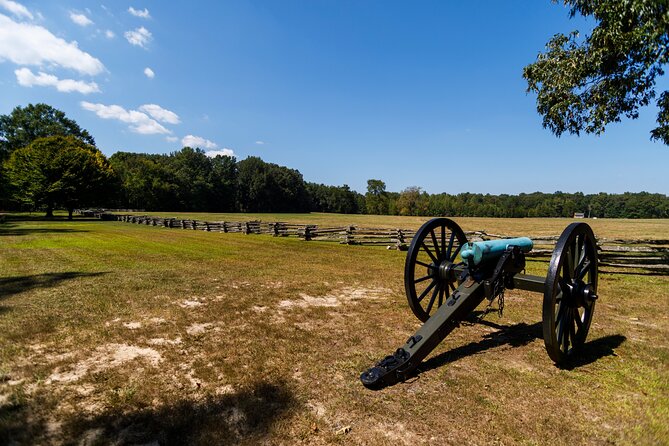
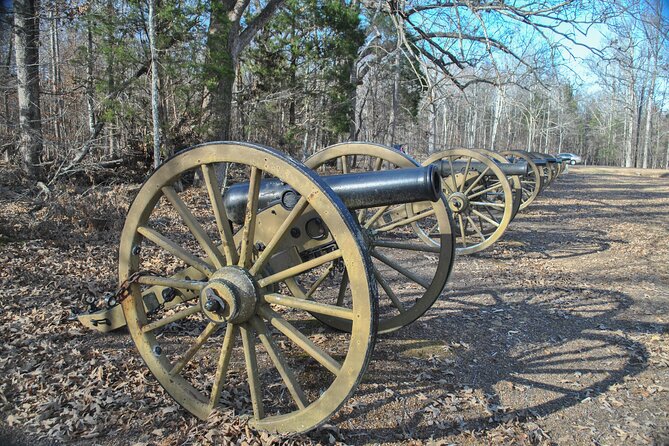
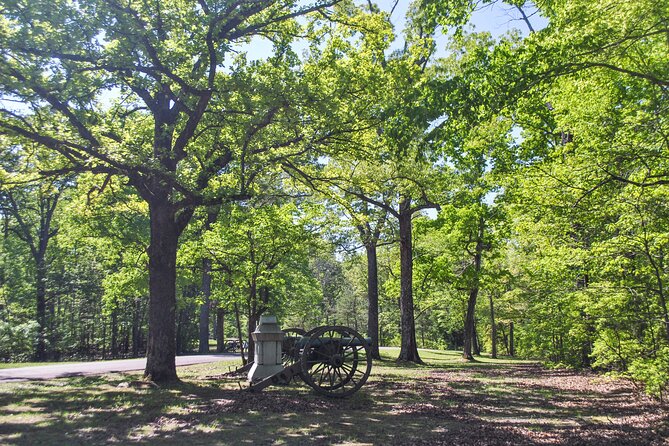
Next comes Grant’s Last Line, marked by cannons. The audio paints a specific moment: dusk falling on a warm April day, huge siege guns being dragged, and 20,000 troops gathering from different brigades to form what the narration describes as a last-ditch attempt against the Confederate surge.
This is one of the most “cinematic” parts of the audio because it gives you a sense of timing and urgency. When you’re standing in front of a cannon marker in real life, that extra narrative helps it click.
Michigan State Memorial: The Human Cost in One Soldier’s Left Turn
You’ll reach an intersection and the audio gives a clear instruction: ignore the intersection road and continue straight along Confederate Road. You’ll know you’re on track when a soldier monument passes on your left.
That soldier memorial honors 353 Michigan troops killed, wounded, or missing. This is the kind of stop where the details matter, and the location cue makes it easier to find the exact marker the story is talking about.
Daughters of the Confederacy Monument: Albert Sidney Johnston in Bronze
The tour routes you to the Daughters of the Confederacy Monument across from the bigger monument in a nearby turnout. The audio calls attention to a bronze plaque depicting General Albert Sidney Johnston, who led Confederate forces here at Shiloh.
Even if monuments aren’t your thing, this stop is useful because it ties battlefield geography to leadership—who commanded, and how that command shaped what you see next.
Shiloh Church and Cemetery: Old vs. New, With Sherman’s Camp Connection
This is a practical and emotional stop. You turn into the parking lot on the left and park. The tour tells you to expect two structures: a modern church building and an authentic replica of the original.
The replica is described as a one-room log cabin. The audio also mentions that this area is associated with General Sherman and his men making camp. If you want a break from the car-driving pace, this is the best place for it: you can walk, read plaques, and absorb the setting without constantly scanning for your next cue.
A drawback to consider: since you’ll likely want to step out, you may lose a few minutes here. That’s normal. Just plan for it if you’re squeezing Shiloh into a tight itinerary.
Seay Field: Prentiss Orders Men to Stand Fast
At Seay Field, the tour explains how Prentiss orders his men to stand fast against rebels emerging from the woods. The story emphasizes the imbalance: a smaller Union contingent facing an overwhelming attack, with a focus on slowing the enemy rather than stopping everything outright.
You’ll feel this stop most if you take a few minutes to look out in the direction you’re imagining from the road. The audio gives you a strategy lens, not just a sequence of names.
Munch’s Battery (1st Minnesota Light Artillery): The Hornet’s Nest Set-Up
The tour points out cannons dedicated to Union Captain Emil Munch. It connects the dots between Union retreat from camp and regrouping in an area known as the Hornet’s Nest, about a mile ahead.
This stop is valuable because it functions like a “chapter transition.” You’re not just looking at another marker—you’re being told why the next area matters.
Jones Field: Sherman Pressed Back, Then Joined by McClernand
At Jones Field, the audio describes General Sherman being pushed back from the church toward this field. Then it shifts: Sherman is joined by General John McClernand, and the story turns on that change in command and direction.
This is a great stop for those who like a battlefield narrative with momentum. If you tend to get bored when tours feel like a list of monuments, the audio here keeps the story moving.
Tennessee State Memorial: Loyalty to the Dead
Soon you’ll see the Tennessee State Memorial, recognizable for its three bronze men: one standing with a rifle, one fallen, and one picking up the flag his comrade dropped. The narration frames the monument around survivors’ loyalty to those they lost.
This is another stop where you can take a few photos and still get something meaningful out of it. The symbolism is spelled out, which helps when you’re trying to interpret what you’re looking at on the fly.
Colonel Julius Raith Mortuary Monument: Cannonball Pyramids and a Parrott Rifle
At the Mortuary Monument for Union General Julius Raith, the audio highlights four pyramids of cannonballs clustered around a jet-black Parrott Rifle—a pillar of strength in the narrative.
The story adds background: Raith was a veteran of the Mexican-American War and formed a regiment of German-Americans when the Civil War began. He led his regiment in Shiloh with three Illinois regiments.
This stop adds context that goes beyond the moment, which is helpful when you want to understand how individuals moved into this conflict.
Texas State Monument: Johnston as a Born Texan Who Joined the Confederacy
Pull over by the Texas State Monument. It honors Texas regiments that fought at Shiloh. The audio also connects it directly to General Albert Sidney Johnston, describing him as a Texan by birth and the highest-ranking soldier to lose his life in Civil War combat.
The tour includes a condensed life timeline: Johnston fought in the Black Hawk War, the Texas Revolution, the Mexican-American War, and more. When Texas seceded, the narration says he joined the Confederacy. His remains are noted as residing in the State Cemetery in Austin, Texas.
This is a good stop if you like seeing how one person’s earlier experiences fed into what they did here.
Shiloh Indian Mounds: An 800-Year-Old Layer Under the Civil War
If you keep driving, you’ll reach the Shiloh Indian Mounds National Historic Landmark, on the left. The audio notes these are the remains of an 800-year-old settlement, far predating the Civil War.
If you’re tempted to skip it because the battlefield is the “main event,” don’t. This stop grounds the place in deeper time. Even if you only spend a minute looking, it changes how you think about what it means to stand on a piece of ground that has carried many eras.
Shiloh National Cemetery: Aftermath, Mass Burial, and Unidentified Soldiers
The tour heads you to Shiloh National Cemetery. After the battle, the audio explains, Union soldiers buried Federal and rebel soldiers in mass graves. After the war, 3,584 bodies were moved to this cemetery, and two thirds remain unidentified.
This stop is heavy. It’s also where the whole experience feels complete because it shifts from the action of battle to the aftermath and its long shadow. Give it a few quiet minutes rather than treating it like just another stop.
Pittsburg Landing: Buell’s Men Arrive to Save the Day
Finally, you end at Pittsburg Landing, where the audio says General Buell’s men arrived to save the day for the Union. The narration ends by telling you the tour is complete.
This endpoint works because you finish the story where the strategy turns: not with a final monument, but with arrival and relief—the moment the battle’s outcome changes.
Value Tips: How to Get the Most Out of Your 1–2 Hours
- Don’t rush the pull-offs. The audio is location-triggered, so stopping for 2–4 minutes at key monuments improves your understanding.
- Use the car stereo for driving, headphones for walking. It keeps you from cranking volume while the phone is in your hand.
- Watch the map between stories. It helps you anticipate turns and cuts down on backtracking.
- Plan for one walk stop. Shiloh Church/cemetery is the best place to get out without turning the day into a marathon.
- Download on strong signal. If you hit spotty connectivity, you want the audio already stored.
Should You Book This Shiloh Self-Guided Driving Audio Tour?
If you want an easy, low-stress way to understand Shiloh without joining a bus or wrestling a big group schedule, this tour is a strong pick. The location-triggered storytelling, offline access, and per-car price make it feel like real value, not just another app purchase.
I’d book it if:
- you like driving with a plan
- your group is 1–4 people
- you prefer to pause, stretch, and photograph without asking anyone for permission
- you want a sequence that connects monuments to the battle narrative
I’d think twice if:
- you hate pulling over and would rather park once and walk everything
- you don’t want to manage phone setup (even though the process is straightforward)
- you plan to rely on Wi‑Fi onsite (download first)
Overall, this is one of those tours where the audio does the hard work for you: you’ll leave with a clearer sense of why these markers sit where they do—and what they were built to remember.