REVIEW · ROME
Rome Walking Tour with Audioguide on Your Smartphone
Book on Viator →Operated by TouringBee · Bookable on Viator
Rome sounds better when it walks with you. This self-guided smartphone audio tour strings together big Rome landmarks with short, practical storytelling so you can move on your own time, not a bus schedule. I love how the route uses an offline map with illustrated landmark ID, so you’re not constantly guessing where you are.
What I like most is the freedom. You get a structured 2.5-hour loop that still lets you pause for photos, coffee stops, or just to watch street life roll by—no human guide herding anyone. And with 1-year access, you can come back later to finish the route you didn’t get to the first day.
The main thing to consider: this is truly self-guided. You must download the app data ahead of time, bring your own headphones, and keep your phone’s location services on—if you don’t, the map can be frustrating and the audio may feel too short because each stop is brief.
In This Review
- Key highlights worth planning for
- How the smartphone audio tour really works in Rome
- Starting at Viale Valadier and getting your bearings fast
- Terrazza del Pincio: Rome’s postcard view, with a route that makes sense
- Piazza del Popolo: a grand entrance and clear landmark cues
- Via del Corso and Via dei Condotti: walking Rome’s main fashion lines
- Augustus, peace, and empire: Mausoleum, Ara Pacis, and the power of place
- Palazzo Borghese and Villa Aldobrandini: art and aristocratic life, minus the rush
- The Spanish Steps and nearby squares: iconic views, manageable pauses
- Column of Marcus Aurelius and Trajan’s Column: spirals that tell war stories
- Trevi Fountain: the photo stop, timed by your own mood
- Vittoriano, Imperial Fora, Mercati di Traiano, and the Colosseum: the biggest finale moments
- Price and logistics: what $7.14 gets you (and what it doesn’t)
- Who should book this Rome audio walk
- Should you book this Rome smartphone audio tour?
- FAQ
- What is the duration of the Rome walking tour with smartphone audio?
- Is this a self-guided tour or do I meet a human guide?
- Do I need internet during the tour?
- Are entrance fees included for places like the Colosseum or villas?
- Do I need to bring headphones and a smartphone?
- Where does the tour start and where does it end?
- Can I cancel, and how long do I have to do it for a full refund?
Key highlights worth planning for
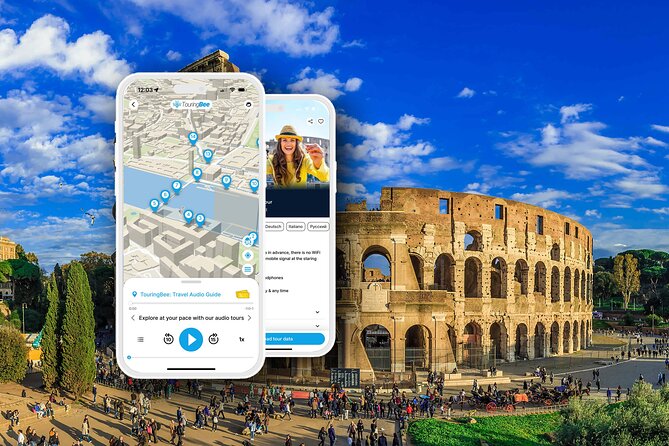
- Offline-first route: download once, then navigate with the map even without internet
- Illustrated landmark recognition: the visuals help you identify what you’re looking at
- Free pacing: you can take breaks and come back later thanks to 1-year access
- A lot of Rome in 2.5 hours: viewpoints, major squares, and big monuments in one loop
- No entrance fees included: the audio supports the sights, but you’ll pay separately if you want inside access
How the smartphone audio tour really works in Rome

This isn’t a sit-and-listen tour. It’s a walking route you run on your phone, using the TouringBee app on iOS or Android. Once you download the tour data, you’ll have an offline map and offline audio, which matters in Rome where signal can be patchy in between streets and viewpoints.
The route is designed around quick orientation moments. Each stop gives you a chunk of audio and a visual cue so you can recognize the landmark fast—important when you’re surrounded by similar-looking churches, monuments, and corners. Expect a lot of “look up” moments: columns, terraces, and façades that you only appreciate fully when you know what you’re seeing.
Timing is also flexible. The total duration is about 2 hours 30 minutes (approx.), and it states that about 1 hour and 10 minutes is spent on the tour stops and walking time, with the rest built into the route flow. In plain terms: you’re moving. If you stop for long breaks at every photo spot, you’ll run long. If you keep a steady pace, it feels like a great orientation day.
One practical note from the reality of self-guided tours: your phone battery is part of the experience. If your battery is low, turn down brightness, keep volume comfortable (not max), and consider a power bank if you’re doing multiple phone-based things in one day.
You can also read our reviews of more tours and experiences in Rome.


Starting at Viale Valadier and getting your bearings fast
The tour starts at Viale Valadier, 00187 Roma RM, Italy, and ends back at the same point. That matters because you’re building a loop rather than trekking across the city in one direction and hoping transit will save you later.
This start location is a smart choice. It sets you up to work from hilltop viewpoints early, when crowds can be lighter and your eyes can adjust to Rome’s scale. You’ll also be near areas that make later stops easier because you’ll already be oriented to the western side of central Rome.
When you set off, do a quick check:
- Put your headphones in before you leave the start area.
- Enable location services so the offline map can track you properly.
- Download everything before you start walking (don’t leave it for “later”).
If you do those things, the experience feels smooth. If you skip them, you can end up doing the annoying version of sightseeing: wandering, checking your screen, and missing audio you didn’t realize you were out of range for.
Terrazza del Pincio: Rome’s postcard view, with a route that makes sense
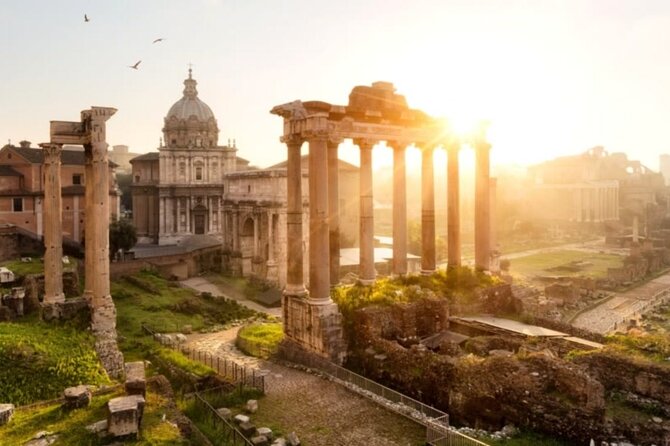
Your first stop is Terrazza del Pincio, perched on Pincian Hill. This is one of those places where Rome looks like it was designed for posters—wide views over the city, with major landmarks visible in the same frame.
The audio here pairs well with what you’re doing physically. You’re walking through Villa Borghese gardens to reach the terrace, so the intro isn’t just about the viewpoint—it helps you connect the view to what you’ll see later around town. You’ll get the Spanish Steps and St. Peter’s Basilica referenced as key visual anchors. And yes, this is a stop that’s especially good around sunset, because the light turns stone and sky into one long color gradient.
The practical upside: this is a great “start strong” moment. If your feet are a little tired, you can also linger here without derailing the whole day, because it’s a viewpoint stop rather than a tight museum appointment.
A consideration: terraces and viewpoints can be crowded at peak times. If you’re doing this in the late afternoon, you might want to plan on enjoying the view quickly, then moving on while your patience is still intact.
Piazza del Popolo: a grand entrance and clear landmark cues

Next up is Piazza del Popolo. Think of it as Rome’s ceremonial welcome. The square is known for a mix of monumental elements: Egyptian obelisks, impressive churches, and a Renaissance arch that visually frames where people flow next.
This stop works well with the app’s “recognize what you’re looking at” approach. You’re not just told facts—you’re directed to scan. That helps you avoid the common problem of standing in a famous square and seeing only what you expected to see, not what’s actually there.
You’ll also find two churches mentioned: Santa Maria dei Miracoli and Santa Maria in Montesanto, plus the idea of climbing back toward Pincian Hill for more views. It’s a nice loop of perspective: start high, come down, then understand how the city’s layout “bends” around major viewpoints and plazas.
If you prefer your history in small doses, this stop is ideal. It’s short, it’s visually packed, and it sets up your next walk in a way that feels logical rather than random.
Via del Corso and Via dei Condotti: walking Rome’s main fashion lines
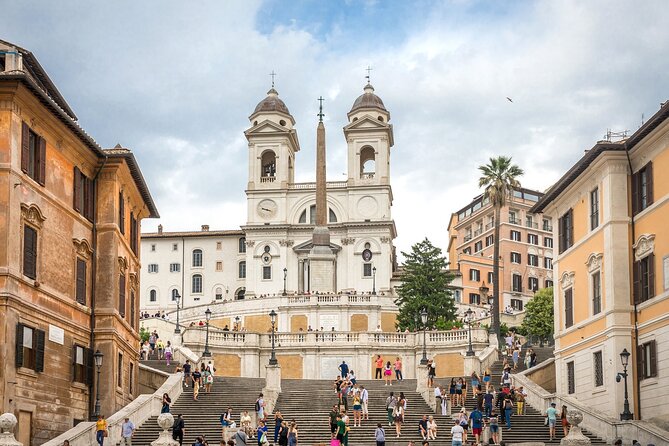
The route then shifts to two iconic streets: Via del Corso and Via dei Condotti. These are famous for shopping, but the audio focus makes them more than a stroll past storefronts.
On Via del Corso, you’re moving through a central corridor that connects Piazza Venezia to Piazza del Popolo. Even if you’re not in shopping mode, it’s a useful stretch because it gives you a sense of Rome’s big urban rhythm. The audio helps you notice architectural landmarks and the street’s role as a spine of central Rome.
Later, Via dei Condotti puts you in a more high-end, design-forward atmosphere. The point here isn’t to buy anything. It’s to see how Rome mixes luxury retail with historic urban design—long sight lines, classic façades, and grand window displays that feel like part of the city’s visual identity, not just advertising.
Practical tip: keep these streets for your “walk steady” segments. If you slow down too much here, you’ll feel the pressure later when you hit the more intense archaeology and monument areas.




Augustus, peace, and empire: Mausoleum, Ara Pacis, and the power of place
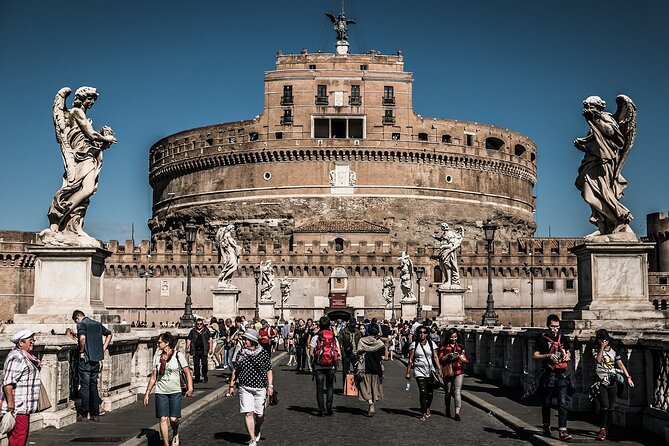
A big part of the route is Roman imperial themes, starting with the Mausoleum of Augustus. This is Rome’s first-emperor monument, and the experience here is about scale and atmosphere. Even if restoration work is ongoing (and it is), you still get a strong sense of how Augustus wanted his legacy to look in stone.
Then you’ll move to Ara Pacis Augustae, the ancient altar dedicated to peace. What makes this stop especially interesting in the audio format is the contrast: the altar’s ancient reliefs are paired with a modern glass enclosure. That old-versus-new pairing is exactly the kind of thing that can be missed if you’re just walking by without context.
The audio approach shines here because you’re likely to stand in front of these structures and wonder what you’re actually seeing. With short, targeted explanations, you get a clearer “why it matters” before you move on.
If you’re the type who likes to understand the story behind each stop, this is where the tour feels most satisfying. You end up building a mental timeline: founder-emperor monument, then the idea of peace as political messaging, then later the route continues into other imperial commissions.
Palazzo Borghese and Villa Aldobrandini: art and aristocratic life, minus the rush

The tour includes Palazzo Borghese, described as an elegant façade with art and antiquities inside, including works by Bernini and Caravaggio. Even if you don’t go inside, the audio framing can help you appreciate the building as part of aristocratic Rome rather than just another grand exterior.
Then there’s Villa Aldobrandini, a Baroque masterpiece with opulent architecture, gardens, and panoramic terraces. The description also mentions frescoes, sculptures, and a water theater. These are the kinds of details that are easier to grasp when you’re given a quick map of what to look for.
Key value for you: this tour isn’t only about the famous “greatest hits.” It gives you stops that connect to Roman taste and power—art collection culture and villa life—without requiring you to commit to a full day of museums.
A consideration: since entrance fees are not included, you may have to decide on the fly whether you’ll step inside at these locations. If you want interior access, you should budget both time and ticket costs separately.
The Spanish Steps and nearby squares: iconic views, manageable pauses
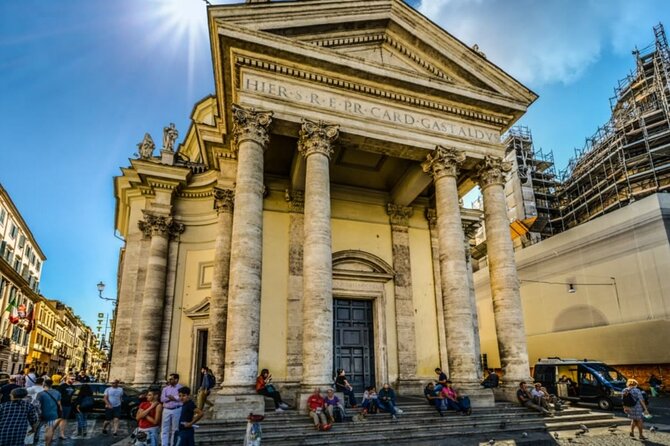
The route hits Spanish Steps next. The tour framing is practical: it’s about the 135 steps, the views toward Piazza di Spagna, and the surrounding mix of cafés and designer boutiques. This is one of the few Rome stops where “climb it” is part of the fun. And because the app gives you a quick history and what to look for, you’ll spend less time wondering and more time enjoying the scene.
Next to it is Piazza Mignanelli, with the Column of the Immaculate Conception. This spot works as a breather. It’s a quieter contrast to the energy around the Spanish Steps, so you get a chance to reset your legs and your attention.
Then comes Piazza San Silvestro, described as a serene escape with historic buildings and quaint cafés, plus San Silvestro church. In a walking tour filled with major landmarks, having a calmer square-like stop is smart. It prevents the whole day from becoming one long stampede of big sights.
If you want to keep your schedule realistic, treat these squares as your “pace control.” Do the steps if you want the view, then use the adjacent plazas to slow down for photos and a short sit.
Column of Marcus Aurelius and Trajan’s Column: spirals that tell war stories
The tour includes the Column of Marcus Aurelius in Piazza Colonna. The point here is the spiral frieze showing military victories. The audio is a strong match for this kind of monument because it helps you read the carvings instead of staring at them without a clue.
Later, you’ll reach Colonna Traiana in Trajan’s Forum area. This column also uses a spiral relief to commemorate Trajan’s victories in the Dacian Wars. Again, the audio guidance helps you interpret what you’re looking at, especially because the carvings can be detailed and easy to miss if you don’t know what to hunt for.
Why this matters for you: Rome is full of columns and statues, but these two are tied directly to specific emperors and campaigns. With the audio, you’re not just collecting “ancient Rome looks cool” impressions—you’re connecting monuments to events.
A note to keep expectations honest: columns are outdoors. You can’t control crowds, weather, or angles. The audio helps, but it won’t replace the benefit of choosing the best time of day for light on stone.
Trevi Fountain: the photo stop, timed by your own mood
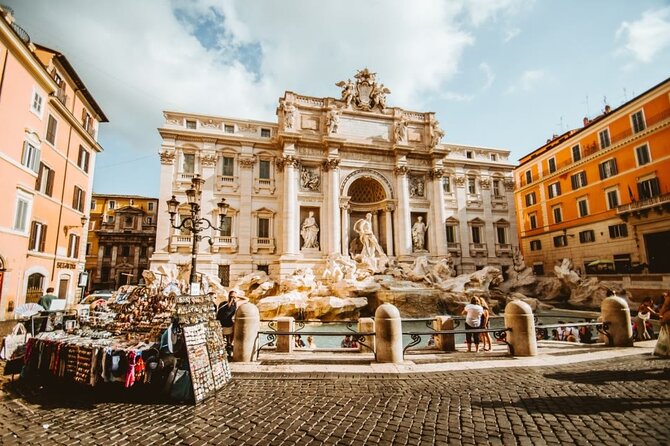
Next is Trevi Fountain. The classic instruction is baked into the stop: toss a coin for a return to Rome. The audio approach here is good because it reminds you to look beyond the obvious. You’ll get pointed toward the baroque grandeur and cascading water.
If you like atmosphere, Trevi Fountain is one of those places where nighttime can be a different experience. The description specifically notes that it looks beautiful illuminated after dark.
The only practical downside is what you already know about Trevi: it can be packed. This tour doesn’t promise a crowd-free viewing. But since it’s self-guided, you can spend less time in the bottleneck area if it’s too much, and instead time your photos and then move on.
Vittoriano, Imperial Fora, Mercati di Traiano, and the Colosseum: the biggest finale moments
The latter part of the route leans into Rome’s large-scale monuments. You’ll visit Vittoriano (Altar of the Fatherland) in Piazza Venezia, described as a white marble tribute to Victor Emmanuel II. The audio also notes sweeping views from the terrace, which can turn this into a satisfying “big picture” moment late in the walk.
Then comes Mercati di Traiano, an ancient commercial area turned cultural treasure. The stop suggests exploring ruins and the Museo dei Fori Imperiali for context. That’s useful if you want your walking tour to connect to something you might do inside afterward, though remember: entrance fees aren’t included.
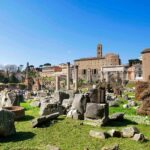
After that, you’ll reach Imperial Fora, the archaeological complex with forums built by emperors like Caesar and Trajan. You’ll see references to towering columns and temples, plus remnants that help you understand Roman politics and culture.
Finally, the route includes the Colosseum. The description frames it as an amphitheater where gladiators battled, plus mentions underground chambers and the arena floor. Since entrance fees are not included, treat the Colosseum stop as a strong orientation moment for the exterior area and nearby views. If you decide to go in, you’ll need to handle tickets separately.
This is a good way to end the day: you’re not only doing “look at famous thing.” You’re closing with Rome’s empire in stone and structure, which makes all the earlier imperial stops feel connected.
Price and logistics: what $7.14 gets you (and what it doesn’t)
At $7.14 per person, this is priced like an intro tool, not a full guided day. The value comes from the structure: you get 21 audio recordings, an offline map, and illustrated help to recognize landmarks. That’s a lot of content for the price, especially for the fact that you can use it on your own schedule.
Also, you get 1 year of access, which changes the math. If you only have one day in Rome, the tour can serve as a quick primer. If you have time to return later, you can replay segments and catch what you missed—without paying again.
What it does not include is equally important. No transportation, no food, no human guide, no entrance fees, and you provide the smartphone and headphones. You’ll also want comfortable shoes because the route strings together many well-known sites.
So here’s the honest way to think about it: if you’re okay with self-guided navigation and want a low-cost Rome orientation day, it’s a strong deal. If you want deep, on-the-ground explanations and ticket planning, you’d be happier with a guided option instead.
Who should book this Rome audio walk
I think this tour fits best if you:
- Want to see a lot of Rome landmarks in one organized loop
- Like learning through short stops you can replay later
- Prefer controlling your pace rather than sticking to a group’s schedule
- Have decent phone navigation comfort and plan to use offline audio
It might be less ideal if you:
- Hate depending on your phone for directions
- Don’t want to bring headphones
- Want long, in-depth museum-style commentary at major sites (audio segments are brief, and some of the biggest places may require paid entry for full access)
Should you book this Rome smartphone audio tour?
If your goal is a low-cost, flexible Rome primer that takes you from hilltop views to imperial monuments, I’d say it’s worth booking. The combination of offline navigation, illustrated landmark cues, and audio access for a full year makes it practical, not just inspirational.
Before you buy, do one small prep step that makes or breaks these tours: download the app data before you start walking. Then bring your own headphones and charge your phone. Do that, and you’ll spend your time looking at Rome instead of troubleshooting your screen.
FAQ
What is the duration of the Rome walking tour with smartphone audio?
It’s listed as about 2 hours 30 minutes (approx.), with additional time spent on tour stops and walking.
Is this a self-guided tour or do I meet a human guide?
This is self-guided. You use the TouringBee mobile app on your iOS or Android phone and follow the route with the app map—there is no human guide.
Do I need internet during the tour?
No, once the tour data is downloaded, the app works without an internet connection. You also get an offline map with the route.
Are entrance fees included for places like the Colosseum or villas?
No. Entrance fees and tickets are not included, so if you want to go inside specific sites, you’ll need to arrange that separately.
Do I need to bring headphones and a smartphone?
Yes. Smartphone and headphones are not included, so you’ll need your own device and your own headphones to listen to the audio guide.
Where does the tour start and where does it end?
The tour starts at Viale Valadier, 00187 Roma RM, Italy, and it ends back at the meeting point.
Can I cancel, and how long do I have to do it for a full refund?
You can cancel for free up to 24 hours in advance for a full refund, based on the experience’s local start time.