REVIEW · ROME
Rome: Roman Forum Super Pass Entry with Audio Guide App
Book on GetYourGuide →Operated by GetYourGuide Tours & Tickets GmbH · Bookable on GetYourGuide
Rome’s ruins feel personal fast. This Roman Forum Super Pass gives you access to the core sites of Ancient Rome plus the quieter “extra” rooms, and it comes with a digital audio guide app so you can move at your own speed.
What I like most is the payoff-to-effort ratio: you’re walking through the political center of the empire in a huge open-air complex, then you’re stepping into museum spaces (including the Roman Forum Museum) where artifacts and details make the stones click. I also really appreciate the Palatine Hill add-ons—especially the views from the heights and the chance to see important house interiors like the House of Augustus and House of Livia.
One thing to plan around: the ticket is non-refundable, and while the route is barrier-free, some “SUPER” rooms have restricted access to protect paintings, and one site (Domus Transitoria) stays closed.
In This Review
- Key things that make this pass work
- Roman Forum Super Pass: the smart way to plan your Forum day
- Where you enter: multiple entrances, no waiting around
- The Roman Forum: the political center you can actually walk through
- What to look for while you’re here
- Roman Forum Museum: artifacts that make the stones feel real
- House of the Vestals + Curia Iulia: sacred power and government in the same orbit
- Practical tip
- Palatine Hill: views, houses, and the feeling of being above it all
- Palatine Museum and the “special” interior access
- Aula Isiaca + Loggia Mattei: when the walls carry the story
- Santa Maria Antiqua and the Imperial Forum route: closing in on Rome’s layered power
- The Santa Maria Antiqua angle
- Domus Tiberiana, Domus Tiberiana remains, and the imperial palaces feeling
- SUPER sites: great access, with one catch
- Timing: how long to plan so you don’t feel rushed
- Audio guide app: how to use it without fighting your phone
- Small group format: less crowd pressure than you’d expect
- What’s not included (and what that means for your itinerary)
- One site you should know is closed
- Good to know: rules that affect your visit day
- Who this Roman Forum Super Pass is best for
- Should you book this Roman Forum Super Pass?
- FAQ
- Is the Roman Forum Super Pass refundable?
- How long is the ticket valid?
- Do I need a time reservation to enter?
- Where do I enter the Roman Forum?
- Is there someone waiting at the meeting point?
- What’s included in the pass?
- What is not included?
- Does it include an audio guide?
- Are there any days when certain houses are closed?
- Can I visit Domus Transitoria with this ticket?
Key things that make this pass work
- You can go on your schedule within a 30-day validity window, without a time reservation requirement
- Audio guide app keeps you oriented as you hop between ruins and museum rooms
- SUPER site access gives you the extra interiors and rooms that make the ticket feel worth it
- Palatine Hill views + standout house remains like Augustus and Livia
- A big, walkable route that typically rewards a longer visit (plan at least half a day)
Roman Forum Super Pass: the smart way to plan your Forum day

If your mental picture of Rome is mostly columns and postcards, the Roman Forum will upgrade it. This pass is designed for a full-forum-and-hills experience, not a quick photo lap. You’ll enter the Roman Forum area and then branch out to Palatine Hill and the Imperial Forum—so you’re not just seeing one era, you’re seeing how the city’s power kept layering itself over time.
The ticket is priced at $25 per person, which is a solid value for what you get here: access to multiple major zones plus museum entry, and an audio guide that helps you understand what you’re looking at without paying for a live guide. The biggest “value lever” is the extra rooms (the ones labeled as SUPER sites). If you’re the type who wants more than the bare minimum, those rooms are why this pass makes sense.
Also, you’re not dealing with some mysterious group logistics. The experience is set up for small groups (up to 10), and even when the site is busy, the routes tend to have enough space to keep you from feeling trapped in a crowd.
You can also read our reviews of more tours and experiences in Rome.


Where you enter: multiple entrances, no waiting around
Your voucher can be presented at any of the Roman Forum entrances. The most useful thing here is that you don’t have to find one single meeting point and wait for staff to appear. The entrances listed include options like via Sacra near the Arch of Titus, via di San Gregorio, via del Tulliano, via del Foro Romano, and Piazza della Madonna di Loreto / Trajan’s Column.
Practical tip: pick the entrance that best matches the route you want to start with. If you want the classic “Forum to Palatine” flow, start closer to the Forum core. If you’d rather see the hill views early, you’ll want to work in that direction sooner rather than later. Either way, the pass gives you freedom to structure the day.
The Roman Forum: the political center you can actually walk through
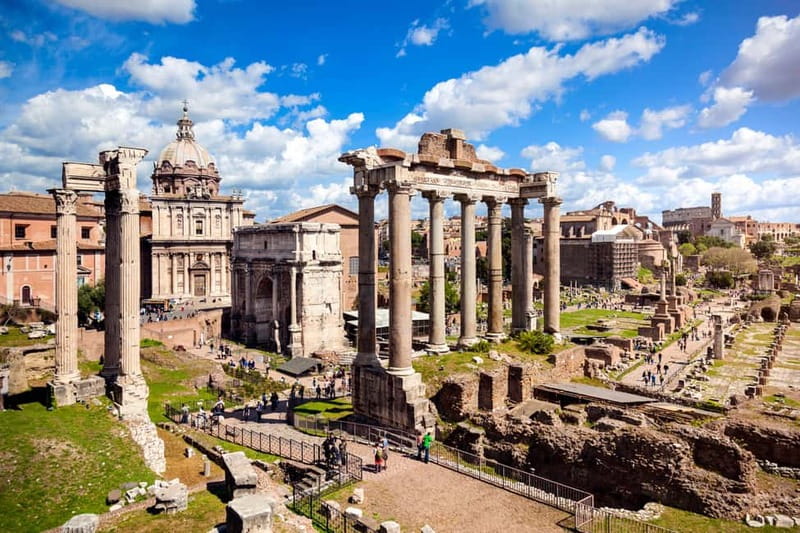
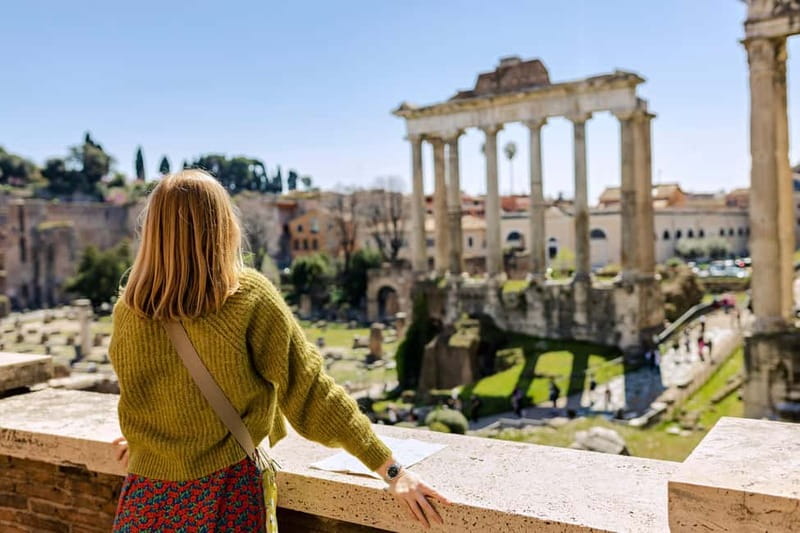
This is the part most people come for, and it delivers. The Roman Forum is where you see the empire’s public life made stone and scale: government buildings, temples, and the broad walkways where ceremonies and power played out.
What makes this section especially good with an audio guide is that you’re not relying on vague signage. The app is designed to trigger at key points, so you get context at the moments that matter—standing near remains that once had real jobs: lawmaking, worship, administration, and public messaging.
What to look for while you’re here
- Temple-level details: even when parts are gone, the shapes tell you how the space worked.
- The “in-between” ruins: the Forum can feel like a jumble until you slow down and let the story connect.
- Route momentum: the Forum is huge. If you rush, you’ll miss the way buildings relate to each other.
One small caution: some parts of the site can be closed for renovations, and you may need to adjust your path. That’s normal here—Rome doesn’t do straight lines, even when it tries.
Roman Forum Museum: artifacts that make the stones feel real
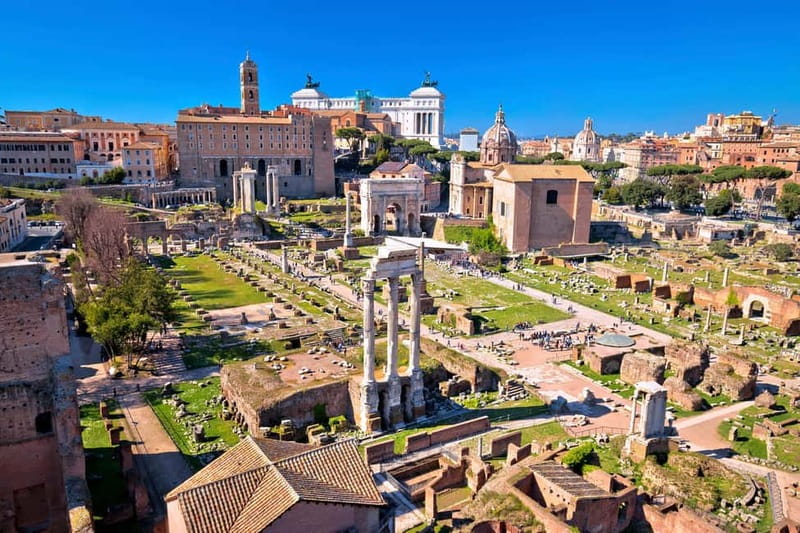
The Roman Forum Museum is a key reason this pass feels like more than just a walking ticket. When you move from outdoor ruins into a museum space, the experience gets clearer. Artifacts and exhibits help you connect what you’re seeing with what life actually looked like.
This is where you can reset your brain. If you’ve spent an hour scanning ruins wondering what’s what, the museum can turn confusion into understanding fast. For me, this is one of the best ways to get value without needing a tour guide.




House of the Vestals + Curia Iulia: sacred power and government in the same orbit
Two stops that bring the Forum’s everyday meaning into focus are the House of the Vestals and Curia Iulia.
At the House of the Vestals, the big draw is the chance to learn about the Vestal Virgins—figures tied to Rome’s religious order. This is not just about learning names. It’s about understanding why a society would assign sacred roles to women and build physical spaces around that power. If you like the human side of ancient history, this section is a strong highlight.
Then comes the Curia Iulia, tied to government. Put together, these two sites show how Romans didn’t separate religion and state the way we often do. They braided them.
Practical tip
These sections are best when you slow down. Read the interpretive material, take a look at the frescoed or preserved areas where available, and let the app explain what you’re looking at before you move on.
Palatine Hill: views, houses, and the feeling of being above it all
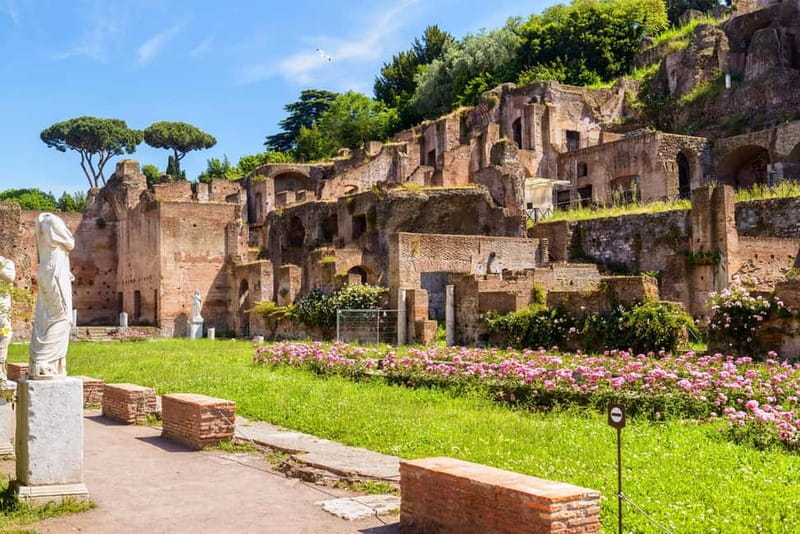
If the Roman Forum is the engine room, Palatine Hill is the vantage point. It’s one of Rome’s central “hills” and the ground feels different once you’re up there. You get sweeping views over the Forum area, and you also get a sense of status: Palatine Hill was where power and prestige lived.
Palatine Museum and the “special” interior access
Your pass includes the Palatine Museum, plus entry to several house remains that people often treat as the main event: the House of Augustus and the House of Livia. These are the kinds of sites where preservation matters. When you step into a room where frescoes and decorative elements survive, it changes your understanding from ruins-as-geometry to ruins-as-lifestyle.
If you’re choosing a ticket specifically to justify the extra rooms, Palatine is where that logic tends to pay off.
Aula Isiaca + Loggia Mattei: when the walls carry the story
These are included with your pass, and they’re worth prioritizing if you like visual details. The Aula Isiaca and Loggia Mattei are known for their preserved elements (including frescoes mentioned in the experience overview), and that’s exactly the kind of “stand still and look” moment that makes this day feel different from just walking past stones.
This is also a good point to use your audio guide for the room itself, not just the site. The app is useful when you pause—so take advantage.
Santa Maria Antiqua and the Imperial Forum route: closing in on Rome’s layered power
You also have access to Santa Maria Antiqua, plus several key stops that define the Imperial Forum area, including entry to the Imperial Forum itself, with a route that includes the Forum of Caesar and the Forum of Nerva.
This part of your day is where Rome stops being about one location and starts being about a timeline written in construction and reinvention. You’re moving through zones connected to later imperial building, and the contrast with the earlier Forum sites can feel striking—even if you’re not a Rome scholar.
The Santa Maria Antiqua angle
Santa Maria Antiqua is included as part of this pass, and it’s the kind of stop that can slow you down in a good way. If you like seeing how later history used earlier spaces, this is where you can notice that Rome is constantly reusing, reshaping, and reinterpreting.
Domus Tiberiana, Domus Tiberiana remains, and the imperial palaces feeling
The Domus Tiberiana is included, and the overview notes it as remains of imperial palaces. This is a great match for anyone who wants the empire’s daily reality beyond monumental worship spaces.
Also included are the Ninfeo della Pioggia and other linked areas in the Palatine/Palace zone route. These stops tend to reward patience. The more you look, the more you see how these buildings worked as living spaces, not just stages.
SUPER sites: great access, with one catch
A big part of the appeal here is that your pass includes access to SUPER sites—but access is restricted to preserve valuable paintings. Translation: some rooms may have tighter rules than the rest of the route. The good news is that your ticket is specifically set up to cover those entries where allowed.
So plan for a little extra patience in those areas. If you’re the type who hates waiting, just mentally group those rooms as “worth it, but go with the flow.”
Timing: how long to plan so you don’t feel rushed
The most honest planning advice I can give you is simple: don’t treat this as a 60–90 minute stop. The sites are spread out and the pass covers a lot. If you want time to read, pause, and absorb the interiors, plan at least 3 hours.
If you try to speed-run it, you’ll likely miss the value of the museum rooms and the preserved house remains. This is also why I like the 30-day validity window: you can choose a day when you feel like spending time, not just getting it done.
Seasonal hours matter too:
- From March to September 2025, many indoor sections run until 6:00 PM (last entry 5:30 PM), while Santa Maria Antiqua runs until 6:30 PM (last entry 6:00 PM).
- House of Augustus closes on Monday, and House of Livia closes on Tuesday.
Audio guide app: how to use it without fighting your phone
The ticket includes a digital audio guide app, and you’ll receive instructions with your booking confirmation. The app is meant to support you as you walk—using audio tied to key locations rather than just blasting music in the background.
From what I gathered, it works best when you do two things:
1) Download/prepare before you start so you’re not hunting for signal mid-ruin.
2) Use it as a pause tool. Even a great app can’t help if you keep walking through every stop at full speed.
One caution: signage and GPS can sometimes be imperfect in a complex archaeological site. If the map feels off, use the physical layout and the route sequence you see on-site. The audio guide should help you reconnect quickly.
Small group format: less crowd pressure than you’d expect
This pass is described as small group (limited to 10 participants). Even though the overall Roman Forum area can be packed, the structure of this visit tends to spread people out. That matters because you’re not just looking at one monument; you’re walking across multiple zones. With fewer people in your group, it’s easier to stop when something catches your eye.
And there’s another benefit: if you want to spend time inside the house remain sections, smaller groups tend to mean fewer forced pacing changes.
What’s not included (and what that means for your itinerary)
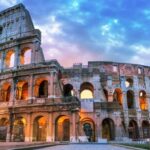
This pass does not include entry to the Colosseum. If you’re planning a classic Rome “day of big hits,” you’ll need a separate plan for the Colosseum.
It also doesn’t include food or drinks, and there’s no tour guide included with this format—what you get is the audio app. Transportation isn’t included either.
My advice: build this day around ruins and rooms. Add food nearby if you need it, and keep your expectations realistic: this is a lot of walking and standing.
One site you should know is closed
The Domus Transitoria remains closed and can’t be visited with this pass. The rest of the included route should still be accessible, but it’s worth keeping in mind so you don’t waste time looking for it.
Good to know: rules that affect your visit day
A few practical notes from the provided info:
- The route is described as barrier-free.
- Small dogs are allowed in special carriers, but dog prams aren’t allowed.
- You must provide the names of each participant during booking, or entry won’t be possible.
- Once validated, your ticket is valid only for the day of use within the 30-day window.
Who this Roman Forum Super Pass is best for
This is a strong fit if:
- You want Forum + Palatine Hill + Imperial Forum in one ticket, with extra room access.
- You like self-paced touring but still want interpretation through an audio guide.
- You’re history-minded, but not looking to spend your day listening to a live script.
- You want better value than a basic exterior-only pass, especially for house remains and museum sections.
It’s less ideal if:
- You only want the Colosseum (you’ll need separate tickets).
- You hate any chance of restricted access in painted rooms (SUPER sites have restrictions).
- You prefer a strict timed itinerary with staff leading every step (this is primarily an app-supported route).
Should you book this Roman Forum Super Pass?
Yes—if your goal is to see more than the obvious stones. The price is reasonable for the number of zones you can cover, and the audio guide app plus SUPER site access is where the value really shows. If you’re the type who loves standing in a room and saying, So this is what it looked like, Palatine and the special interiors are exactly your kind of day.
Book it especially if you can give yourself at least half a day to three hours, and if you’ll take advantage of the museum and the house remains instead of racing past them.
FAQ
Is the Roman Forum Super Pass refundable?
No. It is non-refundable.
How long is the ticket valid?
It’s valid for 30 days from purchase.
Do I need a time reservation to enter?
No time reservation is required. Once validated, it’s only valid for the day of use.
Where do I enter the Roman Forum?
You can present your voucher at multiple entrances to the Roman Forum, including via Sacra near the Arch of Titus and Piazza della Madonna di Loreto / Trajan’s Column, among others.
Is there someone waiting at the meeting point?
No. There is not a person waiting. You can access directly via the entrances.
What’s included in the pass?
The pass includes entry to the Roman Forum, the Roman Forum Museum, Palatine Hill and the Palatine Museum, the House of the Vestals, Curia Iulia, Aula Isiaca and Loggia Mattei, the House of Augustus, the House of Livia, the Imperial Forum, plus Santa Maria Antiqua, Domus Tiberiana, and several other listed areas, along with an audio guide app.
What is not included?
It does not include access to the Colosseum, and it does not include food, transportation, or a tour guide.
Does it include an audio guide?
Yes. Your ticket includes a digital audio guide app, and you’ll receive instructions with your booking confirmation.
Are there any days when certain houses are closed?
Yes. House of Augustus is closed on Monday, and House of Livia is closed on Tuesday.
Can I visit Domus Transitoria with this ticket?
No. Domus Transitoria remains closed and can’t be visited.