REVIEW · ROME
Rome: Colosseum, Roman Forum and Palatine Hill & Audioguide
Book on GetYourGuide →Operated by Italy Wonders · Bookable on GetYourGuide
Rome can overwhelm you fast. This Colosseum + Forum + Palatine plan is designed to keep things simple: you get skip-the-ticket-line access and a multilingual audioguide you can run at your own pace. One watch-out: the experience depends on your phone, and some people report the audio links failing or arriving too late.
I also like that the route is self-guided, so you can linger over the spots that grab you. You’re not stuck in a rigid group timeline for the whole visit. The downside is that self-guided also means there’s less hand-holding on-site, so you’ll want to arrive ready to figure things out quickly.
In short, this can be a good-value way to see ancient Rome in about two hours—as long as your tech works and you’re comfortable with a do-it-yourself flow.
In This Review
- Key highlights to know before you go
- Finding the meeting point outside Santi Cosma e Damiano
- What you get: pre-purchased entry for three sites and an audio guide
- Skip-the-line access: the best use of your two hours
- Entering the Colosseum: how to get meaning fast
- Roman Forum + Imperial Forum ruins toward Piazza Venezia
- Palatine Hill: views, origins, and the climb factor
- Audio guide reality check: phone, download, and earphones
- Price and value: $42.02 for three major sites
- Who this tour fits best (and who should skip it)
- Should you book Italy Wonders? My bottom-line advice
- FAQ
- FAQ
- Where is the meeting point?
- How long is the Colosseum, Roman Forum and Palatine Hill audioguide experience?
- What’s included in the price?
- Do I need earphones or a phone?
- What identification do I need?
- What items are not allowed?
- Is it suitable for wheelchair users?
Key highlights to know before you go
- Skip-the-ticket-line entry helps you start faster inside the Colosseum complex.
- Audioguide in multiple languages (English, Italian, French, German) lets you match the narration to your comfort level.
- A self-guided format means no live guide crowd control; you set your own pace.
- Panoramic viewpoint moments include views over the Imperial Forum ruins toward Piazza Venezia.
- Pre-purchased access means you’re not waiting in the main ticket lines as long.
- Phone-dependent experience: you need your own smartphone, and earphones aren’t included.
Finding the meeting point outside Santi Cosma e Damiano
This tour starts in a very specific spot: the square in front of the Basilica of Santi Cosma and Damiano. Look for staff outside the church wearing a uniform with the activity provider’s logos—this is the best way to confirm you’re in the right place before you move on.
Because you’re meeting at a fixed starting point and the tour ends back where you began, your timing matters. If you’re even a little late, don’t count on it turning into an extended visit; late arrivals are not refunded.
Practical tip: when you get there, take 10 seconds to re-check you’re holding the correct booking details. This matters because the ticket is nominative, meaning it’s tied to the full names you enter at booking.
If you’re traveling with a group, I’d also make sure everyone has their ID ready before you walk away from the meeting point. Entrance depends on the name on your ticket matching your ID.
You can also read our reviews of more tours and experiences in Rome.


What you get: pre-purchased entry for three sites and an audio guide
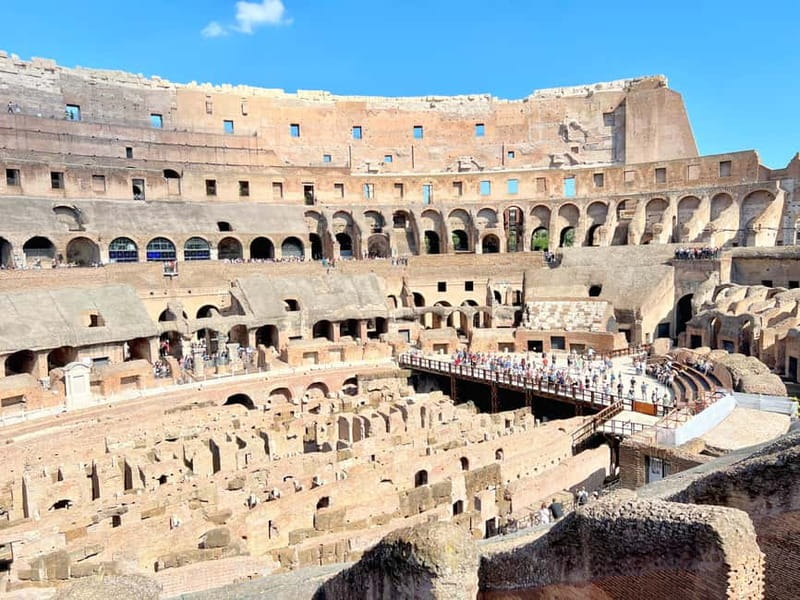
You’re buying access to the Colosseum, the Roman Forum, and Palatine Hill, plus an audio guide available in different languages. There’s no live guide included, so think of this as a guided experience where guidance is delivered through your headphones and your screen, not through a person leading you by the arm.
In a city like Rome, having pre-arranged entry is a real convenience. The Colosseum area can be slow at the entrances when lines build up. Here, the main promise is that you can skip the ticket line, then focus on the monuments instead of waiting outside.
One detail that matters: earphones and your mobile device aren’t included. The activity also specifically says a smartphone is required to download and listen. If you show up with low battery, no headphones, or shaky data/connection during download, your experience can shift from “cool and educational” to “figure it out as you go.”
Also note the audio is meant to run with you while you explore. That’s great when it works well, because you control the pace. It’s a risk when the audio link doesn’t cooperate.
Skip-the-line access: the best use of your two hours

The biggest value lever here is time. You get a 2-hour window, and the skip-the-line setup helps you use that time inside the sites rather than at entrances.
But you should go in with a mindset: this is self-guided. That means you’ll want a plan for how you want to split your time among the three stops. If you wander without structure, 2 hours can evaporate fast—especially because Palatine Hill involves climbing and uneven ground.
A realistic way to think about the route:
- Colosseum first to catch the main highlights while you still have energy.
- Then move into the Roman Forum for the political and daily-life atmosphere of ancient Rome.
- Finish with Palatine Hill for the sweeping views and the “Rome’s origin story” feeling.
This tour is best when you’re comfortable making micro-decisions on the fly. You won’t have a live guide to steer you toward the next must-see spot if you lose your bearings.
Entering the Colosseum: how to get meaning fast
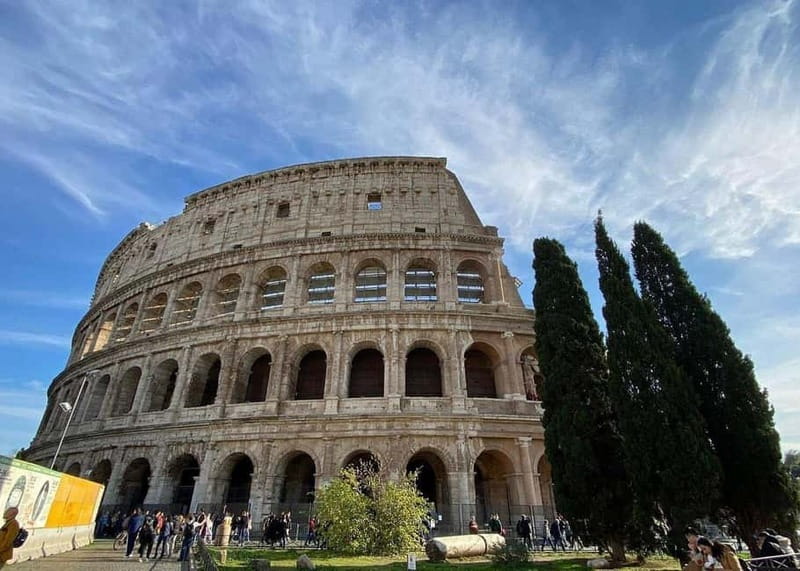
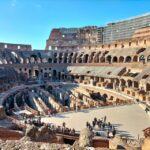
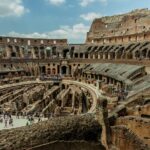
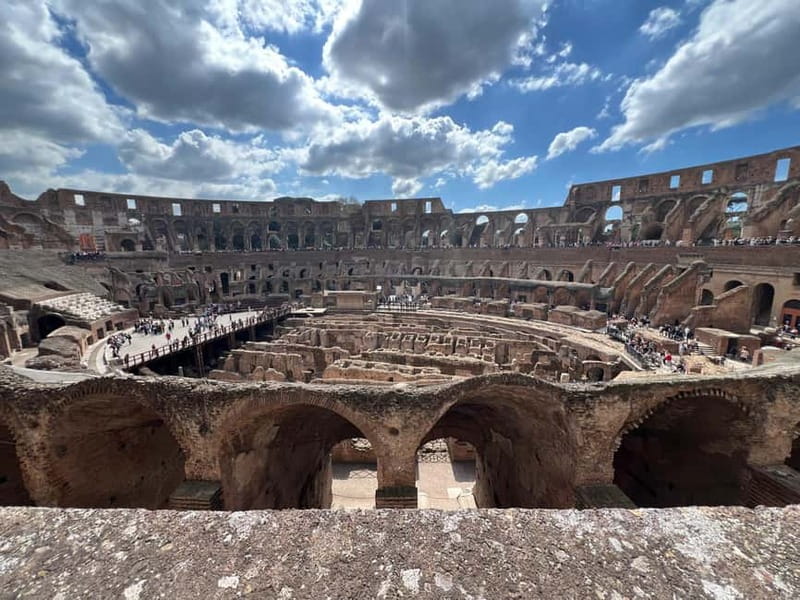
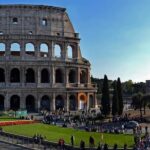
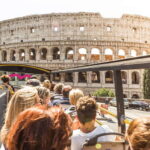
The Colosseum is one of those places where you don’t need a lecture to feel the scale. Still, what makes your visit click is learning what you’re looking at as you walk.
For a self-guided visit, I’d treat the Colosseum like a series of photo-and-meaning stations. Spend a few minutes getting oriented, then use the audio narration to add context about:
- how the arena worked,
- what kinds of events happened here (you’ll hear about gladiators and crowds),
- and how this building fit into the power of imperial Rome.
Because the tour is designed around an audioguide, your best strategy is to stay in sync with the narration. If you pause to read signboards but then fall behind the audio, you can end up wandering without knowing what the story is at that moment.
One more practical note: the Colosseum is a high-demand site. Even with skip-the-line access, you should expect crowds at entry areas and inside corridors. So if you prefer quiet, plan your visit with that in mind.
And if you have limited time, don’t try to see everything. In 2 hours, you’ll be choosing. Pick the spots that make you stop and look up—those are usually the ones that reward you most.
Roman Forum + Imperial Forum ruins toward Piazza Venezia

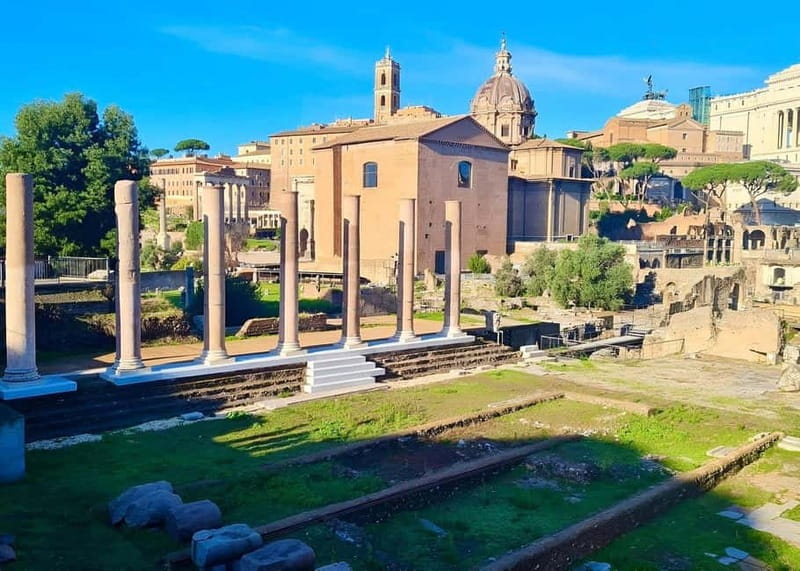
After the Colosseum, the Roman Forum can feel like the “thinking part” of ancient Rome. The Forum is where you get a sense of the city’s political stage and everyday business life colliding in one space.
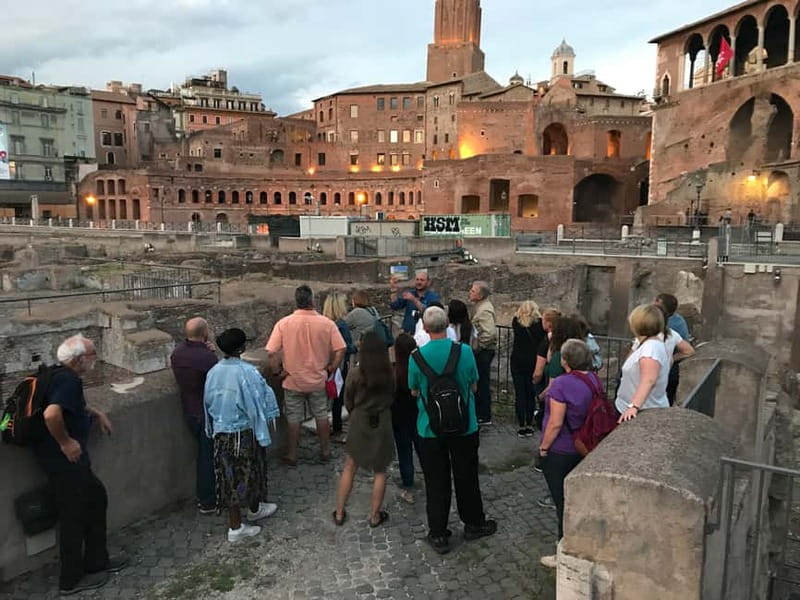
This experience includes Forum access and highlights panoramic views connected to the Imperial Forum ruins and toward Piazza Venezia. Those viewpoints can be one of the best payoffs in a short visit because they let you connect different parts of the site in your mind: ruins, sightlines, and the geometry of the city.
For your self-guided approach, I suggest you slow down when you reach open areas. Ruins spread out, and it’s easy to stare at stone without understanding what stood there or why it mattered. The audioguide is designed to fix that by putting the story into place while you’re physically there.
Also, keep an eye on your footing. Forum surfaces can be uneven, and crowds can funnel you toward certain paths. That’s where having a plan helps: know roughly where you’re headed next so you don’t lose time backtracking.




Palatine Hill: views, origins, and the climb factor
Palatine Hill is where the visit turns from “big monuments” to “place with a story.” It’s associated with the idea of Rome’s beginnings, and it’s also known for views—especially over major ruins and directions you can spot from above.
This tour includes Palatine Hill access and calls out views connected to the Circus Maximus area. That view element matters because from a height you can better understand the scale of what once surrounded this hill.
The drawback you should plan for is physical. Palatine Hill typically involves stairs and walking on uneven ground. Since the tour is only about two hours, you can’t rely on a leisurely stroll up and around without trimming something elsewhere.
If you want an easy win on this part of the route:
- wear comfortable shoes,
- keep your phone charged,
- and don’t wait until you reach Palatine to realize your audio isn’t loaded.
Because this is self-guided, Palatine is also where you’ll feel the lack of a live guide most. Without narration, it can be harder to tell what each terrace and ruin segment is meant to represent. With audio working properly, it turns into an enjoyable “step-by-step story” walk.
Audio guide reality check: phone, download, and earphones

Here’s the part that makes or breaks the experience: the smartphone requirement and the audio download process. The activity notes clearly that your smartphone is needed to download and listen, and that earphones and mobile devices are not provided.
That’s normal for modern tours. What’s not ideal is when the audio link doesn’t work or takes too long to arrive. Some people report the download link error-ing out, leaving them with no audio for the full visit. Others mention difficulty getting the audio working within their group.
So do yourself a favor before you head to the Colosseum:
- Have your phone fully charged.
- Bring your own headphones that work reliably.
- Try the audio link download before you arrive at the site, if the timing lets you.
- If you’re traveling in a group, consider testing audio for at least one device early so you’re not trapped mid-visit.
If the audio does fail, you can still enjoy the monuments—but you’ll lose the structure that helps you understand what you’re seeing at each stop. And in a tight two-hour timeframe, that loss is bigger than it sounds.
Price and value: $42.02 for three major sites
At $42.02 per person, you’re paying for a combo ticket style experience: entry to three iconic places plus a multilingual audioguide and skip-the-line access.
Whether it feels like a bargain depends on how smoothly it runs for you:
- If the pre-purchased entry and audio setup work, the cost is easier to justify because you’re getting three sites in a compact window.
- If audio delivery or download becomes a hassle, you’re still seeing the monuments, but you’re paying for guidance that may not show up when you need it.
Also, remember what’s not included: transportation, a live guide, and earphones/mobile devices. Those add-ons can change the real out-of-pocket cost if you have to buy or improvise.
My rule of thumb: this price works best for people who are comfortable troubleshooting a little tech and who don’t need a person to steer them. If you want a stress-free, guaranteed audio experience with human backup, this format might disappoint you.
Who this tour fits best (and who should skip it)
This kind of self-guided, audio-driven tour is a good fit if you:
- like moving at your own pace,
- can follow a route without constant staff direction,
- and are happy using your phone for the main storytelling.
It’s also a decent option if you’re short on time and want skip-the-ticket-line access across the Colosseum, Forum, and Palatine Hill in one go.
But if you’re someone who prefers a live guide to handle problems, don’t want any tech dependence, or are easily thrown off by unclear check-in guidance, you might want a different approach. Low ratings tied to communication and audio quality are a strong signal to take that risk seriously.
One more hard limitation: the experience is not suitable for wheelchair users, so if mobility is a concern, you’ll need a different plan.
Should you book Italy Wonders? My bottom-line advice
I’d book this only if you meet two conditions: you’re okay with a self-guided visit, and you’ll take the audio setup seriously.
If your group is comfortable with phones, you have time to troubleshoot before entering, and you value skip-the-line access, this can be a practical way to hit the highlights. The Colosseum alone is worth planning around; adding the Forum and Palatine Hill in a 2-hour package can feel efficient.
If you hate tech glitches, hate uncertainty, or need help on-site when something goes wrong, I’d consider spending your time and money somewhere with a more dependable human support layer. In a place this busy, you really want your guidance working the moment you arrive.
FAQ
FAQ
Where is the meeting point?
The meeting point is in the square in front of the Basilica of Santi Cosma and Damiano. Staff will be outside the basilica in a uniform with the provider’s logos.
How long is the Colosseum, Roman Forum and Palatine Hill audioguide experience?
The duration is 2 hours. Starting times vary, so you’ll need to check availability.
What’s included in the price?
You get Colosseum access, Roman Forum access, Palatine Hill access, and an audio guide in different languages.
Do I need earphones or a phone?
Yes. A smartphone is required to download and listen to the audio guide, but earphones and mobile devices are not included—bring your own.
What identification do I need?
Bring your passport or ID card. Your ID must match the booking name for entry.
What items are not allowed?
Luggage or large bags are not allowed.
Is it suitable for wheelchair users?
No, it is not suitable for wheelchair users.