REVIEW · ROME
Rome: Colosseum & Forum with AudioGuide App + Optional Arena
Book on GetYourGuide →Operated by Vivicos International Travel · Bookable on GetYourGuide
The Colosseum gets under your skin fast. This is a self-guided visit that pairs pre-reserved, timed entry with a downloadable AudioGuide app, so you can wander at your speed while the stories play on your phone.
I like two things right away: the timed ticket helps you get into the Colosseum without the long ticket scramble, and the app lets you learn while you walk, without needing a live guide.
One thing to consider before you book: it’s not a live-guided tour, so you’ll need to bring your own phone and headphones, and you’re responsible for your own pace and wayfinding.
In This Review
- Key things to know before you go
- Timed Colosseum entry: why it changes the whole visit
- Walking the Colosseum with an offline AudioGuide app
- Picking the Arena Floor upgrade: worth it for the right mood
- Roman Forum: where politics, religion, and street life overlap
- Palatine Hill: the emperors’ neighborhood and the best city views
- Where you meet, plus the paper-ticket reality
- How to pace it in 1.5 to 2.5 hours
- Value check: is this $38 worth it?
- Who this tour fits best
- Should you book this Colosseum & Forum AudioGuide tour?
- FAQ
- How long does the tour take?
- Do I need a live guide?
- Is the AudioGuide app usable offline?
- What language options are included for the AudioGuide?
- What’s included besides the Colosseum?
- Is the Arena Floor access included?
- Where do I meet the staff?
- What ID do I need?
- Are tickets paper or QR code?
- What’s the cancellation policy?
Key things to know before you go
- Timed Colosseum entry means fewer delays at the start
- Offline AudioGuide app works without Wi‑Fi, with interactive maps and key highlights
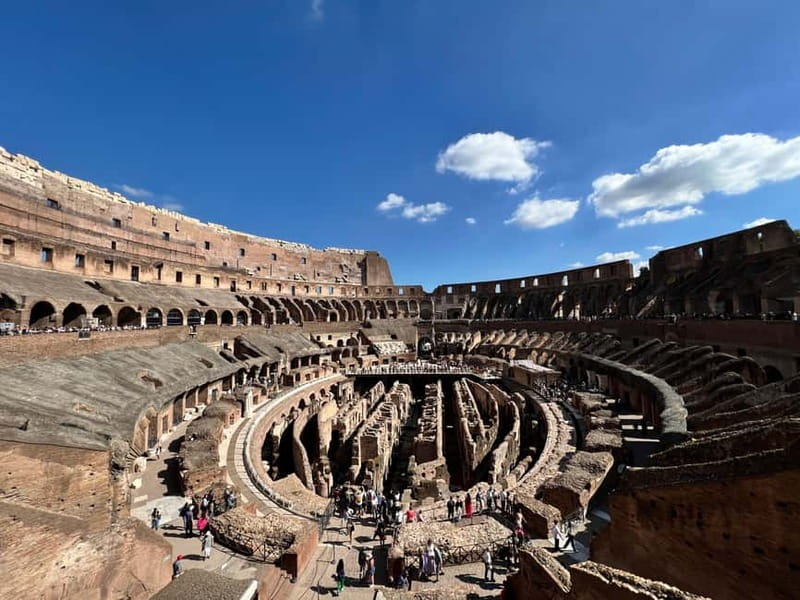
- Optional Arena Floor access brings you closer to the action zone
- Self-guided route through the Colosseum, Forum, and Palatine Hill
- Name-perfect ID rules can cause problems if details don’t match exactly
Timed Colosseum entry: why it changes the whole visit

The big value here is that your Colosseum entry is scheduled. Instead of joining a general ticket line, you arrive and get checked in for your time slot, which is a practical win in a place that can get chaotic. Even if you’re not rushing, that early head start helps you spend your energy looking up at the architecture instead of waiting.
Your experience is designed as a short-to-medium window—listed at 1.5 to 2.5 hours—so you’ll want to treat your time like a tight city block. The tour covers three major sites in one go: the Colosseum, the Roman Forum, and Palatine Hill. If you arrive late or linger too long at one stop, you may feel a bit “compressed” toward the end.
One more reality check: you still pass through airport-style security, and during peak periods it can take up to 30 minutes. Timed entry helps, but security is still security.
You can also read our reviews of more tours and experiences in Rome.



Walking the Colosseum with an offline AudioGuide app

Once you’re inside, the Colosseum is much easier to enjoy when you’re not guessing what you’re looking at. That’s where the downloadable AudioGuide app does the heavy lifting. It’s built to work offline, so you don’t have to rely on cell service or Wi‑Fi inside the ruins.
The app includes commentary in multiple languages, and you can choose among English, German, Spanish, Italian, French, Chinese, Polish, and Portuguese. It’s also meant for self-paced wandering—no group herding, no forced cadence. You can pause to stare at the stonework, walk a corridor slowly, then jump to the next highlight when you feel ready.
A practical note: the tour states you need your own phone device and headphones. Plan on charging your phone before you go. Also, because it’s offline, download and test the app before you leave your hotel area. Nothing kills momentum like realizing your phone is at 8% right as you enter.
Picking the Arena Floor upgrade: worth it for the right mood
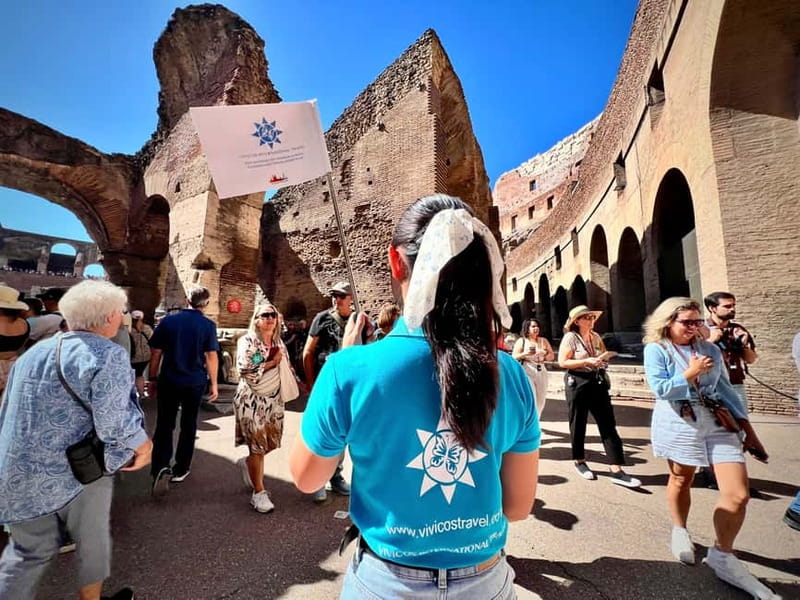
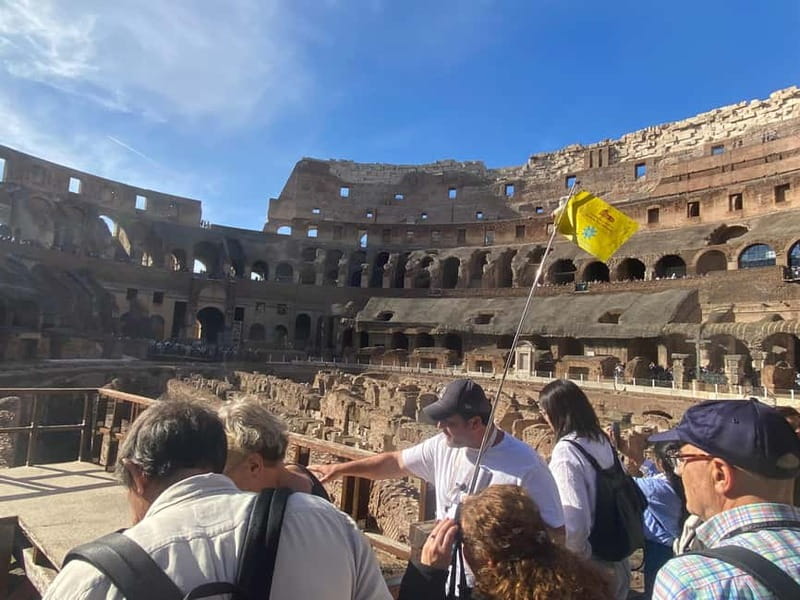
The standard experience includes access to the Colosseum and then continues through the Roman Forum and Palatine Hill. There’s an optional upgrade for Arena Floor access, which adds a different kind of perspective: you get closer to the performance space where gladiators and wild-animal hunts once played out.
If you love “visualizing history” and you want the most direct sense of place, this upgrade tends to make the Colosseum feel more physical. If you’re more focused on ruins and panoramic viewpoints from higher points, you might feel satisfied without stepping onto the floor.
The upgrade costs 24€ on top of the main ticket. If you’re doing the full route (Colosseum + Forum + Palatine Hill), I’d treat the upgrade like your main splurge within the tour—worth it if you can handle a slightly more intense, step-forward kind of visit.
Roman Forum: where politics, religion, and street life overlap

After the Colosseum, you move into the Roman Forum, which is basically ancient Rome’s “center of gravity.” The Forum wasn’t just a pretty ruin field—it was a working hub for political decisions, religious ceremonies, and public life.
This part of the visit is especially good after the Colosseum because your brain can connect systems. You’ll walk along what’s known as the Sacred Way, the route people followed as they moved through ceremonial and public spaces. You’ll also come across temple and basilica remains, plus monuments that help you understand how power looked in stone.
The drawback of a short tour is that the Forum can feel like a lot of fragments in a limited time. The app helps you spot what matters, but if you’re the type who wants to read everything on every pedestal, you may want a longer Forum stop on a different day. For many first-timers, though, it’s a solid “best-of” introduction.
Palatine Hill: the emperors’ neighborhood and the best city views
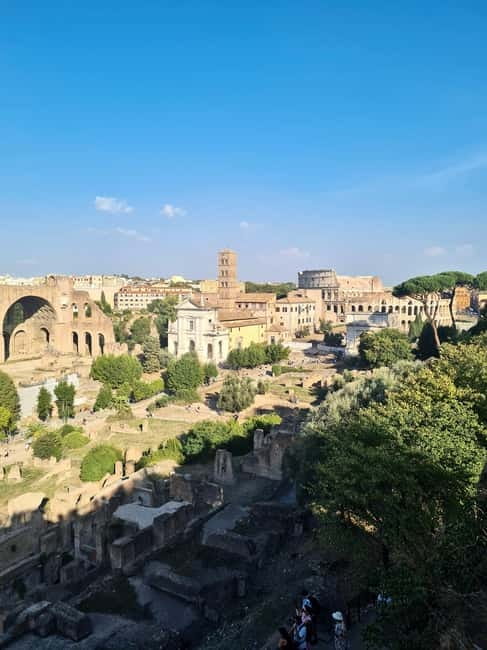
The tour finishes at Palatine Hill, which is tied to the mythical birthplace of Rome and later became home turf for the empire’s most powerful residents. The ruins here are tied to comfort and control: imperial palaces, shaded garden areas (where you can find relief from sun), and spots where you get that layered view over modern Rome.
What I like about Palatine Hill in a guided-by-app format is that it doesn’t demand constant attention like a museum wall does. You can pause where the views open, listen to the audio narration, then walk on at your pace.
This stop is also a good place to reset your energy. You’ve already seen the Colosseum’s scale; now you shift to a different mood—more domestic, more political-in-residence, more “how leaders lived.”






Where you meet, plus the paper-ticket reality

Your meeting point is outside the Santi Cosma and Damiano Basilica in Via dei Fori Imperiali 1. Look for staff wearing a light blue vest next to a big white flag.
A small but important warning: the tour information says you must match names on your IDs exactly. It also says minors must be 17 or younger on the day of the activity. If your reservation has even a small mismatch—missing last name, swapped order, nickname instead of the official name—Colosseum staff can deny entry, and you won’t be refunded.
Also, keep an eye on your ticket format. One review noted that you may need paper tickets, not just an online QR code. So, don’t assume screenshots are enough. Bring the paper voucher if you received one, and keep it somewhere safe.
On the “what to bring” list, you’ll want your passport or ID card for every participant, including children. For “what not to bring,” the rules are strict: no weapons, no oversize luggage, and no large bags. You’re also not allowed to smoke or bring alcohol and drugs. If you’re traveling light, you’ll feel less stressed passing through checks.
How to pace it in 1.5 to 2.5 hours
Because this is a self-guided route, your timing depends on how you move. The standard plan is designed so you can do the Colosseum first, then the Forum, then Palatine Hill. To keep it from feeling like a sprint, I’d treat each stop like this:
- Colosseum: aim for enough time to walk key corridors and pause for the main engineering highlights.
- Arena Floor (if upgraded): plan extra steps here, since it changes your route.
- Forum: use the app to hit the major connective points (like the Sacred Way) instead of trying to cover every ruin.
- Palatine Hill: save energy for viewpoints and shaded breaks.
If you’re traveling with kids or you’re someone who tends to stop for photos every few minutes, I’d lean toward the higher end of the time range when possible. The tour duration is listed as 1.5 to 2.5 hours, so the schedule isn’t meant to be ultra-luxury time, but it’s also not a blink-and-you-miss-it “drive-by.”
Value check: is this $38 worth it?

The listed price is $38 per person, and the inclusions show how that adds up: it includes timed Colosseum entry (listed as 18€), plus entry to the Roman Forum and Palatine Hill. On top of that, you get a downloadable AudioGuide app.
What makes that value real is the “combo effect.” You’re not just paying for access to one site—you’re paying for a connected ancient-Rome route with audio help. In a city where most “audio tours” can cost almost as much while covering only one location, this pairing can feel like better use of your time.
The main tradeoff is the lack of a live guide. If you want a person to answer questions, explain politics in a tight narrative, or keep you on track, you’ll miss that. But if you prefer a calmer pace and you like learning by listening while you walk, the app-based format is exactly the point.
Who this tour fits best

This works well if you:
- Want a first-timer introduction to the Colosseum area without committing to a full-day program
- Like self-paced sightseeing and don’t want to wait around for group arrivals
- Enjoy history through storytelling while you’re standing in the place it happened
- Are comfortable using your phone and headphones to guide your visit
It may be less ideal if you:
- Want a live lecturer-style guide
- Hate managing phone battery and audio settings
- Want lots of time to read every inscription and small detail
Should you book this Colosseum & Forum AudioGuide tour?
I’d book it if you want efficient access plus a structured way to understand what you’re seeing. The timed Colosseum entry, the offline app, and the tight trio of sites (Colosseum + Forum + Palatine Hill) make it a practical choice for visitors who want meaningful context without being locked into a group pace.
Skip it—or consider a different format—if you know you’ll feel lost without a human guide, or if you dislike handling phone-based audio. And before you go, double-check your reservation names against your passport/ID, and keep your ticket format solid (including paper if provided), so security lines don’t turn into entry problems.
If you do it right, you’ll leave with the best kind of Rome memory: not just photos, but a clearer sense of how the empire looked and worked.
FAQ
How long does the tour take?
The duration is listed as 1.5 to 2.5 hours. You’ll want to check availability for the specific starting time options.
Do I need a live guide?
No. This is a self-guided experience, and it includes a downloadable digital AudioGuide app rather than a live guide.
Is the AudioGuide app usable offline?
Yes. The guide is described as working offline, so you don’t need Wi‑Fi during the visit.
What language options are included for the AudioGuide?
The AudioGuide app is included in English, German, Spanish, Italian, French, Chinese, Polish, and Portuguese.
What’s included besides the Colosseum?
Entry to the Roman Forum and entry to Palatine Hill are included, in addition to timed Colosseum access.
Is the Arena Floor access included?
Arena Floor access is optional. The upgrade is listed separately, and standard entry does not automatically include it.
Where do I meet the staff?
Meet outside the Santi Cosma and Damiano Basilica in Via dei Fori Imperiali 1. The staff member should be wearing a light blue vest next to a big white flag.
What ID do I need?
You must bring a passport or ID card for each participant. Names must match exactly what’s on your reservation.
Are tickets paper or QR code?
You may receive access instructions that can require paper tickets. Since issues were mentioned when only an online QR code worked after losing the paper, it’s safest to keep the paper voucher if you’re given one.
What’s the cancellation policy?
Free cancellation is listed up to 3 days in advance for a full refund.