REVIEW · ROME
Rome: Castel Sant’Angelo Entrance Ticket with Audioguide
Book on GetYourGuide →Operated by The Voyager · Bookable on GetYourGuide
Rome’s riverfront has a secret fortress. Castel Sant’Angelo is a single stop that quietly explains centuries of power—starting as Hadrian’s mausoleum and ending up as a papal refuge and military stronghold. I like that this ticket is built for time: you get swift access so you can spend more of your visit reading the rooms, not waiting outside.
Two standout parts for me are the audioguide (clear and easy to use) and the terrace payoff—views over the Tiber, St. Peter’s, and the Vatican from the ramparts. One thing to keep in mind: you’ll climb a series of stairs to reach the panoramic terrace, so plan around it and wear comfortable shoes.
In This Review
- Key Things I’d Zoom In On
- Castel Sant’Angelo: One Building, Three Big Identities
- How Your Emailed Ticket Gets You In (No Meeting Point Stress)
- The Hadrian Mausoleum Start: Where the Tone Changes
- Ramparts and Terrace Views: The Part You’ll Remember
- Papal Apartments: Luxury Built into a Defense Plan
- Fortress Rooms and Defensive Logic: Why This Spot Was Chosen
- The Audioguide: How to Use It Without Getting Stuck
- What to Bring (And What Not to)
- Getting the Most From a 1-Day Visit
- Price and Value: Is $49 Worth It?
- Staff and On-Site Experience: Helpful Information, Mixed Tone
- Should You Book This Castel Sant’Angelo Ticket?
- FAQ
- How do I get my ticket?
- Do I need a meeting point?
- How long is the experience?
- Is an audioguide included?
- What should I bring with me?
- Is the panoramic terrace reachable?
- Is it suitable for wheelchair users or people with mobility impairments?
- Are pets allowed?
- Can I bring luggage or large bags?
- What’s the cancellation window?
Key Things I’d Zoom In On
- Swift entry that reduces waiting at a busy Rome landmark
- Audioguide that’s easy to follow while you wander
- Terrace ramparts with postcard framing of the Vatican area
- Papal Apartments that show luxury in a place built for crisis
- Layers of use: tomb, fortress, and prison in one building
- Good information content, even if staff friendliness can be hit-or-miss
Castel Sant’Angelo: One Building, Three Big Identities
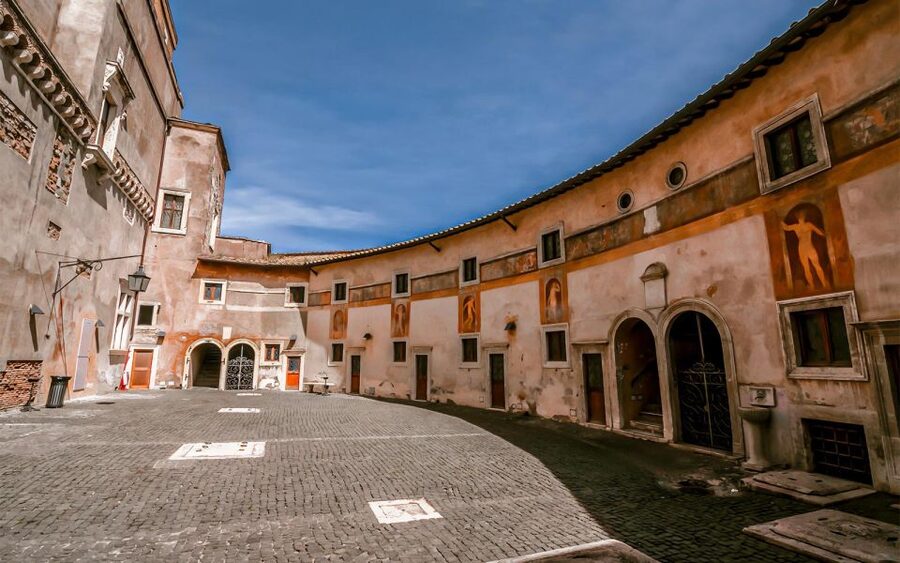
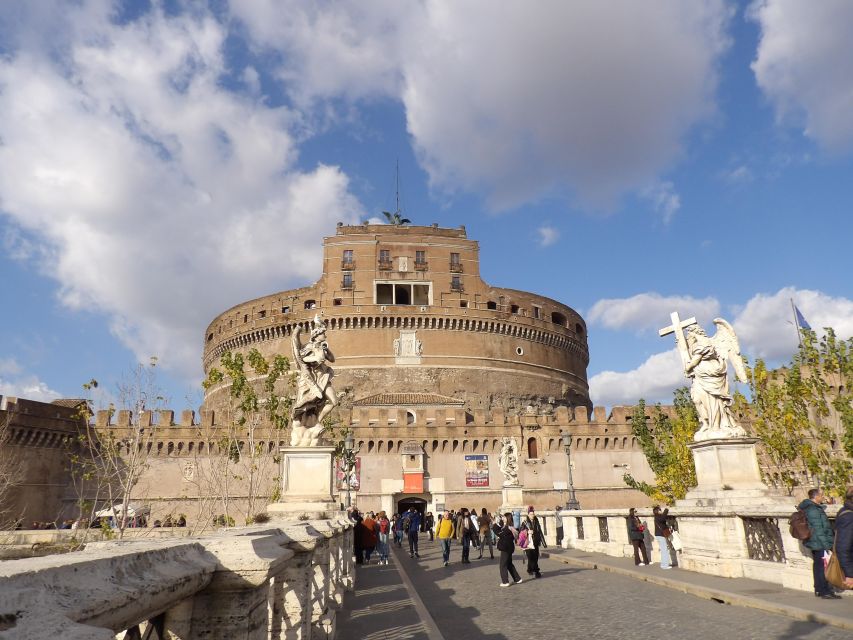
Castel Sant’Angelo is one of those Roman sites where the same walls keep getting new jobs. It starts as a monumental mausoleum for Emperor Hadrian, then later becomes a fortress and—at different points in its life—a prison. You don’t just see rooms here; you watch a building evolve with the city’s shifting needs.
That matters for you because it makes your visit feel connected. Instead of jumping between unrelated sights, you’re following a single “story engine.” One day is enough to understand why Rome kept using this strategic spot along the Tiber—and why popes later wanted a defensive refuge nearby.
You can also read our reviews of more tours and experiences in Rome.


How Your Emailed Ticket Gets You In (No Meeting Point Stress)
This experience is set up so you don’t need to coordinate with a guide in person. Your entry ticket gets sent to your email in the late afternoon of the day before your reservation, and you show it at the entrance.
For value, this kind of delivery matters in Rome. It saves you from last-minute pickup lines and keeps you moving on your schedule. Just double-check your spam folder when the email is supposed to arrive, and bring a passport or ID card so you’re covered if staff ask for it.
Also note the “swift access” angle. It’s not a promise of zero waiting in every situation, but it’s designed to reduce the friction at one of the city’s popular stops.
The Hadrian Mausoleum Start: Where the Tone Changes
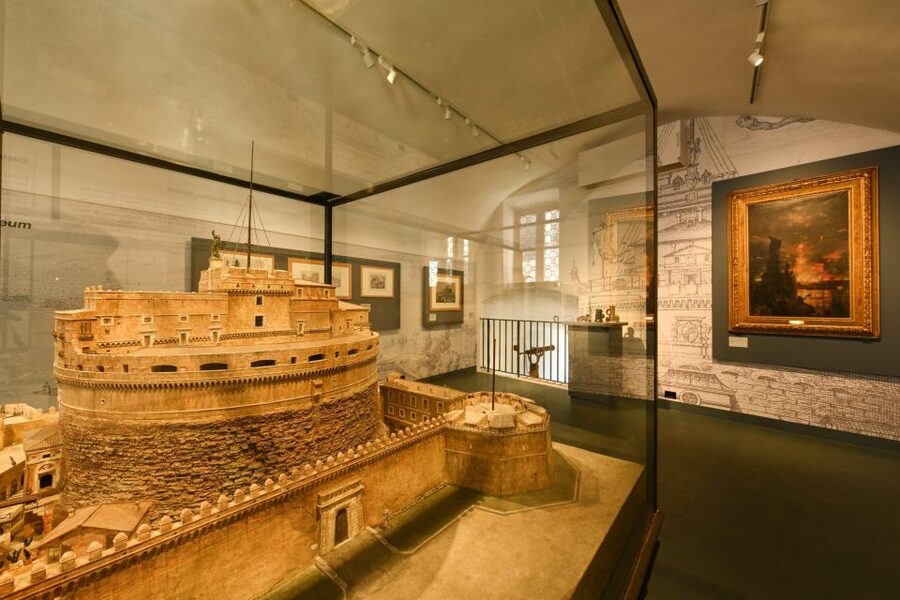
When you begin inside Castel Sant’Angelo, you’re essentially starting at the beginning of its identity. The first part of the visit takes you through imposing corridors and chambers that once served as a mausoleum for Emperor Hadrian.
What I like about starting here is that the scale lands immediately. You see architecture built for permanence—then you understand why later leaders repurposed it. The building’s location and structure didn’t change, but the purpose did, and you can feel that shift as you move deeper.
If you’re the type who likes to orient before you rush ahead, take your time at the earliest rooms. Even a short pause early makes the later fortress and papal sections click.
Ramparts and Terrace Views: The Part You’ll Remember
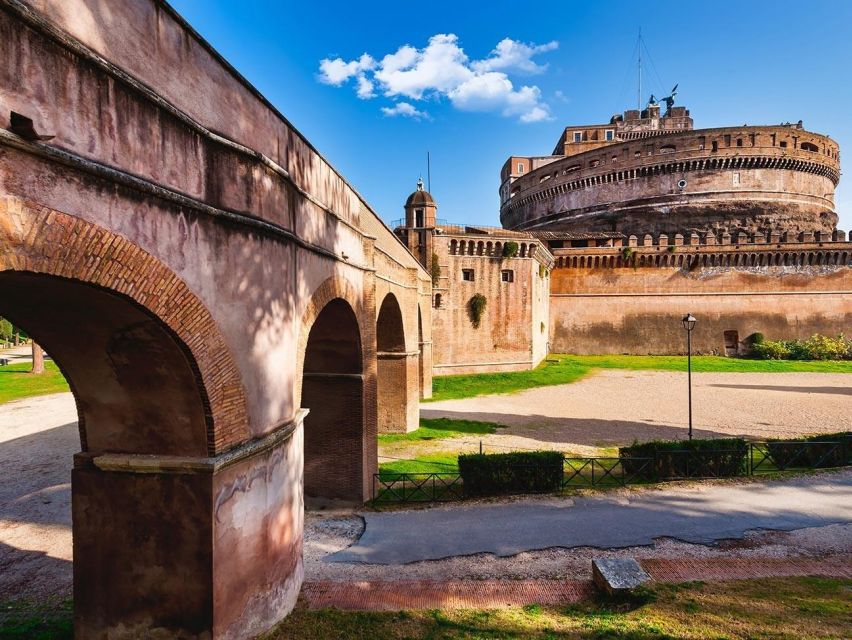
At some point, you’ll head up to the terrace and ramparts for panoramic views. This is the moment where Castel Sant’Angelo stops being just “interesting” and becomes “wow.”
From the terrace, you get wide views spanning the Tiber River and the Vatican area. You can spot a clear view of St. Peter’s Basilica and the Vatican complex area, plus the wider Roman skyline beyond. It’s the kind of view that helps you understand the city’s geography—why this river-adjacent position mattered for defense and access.
Practical note: you will climb stairs to reach the panoramic terrace. That doesn’t mean you should skip it, but it does mean you should save your energy. Wear shoes you can walk in confidently, and keep a slower pace if you need breaks on the way up.
Papal Apartments: Luxury Built into a Defense Plan
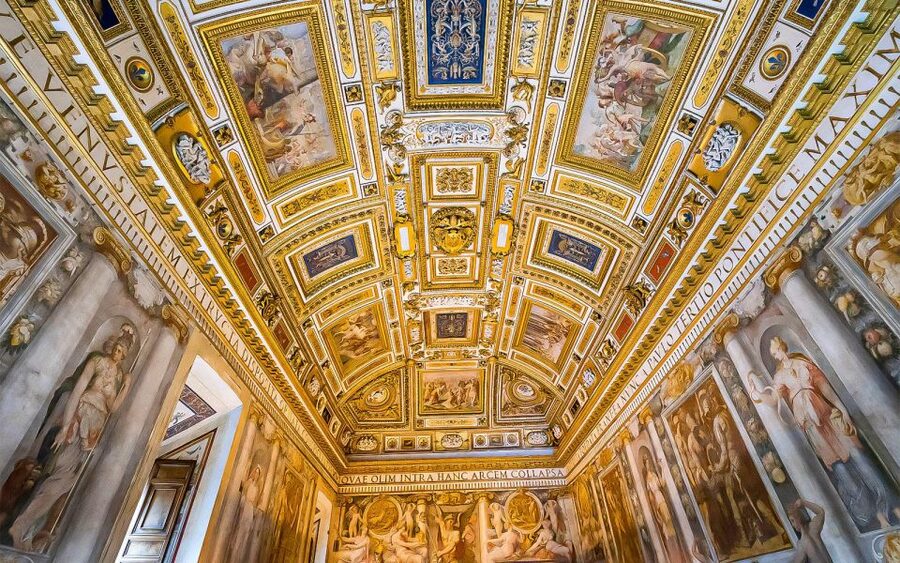
One of the most fascinating parts of Castel Sant’Angelo is the Papal Apartments. This section shifts the tone from stone power and military logic to a more personal world—one where popes lived with comfort inside a fortress.
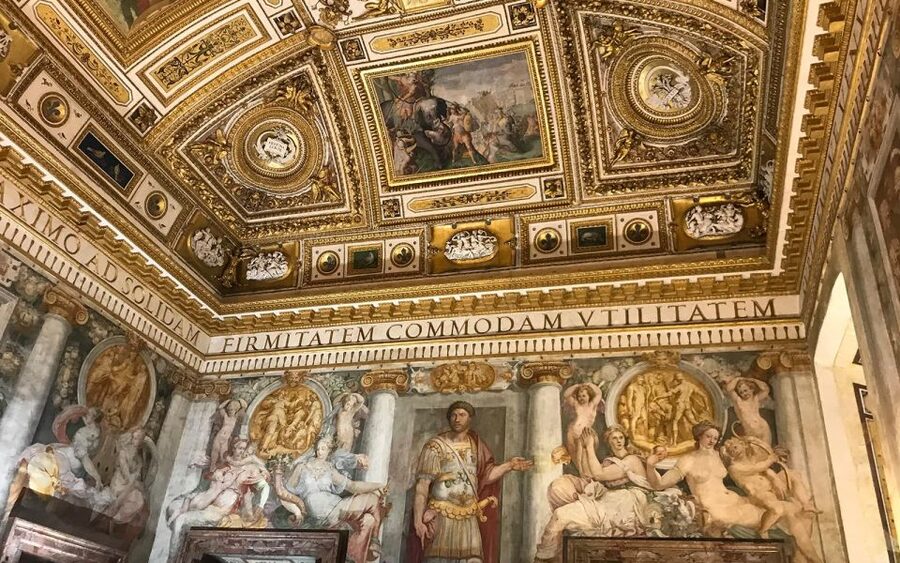
Here, you’ll see opulent interiors with Renaissance frescoes and period furniture. It’s a reminder that leadership wasn’t only about commanding troops—it was also about image, ceremony, and making a space feel “worthy” even during tense times.
This is also where the building’s layered past becomes obvious. You’re standing in luxury while the walls around you have been repurposed again and again. That contrast is exactly what makes the Papal Apartments worth focusing on, rather than treating them as a quick pass-through.





Fortress Rooms and Defensive Logic: Why This Spot Was Chosen
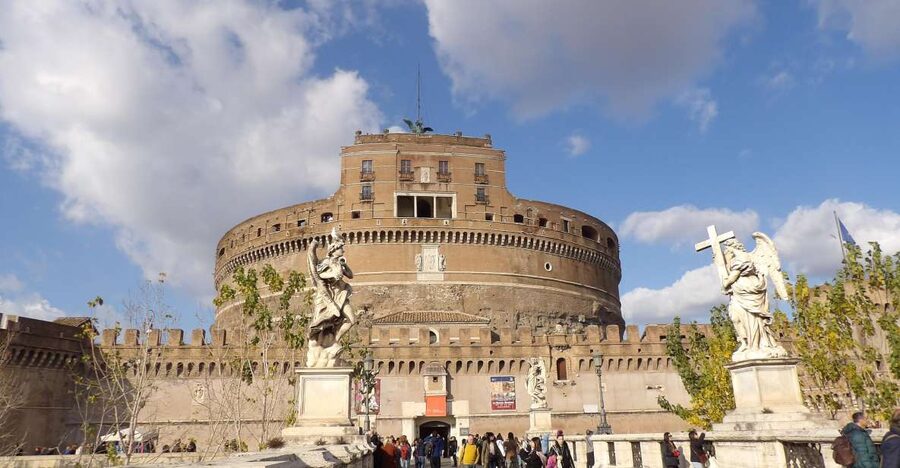
Castel Sant’Angelo didn’t become important by accident. It evolved into a fortress and played a strategic role in protecting the city during turbulent periods. As you move through the military parts, you’ll see how the design supports defense.
You’re not just looking at “cool old stuff.” You’re learning why the structure makes sense: the placement, the defensive setup, and the idea of having a place of refuge ready when crisis hits. It’s the kind of context that makes Rome’s power struggles feel less abstract.
And since this experience is about swift access, you can spend more time lingering in these sections instead of losing your day to bottlenecks. If you like architecture with a purpose, this part is a strong match.
The Audioguide: How to Use It Without Getting Stuck
The audioguide is included with this entrance ticket, and reviews note that it’s well organized and easy to use. That’s a big deal. In a building like this, where the spaces can feel similar, a clear guide helps you connect what you’re seeing to the story behind it.
My suggestion: use the audioguide to pick up the “why,” not just the “what.” For example, listen for the explanations around transitions—how it goes from mausoleum to fortress, and how popes later used the space as a refuge. Once you get the logic, the rooms start to feel more readable.
Also, don’t feel pressured to listen cover-to-cover. This site is manageable in one day, but you’ll enjoy it more if you let yourself pause where the story matches the view—especially around terrace moments.
What to Bring (And What Not to)
This is a practical outing, so pack like you’re walking in Rome.
Bring:
- Passport or ID card
- Comfortable shoes
- Comfortable clothes
Not allowed:
- Pets
- Weapons or sharp objects
- Luggage or large bags
- Sprays or aerosols
If you’re the “just in case” type, keep your bag minimal. A large bag can slow you down, and restrictions like these are common in historic sites.
Getting the Most From a 1-Day Visit
This ticket is valid for 1 day, and that’s realistic for how Castel Sant’Angelo works. You have enough time to do the full circuit—mausoleum sections, ramparts, Papal Apartments, and the fortress parts—without feeling like you’re trapped in a rigid schedule.
Here’s how I’d structure your pacing:
- Start with the earlier rooms so the building’s origin makes sense.
- Take the terrace when you’re ready for the big view moment.
- Then move through Papal Apartments and military areas with that new perspective in mind.
If you’re also visiting Vatican-area attractions on the same day, this place is a natural complement. The views alone connect the dots between Rome’s riverfront and the Vatican complex.
Price and Value: Is $49 Worth It?
At about $49 per person, this is not the cheapest thing you can do in Rome—but it’s also not priced like a luxury tour. The value comes from what you’re actually buying: entry with swift access plus an audioguide.
What makes that feel worth it:
- You spend your time in rooms instead of standing in line.
- You get a guided layer of context through the audioguide.
- You see multiple identities of the same landmark (tomb, fortress, papal apartments, prison connections).
Where it might not feel like a slam dunk:
- If you’re very fast-moving and don’t plan to use the audioguide much, you may feel you’re paying for a tool you barely use.
- If stairs are a deal-breaker for you, this won’t fit well—since the terrace involves climbing.
In short: for most people, the combination of efficient access and structured self-guided narration is a fair match to the cost.
Staff and On-Site Experience: Helpful Information, Mixed Tone
Based on the feedback available, the information can be excellent, and the overall flow can feel smooth. At the same time, at least one review flags that the on-site staff can feel unfriendly.
So treat this like a typical Rome landmark: the main value is the structure, the views, and the story you get through the audioguide. If you’re friendly and keep things straightforward, you’ll likely get the best experience the system allows.
Should You Book This Castel Sant’Angelo Ticket?
I’d book it if you want one Rome stop that explains multiple eras in a single building—and you care about saving time at the entrance. The terrace views plus the Papal Apartments make it feel like more than a “quick photo stop,” and the audioguide helps you follow the story without needing a live guide.
Skip or rethink it if stairs are an issue for you, since you’ll need to climb to reach the panoramic terrace. And if you know you won’t use the audioguide at all, consider whether a lower-cost self-guided approach would be better.
If you want a practical plan that hits the big moments—Hadrian’s origins, papal luxury, fortress logic, and the Vatican-area view—this ticket is a solid choice.
FAQ
How do I get my ticket?
Your ticket is sent by email in the late afternoon of the day before your entry date. You show it at the entrance.
Do I need a meeting point?
No. There’s no meeting with anyone required for this ticket.
How long is the experience?
It’s listed as valid for 1 day.
Is an audioguide included?
Yes, this experience is described as Castel Sant’Angelo Entrance Ticket with audioguide, and audio guides are mentioned in feedback.
What should I bring with me?
You should bring a passport or ID card and wear comfortable shoes and comfortable clothes.
Is the panoramic terrace reachable?
Yes, but you should know you’ll need to climb a series of stairs to reach the panoramic terrace.
Is it suitable for wheelchair users or people with mobility impairments?
No. It is not suitable for people with mobility impairments or wheelchair users.
Are pets allowed?
No, pets are not allowed.
Can I bring luggage or large bags?
No. Luggage or large bags are not allowed.
What’s the cancellation window?
You can cancel up to 24 hours in advance for a full refund.