REVIEW · PARIS
Paris: Batobus Hop-On Hop-Off Cruise & Landmarks Audio Tour
Book on Viator →Operated by Vox City International Ltd · Bookable on Viator
This is one of those Paris ideas that sounds simple, but it really helps you get your bearings fast along the Seine. You get a 24-hour Batobus ride with a built-in digital audio tour and map, so you can move at your pace while you spot big-name landmarks from the water.
I particularly like two things: the heated boat with panoramic views (nice when the weather turns) and the flexibility of nine stops plus frequent departures. You can hop on near the Champs-Élysées or Musée d’Orsay and then fill in the rest of the day as it suits you.
One real consideration is the ticket setup. The experience depends on you getting the official e-ticket / QR code download working correctly before boarding, and that handoff can be stressful if your device or download method misbehaves.
In This Review
- Key things to know before you go
- A 24-hour Seine cruise that keeps your day flexible
- Nine stops along the Seine: where the big landmarks plug in
- Stop 1: Eiffel Tower (Port de la Bourdonnais)
- Stop 2: Musée d’Orsay (Quai de Solférino)
- Stop 3: Quai Malaquais (Saint-Germain-des-Prés area)
- Stop 4: Notre Dame area (Quai de Montebello)
- Stop 5: Les Invalides (Port des Invalides)
- Stop 6: Jardin des Plantes (Quai Saint-Bernard)
- Stop 7: Hôtel de Ville area (Quai de l’Hôtel de ville)
- Stop 8: Le Louvre (Quai du Louvre)
- Stop 9: Champs-Élysées (Port des Champs-Élysées)
- Audio guide and app: the smartest way to turn views into learning
- Comfort on board: heated ride, panoramic views, and practical capacity
- Price check: why $32.41 can be a strong value
- The ticket download reality: how to avoid boarding-day stress
- Timing and operating months: when the route is running
- Who this Seine cruise fits best
- Should you book this Batobus Hop-On Hop-Off cruise and audio tour?
- FAQ
- How long is the Batobus cruise?
- Can I board at any stop?
- How do I get the audio guide on my phone?
- What languages are available for the audio commentary?
- Is there a live guide on board?
- What about headset, mobile device, and luggage?
Key things to know before you go
- 24-hour hop-on hop-off means you’re not stuck doing everything in one straight line
- Heated boat + panoramic views make the ride comfortable even on cooler days
- Audio in multiple languages (English, French, Italian, Spanish, German) keeps it accessible
- Nine practical stops put you close to major landmarks along the Seine
- Boats pass every 15 minutes, so you won’t feel trapped waiting around
- You supply your own headset and mobile device since those aren’t included
A 24-hour Seine cruise that keeps your day flexible
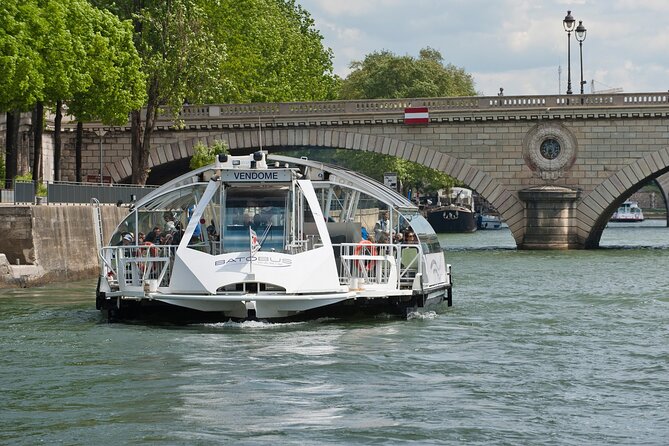
Paris can be fast and fussy: lines, transfers, and that moment when you realize you’re walking the wrong direction with confidence. Batobus helps by turning a chunk of the city into a smooth, scenic route.
The big advantage is the 24-hour validity from your first use. That means you can do a full loop, hop off for photos, then return later without restarting your plan. The cruise ride itself is listed at around 2 hours, but in real life you’ll likely stretch it out with stops.
This is also a smart choice for mixed groups—people who want to see the classics, plus people who just want good views and a calm way to get around.
You can also read our reviews of more tours and experiences in Paris.



Nine stops along the Seine: where the big landmarks plug in
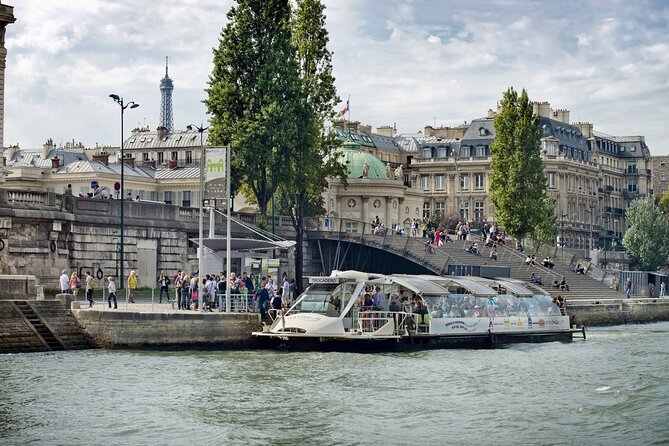
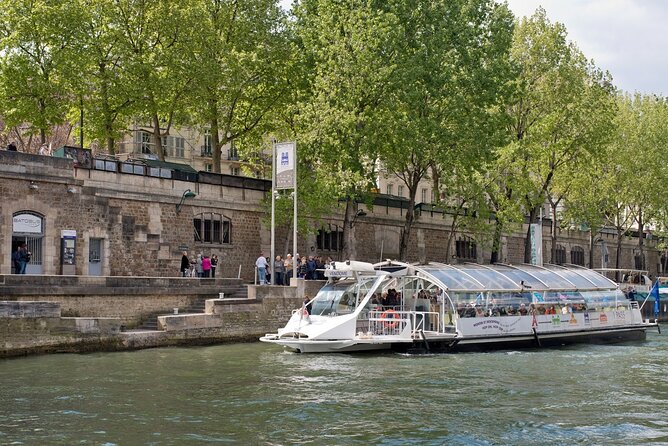
You can redeem your ticket and board at any of the nine Batobus stations. Boats run on a steady rhythm (every 15 minutes), so you can decide your pace on the fly.
Here’s the lineup and why each stop matters for sight-seeing. The audio guide is designed to guide you through the route with about 24 points of interest, and each stop lines up with major landmarks you’ll recognize right away.
Stop 1: Eiffel Tower (Port de la Bourdonnais)
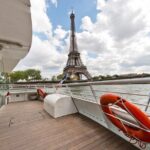
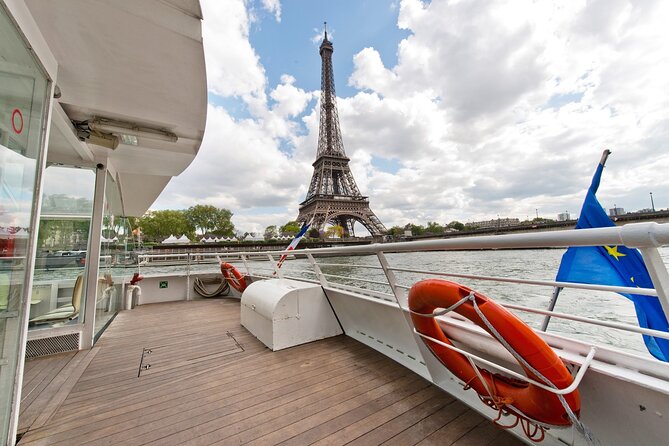
This is the “first photo” stop for a lot of people. From the boat, you’re in a classic Seine viewpoint zone, which is exactly what makes the Eiffel Tower feel iconic without the crowds of trying to stand right under it.
What I like: you can keep your bearings while the landmark “arrives” on your route. The audio guide also gives you context as you pass, which helps photos feel less like random snapshots.
A drawback: if you’re hoping for a ton of walking time off the boat here, give yourself extra buffer. The area is busy, and you’ll spend some time navigating around pedestrians.
Stop 2: Musée d’Orsay (Quai de Solférino)
Musée d’Orsay is not just a museum stop—it’s a cultural waypoint. Even if you don’t go inside, the area is a great place to pause, stretch your legs, and then continue later.
This stop works well if you want a “half museum day.” You can hop off, walk nearby, and return to the boat when you’re ready to move on.
Possible catch: if you hop off and then end up staying longer than planned, you might miss your preferred next departure window. The 15-minute frequency helps, but you still need time awareness.
Stop 3: Quai Malaquais (Saint-Germain-des-Prés area)
This is one of those stops that can feel more like neighborhood Paris than Monument Paris. The audio tour helps connect what you’re seeing to what you’re hearing, so it’s not just pretty scenery—you learn while you float.
I like this stop for people who want to shift gears from “big landmark photos” into more lived-in streetscapes.
Consideration: this stop can be better for wandering than for a single must-see attraction, so plan extra time if you want it to feel worthwhile.






Stop 4: Notre Dame area (Quai de Montebello)
Notre Dame is a landmark you’ll recognize immediately from the waterway context. Even if you’re only passing through, this stop tends to be one of the most emotionally satisfying because the area is so closely tied to how people imagine central Paris.
Why it’s useful: you get to see the landmark through the rhythm of the Seine, which is a different viewpoint than most city photos.
Potential drawback: central areas get crowded fast. If you’re hopping off specifically for photos, do it with a quick strategy rather than an open-ended “let’s just wander.”
Stop 5: Les Invalides (Port des Invalides)
This stop pairs well with travelers who like military and monument history, or who simply want another “major Paris” moment without changing transport modes.
I find this kind of stop helpful because it breaks the day into clear chunks. One landmark, one hop-off opportunity, then back on the boat to keep moving.
Small consideration: if you plan to do multiple hop-offs close together later, keep an eye on how much daylight you have left.
Stop 6: Jardin des Plantes (Quai Saint-Bernard)
This is a good “reset stop.” When your legs need a calmer break, Jardin des Plantes area is a sensible place to hop off, walk, and breathe.
The audio tour keeps the momentum, but the setting gives you a different feel—less “museum block” and more “park-and-stroll.”
Possible drawback: if you only care about the absolute biggest icons, you might find this stop less compelling than Eiffel Tower or Louvre. It still pays off if you like parks and walking.
Stop 7: Hôtel de Ville area (Quai de l’Hôtel de ville)
This stop sits you near an administrative and civic core area, which can be a fun contrast to the postcard landmarks. It’s also a good point to grab food or re-group if your party has different interests.
I like it as a “midday anchor.” You can do a few key photos, hop off here for a snack or a short walk, then return when the light changes.
Consideration: depending on the time of day, you may be moving through busier streets than you expect from the boat.
Stop 8: Le Louvre (Quai du Louvre)
This is a huge one. Seeing the Louvre area from the water gives you scale and perspective, and it’s easier to connect the dots between what you’re hearing in the audio and what you’re aiming at on the ground.
The audio guide storylines help a lot here, especially if you don’t know the finer details already. You’ll understand why certain buildings and features matter, and that makes photos and walks feel more intentional.
Possible drawback: Louvre-adjacent areas are popular. If you hop off for a quick look, keep it time-boxed or you may spend longer than you planned.
Stop 9: Champs-Élysées (Port des Champs-Élysées)
This is a practical “wrap the day” stop. It gives you an easy bridge back to central shopping streets and classic Paris energy.
I like that the route doesn’t end in some random corner. You land where your next plan probably already is: a stroll down a major avenue, dinner reservations, or just people-watching.
Consideration: if you’re hopping off late, expect more crowds near major shopping areas.
Audio guide and app: the smartest way to turn views into learning
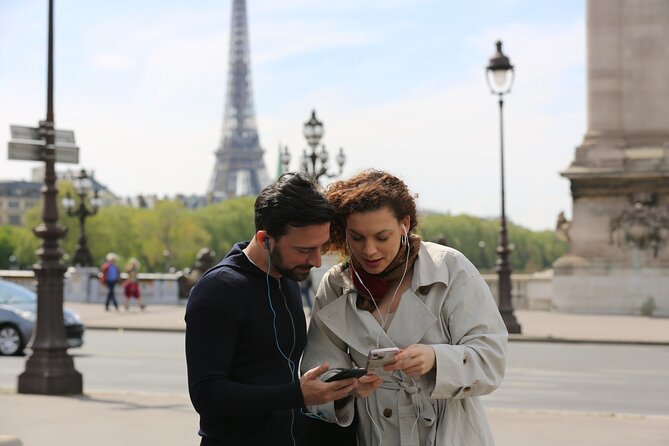
This experience isn’t a live guided tour. It’s self-guided with a sightseeing app that includes the audio tour and map.
That actually suits a lot of travelers. You can pause, hop off, or keep moving without someone deciding your schedule. The commentary runs in English, French, Italian, Spanish, and German, so you can match the language to your comfort level and move as a group without everyone getting stuck listening to the same option.
A key practical note: you’re told to scan the QR code to download the audio guide before arrival. If you wait until you’re on the boat and your phone has low battery, you’ll feel it. I’d treat this like museum audio prep: charge up beforehand and download before you need it.
Also, headset and a mobile device are not included. If you want clear audio, bring your own headset.
Comfort on board: heated ride, panoramic views, and practical capacity
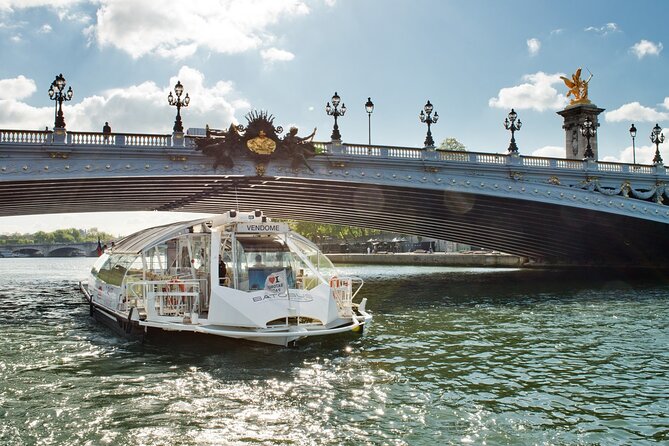
Batobus boats are built for sightseeing comfort. You get panoramic views and a heated boat, plus a summer roof option depending on conditions. The result is that the ride feels more like a warm, stable “moving viewpoint” than a cold outdoor bus substitute.
There’s also bike storage, which is a nice touch if you’re traveling with a bike. Luggage rules matter, though: luggage, large bags, and non-foldable items aren’t permitted. Compact luggage and foldable strollers are permitted depending on space.
If you’re carrying anything bulky (or you’re traveling with kids), plan around the storage reality. Crowded sailings happen in peak season, and space can be tight.
Price check: why $32.41 can be a strong value

At $32.41 per person, this isn’t a “one-and-done” ticket. You’re paying for:
- 24 hours of hop-on hop-off river travel
- multiple major stops tied to big landmarks
- an audio guide with stories and a map across about 24 points of interest
- the comfort upgrades like heating and panoramic views
For comparison, a single one-way ride plus a separate guided activity can quickly add up. Here, you’re buying a whole day of flexible sightseeing movement.
One more value point: frequent departures (boats every 15 minutes) reduce the “waiting cost” of sightseeing. You can adjust your plan when you see a line forming somewhere or when your energy drops.
The ticket download reality: how to avoid boarding-day stress
The smoothest experience depends on the e-ticket process going well. The guidance says you’ll get an e-ticket available for download and sent via WhatsApp within 24 hours of your travel date, and you’ll redeem using a QR code.
That’s simple when it works. It becomes annoying if:
- your phone won’t download the official ticket QR interface
- your booking reference doesn’t match what the station kiosk expects
- you arrive without having downloaded what you need
So here’s my practical advice. This is the part you should treat like a travel checklist:
- Download the official ticket QR code as early as you can after it’s sent
- Make sure you can open it offline or on a phone that’s charged
- If you rely on WhatsApp, confirm you’ll have signal when you arrive
If something goes wrong, be patient but firm. There’s a counter process at stations, and staff may help sort it, but your time won’t be instantly protected. Build a little slack into your arrival time.
Timing and operating months: when the route is running
The listed opening hours show 10:00 AM to 5:00 PM, seven days a week, for the period 04/01/2025 through 06/18/2026. Another detail states the cruise service operates April to October 2025, daily 10am–7pm.
Because departure times can vary due to weather, check batobus.com for current timing. This is especially important in shoulder seasons when conditions can affect schedules.
Who this Seine cruise fits best
I see this working best for:
- you if you want a comfortable, scenic way to connect multiple landmarks without squeezing in lots of transit
- you if your group has mixed interests and you want everyone to move at their own pace
- you if you prefer self-guided audio over a live group tour that controls your schedule
- you if you like photos from “moving viewpoints” and want the river perspective
It might be less ideal if you only want one single landmark and don’t care about flexibility. Also, if your phone and ticket downloads are usually a hassle, plan extra time to get the QR code working before you reach the station.
Should you book this Batobus Hop-On Hop-Off cruise and audio tour?
Yes, I’d book it if your goal is to see a lot of Paris along the Seine with less stress. The value comes from the combination of 24-hour freedom, frequent boats, and an audio guide that helps you understand what you’re seeing as you pass each stop.
I’d book it with one condition: get your QR ticket download and audio setup done ahead of time. If you do that, the ride itself is the easy part—and it’s the easy part you’ll actually remember.
If you want to make it extra satisfying, pick two or three “must-hit” hop-off stops (like Eiffel Tower, Notre Dame area, and Louvre) and treat the others as bonus wandering. The route is long enough that you’ll feel productive without feeling rushed.
FAQ
How long is the Batobus cruise?
The experience is listed at about 2 hours, but your ticket is valid for 24 hours from first use, so you can hop on and off throughout the day.
Can I board at any stop?
Yes. You can redeem your cruise ticket and board at any of the nine Batobus stations. Boats pass every 15 minutes.
How do I get the audio guide on my phone?
You’re instructed to scan the QR code to download the audio guide before arrival. The audio guide is part of the sightseeing app.
What languages are available for the audio commentary?
The audio commentary is available in English, French, Italian, Spanish, and German.
Is there a live guide on board?
No. This is a self-guided experience. There is no live commentary, and it’s an audio tour through the app.
What about headset, mobile device, and luggage?
A headset and mobile device are not included, so bring your own. Large bags and non-foldable luggage aren’t permitted, while compact luggage and foldable strollers are permitted depending on space. Service animals are allowed.