REVIEW · SACRAMENTO
Old Sacramento: A Self-Guided Audio Tour
Book on Viator →Operated by VoiceMap Audio Tours · Bookable on Viator
Old Sacramento has a great built-in soundtrack. I love the offline VoiceMap setup (audio plus maps and geodata), and I also love how the narration steers you to big names and key corners like Pioneer Square, the Pony Express Statue, and Theodore Judah. One possible drawback: if your app download or offline access goes sideways, you’ll need to troubleshoot before you can start, and there’s at least one reported tech hiccup in the reviews.
At $11.99 per person for a walking route that takes about 1.5 to 2 hours, this is one of those easy add-ons that can turn a casual stroll into a more complete Old Sac story—especially if you like history but don’t want to sit through a formal tour. If you enjoy wandering at your own pace, this kind of self-guided format fits.
In This Review
- Key Highlights You’ll Actually Feel on the Walk
- Old Sacramento Sounds Better on a Self-Guided Audio Route
- Tower Bridge to the Historic Streets: Getting Your Bearings Fast
- Pioneer Square, the Pony Express Statue, and Theodore Judah
- Restored 1850s Buildings: What Cheer House, Orleans Hotel, and the Firehouse Area
- Lady Adams Building: A Smaller Stop With a Big Story Role
- The Long Mail Problem, Before the Pony Express (and Why That Matters)
- Central Pacific Railroad and Chinese Migrants: A Clear Human Thread
- I Street, the Big Four Building, and Front Street Food-Stop Options
- Optional Museum Time: Railroad and Sacramento History
- Finishing at the Delta King Paddlewheeler
- Price, Timing, and Value for a 1.5–2 Hour Walk
- Who This Old Sacramento Audio Tour Is Best For
- Should You Book This VoiceMap Old Sacramento Tour?
- FAQ
- How much does the Old Sacramento self-guided audio tour cost?
- How long does the tour take?
- What do I need to use the tour?
- Where does the tour start and end?
- Is the audio available offline?
- Is it refundable if I cancel?
Key Highlights You’ll Actually Feel on the Walk
- Offline audio and maps so you’re not hunting for signal in historic streets.
- Start at Tower Bridge and follow a logical route through the Historic District and Waterfront.
- Landmarks that make the Gold Rush click, like the Pony Express Statue and Theodore Judah monument.
- Restored 1850s buildings with stops tied to well-known sites such as the Orleans Hotel and What Cheer House.
- Railroad-focused storytelling including the role of Chinese migrants on the Central Pacific Railroad.
- Optional museum time at the California State Railroad Museum and Sacramento History Museum.
Old Sacramento Sounds Better on a Self-Guided Audio Route
Old Sacramento is compact, walkable, and visually varied. You’ve got cobblestones, wooden boardwalk sections, and waterfront energy—all great for a stroll. But without guidance, you can miss the connections that make it feel like more than a pretty set of old buildings.
That’s where this audio tour helps. The narration is built to match what you can see outside your window: you move, you hear, you look closer. I like that you get the story in manageable chunks rather than one giant lecture. And because it includes offline access to audio and maps, you can focus on the walk instead of babysitting your phone’s data connection.
The other big win is pacing. A self-guided format lets you pause at the Firehouse Restaurant area if something catches your eye, or linger near the waterfront without asking permission from a group schedule. If you’re trying to fit Old Sac into a day with other stops, this kind of route makes planning simpler.
You can also read our reviews of more tours and experiences in Sacramento.
Tower Bridge to the Historic Streets: Getting Your Bearings Fast
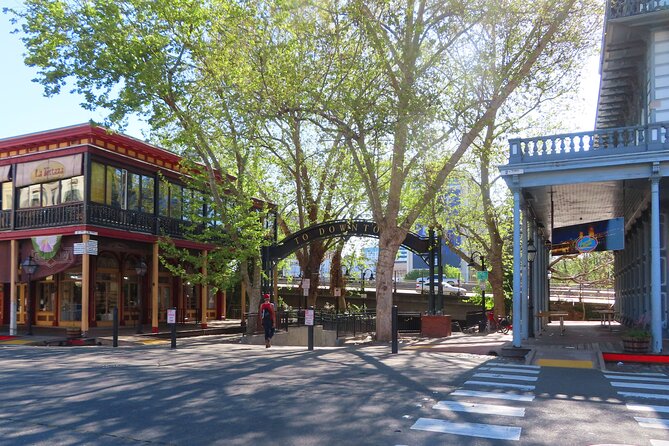
The tour kicks off at 1 Capitol Mall and then orients you around Tower Bridge. That’s a smart start point because it immediately puts you in the right neighborhood mindset: you’re heading into the Old Sacramento Historic District and Waterfront rather than wandering randomly.
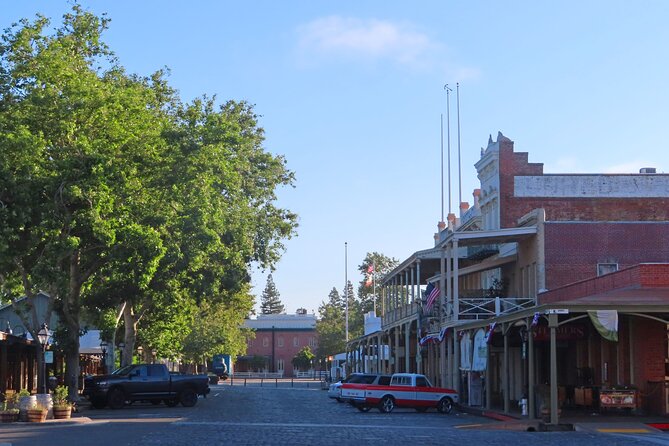
As you stroll, the audio leans into what makes this area distinct—cobblestone streets and sections of wooden boardwalk. Those textures matter. They’re not just for atmosphere; they’re part of why the district feels like it time-traveled you back toward the Gold Rush era.
Practical note: plan to wear shoes that can handle uneven ground. Even if you’re not going far, the mix of surfaces can be a little tough if you’re in stiff or slippery footwear. Your best “upgrade” here is comfort.
Pioneer Square, the Pony Express Statue, and Theodore Judah
One of the tour’s strengths is that it doesn’t float around the idea of history—it anchors you in specific names and monuments. You’ll hear your way through Pioneer Square, then move on to the Pony Express Statue and the monument to Theodore Judah, the Central Pacific Railroad’s first Chief Engineer.
This trio gives you a useful framework:
- Pioneer Square helps you understand the social and civic center of early Sacramento.
- The Pony Express Statue connects you to the communication problem of the era—how quickly you could move information between the East and West.
- Theodore Judah points you to the railroad side of the story, which is huge in California’s 1860s transformation.
If you’ve ever wondered why the railroads and communication systems got so much attention in the 1800s, this route makes that connection in plain language. You don’t just see names—you understand why they mattered.
Restored 1850s Buildings: What Cheer House, Orleans Hotel, and the Firehouse Area
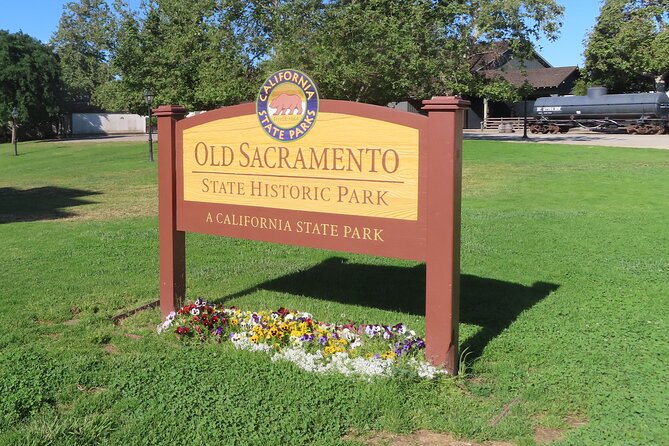
As the walk continues, the audio turns toward the area’s restored historic fabric. You’ll pass through parts of a suburb designated as a California Historical Landmark in 1965, with over 50 restored historical buildings dating to the second half of the 1850s.
That’s not a vague claim. The tour ties the story to places you can actually locate as you walk. Expect named stops and recognizable stops such as:
- Firehouse Restaurant
- Orleans Hotel
- What Cheer House (not just a name—an old hotel turned historical landmark in the district)
When you have audio tied to specific buildings, your eyes stop treating them like scenery. Instead of walking past facades, you start noticing details that you might otherwise skip: the way a building sits, how the streets are set up, and why certain spots became gathering points.
One consideration: if you’re the type who hates repeating yourself—meaning you want every stop to be a major photo moment—this part can feel more about texture and context than dramatic sightlines. It’s still worth it, but your expectations should be “walk-and-learn,” not “constant wow.”
Lady Adams Building: A Smaller Stop With a Big Story Role
The route also includes a stop for the Lady Adams Building. You’ll hear its history while you’re walking, which helps keep the tour from feeling like it only revolves around the most famous monuments.
This is one of those places where audio is especially useful. A building can look “historic” to you, but without a narrative, you might not know what to focus on. With the tour’s guidance, you’re nudged toward the specific angle that makes it meaningful in the Old Sac story.
If you like architectural storytelling—when a place explains itself through context—you’ll enjoy this kind of mid-route anchor.
The Long Mail Problem, Before the Pony Express (and Why That Matters)
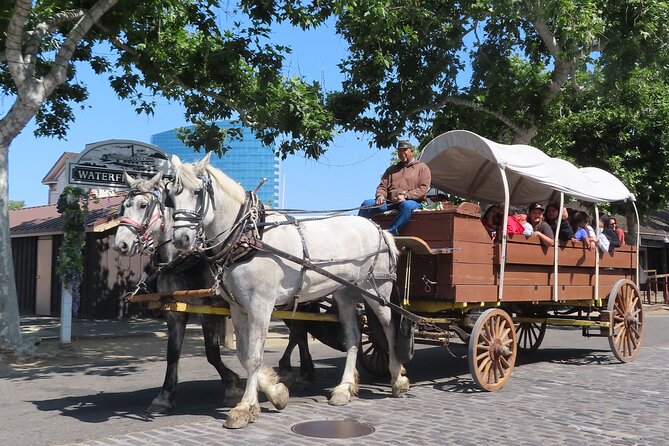
A standout segment in the audio is the explanation of how early mail delivery worked before the Pony Express began in 1860. You’ll learn that it took 25 days via steamboat to get mail from the East Coast to California across the West Coast by water.
That single detail changes how you interpret the era. Instead of thinking of the Pony Express as an isolated stunt, you start seeing it as a response to an uncomfortable reality: communication delays were slow enough to reshape business, news, and personal life.
As you walk, the audio ties this to the earlier communication and transportation narrative that runs through Old Sacramento. It’s history with a practical angle, not just dates.
Central Pacific Railroad and Chinese Migrants: A Clear Human Thread
Later in the route, the audio brings in an important human story: the courage of Chinese migrants during the building of the Central Pacific Railroad.
This part works because it’s not tacked on. It connects to what you already heard about railroad leadership and the larger push to connect routes. In other words, you’re not just hearing about machinery or monuments—you’re hearing about people who made the project real.
You’ll feel the effect of this segment when you reach later landmarks related to the railroad theme. The tour doesn’t leave you with a name-only understanding. It gives you a reason the railroad story needs people behind it.
I Street, the Big Four Building, and Front Street Food-Stop Options
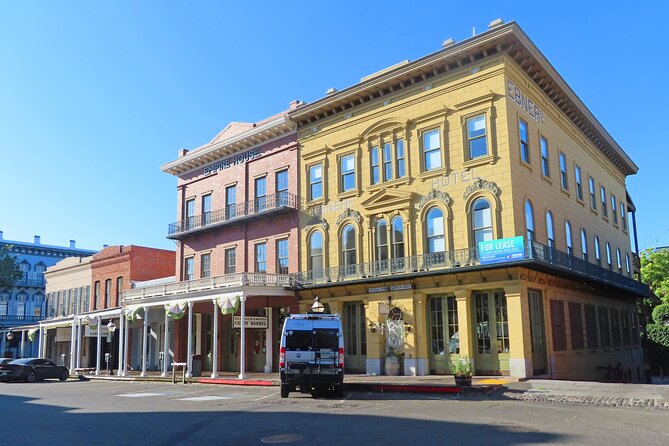
As you continue, you’ll stroll down I Street and pass the Big Four Building, then head down Front Street. This is a good section for two reasons.
First, it’s where Old Sacramento starts to feel like a modern neighborhood again. Second, the tour gives you freedom: you can sample the menu at one of the charming bars or restaurants along the Old Sacramento Waterfront.
That matters if you’re timing your day. You can treat this as a quick break before your end point, or you can power through and save eating for after. The tour doesn’t require food, but the area offers it, so you’re not locked into a snack hunt later.
Tip: if you’re planning to stop somewhere to eat, give yourself a little extra buffer. The route is designed for walking and listening, and adding a sit-down stop can stretch your time.
Optional Museum Time: Railroad and Sacramento History
One of the more practical features is that the audio explicitly sets you up for optional museum visits. You’ll have an opportunity to visit both the California State Railroad Museum and the Sacramento History Museum after the tour builds the context around them.
This is how self-guided should work. The tour helps you arrive with questions and themes in your head, so the museums can feel like answers—not like random displays.
Do note: the museums’ entry tickets are not included. So if you want to add museum time, plan for that cost and time. The audio helps, but it doesn’t replace museum admission.
If your schedule is tight, you can still get value from the walk alone. If you have more time, pairing audio context with museum visits is one of the best ways to turn 2 hours into a half-day of meaning.
Finishing at the Delta King Paddlewheeler
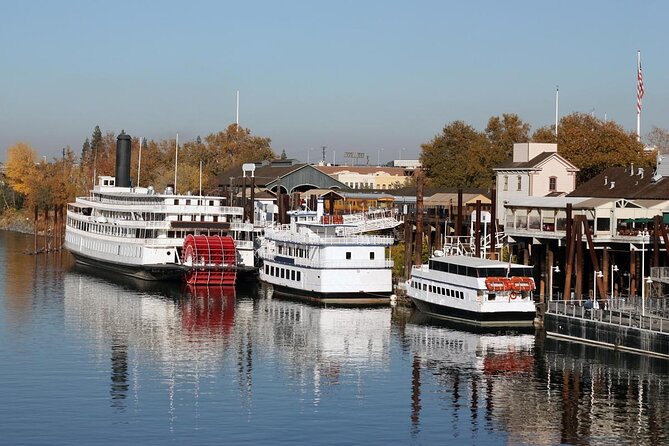
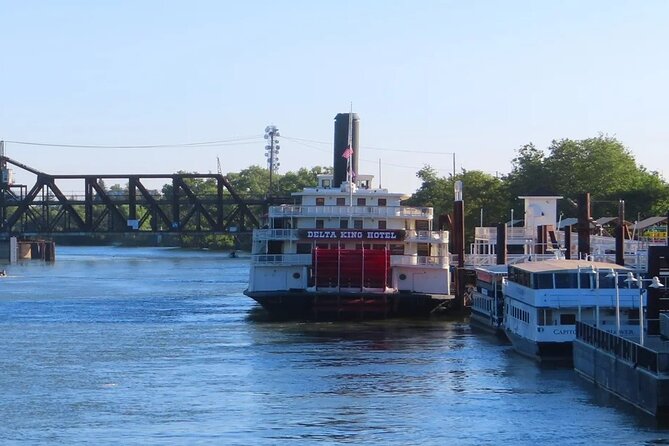
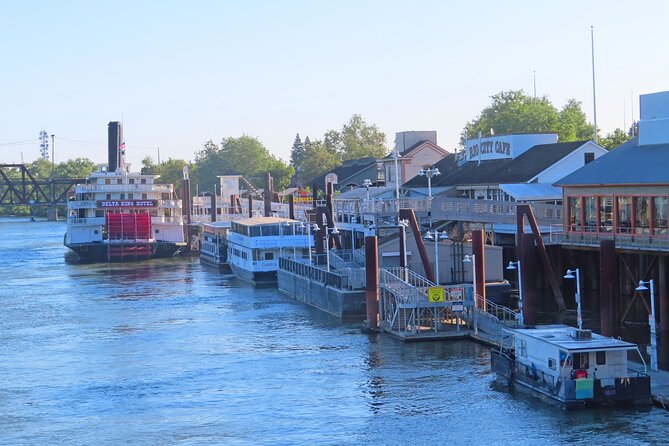
The tour ends at the Delta King Hotel area, right by the Delta King paddlewheeler. This is a fitting end point because the Delta King connects to the broader theme of how people moved and lived around Sacramento’s waterways.
The audio gives you the ship’s history right at the place you can look it over. That’s the moment where it all clicks: Gold Rush-era transportation wasn’t just rail or mail—it was also river travel. Ending here keeps the story from feeling too one-track.
If you still have energy after the walk, hang around near the waterfront to absorb the change in atmosphere. It’s an easy last step because you’re already at the water, already done with the navigation.
Price, Timing, and Value for a 1.5–2 Hour Walk
For $11.99 per person, you get lifetime access to the tour in English, plus offline access to audio and maps. That’s a good value model if you think you might re-walk Old Sacramento later, or if you want to try it on a future trip without paying again.
The duration—about 1 hour 30 minutes to 2 hours—is ideal for people who want history without committing to a full guided afternoon. It’s also flexible. If you stop for a photo or a quick snack, the audio format is designed for an easy walking loop.
Two practical things to plan for:
- You’ll need your own smartphone and headphones.
- You’ll want your phone charged, since you’ll be using the VoiceMap app for navigation and audio.
And one more reality check: this is a private tour/activity, meaning only your group participates. That usually keeps things simple—no waiting for a big group. The tradeoff is that if your tech isn’t cooperating, you don’t have a live guide to fix it on the spot.
Speaking of tech: the reviews are mostly positive about the tech working smoothly, but there was at least one complaint about confusing download steps and support that didn’t feel helpful. My advice is simple: start the setup early, and don’t leave it until the last minute in the middle of walking.
Who This Old Sacramento Audio Tour Is Best For
I’d book this if:
- you like self-guided walking and don’t want to join a group schedule
- you want offline audio and maps in a compact historic district
- you enjoy story-driven stops with real names like Theodore Judah and Chinese migrants’ contributions
- you want an easy base layer before optional museum visits
I’d think twice if:
- you absolutely hate any chance of phone/app troubleshooting
- you’re only interested in major monuments and don’t want quieter “read-the-building” moments
- you’re hoping for food included (you’ll need to plan food separately)
Should You Book This VoiceMap Old Sacramento Tour?
Yes—if you want a smart, low-pressure way to learn the Old Sacramento story while you walk. The offline VoiceMap approach is the main reason it’s worth your time: it helps you keep moving and keep listening, even when signal is unreliable. The route also does a nice job connecting the big symbols—Pony Express and Judah—to the broader human and transportation realities that shaped the city.
If you’re booking with a tight tech setup mindset, build in a few minutes to get the app ready before you start. And if anything goes wrong with download or offline access, contact the provider promptly—one support response suggests they can review technical issues and potentially refund if there’s a real problem.
FAQ
How much does the Old Sacramento self-guided audio tour cost?
The tour costs $11.99 per person.
How long does the tour take?
Plan for about 1 hour 30 minutes to 2 hours.
What do I need to use the tour?
You need the VoiceMap app on your Android or iOS device, plus your own smartphone and headphones. Food, drink, and transportation are not included.
Where does the tour start and end?
It starts at 1 Capitol Mall, Sacramento, CA 95814, USA and ends in front of the Delta King Hotel at 1000 Front St, Sacramento, CA 95814, USA.
Is the audio available offline?
Yes. Offline access is included for the audio, maps, and geodata.
Is it refundable if I cancel?
The experience is non-refundable and cannot be changed for any reason.