REVIEW · RENNES
The Hardest City to Invade: Saint Malo’s Secrets Audio Guide
Book on Viator →Operated by VoiceMap Audio Tours · Bookable on Viator
Fortifications make Saint-Malo feel unstoppable. This English audio GPS walk turns the city’s sea defenses into a clear story, starting at the Office de Tourisme and ending at the Big Gate. I like the self-guided GPS mapping that keeps you on track, and I like how the route ties famous names to specific spots you can actually see, like Chateaubriand and Jacques Cartier. One catch to consider: the narration pace can feel a bit fast, and place-name pronunciation may not be perfect if you want very precise French sounds.
If you enjoy walking, this is an easy way to make sense of Saint-Malo fast. You’ll cover key ramparts and gates in about 1 hour to 1 hour 15 minutes, without dealing with a live group pace. The value is strong because you get offline audio and maps, plus unlimited lifetime use of the tour after you buy it.
In This Review
- Key things to know before you go
- Saint-Malo’s fortification story, in a walk that stays on track
- Starting at the Office de Tourisme: get your bearings fast
- Chaussée du Sillon to the castle: the city’s sea-facing logic
- Saint Vincent Gate and the ermine symbol: reading the old town
- Chateaubriand, Place Vauban, and Poterne Aux Normands
- Bastion de la Reine to Bidouane Tower: walls with stories
- Champs-Vauvert Cavalier to Les Remparts: views with purpose
- Place du Quebec and House Quebec: Breton-to-Canada links
- Holland Bastion, Jacques Cartier, and more gates before the cathedral
- Price and practical tips: getting value from your $8.99 audio guide
- Who should book this self-guided Saint-Malo audio walk
- Should you book this Saint-Malo audio guide?
- FAQ
- How long is the Saint-Malo Secrets audio guide?
- How much does it cost?
- What languages are available?
- Where does the tour start and end?
- Do I need headphones?
- Can I download the tour for offline use?
- Can I reuse the tour after I book?
- Is this a guided tour with a person leading the group?
- Are entry fees included for stops along the way?
- What is the cancellation policy?
Key things to know before you go
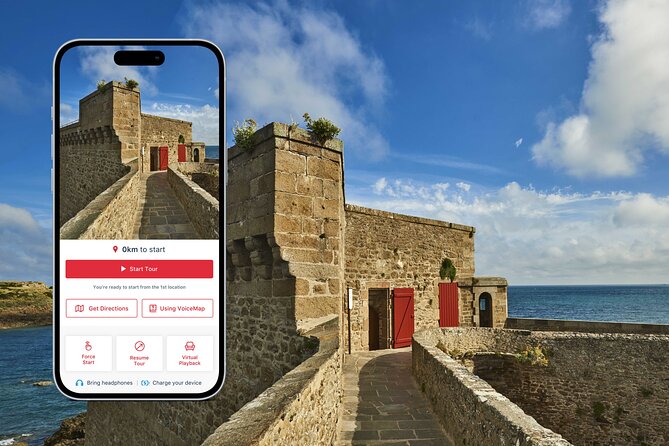
- Step-by-step GPS guidance so you spend less time checking your map
- Offline audio, maps, and geodata so you can wander without signal panic
- A defense-focused route through castles, gates, and bastions (not just scenic stops)
- Canada connections worked into the walk via Quebec links and Jacques Cartier
- Self-guided flexibility to pause for views at Chaussée du Sillon and along the ramparts
- No museum entries included if you want to go inside any attractions mentioned
Saint-Malo’s fortification story, in a walk that stays on track

This audio guide is built for people who want the big picture without getting lost. You get directions to the starting point, then a self-guided GPS tour that aims to match the city’s layout stop by stop. It’s a smart match for Saint-Malo, because the fun part is seeing how the city’s defenses connect to the sea.
At $8.99 per person, the price makes sense because you’re buying time and clarity. Instead of just wandering the ramparts and gates guessing what you’re looking at, you get explanations while you’re standing there. And you don’t lose the purchase if your plans change: you get unlimited, lifetime use, and you can listen virtually from anywhere like an audiobook.
The overall pacing fits most visitors. Most people can handle it, and the route timing (about 1 to 1 hour 15 minutes) keeps it from turning into a long slog. If you’re someone who prefers slower narration, you may want to take brief pauses at the viewpoints and let the audio settle.
You can also read our reviews of more tours and experiences in Rennes.
Starting at the Office de Tourisme: get your bearings fast
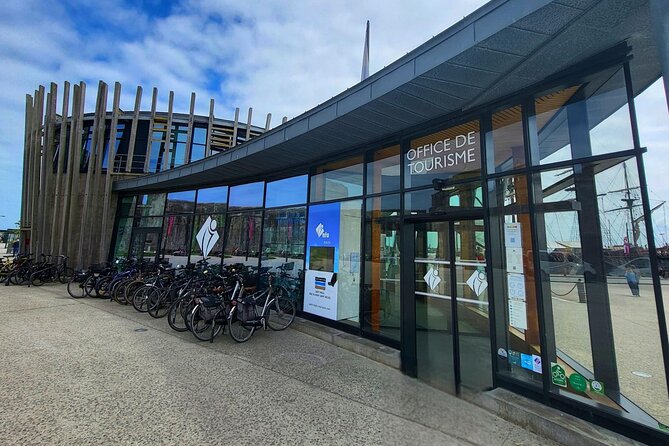
You begin outside the Office de Tourisme de Saint-Malo, on Esp. Saint-Vincent. This is a great starting choice because it’s an easy reference point and you’re already near the core of the old town. The directions included with your purchase are there for a reason: Saint-Malo’s streets can twist, but your audio tour aims to keep you oriented.
From there, the guide sends you toward Chaussée du Sillon, a boulevard known for sea-and-coastline views. This first stretch matters because it sets the theme: Saint-Malo’s geography is part of the defense story. You get a feel for the water, the coastline, and why the ramparts and gates matter once you start walking deeper into the old city.
Practical tip: bring a fully charged phone. Even though you’ll have offline access, your GPS needs the device running. Also bring your own headphones—smartphone and headphones are not included.
Chaussée du Sillon to the castle: the city’s sea-facing logic

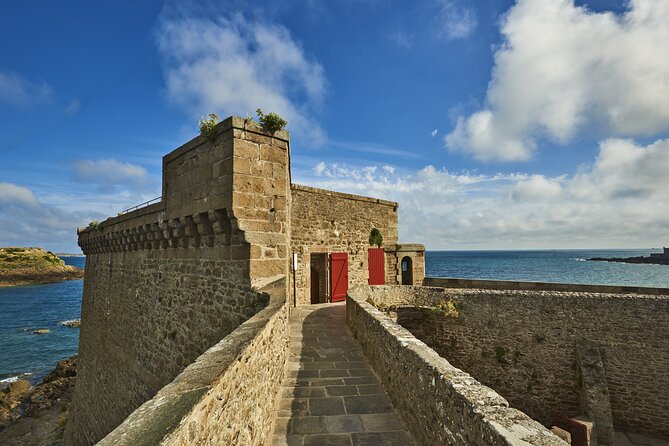
The walk continues toward Saint Malo Castle. Even from the outside, the narration helps you read the place like a fortress, not just a landmark. You’ll hear how corsairs and conquests echo through the area and why this castle mattered to defending the city.
After that, you shift from big fortress ideas to specific symbols and gates. That’s one of the strongest parts of this tour: it doesn’t just point at walls, it explains the purpose behind them. You learn to connect what you see—gates, bastions, and layered entries—to the reason Saint-Malo was hard to attack.
If you’re the type who likes learning the “why” while you walk, you’ll appreciate this structure. You’ll go from panoramic views to defense details without feeling like you’re trapped in history facts with nowhere to stand.
Saint Vincent Gate and the ermine symbol: reading the old town

One of the early stops is Saint Vincent Gate, where the narration connects the gate to a specific symbol you’ll see around Saint-Malo: the ermine. That’s a small detail, but it changes how you look at the city while you’re walking. Instead of seeing repeated emblems as decoration, you understand there’s meaning attached.
Then you move to Porte Saint-Thomas, where you’ll hear why there are three Saint Thomas gates. This is the kind of explanation that helps the walk click. The city’s fortifications often evolved in stages, and understanding that layered approach makes the gates feel less random and more intentional.
This is also where the GPS guidance pays off. When you’re moving between gates and passages, you want your device to tell you you’re at the right spot. The mapping is designed to do exactly that, and the overall navigation experience tends to be smooth for people using it.
Chateaubriand, Place Vauban, and Poterne Aux Normands
The tour doesn’t keep things purely military. You’ll reach the birthplace of Chateaubriand, a prominent French politician and diplomat, and you’ll hear how he connects to French literature and politics. This stop helps break up the fortress theme, and it also shows how the old town served real lives, not just defenses.
Next is Place Vauban, the large square in front of the castle named after Sébastien Le Prestre de Vauban, a combat engineer tied to city fortifications. This is a good checkpoint because the square and the castle context make it easier to picture how engineering shaped the defenses you’re walking through.
Then you pass Poterne Aux Normands, a historical gateway that gives a glimpse into the medieval past. Gate-to-gate walking can get repetitive if the audio is vague, but here the narration keeps giving you different angles—symbolism, engineering, and everyday meanings tied to entry points.
Note on museum stops: entry fees are not included for museums or attractions mentioned along the way. If you decide you want to go inside a site you hear about, plan for extra time and possible tickets.
Bastion de la Reine to Bidouane Tower: walls with stories
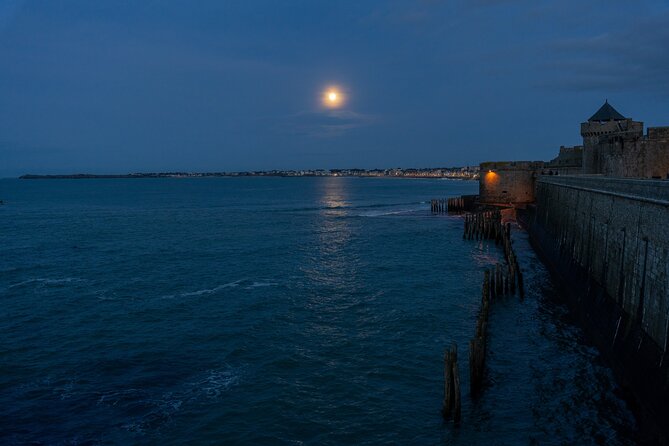
Bastion de la Reine is a key rampart stop, described as a formidable part of the defenses. If you’ve ever looked at ramparts and thought they’re just thick stone, this is the type of narration that gives them purpose. You’ll hear about the strategic importance of the bastion, so it reads like an active defense position rather than a static view.
Then comes Bidouane Tower, tied to the story behind the name of the walking area known for the dancing cat street. Even if you don’t care about urban legends, it helps to have a “human” thread in a city built around fortification. It turns your eyes to details you’d otherwise miss.
This portion of the tour is also where you’ll likely start noticing how the city’s defensive design shapes your walking rhythm. You’re not just strolling; you’re moving along routes that were built to control movement, sightlines, and access.
Champs-Vauvert Cavalier to Les Remparts: views with purpose
As you walk along Champs-Vauvert Cavalier, the narration adds historical context while you’re up high enough to see. These rampart sections are where Saint-Malo’s sea-and-stone combination becomes real. You’ll get stunning views, but you’ll also understand what you’re seeing and why the placement mattered.
Then you move along Les Remparts de Saint-Malo, the famous ramparts. This part is great for photographers and for anyone who simply wants to pause and look. One real-world consideration: this audio route doesn’t aim to take you on every single stretch of wall. It focuses on key defense points and gates, so if you’re hoping for an exhaustive circuit, you might want to add extra wandering time after.
The payoff is that the story stays coherent. You’re not hopping randomly; each segment tends to connect to the next, so the city’s defenses feel like a plan instead of scattered leftovers.
Place du Quebec and House Quebec: Breton-to-Canada links
One of the coolest “wait, what?” moments in the tour is Place du Quebec and House Quebec. The narration explains the connection between Saint-Malo and Quebec, and it gives this wall-and-gate walk a wider world feel. You’re still in the same streets, but suddenly the city isn’t only looking outward defensively—it’s also part of a bigger historical web.
This matters because it changes how you remember the walk. Instead of only thinking of ramparts, you leave thinking about names, voyages, and connections. Saint-Malo is famous for maritime life, and this section keeps that theme moving.
If you’re traveling from outside France, this is an especially good section to pay attention to. It gives you a tangible reason to care about the city’s maritime legacy beyond scenery.
Holland Bastion, Jacques Cartier, and more gates before the cathedral
You’ll reach the Holland Bastion, where there’s a statue of Jacques Cartier. The audio explains his voyages and his connection to Canada, tying the earlier Quebec stops into one clear arc. It’s a strong moment because the statue sits in a fortified context—history literally placed along the city’s defensive line.
After that, you pass Porte Saint Pierre, another historical gate that adds more detail about fortifications. The walk keeps returning to entry points because gates are where defense and daily access meet. You learn to see them as planned chokepoints rather than just old stone entrances.
Then you end up at Place du Guet, a charming square where the narration highlights how the spot fit into the city’s past and strategic importance. From there, the tour continues to Saint Vincent Cathedral of Saint Malo, where prominent individuals (including Jacques Cartier) are buried. You’ll get context on the cathedral’s history and architectural features, which gives the walk a quieter, more reflective finish.
Finally, you end at the Big Gate (Grand Prte). Finishing at a major gate feels satisfying because it brings the defense theme full circle.
Price and practical tips: getting value from your $8.99 audio guide
Let’s talk value first. At $8.99, you’re not paying for a museum ticket or a live guide. You’re paying for an audio story that runs while you walk the city’s most important defense points. For one hour to 1 hour 15 minutes of guided clarity, that’s solid value, especially if you like learning as you go.
Here’s how to make it even better:
- Bring your own headphones and a charged phone. Your device handles audio and GPS.
- Use offline access before you start. Download audio, maps, and geodata so you don’t lose guidance.
- Plan for pauses at sea views. Stops like Chaussée du Sillon and the rampart viewpoints are the moments you’ll actually remember.
- If you want interior visits, budget time and tickets. Entry fees for museums or attractions mentioned are not included.
- If pronunciation matters to you, slow down the audio mentally. The narration can run quickly, and some names may not sound how you expect if you’re picky about French sounds.
Also keep in mind this is a private activity in the sense that only your group participates. You’re not joining a big walking crowd, which makes it easier to stop, look, and continue without pressure.
Who should book this self-guided Saint-Malo audio walk
I think this works best for you if:
- You like independent walking but still want clear directions.
- You’re interested in fortifications, gates, and how cities defend themselves.
- You want an English audio tour that connects places to famous names and maritime links.
- You’re planning a short visit and need a tight route that makes the city’s layout make sense.
It’s also a good pick if you’re traveling with someone who hates slow museum pacing but does enjoy outdoor history. The route is built around being outside, using viewpoints, and hearing explanations in the exact spot where they apply.
If you’re the type who wants every wall segment and every possible stop crammed in, this may feel a bit curated. It’s not trying to be an unlimited ramparts marathon. It’s aiming to be efficient and understandable.
Should you book this Saint-Malo audio guide?
Book it if you want the easiest way to turn Saint-Malo’s walls and gates into a story you can actually follow in real time. The GPS mapping, offline features, and English narration make it a practical choice, and the stops connect military engineering to names and places you’ll recognize.
Skip it or add planning time if you need a slower narration pace, very precise French pronunciation, or a full circuit of every rampart stretch. For a one-session overview that leaves you with a stronger sense of how Saint-Malo resisted invasion and stayed connected to the wider world, this is a smart buy.
FAQ
How long is the Saint-Malo Secrets audio guide?
It takes about 1 hour to 1 hour 15 minutes.
How much does it cost?
The price is $8.99 per person.
What languages are available?
It’s offered in English, including English audio and English written content.
Where does the tour start and end?
It starts outside the Office de Tourisme de Saint-Malo (Esp. Saint-Vincent) and ends at the Big Gate (Grand Prte).
Do I need headphones?
Yes. You need to bring your own smartphone and headphones.
Can I download the tour for offline use?
Yes. Audio, maps, and geodata are available for offline access.
Can I reuse the tour after I book?
Yes. You get unlimited, lifetime use before your booking date and after it.
Is this a guided tour with a person leading the group?
No. It’s an audio guide with self-guided GPS, and it’s described as a private activity for your group.
Are entry fees included for stops along the way?
No. Entry fees to museum or attractions mentioned en route are not included.
What is the cancellation policy?
Free cancellation is available. You can cancel up to 24 hours in advance for a full refund, based on the local experience time.