REVIEW · DURANGO
Million Dollar Highway Self-Guided Driving Audio Tour
Book on Viator →Operated by Guide With Action · Bookable on Viator
One road, 50+ stories. What makes this drive feel special is the offline audio that works with no SIM and hands-free playback that starts stories automatically as you pass each spot. You’re not stuck with a bus schedule, and you’re getting the kind of roadside context that turns roadside stops into real moments.
I also like the built-in pacing: you can start when you want, pause when you want, and keep moving without herding anyone. The single biggest catch is practical: you must download the tour while you have strong wifi/cellular and start it from the correct starting point, or the app may not behave the way you expect.
Think of it as a guided road trip you control—history, movie trivia, waterfalls, high passes, and ghost-town echoes—served one audio cue at a time.
In This Review
- Key things to know before you go
- Offline-First Driving: How the audio tour actually works
- Price and value: why one purchase per car makes sense
- Durango to Ouray in 2–3 hours: what the timing feels like
- Durango and Otto Mears: start with the man who made it
- Animas River Trail, Pinkerton Hot Springs, and Baker’s Bridge
- Haviland Lake, Molas Pass, and Molas Lake: where the altitude shows up
- Silverton’s older roots and Ironton’s ghost-town silence
- Bear Creek Falls and Ouray: the payoff scene by scene
- Using this tour like a pro: car audio, quick stops, and smart breaks
- Who should book: perfect fit and realistic expectations
- Should you book this Million Dollar Highway audio tour?
- FAQ
- Where does the Million Dollar Highway self-guided tour start and end?
- How long does the tour take?
- Do I need a SIM card or cellular signal while driving?
- How do the audio stories play while I drive?
- Can I pause the tour or start later?
- What’s included in the price?
- What do I need to do before I start?
- Can I play the tour through my car stereo?
- Is there free cancellation?
- Does this tour include a guided group?
Key things to know before you go
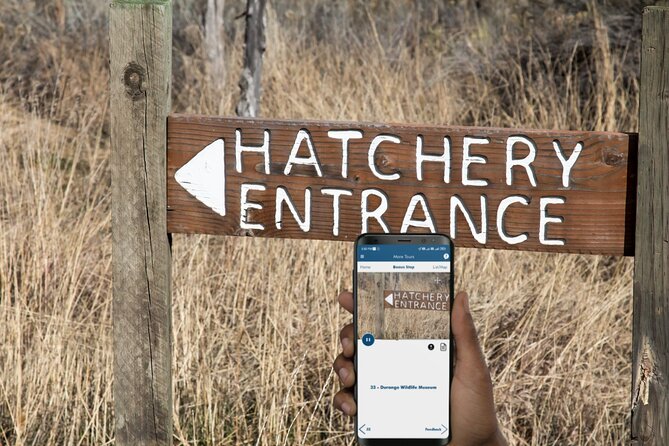
- Offline by design: maps and audio work without signal after you download.
- GPS-triggered stories: audio plays based on your location, so you don’t need to tap every few minutes.
- Value per car: you buy once per group (up to 4), which can beat per-person tours.
- Northbound route structure: the tour runs Durango to Ouray, with a clear ending at the visitor center.
- Photo-and-picnic timing: most stops are short, with a few longer breaks where nature is the point.
- Seasonal Ouray add-ons: ice-climbing focus in winter months, plus Box Canyon Falls Park views.
Offline-First Driving: How the audio tour actually works
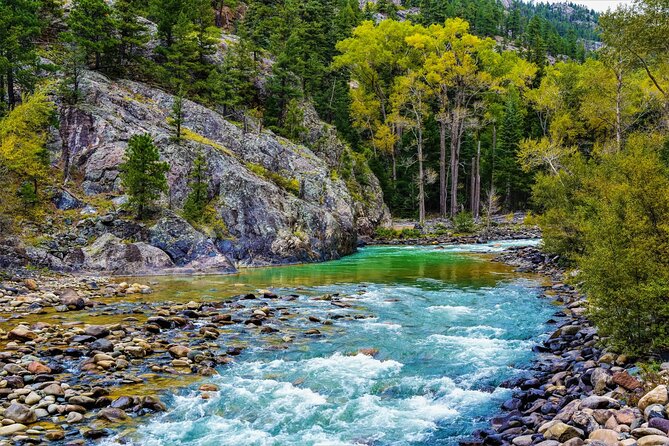
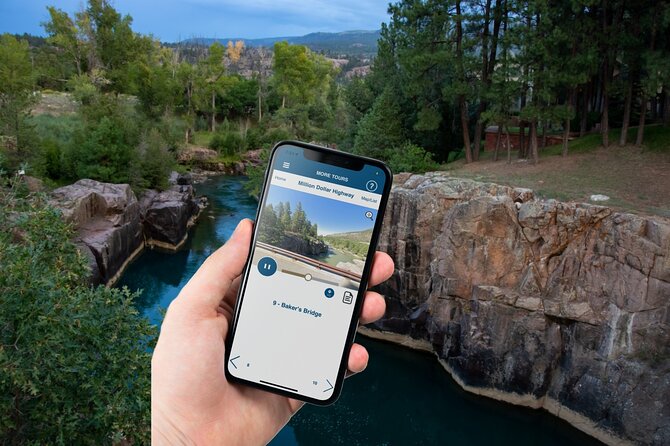
This is a self-guided driving tour built around location-based listening. Once you’re onsite, you open the separate audio app, enter the password sent to you by email/text, and start the correct tour version for your direction and starting point. After that, the stories are designed to begin on their own as your phone tracks where you are along the route.
The big win is that the tour is meant to run offline. You won’t be hunting for bars on the Million Dollar Highway, and you won’t have to worry about wasting your data just to hear the next stop. The only time you need connectivity is before you start, when you download the tour content while you have strong wifi/cellular.
For sound, you’ve got options. You can connect your phone to your car stereo using Bluetooth, USB, or AUX. If you want the cleanest experience (especially for quick pull-offs), headphones work too. The audio also fits with Apple CarPlay, and Android Auto support is noted as coming soon.
You can also read our reviews of more tours and experiences in Durango.
Price and value: why one purchase per car makes sense
At $16.99 per group (up to 4), this tour is priced like a road-trip tool, not a high-cost guided excursion. The way it’s structured matters: it’s not per person, so families and friends can split the cost without math gymnastics.
Also, you’re paying for more than narration. You’re paying for a route plan that nudges you toward meaningful stops—so you’re not just driving through scenery hoping you’ll remember what you saw. If you’ve ever done a drive and thought, I wish someone had told me what that bridge or that ghost town meant, that’s exactly what this format tries to prevent.
Then there’s the unusual perk: new lifetime access, no expiry. That means you can reuse the tour later—on a second trip, on a different weekend route, or even from home to replay the stories while you map your next Colorado idea.
Durango to Ouray in 2–3 hours: what the timing feels like
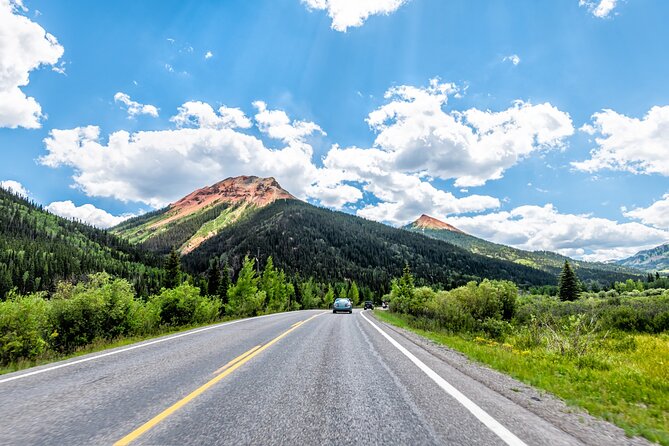
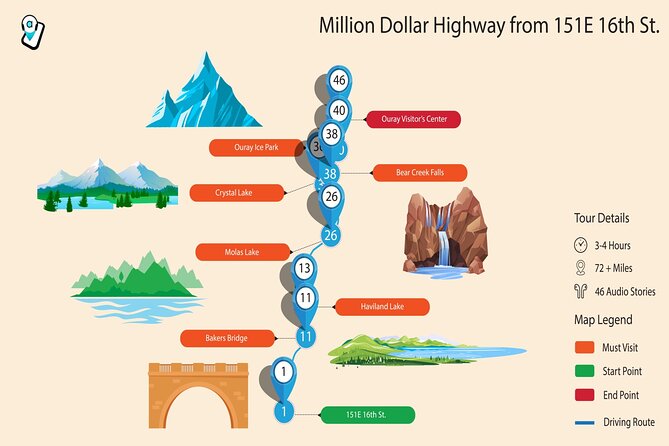
The route runs about 72 miles and is designed to take roughly 2–3 hours to complete. In real life, your timing depends on how often you pull over for photos and how long you linger at the few stops that are truly worth getting out.
Most audio segments are around 5–10 minutes, and that’s a useful rhythm. It keeps you moving through the dramatic stretch without turning every stop into a long hike. The route also ends in Ouray at the visitor center, which helps you avoid the classic self-guided problem of not knowing where your day “officially” closes.
If you’re driving with kids, this structure tends to work well. You get variety—water, hot springs, movie location trivia, and mountain overlooks—without constant navigation tasks. Just remember: you’re still on a highway. Drive first, listen second, pull over when it’s safe.
Durango and Otto Mears: start with the man who made it
Your tour begins in Durango, where the narration sets the stage with Otto Mears—the person tied to turning a rough railroad camp into a destination. That matters because the Million Dollar Highway isn’t only about views. It’s also about how access changed the whole region, how towns grew, and how roads stitched communities together.
As you drive through Durango, you’re essentially getting an orientation briefing before the route turns wild. You’ll also get a feel for why people still talk about this area like it’s both historic and dramatic at the same time.
Practical tip: treat this first stretch like a warm-up. Don’t worry about perfect timing. Just use it to get the audio synced, connect to your car stereo if you’re using it, and set your expectations for a scenic drive with frequent quick stops.
Animas River Trail, Pinkerton Hot Springs, and Baker’s Bridge
The next part of the route leans into water and storytelling. You’ll pass the Animas River, a 126-mile tributary of the San Juan River. The story behind the name adds an edge—this isn’t just calm sightseeing water, it’s part of a bigger exploration and naming history.
Then comes Pinkerton Hot Springs, tied to James Pinkerton, who built a resort and hotel by the springs. The resort is gone, but the narration highlights what the area was like in the past—and includes the fact that the resort also functioned as an illegal speakeasy during prohibition. That’s the kind of detail that makes a roadside stop feel like a scene from real life, even if you’re only there briefly.
After that, you get the movie-lovers payoff at Baker’s Bridge Veterinary Clinic. The narration points you to the spot where Paul Newman and Robert Redford made their famous leap into the Animas River in Butch Cassidy and the Sundance Kid. Even if you’re not obsessed with the film, it’s a fun reminder that this drive has served as cinematic backdrop—and that the geography is doing the heavy lifting.
What to watch for: these stops are short. Pull over where you can safely park, and don’t assume you can linger on the shoulder. Your best photos usually come from being intentional and quick.
Haviland Lake, Molas Pass, and Molas Lake: where the altitude shows up
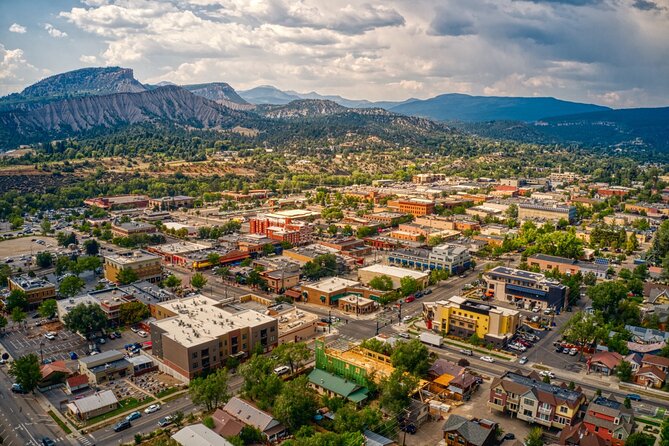
This stretch gives you “break from driving” options, and it’s also where you’ll start to feel the mountain geography more clearly.
At Haviland Lake, the focus is on a calm pause: shaded by towering pines, with a good spot for a picnic or a chilly swim. It’s also described as a no-wake lake, which usually means the water feels less like a traffic lane. Behind it, you get views of the Hermosa Cliffs, so even if you don’t swim, you’re likely to want a photo or two.
Next is Molas Pass, which rises to 10,910 feet. That’s high enough that the road feels serious, and the narration points out something fun: Molas Pass is also part of an annual bicycle racing route. You might see cyclists there (depending on season), and the contrast between scenic driving and hard athletic climbing is exactly what makes pass-country feel real.
Then you reach Molas Lake, presented as pristine and very cold, with views toward the San Juan Mountains and the Weminuche Wilderness. This is an ideal “get out for a moment” stop. Even a quick stop feels different because glacial history is part of the story, not just the scenery.
Time-management note: treat these stops like quick resets, not full-day hikes. The tour is structured to keep you flowing. If you want long breaks, plan to go slower than the tour’s pacing on purpose.
Silverton’s older roots and Ironton’s ghost-town silence
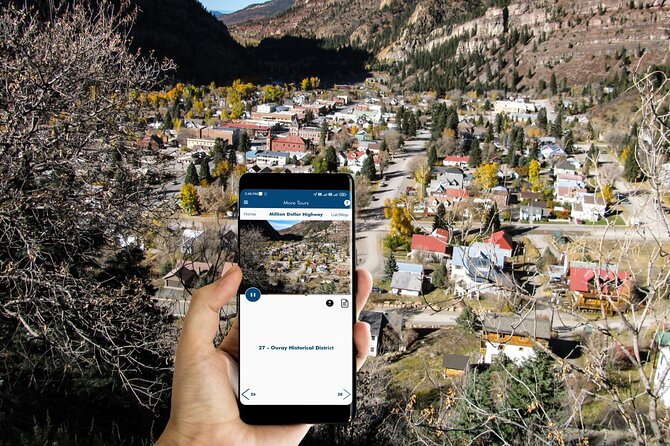
As you drive, you’ll pass Silverton, where the story goes beyond mining dates and mules. The narration explains that the land’s history goes back before miners arrived, including the Ute tribe who once called this their home—and what happened after the mining rush began. It’s a reminder that these mountain towns weren’t starting from scratch; they were changing lands people already lived in and shaped.
Then comes Ironton, the remains of a once-booming iron mining town. Today it’s a ghost town, left behind when operations went bust. The narration adds a clear human marker: the last Ironton resident died in 1960. That detail gives the place weight, so it doesn’t just feel like ruins for photos—it feels like a timeline you can drive past.
Consideration here: ghost towns are easy to skim. If you’re tempted to just glance from the car, this is one of those moments where stepping out for a minute can change how the whole drive lands. Even ten minutes of attention makes the quiet feel intentional.
Bear Creek Falls and Ouray: the payoff scene by scene
The route builds toward Ouray with two big “wow” categories: waterfalls and mountain-town energy.
First is Bear Creek Falls, a 200-foot cascading waterfall. The narration flags fall foliage as especially good here, which makes sense: when the trees change color, a waterfall gets a second frame. This is one of the shorter stops, so be ready to decide quickly: do you want a view from where you park, or are you walking to get a better angle? Either way, it’s a strong payoff for the time.
Then you enter Ouray, nicknamed the Switzerland of America. The point of the narration isn’t just that it looks pretty. It’s that the town is packed with things to do—ice experiences, waterfalls, parks, and classic “wander without a plan” potential.
The tour calls out two Ouray highlights with season awareness. From December to March, Ouray Ice Park offers winter experiences, including climbing an enormous ice wall created for that purpose. If you’re visiting outside winter, don’t expect that exact setup—but the story still helps you understand why people target Ouray in cold months.
Next is Box Canyon Falls Park. The narration describes towering canyon walls and hiking trails, with scenic picnic options. The main attraction is the huge waterfall tumbling over the canyon edge, and you can view it from both below and above. In other words: even if you don’t do big hikes, you still get options.
You finish with the Ouray Historical District—Victorian-era homes and commercial buildings, plus an opera house saved from demolition. Then the tour ends at the Ouray Visitor’s Center, a handy place to reset and decide what you want to do after the drive.
Using this tour like a pro: car audio, quick stops, and smart breaks
Here’s how to make the app feel effortless.
Start early enough that you have daylight for pull-offs. The tour notes opening hours of 6:00 AM to 9:00 PM, which gives you room to choose a time that matches your photo priorities and weather.
Before you leave home, plan your download. You must download the tour while you have strong wifi/cellular. Once downloaded, the audio and offline maps are supposed to be solid even without signal. This is exactly what you want on a remote-feeling highway, but it only works if the pre-download happens cleanly.
In the car, keep audio playing through the stereo so everyone hears the same thing. Many people like these tours because the narration is designed to line up with what you can see from the windshield. If you choose headphones instead, you can still do it hands-free, but you’ll be the only one “in the story” unless you pass the phone around.
For photo timing, don’t wait until the last second. The stops are structured, so you’ll have a window to park, look, and shoot. If you miss a spot, don’t worry—many of these sites are short enough to re-find with simple roadside awareness once you know what to look for.
One balanced caution: if something doesn’t sound right—audio not triggering or the app looking odd—pause and check that you launched the right tour version and that you started at the correct direction starting point. The tour data emphasizes that you choose the version based on your planned starting point and direction.
Who should book: perfect fit and realistic expectations
This tour is a great choice if you want:
- A self-guided drive without a big-group pace
- Offline storytelling for a highway where cell service can be unreliable
- A road trip that’s family-friendly, since the stop rhythm and narration help you notice things you might otherwise pass
- History, film trivia, and nature all in one package, without studying maps ahead of time
It may not be your best fit if you:
- Want a fully guided, stop-by-stop experience where someone physically tells you what to do at each location
- Expect the ability to start anywhere and go in any direction (the tour is designed around starting point and direction selection)
If you like the idea of learning as you go, and you’re comfortable driving responsibly while listening, this is one of those purchases that can turn a familiar scenic route into a story you’ll remember.
Should you book this Million Dollar Highway audio tour?
Yes, I’d book it if you’re doing Durango to Ouray and you want your drive to have structure. The offline feature is the practical backbone, and the GPS-triggered audio is the reason it feels like a real guide instead of a random podcast.
It’s also good value: one purchase per group, short stop windows, and lifetime access mean you’re not just buying for a single afternoon. Just do the small prep steps—download while you have strong signal, and make sure you launch the right direction from the correct starting point—so the experience stays smooth.
If your main goal is slow travel with long hikes or a deep tour with guides on site, you might prefer a different style. But for a clean, affordable, learn-as-you-drive road trip through Durango, the passes, Silverton, Ironton, Bear Creek Falls, and into Ouray, this one is a strong match.
FAQ
Where does the Million Dollar Highway self-guided tour start and end?
It starts in Durango and ends in Ouray at the visitor’s center.
How long does the tour take?
The tour route is about 72 miles and typically takes 2 to 3 hours to complete.
Do I need a SIM card or cellular signal while driving?
No. After you download it, the tour works offline with no signal needed.
How do the audio stories play while I drive?
The app uses your location so audio stories play automatically at each stop based on where you are.
Can I pause the tour or start later?
Yes. The tour is designed so you can start anytime on the day you’re using it and pause for breaks, snacks, or photos.
What’s included in the price?
You get the offline audio tour, including storytelling, route-based stop content, and hands-free playback. Attraction passes or entry tickets are not included.
What do I need to do before I start?
After booking, you receive setup instructions and a password by email/text. You need to download the tour while you have strong wifi/cellular, then it works offline afterward.
Can I play the tour through my car stereo?
Yes. The audio setup supports connecting your phone to your car via Bluetooth, USB, or AUX. It’s also compatible with Apple CarPlay, and Android Auto support is noted as on the way.
Is there free cancellation?
Yes. You can cancel for a full refund up to 24 hours in advance of the experience’s start time.
Does this tour include a guided group?
No. It’s self-guided and private, so only your group participates. No one meets you at the starting point.