REVIEW · OSLO
Discover Oslo: Self Guided Audio Tour
Book on Viator →Operated by Citywalksz Ltd · Bookable on Viator
Oslo makes sense on foot with audio help. This self-guided walk strings together big names from Akershus Fortress to the Nobel Peace Center, and it explains how the sea shaped Oslo for 800 years. I love the freedom to set your own pace and the built-in GPS map that keeps you moving in the right order. One catch: if you expect lots of hand-holding and deep narration, the guidance may feel thin for the $15.29 price.
You’ll download audio files to your phone, plug in headphones, and follow the map at your speed. The tour is English-only, runs about 2 hours (you can pause for breaks), and it’s designed for walking rather than riding around town.
In This Review
- Key things to know before you go
- What You’re Paying $15.29 For (and What You Bring)
- How the Sea Story Changes the Way You See Oslo
- Akershus Castle and Fortress: Oslo’s Shoreline Defense
- Norwegian National Opera & Ballet: Walkable Architecture
- Oslo Cathedral: A Calm Reset in Old Stone
- Oslo City Hall and the Edvard Munch Room
- Nobel Peace Center: Thinking Through War and Peace
- Fram Museum: The Wooden Explorer Fram
- Kon-Tiki Museum: Heyerdahl’s 1947 Voyage and the Raft
- Timing and Walking Reality: Making 2–3 Hours Work
- Who This Self-Guided Oslo Walk Suits Best
- Should You Book Discover Oslo: Self Guided Audio Tour?
- FAQ
- How long is the Discover Oslo self-guided audio tour?
- Is admission included in the price?
- Do I need an audio device?
- What language is the audio available in?
- What does the tour include?
- Where does the tour start and end?
- Can I pause and take breaks?
- What is the cancellation policy?
- Is it near public transportation?
Key things to know before you go
- A sea-focused story for 800 years ties the stops together, instead of treating each sight like a separate postcard.
- GPS map + audio files help you stay oriented without a live guide.
- Every stop is timed to about 15 minutes, which keeps the walk from dragging.
- Great mix of viewpoints and museums: fortress, opera roof, cathedral calm, then polar and exploration museums.
- Admission varies a lot: some places are free, others cost extra since tickets aren’t included.
- Max 50 travelers means the company runs it with some limit, even though it’s self-guided.
What You’re Paying $15.29 For (and What You Bring)

At $15.29 per person, this is priced for the audio experience, not museum entry. There’s no live guide included, and admission fees aren’t part of the deal. So you’re really paying for the convenience: downloaded narration plus a GPS walking plan that stitches together Oslo’s highlights into one route.
I like that setup because it’s flexible. You can linger at Akershus if the light is good, then speed up through the City Hall art rooms if you’re on a mission. If you’re the kind of traveler who hates being herded, that’s a win.
But you should go in with the right expectations. Since the audio guide is the only “guide,” you won’t get the back-and-forth answers you might get from a person. And with an overall rating of 3.4, including at least one blunt complaint about limited guidance for the cost, I’d call this a good choice for independent walkers—not for people wanting maximum storytelling.
Practical note: you need your own audio device. The tour does not include an audio device. You’ll also want headphones and a charged phone.
You can also read our reviews of more tours and experiences in Oslo.



How the Sea Story Changes the Way You See Oslo
This tour’s main idea is simple: the sea mattered to Oslo for about 800 years, and you can feel that influence in how the city developed and how people lived. That theme pays off because it gives your stops a common thread.
Here’s how I’d use that idea while walking: don’t just look at buildings as objects. Ask what each place says about ships, trade, travel, survival, and exploration. Oslo’s history isn’t only about kings and cathedrals. It’s about routes, weather, and reaching far places—often by water.
Once you start noticing that pattern, even the museum stops feel connected. The polar expeditions at the Fram Museum and the sailing story at the Kon-Tiki Museum don’t feel random. They’re part of the same Oslo-as-a-sea-city mindset.
Akershus Castle and Fortress: Oslo’s Shoreline Defense
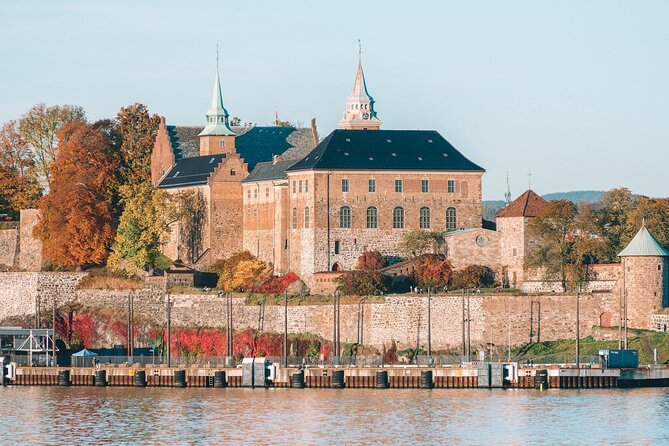
Start with Akershus Slott og Festning at the water’s edge. This fortress is one of the most dramatic sights in Scandinavia, and it wasn’t built for decoration. It was built to protect Norway’s capital, using its shoreline position to spot enemy ships early—before they reached the shore.
What I like about beginning here: it sets the tone fast. You get a sense of how geography controls history. If you pay attention to the setting while the audio plays, the sea theme makes immediate sense.
Plan for a short visit (about 15 minutes), but don’t feel locked into the clock. If you’re drawn to walls, towers, and the big idea of coastal defense, you might spend a little longer just soaking in the views and the scale. Admission isn’t included here, so budget extra if you decide you want the interior access.
Norwegian National Opera & Ballet: Walkable Architecture
Next up is the Norwegian National Opera & Ballet. The building is described as encouraging visitors to walk up onto the roof, which is a huge part of why this stop works on a self-guided route. You don’t need a ticketed “guided” moment to enjoy it. You can treat the roof as your viewpoint break.
Two useful details from the audio theme: this is Norway’s largest performing arts institution, employing over 600 people, and the building itself is modern in how it invites you to participate as you explore. If you’re tired from museums and want something more like a city stroll with a view, this is it.
Admission isn’t included, and the stop is about 15 minutes. I’d use that time to enjoy the roof walk (weather permitting) and then keep moving—because the next stops slow down into more reflective spaces.
Oslo Cathedral: A Calm Reset in Old Stone
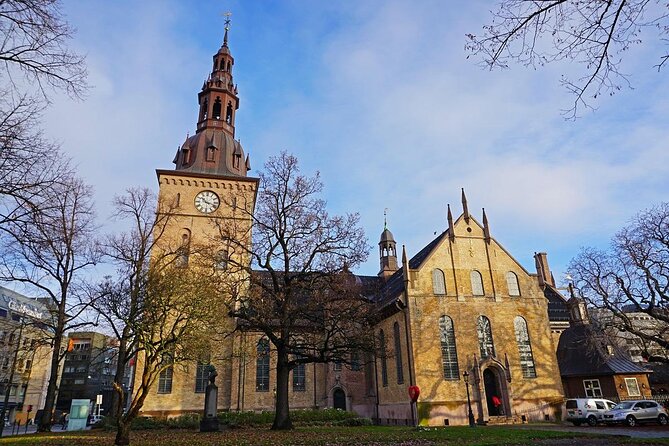
Then you get a breather: Oslo Cathedral. This is a peaceful stop, and it’s the kind of place where the audio can make sense without you rushing. The cathedral was consecrated on November 7, 1697, and it serves as Norway’s official church, with many national, parliamentary, and royal events held here.
The best way to enjoy this stop is to use it as a mental pause. Don’t treat it as a checkbox. Take a few minutes to look around and let your walking rhythm reset before you head into more civic and museum spaces.
The good news: admission is free. The stop is about 15 minutes, so it fits the tour’s pacing nicely, especially if you don’t want to spend your entire afternoon inside.



Oslo City Hall and the Edvard Munch Room
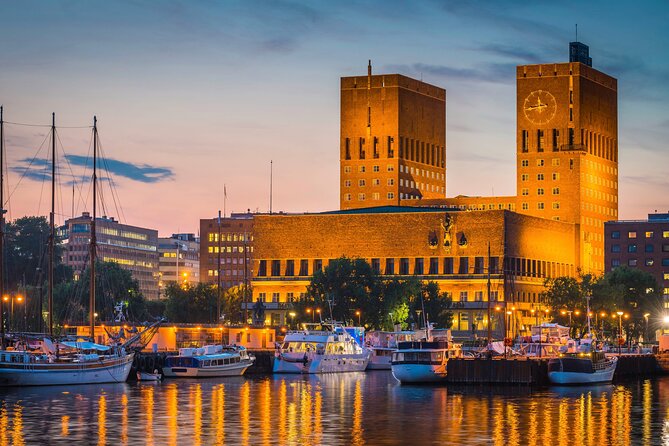
Oslo City Hall is where you trade fortress drama and cathedral stillness for public art and civic pride. The main feature is its art collection, which draws over 300,000 visitors each year. The audio points you to a room dedicated to Edvard Munch, which is worth planning around if you’re an art fan.
This is also a nice stop for people who prefer visual storytelling. Even if you skim parts of the audio, the art itself gives you something to react to. The tour’s self-guided setup helps here: you can spend an extra minute with the parts that grab you.
Admission is free, and the stop is about 15 minutes. If you’re moving quickly, you may feel like you barely scratched the surface. If you’re slower, you might want to pause the audio so you don’t feel rushed.
Nobel Peace Center: Thinking Through War and Peace
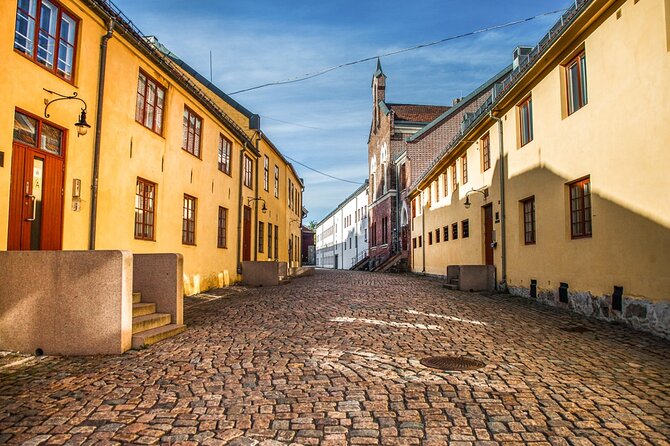
Next comes the Nobel Peace Center, built as a place for exhibits, discussions, and reflections about war and peace. This stop is powerful because it pushes you to think beyond facts and dates. Instead of a typical “here’s what happened” museum format, it’s set up for reflection and dialogue.
Admission isn’t included here, and the stop is about 15 minutes, so I’d treat it like an overview and a mood-check rather than a full museum day. If the exhibits catch your eye, you can always stay longer on your own after the audio segment ends—but the timed structure is there to keep your overall walk manageable.
I also like that this stop fits the sea-throughline. Exploration museums come after this, but the peace theme gives the route emotional balance. It reminds you that how humans move through the world includes conflict, negotiation, and big moral questions—not only adventure.
Fram Museum: The Wooden Explorer Fram
The Fram Museum shifts the story toward polar exploration. It tells the history of polar expeditions Norway has participated in, and the centerpiece is the wooden polar explorer ship, Fram.
This is one of those stops where the audio makes your time feel structured. Instead of wandering around and hoping something clicks, you have a narration that guides you toward the “why it matters” part of the ship story.
Admission isn’t included, and the stop is about 15 minutes. With a museum anchor like Fram, you can get a lot done fast if you focus on the ship as the main attraction. If you’re the type who wants to read everything on every panel, you’ll likely go over the time allotment.
Still, even a shorter visit works because the ship is visual and dramatic. You don’t need a long explanation just to feel the scale and the ambition.
Kon-Tiki Museum: Heyerdahl’s 1947 Voyage and the Raft
Finally, you reach the Kon-Tiki Museum. It houses vessels and maps from Thor Heyerdahl’s 1947 Kon-Tiki expedition, including the raft used for the voyage. The audio frames the importance of those voyages as evidence that people mastered sailing long before the saddle and the wheel were invented.
This stop is a great “capstone” because it’s both an adventure story and a historical argument. It connects the sea theme from the city itself to the wider world of travel and navigation. When you listen while looking at the maps and artifacts, you get a stronger sense of how technology and human curiosity work together.
Admission isn’t included here, and the segment is about 15 minutes. If you have a bit more time, this is a museum where slowing down can pay off, especially if you like exploration history more than fine art or politics.
Your tour ends at the area of the Norwegian Museum of Cultural History (Museumsveien 10, 0287 Oslo), which is where these sights are clustered.
Timing and Walking Reality: Making 2–3 Hours Work
The tour is built for roughly 2 to 3 hours, with each stop timed to around 15 minutes. There’s also built-in flexibility: you can pause the audio whenever you need a break, to grab food, or to shop.
Here’s how I’d manage that time:
- Start when you’re fresh. There’s a start time listed as 9:00 am, which is a solid choice if you want daylight for outdoor views.
- Treat the 15-minute guideline as a plan, not a rule. If you pause for an extra coffee, just let the next stop run a little shorter.
- Keep expectations realistic about admission. Because some stops are free and others aren’t, your total spend can change depending on what you choose to enter.
The tour also calls for moderate physical fitness and is described as near public transportation. That’s helpful because you’re not locked into a long, all-day trek in one shot. If you’re tired, you can break the route and return later rather than forcing the full chain.
Who This Self-Guided Oslo Walk Suits Best
This tour fits you if:
- you like walking between major sights without getting stuck in a group schedule
- you want English audio that explains the sea-centered Oslo story
- you prefer choosing your own pace, including pausing for food and shopping
- you enjoy a route where museums are part of the journey, not separate errands
It’s less ideal if:
- you want a person to answer questions and adjust the story on the fly
- you expect heavy guided narration in every minute
- you’re very budget-sensitive about admissions, since several key stops aren’t free
Should You Book Discover Oslo: Self Guided Audio Tour?
Yes, if you want a practical way to see Oslo in a few focused hours and you’re happy doing the “guided” part through your phone. The combination of GPS map and a clear sequence of stops makes it easy to move without overthinking logistics.
But don’t buy it expecting a deep, live-guided experience. The audio format is the whole show here—so if your idea of a great tour is a lot of human interaction and detailed commentary, you may feel let down, especially given the complaint about limited guiding for the cost.
If you’re an independent explorer who likes history that connects places into one story, this is a good match.
FAQ
How long is the Discover Oslo self-guided audio tour?
It takes about 2 to 3 hours in total, with the tour described as approximately 2 hours. You can pause the audio when needed.
Is admission included in the price?
No. Admission fees are not included. Some stops are free (Oslo Cathedral and Oslo City Hall), but others require tickets.
Do I need an audio device?
Yes. Audio device is not included. You’ll need your own phone and headphones.
What language is the audio available in?
The tour is only available in English.
What does the tour include?
You get audio files and a GPS map, and it’s self-paced.
Where does the tour start and end?
It starts at Akershus Fortress, 0150 Oslo and ends at The Norwegian Museum of Cultural History, Museumsveien 10, 0287 Oslo.
Can I pause and take breaks?
Yes. The audio can be paused so you can grab a bite to eat or do shopping along the way.
What is the cancellation policy?
Free cancellation is available up to 24 hours before the experience start time for a full refund.
Is it near public transportation?
Yes, it’s described as near public transportation.
If you want, tell me your walking style and interests (art vs museums vs views), and I’ll suggest how long to spend at each stop so the route fits your pace.