REVIEW · MUNICH
Munich: Scavenger Hunt Self-Guided Tour for Children
Book on GetYourGuide →Operated by Stadtspiel Schnitzeljagd GmbH · Bookable on GetYourGuide
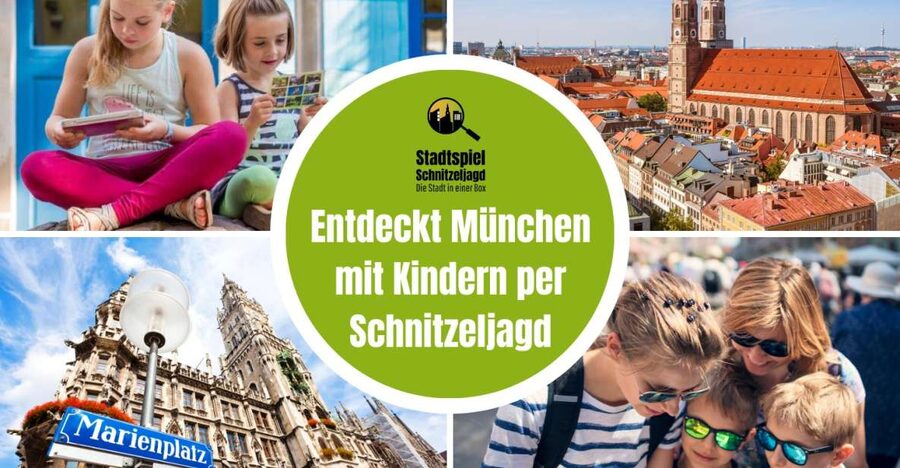
Munich can be a lot with kids, unless you give them a job. This self-guided scavenger hunt turns Munich’s old center into a game, with numbered envelopes that guide you from stop to stop at your own pace. I especially like that it combines big-photo sights with kid-friendly facts, so the walk feels like sightseeing instead of homework.
I also like the flexibility. You can pause whenever you need a break, snap photos, or slow down in crowded spots, all within a simple 150-minute flow. The route hits the heart of central Munich, including Stachus, Frauenkirche, Marienplatz, and Viktualienmarkt, so it feels like you covered real ground.
One possible drawback to keep in mind: the puzzles may feel a bit light for some kids on the older end of the 6–12 range. And since there’s no guide on-site, you’ll be leaning on the envelopes for explanations if your child wants deeper answers.
In This Review
- Key things I found especially good about this Munich hunt
- Why this Munich scavenger hunt feels right for families
- The self-guided format: 8 envelopes, your pace, and an emergency backup
- Starting at Stachus: getting oriented in Munich’s center
- Frauenkirche: Munich’s symbol, explained through clues
- Marienplatz and the Rathaus duo: turning a town-square into a story
- Viktualienmarkt: a food market stop that still works on a puzzle day
- How long 150 minutes really feels with kids
- Price and value: what $47 per group buys you
- Who this Munich scavenger hunt suits best (and who might not)
- Practical details that matter on the day
- Should you book this Munich scavenger hunt?
- FAQ
- Where does the scavenger hunt start?
- Is there a guide with the hunt?
- How long does the Munich scavenger hunt take?
- How much does it cost?
- What sights are included?
- What’s included in the box?
- What isn’t included in the price?
- How do I receive the scavenger hunt?
- Can I choose the time to start?
Key things I found especially good about this Munich hunt
- Start anytime: once your mailed box arrives, you choose the date and time
- 8 numbered envelopes: each one nudges you to the next sight with directions and kid facts
- Built-in pacing: it’s designed for a family walk, not a rushed group tour
- Top Munich landmarks: Frauenkirche, Marienplatz (Altes Rathaus + Neues Rathaus), and Viktualienmarkt
- A safety net: an emergency envelope includes solutions if you get stuck
Why this Munich scavenger hunt feels right for families
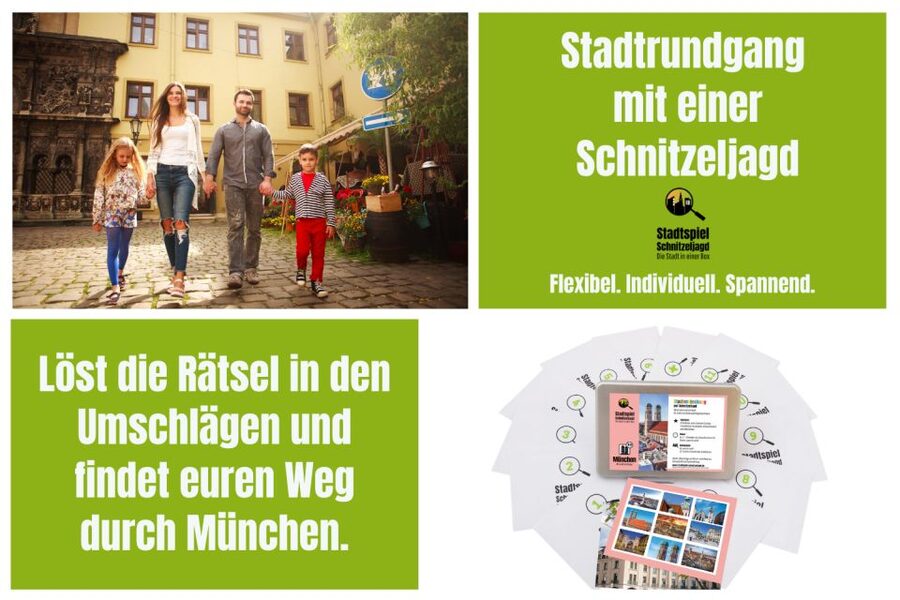
This is the kind of activity that works because it respects attention spans. Instead of marching through attractions, you’re solving mini challenges that naturally pull you toward the next landmark.
The other win is that adults don’t feel like they’re just babysitting. The envelopes mix history and landmark info with kid-friendly facts, so grown-ups can follow along and learn a few things too.
And because it’s self-guided, you’re not trapped in a strict schedule. That matters in Munich, where crowds, weather, and kids’ energy can change minute to minute.
You can also read our reviews of more tours and experiences in Munich.
The self-guided format: 8 envelopes, your pace, and an emergency backup
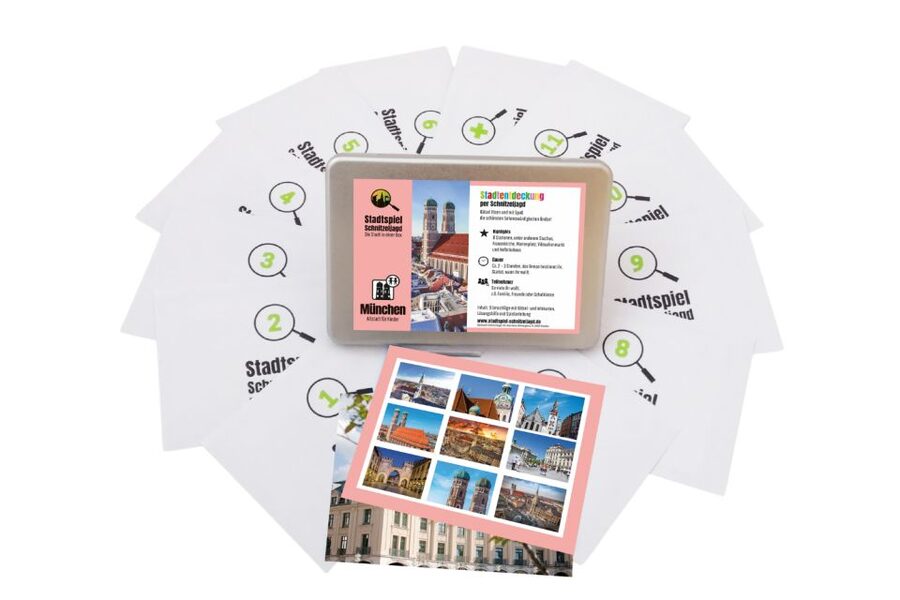
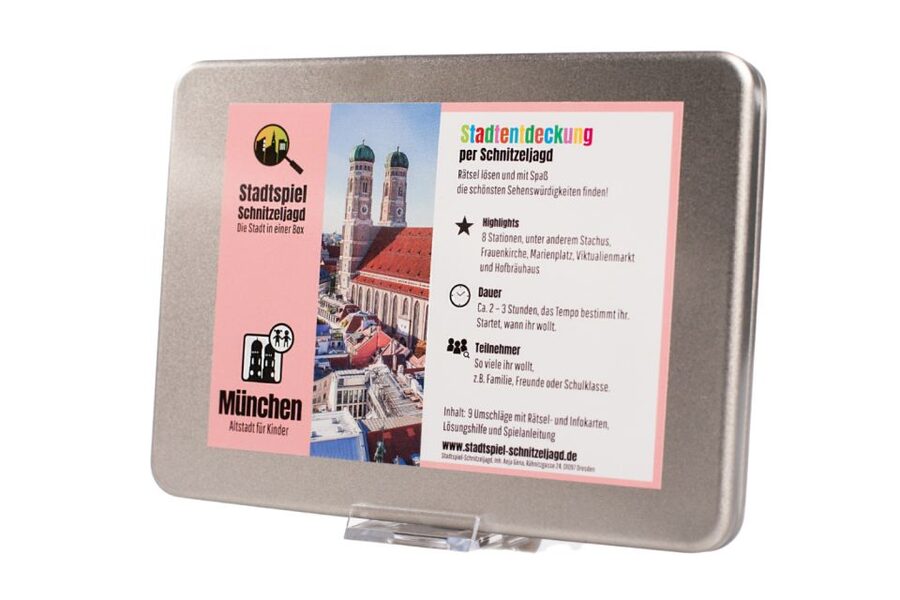
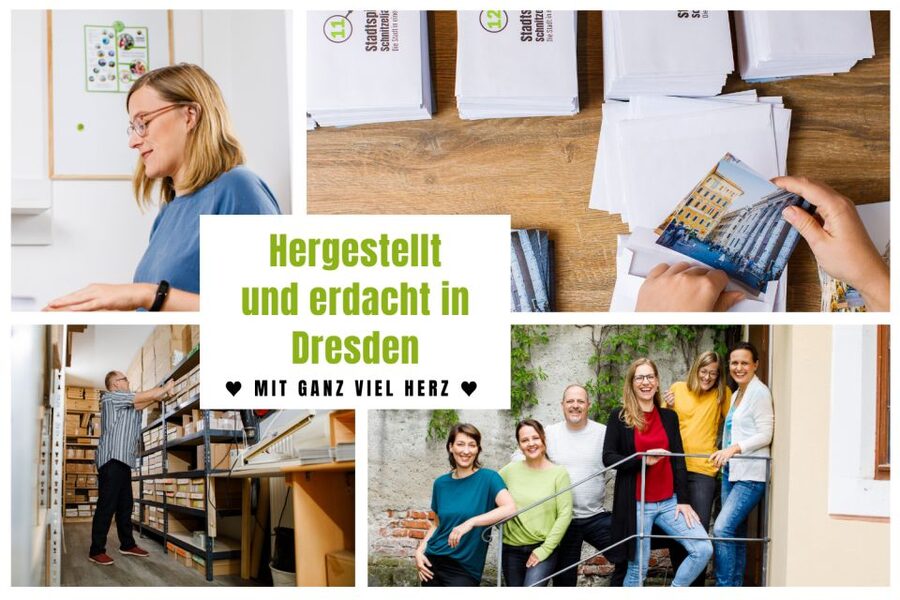
The experience is built around a scavenger hunt box you receive via mail. Inside, you’ll get eight envelopes with riddles, directions, and information, plus an emergency envelope with all the solutions.
Here’s how that translates into real-life usefulness for your day:
- You don’t need Wi-Fi or a phone to “play,” since the numbered envelopes do the work.
- You control the pace. If you want to linger, stop for snacks, or re-check a clue, you can.
- You can pause to take photos without breaking the game.
The “no guide” setup is important. You won’t have someone there to interpret what your kids are seeing in real time, so the envelope text is your main source of context. If your family likes structured explanations, you might want to be ready to read the clues closely together.
Starting at Stachus: getting oriented in Munich’s center
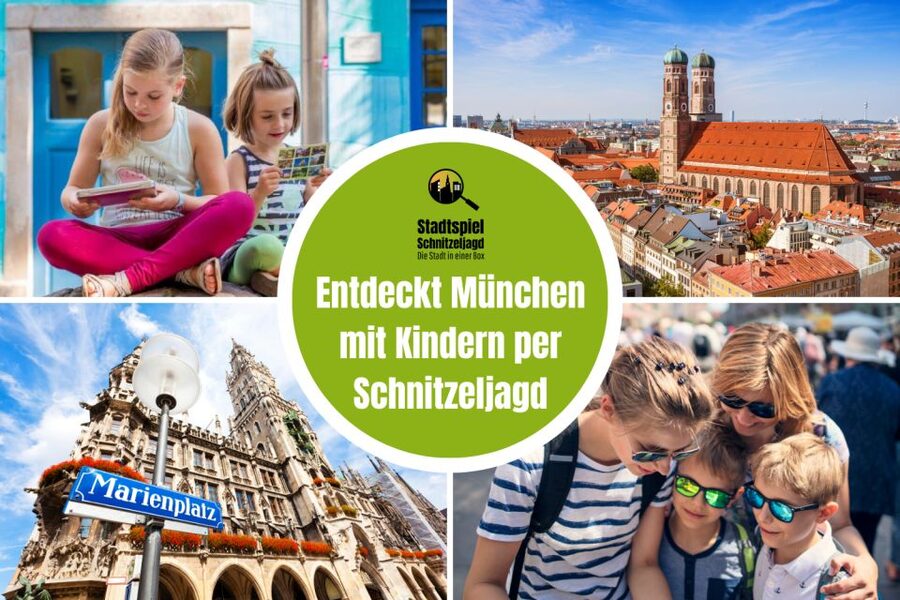
The hunt begins at Stachus, the large central square in Munich. Think of this as your orientation moment: you’re right in the middle of the old-town flow, with easy access to major sights.
Practically, this is a smart start with kids. Starting in a big open square lets everyone gather, read the first instructions, and get moving before you hit the tighter streets.
Also, because the route is designed to lead you forward sight-by-sight, you’re not relying on map skills during the most distracting part of the walk. The envelopes do that job for you.
Frauenkirche: Munich’s symbol, explained through clues
One of the best parts of this hunt is that it treats Frauenkirche like a “mission,” not just a stop. The cathedral is described as the symbol of Munich, and you’ll get kid-friendly information tied to the questions.
What I like about this approach is that it gives your child a reason to look up, not just walk past. When kids are hunting for answers, they tend to notice details adults often miss, like the overall shape and presence of a landmark.
A fair consideration: the hunt is self-paced, so you’ll want to manage expectations if you pass by quickly. If you want the cathedral moment to land, slow down enough to read what the envelope asks for before moving on.
Marienplatz and the Rathaus duo: turning a town-square into a story
Next up is Marienplatz, one of Munich’s central squares, where you’ll find both the old and new town halls: Altes Rathaus and Neues Rathaus.
This stop is where the game overlaps perfectly with real sightseeing. Marienplatz is open enough to keep a family moving, but it’s surrounded by the kind of architecture that rewards curiosity. The envelopes keep you engaged by pairing directions with questions and information, so your child has a concrete goal during the walk.
What you’ll likely enjoy most here is the mix of scale and accessibility. You’re in the middle of Munich’s civic center, but the game format makes it feel manageable for kids. Instead of trying to explain civic buildings from scratch, you’re getting short bursts of context right when you’re in front of the landmark.
And yes, this is a popular area, so plan for crowds. That’s another reason the self-guided pacing helps: if a bottleneck forms, you can pause, wait, or take a different pace without feeling like you’re “behind” a group.
Viktualienmarkt: a food market stop that still works on a puzzle day
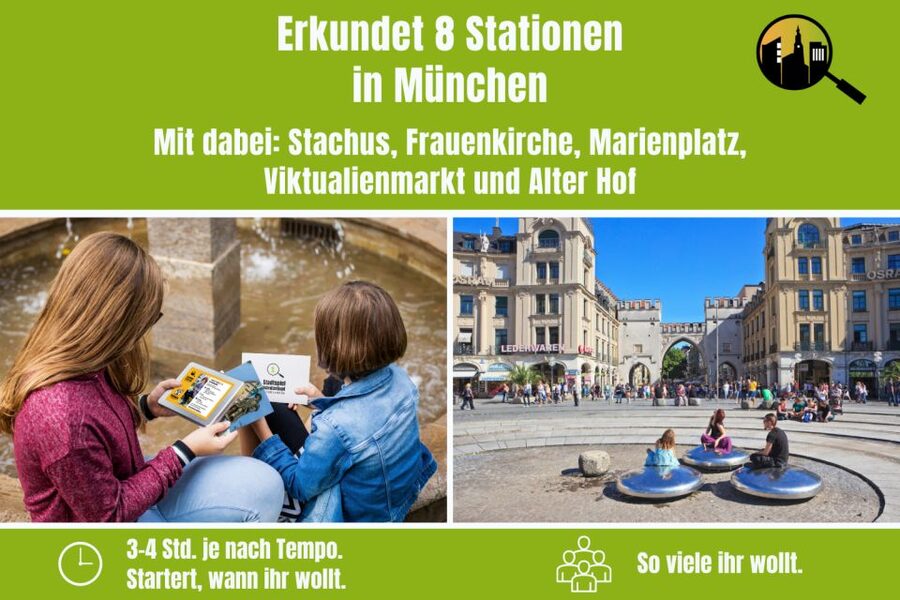
The hunt also includes Viktualienmarkt, a popular gourmet food market. For families, this is a key ingredient: it breaks up the sightseeing rhythm with something that naturally attracts kids—color, stalls, and the sense of place.
Even if you don’t plan to buy a meal, this stop gives you a relaxed moment in the middle of the game. You can use it as an energy reset point: read a clue, walk between stalls, and take a breath before continuing.
One practical note: if your child’s hungry, this is where you’ll be thankful for the game’s built-in flexibility. You can pause as needed, and the hunt format doesn’t punish you for taking a longer look around.
How long 150 minutes really feels with kids

The total time is 150 minutes. In real terms, that’s usually enough for a family to walk the route, solve riddles at a steady pace, and take a few photo breaks—without turning the day into a marathon.
Because the hunt uses eight envelopes, it naturally breaks the experience into chunks. That pacing helps kids stay engaged: they don’t feel like they have to “endure everything” at once.
If you want to stretch it a little, you can. A slower approach can make the information stick more, especially for kids who enjoy reading the kid facts carefully. If you’re trying to keep energy up, you can also move quickly between stops when everyone is in a good mood.
Price and value: what $47 per group buys you

The price is $47 per group up to 10 people. That’s the part that makes this hunt unusually good value for families.
Instead of paying per person, you’re paying for one box experience that can include parents, grandparents, and multiple kids together. If you’re traveling as a small group or your kids bring along cousins, it stretches the cost fast.
Also, you’re paying for more than route planning. You’re buying:
- a designed walking flow through major sights
- eight envelope sets with riddles, directions, and information
- an emergency envelope with full solutions
What it doesn’t include is important for your budgeting mindset. Entrance fees, food and beverages, and transportation tickets are not part of the price. So you’ll still want to plan your museum/entry costs if you decide to add anything on top.
Who this Munich scavenger hunt suits best (and who might not)
This is best for families with children roughly 6 to 12, where the game format and kid facts land well. It can also work for older kids—especially if they enjoy puzzle-solving more than pure explanation—because the hunt keeps the focus on finding answers at each landmark.
From the family-friendliness angle, it’s also good for mixed-age groups. One of the strengths of this format is that adults and kids can participate together without one side doing all the work.
I’d be a bit cautious if your kids strongly prefer guided storytelling or deep historical detail. Since there’s no guide on-site, the experience depends on what’s printed in the envelopes. And if your child needs tougher puzzles, you may find the riddles simpler than you hoped.
Practical details that matter on the day
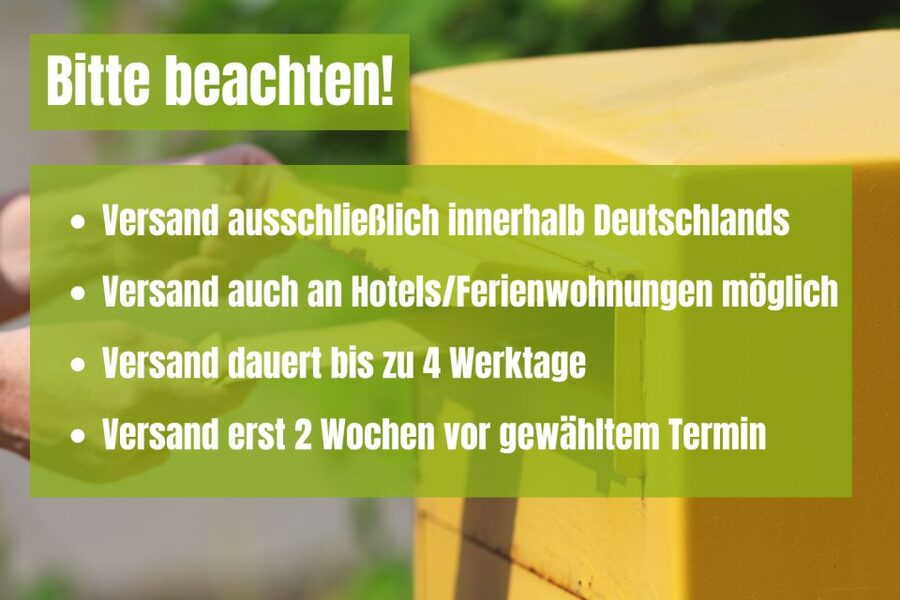
You receive the scavenger hunt box by mail, not at a local pickup point in Munich. Shipping within Germany can take up to 4 working days, and it’s shipped at the earliest 2 weeks before your selected date.
That means the biggest planning tip is simple: pick a date only after you’re confident the box will arrive on time. If it’s late, the experience can still be done after you receive the box, so you’re not stuck with a wasted plan—but you will need to adjust your sightseeing schedule.
Bring comfortable shoes, since you’ll be walking through the old center. And bring the box itself, since there’s no guide at the meeting point.
The tour is wheelchair accessible, which is a big plus if you’re traveling with someone who needs mobility support.
The operator is Stadtspiel Schnitzeljagd GmbH, and the structure is designed to let your family move independently once you start.
Should you book this Munich scavenger hunt?
Yes, I think it’s a strong choice if you want a kid-led walk through Munich’s main squares and landmarks without committing to a set guided tour pace. The biggest reasons to book are the family-friendly format, the major-sight route (Stachus, Frauenkirche, Marienplatz, Viktualienmarkt), and the value of paying per group up to 10.
I’d consider skipping (or pairing it with another guided experience) if you need a tougher puzzle challenge for older kids or you want a real-time guide to answer questions on the spot. Also, if you don’t like planning around mailed delivery, this isn’t the best fit.
If your family can handle reading the clues together, this is an easy way to make Munich feel like a game instead of a checklist.
FAQ
Where does the scavenger hunt start?
It starts at Stachus, the large square in the center of Munich.
Is there a guide with the hunt?
No. There is no guide at the meeting point. You start and follow the instructions from the mailed box.
How long does the Munich scavenger hunt take?
The duration is 150 minutes.
How much does it cost?
It costs $47 per group (up to 10 people).
What sights are included?
The hunt includes major sights such as Frauenkirche, Marienplatz (including Altes Rathaus and Neues Rathaus), and Viktualienmarkt.
What’s included in the box?
You get the scavenger hunt box (including shipping), 8 envelopes with riddles/directions/information/kid-friendly facts, and an emergency envelope with all solutions.
What isn’t included in the price?
It doesn’t include food and beverages, entrance fees, or transportation tickets. Arrival and departure to the tour are also not included.
How do I receive the scavenger hunt?
You receive the box via mail. Shipping within Germany can take up to 4 working days, and it’s shipped at the earliest 2 weeks before your selected date.
Can I choose the time to start?
Yes. You can start on any date and at any time once you have received your box.