REVIEW · LUGO
Lugo: Cathedral of Santa Maria Entry Ticket and Audio Guide
Book on GetYourGuide →Operated by Catedral de Lugo · Bookable on GetYourGuide
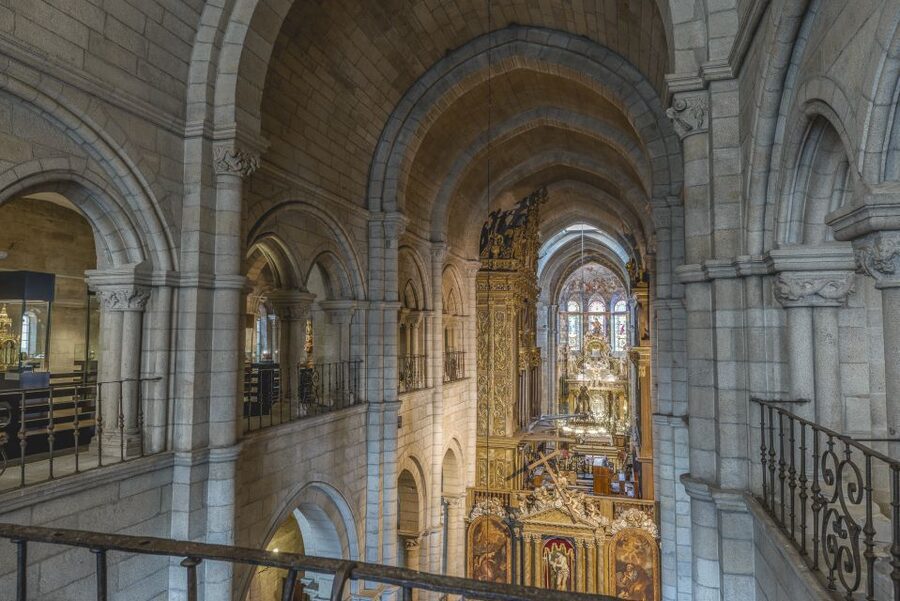
Slow walking pays off at Lugo Cathedral. This ticket gives you entry to the Catedral de Santa Maria with an audio guide, plus time for the museum and cloister. I especially enjoy the Romanesque Christ in majesty stonework and the later Churrigueresque altar wrapped in stained glass.
One possible drawback: the visit can start late sometimes, and the audio/numbering may not match perfectly. If you’re the type who wants everything to be perfectly timed, go in with a little patience and use the cathedral’s details to stay oriented.
- Audio guide in five languages (Spanish, English, Portuguese, French, Galician) so you can move at your own pace
- UNESCO-listed Lugo Cathedral access included with your ticket
- Architecture stitched across centuries, from Romanesque details to neoclassical lines
- Christ in majesty: a standout Spanish Romanesque carving you’ll want to find up close
- Churrigueresque altar and stained glass: the visual payoff stop
- Cathedral Museum included, with archaeology and art, including works by Cornielles de Holanda and Joannes de Boloña
In This Review
- Lugo Cathedral Entry With Audio Guide: what you’re actually buying for $9
- Finding the Neoclassical Entrance and Getting Your Ticket
- The Cathedral’s Big Story: late Roman roots, 12th-century core, and centuries of change
- Romanesque to Neoclassical: what to look for as you walk inside
- Christ in majesty: the Spanish Romanesque carving you’ll want to find first
- The Churrigueresque altar and stained glass: where you slow down
- A long, narrow floor plan: how the layout changes your walk
- Cloister and the Cathedral Museum: archaeology and art in one ticket
- Audio guide tips: five languages, self-paced freedom, and one common snag
- Timing your visit around the 7:00 PM closing and last entry
- Rules inside the cathedral: small limits that keep your visit smooth
- Who should book this Lugo Cathedral audio ticket
- Should you book Lugo Cathedral entry with audio guide?
- FAQ
- What’s included with the Lugo Cathedral ticket?
- Where is the entrance, and where do I collect tickets?
- What languages are available for the audio guide?
- Is the museum included in the ticket?
- How long is the ticket valid?
- When does the cathedral close?
- Is the experience wheelchair accessible?
- Are photos or video recording allowed?
- Are pets, smoking, or food allowed?
- What ID do I need, and can I cancel for free?
Lugo Cathedral Entry With Audio Guide: what you’re actually buying for $9
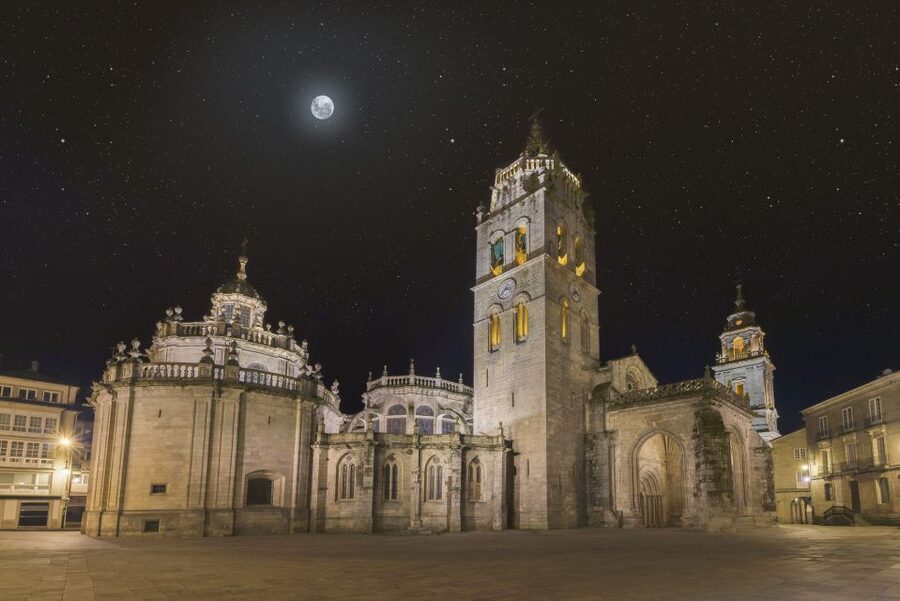
For $9, you’re not just buying a church door ticket. You’re getting entry to the cathedral plus access to the cloister and the Cathedral Museum, and that’s bundled with an audio guide.
That matters because Lugo Cathedral works best when you can linger. You’ll want time for carved Romanesque details, then time to reset your eyes for the later, very ornate altar. With the museum included, you also get context beyond what you’ll see in the main nave.
This is also a good choice if you like understanding what you’re looking at without committing to a set walking schedule. The audio guide lets you pause, rewind your attention, and come back when something catches your eye.
Finding the Neoclassical Entrance and Getting Your Ticket
The entrance experience starts at the neoclassical facade. That’s where you’ll go in, then where ticket handling happens.
Even though your “meeting point” is at the neoclassical door, your ticket is collected inside at the ticket office in the shop area by that facade. Plan a minute or two for the handoff and to grab whatever you need for the audio guide setup.
If you arrive right at your time window, you can still have a calm start—but I’d rather you build in a small buffer. One issue that can pop up is delays at opening, so arriving early is your friend.
The Cathedral’s Big Story: late Roman roots, 12th-century core, and centuries of change
Lugo Cathedral’s story begins in late Roman times. After the city was evangelized, a temple was built, but there isn’t any surviving trace of that original church.
What you can trace clearly starts later. The current cathedral structure ties back to the 12th century, and then work continued across many eras. The result is a building where different architectural languages sit side by side, rather than one “pure” style dominating everything.
Here’s what that means for you during the visit: you’ll notice transitions. You might start thinking Romanesque, then suddenly be looking at neoclassical lines on the outside, and then at interior elements shaped by later tastes.
Romanesque to Neoclassical: what to look for as you walk inside
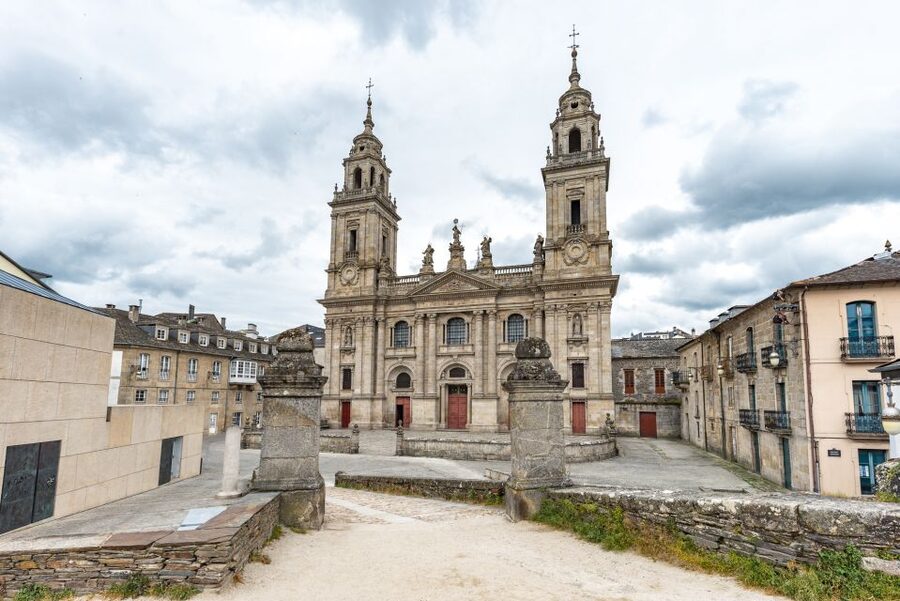
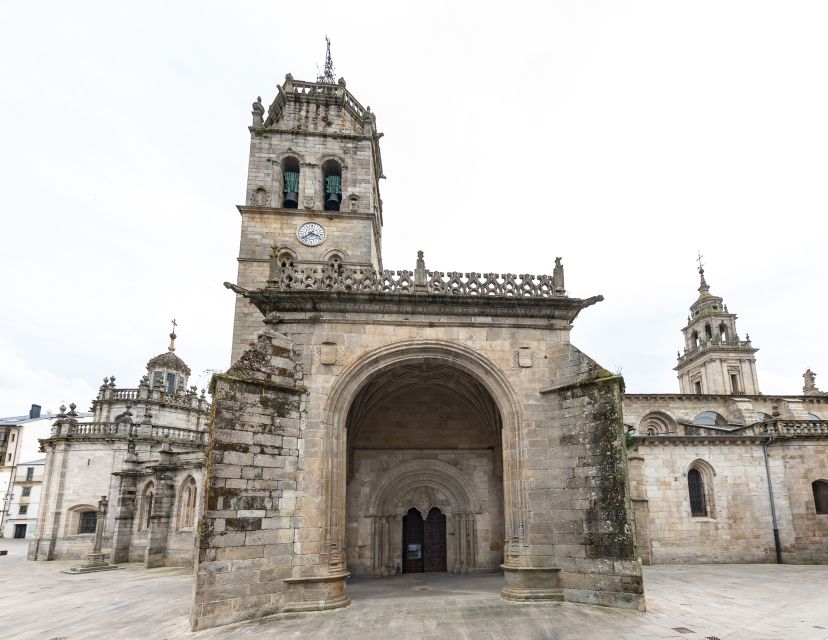
As you move through the cathedral, keep an eye out for the major style clues you’re given by the building itself. On the Romanesque side, the north door is specifically noted as a Romanesque highlight, while the west façade is tied to a neoclassical feel.
Inside, you’ll also run into the cathedral’s “long build” personality. It’s not one single era making all decisions. It’s multiple centuries leaving their mark, which is why the experience can feel like comparing chapters of the same book written in different hands.
Let the audio guide nudge you from one feature to the next. You’ll get the quickest results by following its order, then using your own eye when something pulls you off-course.
Christ in majesty: the Spanish Romanesque carving you’ll want to find first
One of the biggest reasons people care about this cathedral is the Christ in majesty. It’s described as a masterpiece of Spanish Romanesque stone carving, and it’s exactly the kind of work you’ll appreciate more the second time you look.
Try this: when you reach it, don’t just glance and move on. Take a short pause and look for how the sculpted form is built—how details project from the stone and how the overall figure reads as a complete statement rather than separate pieces.
The audio guide is handy here because it helps connect the carving to the cathedral’s larger medieval world. If you’re the kind of visitor who normally misses the “why” behind religious art, this is one of the best chances to catch it.
The Churrigueresque altar and stained glass: where you slow down
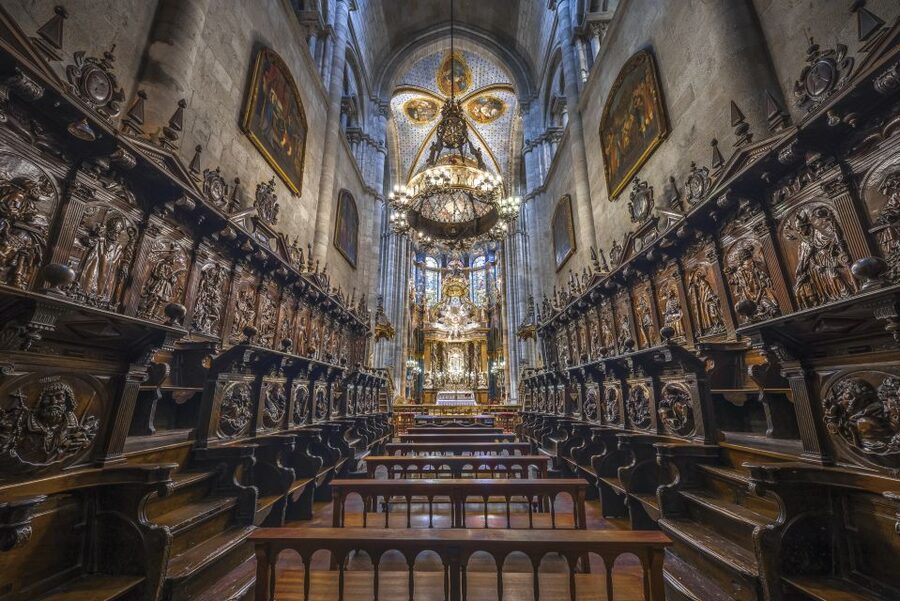
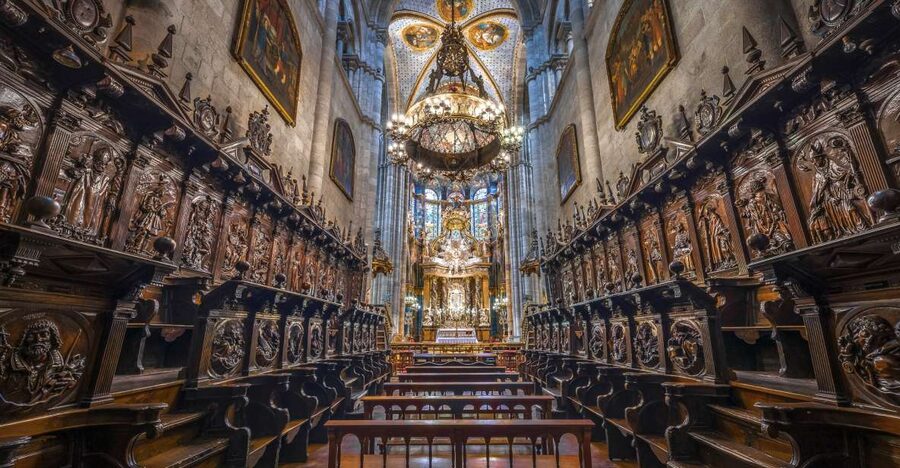
Later on, you’ll come to the Churrigueresque altar, described as ornate and surrounded by stained glass windows. This is the moment when the cathedral shifts gears visually.
Churrigueresque style is known for dramatic ornament, and you can feel that energy when you’re standing close to the altar area. The stained glass adds another layer: it turns the space into something less like a neutral room and more like a stage set for light and color.
I like treating this stop as a break point. After Romanesque stonework, your eyes need a moment to adjust to the altar’s intensity. If your audio guide has you rushing, slow down anyway. This is one of the few spots where the cathedral practically demands a pause.
A long, narrow floor plan: how the layout changes your walk
The cathedral is noted for having the longest and narrowest floor plan of any Hispanic cathedral. That’s not trivia for trivia’s sake—it affects how the church feels while you’re inside.
A long, narrow plan naturally guides your attention toward the altar. Even if you don’t measure anything, you’ll feel the direction of movement. It can also make the interior feel more like a focused corridor than a wide open space.
This is a good place to use the audio guide thoughtfully. If the sound bites start to blur, switch your strategy: listen for one key point, then stop and look forward in the direction the building pushes you.
Cloister and the Cathedral Museum: archaeology and art in one ticket
Your ticket doesn’t stop at the main church. It includes entry to the cathedral museum and access to the cloister.
The museum is highlighted for its archaeological exhibition and an extensive art collection. That combination matters in Lugo because it lets you connect the cathedral’s physical building with earlier material evidence—what was here before the current structure formed.
The art collection includes works by specific artists, such as Cornielles de Holanda and Joannes de Boloña. If you’re hoping for more than general background, this is a solid payoff: you can see credited names rather than only broad themes.
As a practical approach, I recommend leaving the museum for when you want a calmer pace. The church can be visually demanding, especially at the altar stop. The museum gives your eyes a different kind of work: reading, comparing, and noticing.
Audio guide tips: five languages, self-paced freedom, and one common snag
The audio guide is included in your ticket and is available in Spanish, English, Portuguese, French, and Galician. That language range is a real advantage in Spain’s regional settings, because you can match the guide to how comfortable you feel.
Use it like this. Start with one pass that follows the order of the cathedral’s main features. Then, if you want, do a second round for anything you especially liked—like the Christ in majesty or the altar area.
Now for the practical snag: the visit may begin late, and the audio guide can have issues with synchronization between the audio and the numbered stops. If that happens, don’t panic. Use the building itself as your anchor. When the audio mentions something you can’t find, look for the described feature visually, then restart as needed.
Timing your visit around the 7:00 PM closing and last entry
The cathedral closes at 7:00 PM, and the last entry is 45 minutes before closing. That means your best strategy is to arrive with enough slack to complete the church and still get into the museum calmly.
There’s also a note that the schedule may change due to liturgical events. If you see signs or notice changes on-site, adjust. In places like this, the building’s religious schedule can affect how open spaces feel and how quickly you can move.
If your day is tight, prioritize what you care about most:
- Main church features first, especially Christ in majesty and the Churrigueresque altar
- Museum next, if you have energy and time left
Rules inside the cathedral: small limits that keep your visit smooth
The rules are straightforward, but they can trip you up if you show up with the wrong items. Pets are not allowed, and smoking is also not allowed.
Food and drinks aren’t permitted, so plan to eat before you enter. Also note restrictions that matter for photos and filming: flash photography is not allowed, selfie sticks are not allowed, and tripods are not allowed. Video recording is not allowed either.
In practice, this means you should bring only what you need and keep your phone use simple. If you want photos, plan on natural light and avoid flash. If you like stable shots, you’ll need to skip the tripod.
Who should book this Lugo Cathedral audio ticket
This ticket makes the most sense for you if you like architecture and religious art, and you want context without joining a group tour pace. You’ll also enjoy it if you travel with flexibility, since the visit is self-paced and includes both the church and museum.
It’s also a good fit if you want a choice of languages. With Spanish, English, Portuguese, French, and Galician audio options, you can match the guide to your comfort level.
If you’re looking for a long guided experience with lots of people guiding you step by step, this might feel too light. One downside that comes up is that the experience can feel short for the price if you expected more structure or a longer “tour-style” visit.
Should you book Lugo Cathedral entry with audio guide?
If you want a UNESCO-listed cathedral visit that’s built around what you see—Romanesque carving, later ornate altar work, and a museum with archaeology plus named artists—then yes, this is worth booking.
Book it if:
- You want audio guidance in your preferred language
- You care about both the main cathedral and the Cathedral Museum
- You’re happy to explore at your own pace
Skip it (or at least plan differently) if:
- You want a highly structured, long walking tour
- You’re easily bothered by audio/numbering mismatches and occasional delays at start time
FAQ
What’s included with the Lugo Cathedral ticket?
The ticket includes entry to Lugo Cathedral, entry to the cloister and the Cathedral Museum, and an audio guide.
Where is the entrance, and where do I collect tickets?
Enter through the cathedral’s neoclassical facade. Tickets are collected inside at the ticket office in the shop area by that neoclassical door.
What languages are available for the audio guide?
The audio guide is available in Spanish, English, Portuguese, French, and Galician.
Is the museum included in the ticket?
Yes. The Cathedral Museum is included in the entry ticket, along with access to the cloister.
How long is the ticket valid?
Your ticket is valid for one day. You can check availability for starting times.
When does the cathedral close?
The cathedral closes at 7:00 PM, and the last entry is 45 minutes before closing.
Is the experience wheelchair accessible?
Yes, the visit is listed as wheelchair accessible.
Are photos or video recording allowed?
Flash photography is not allowed, selfie sticks are not allowed, tripods are not allowed, and video recording is not allowed.
Are pets, smoking, or food allowed?
Pets are not allowed. Smoking is not allowed. Food and drinks are also not allowed inside.
What ID do I need, and can I cancel for free?
You need a passport or ID card, and the same applies for children. You can cancel up to 24 hours in advance for a full refund.