REVIEW · LUXEMBOURG CITY
Luxembourg City Romantic Game: Walking Tour & Scavenger Hunt
Book on Viator →Operated by Questo · Bookable on Viator
A puzzle walk through Old Luxembourg City. I like the self-paced 13-puzzle story quest and the chance to play with offline chapters while you wander bridges and cathedrals. One heads-up: if you want a live guide and fully natural human storytelling, this is an app-first experience.
You start at Pont Adolphe in Ville Haute and finish by a bridge above the Alzette River in Grund. The route is listed at about 1 to 1.5 hours, but it’s truly your pace because you can start anytime and pause/resume.
At $7.20 per person, it’s a smart-value way to get oriented fast and hit famous spots like Notre-Dame Cathedral and the Corniche ramparts. Just don’t trust GPS blindly—some directions can be a little weird, especially in rain.
In This Review
- Key highlights at a glance
- A self-guided romantic game that actually fits Luxembourg City
- Getting rolling at Pont Adolphe (Ville Haute) and finding the first answers
- The core route: 3.5 km of landmark stops that reward slow walking
- Gëlle Fra (Monument of Remembrance) and the war memorial story
- Notre-Dame Cathedral: Jesuit roots and the only cathedral in Luxembourg
- Place d’Armes: where parades and city life meet
- Jan Pallach Square poet monument: the lion, steel, and a motto
- Place Guillaume II (Knuedler): City Hall, the equestrian statue, and the knot in a belt
- Grand Duchess Charlotte statue on Clairefontaine Square: Heeschefraa
- Grand Ducal Palace: official seat of the head of state
- The “most beautiful balcony of Europe” stretch: Corniche and Alzette views
- Melusine lore and the final bridge over the Alzette
- Offline play, phone navigation, and why GPS can slow you down
- Price and value: $7.20 for a full mini-adventure
- Who should do this, and who might want a guided tour instead
- Should you book the Luxembourg City Romantic Game?
- FAQ
- Is this a guided tour with a live guide?
- How much does the Luxembourg City Romantic Game cost?
- How long does the walk take?
- Where do I start and where does it end?
- Can I play offline?
- How many puzzles are there, and how far do I walk?
- What language is it offered in?
- Can I start at any time?
- Is there a group size limit?
- What’s the cancellation policy?
Key highlights at a glance
- Self-paced start anytime with the freedom to pause and come back later
- 13 story-based puzzles across about 3.5 km of walking
- No live guide needed, so you avoid the slowdown of a group schedule
- Offline-friendly gameplay so you can save mobile data on the move
- Big sights in one run, including the Gëlle Fra memorial and Corniche viewpoints
A self-guided romantic game that actually fits Luxembourg City
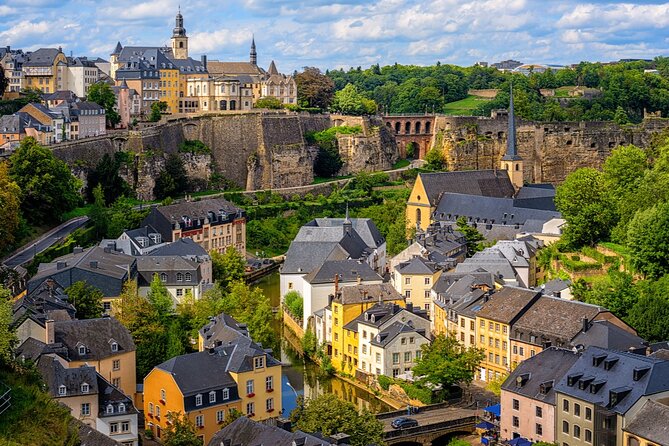
Luxembourg City can feel compact but steep—pretty easy to see the main landmarks, harder to explore them in a way that feels personal. This game helps you do the second part. It turns the walk into a sequence of “find the clue, read the story, answer, move on,” so you’re not just passing by plaques.
I also like the practical angle: you’re not boxed into a guided group pace. You can start when you want, slow down at the views, and stop to take photos without having to catch up.
And yes, it’s called a romantic game, but the real romance is what you get when you combine two things Luxembourg does well: scenic walking routes and stories tied to the buildings. You’ll end up with better context than a quick postcard lap.
The only drawback I’d plan for is this: an app can’t read a room. If you expect a human guide to correct misconceptions on the spot, you might find some story chapters feel more “produced” than lived-in.
Getting rolling at Pont Adolphe (Ville Haute) and finding the first answers
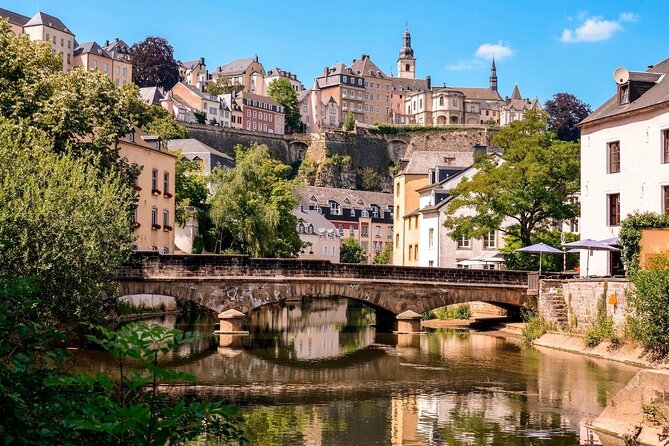
Your official start is Pont Adolphe (Ville Haute). This is a great place to begin because it’s both central and photogenic—one of the nicest bridges in town, with the Alzette in your peripheral vision.
The first part sets the tone: you look around and hunt for an answer to a question tied to a cafe story. That “look closely, then move” structure is what makes the walk work. You’re forced to slow down and notice details you might otherwise miss, like how the city’s viewpoints line up with older streets and the river.
Practical tip: when you begin, make sure your phone is ready before you step out. Keep brightness up enough to read the screens, and consider downloading any needed content ahead of time since the route is designed for app play.
The core route: 3.5 km of landmark stops that reward slow walking
The game is built around 13 story-based puzzles spread across about 3.5 km. In theory, that’s a nice, manageable outing. In reality, self-guided puzzles can stretch your walking if you miss a turn or backtrack.
So I’d plan for a little extra time—especially if you stop often for views. Some people also report that directions can be confusing, so if the app tells you to go one way and it doesn’t match your street view, step back, find the street signs, and correct before you lose your place.
Here’s how the landmarks unfold, stop by stop.
Gëlle Fra (Monument of Remembrance) and the war memorial story
Next up is the Monument of Remembrance, famously known as Gëlle Fra (Golden Lady). This memorial is dedicated to Luxembourgers who volunteered for service with the Allied Powers during both World Wars and the Korean War.
In the app, you’re not just reading a description. You’re asked to look around to find an answer that moves you onward. That small push turns the memorial from a photo-op into something you actually process.
If you care about European history, this stop is a strong anchor. It’s one of those places where details matter, and the puzzle format nudges you to pay attention.
Notre-Dame Cathedral: Jesuit roots and the only cathedral in Luxembourg
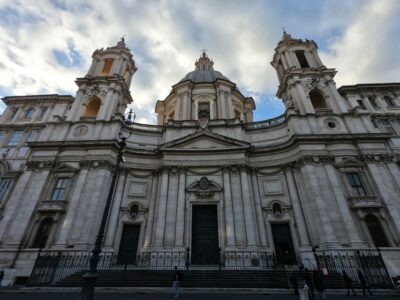
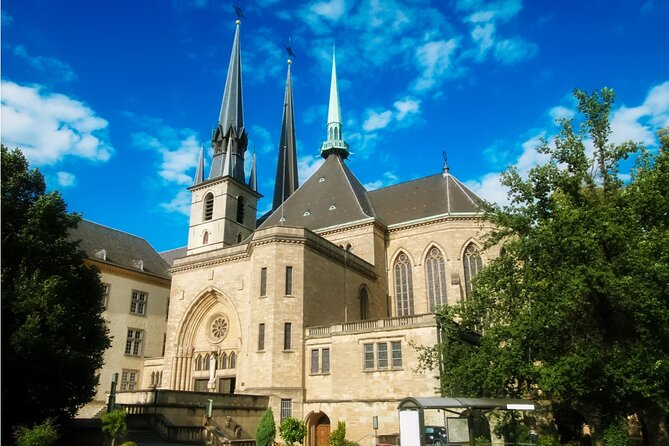
The route then reaches Notre-Dame Cathedral. The game ties you to its origin story: it began as a Jesuit church, with the cornerstone laid in 1613—and it’s described as the only cathedral in Luxembourg City.
This is one of the moments where the app’s “look around for the answer” approach helps you notice architectural cues instead of just scrolling past. Even if you’re not a cathedral person, you’ll probably spend an extra minute here because the puzzle makes you look up and read signs and features carefully.
Place d’Armes: where parades and city life meet
At Place d’Armes, you get a sense of how the city functions day to day. It’s a central square in the old town, popular with locals and visitors—especially in summer—and it originally served as a parade ground for troops defending the city.
The benefit of placing a square in the route: it gives your legs a break and gives your eyes a “breather” before the more detail-heavy monuments ahead. Squares like this also help you reorient if your phone guidance gets fuzzy.
Jan Pallach Square poet monument: the lion, steel, and a motto
On Jan Pallach Square, you reach a monument honoring two national poets: Dicks (1823–1891) and Michel Lentz (1820–1893), tied to the words of the national anthem.
The details are the whole point here:
- It’s topped by a lion, linked to the Grand Duchy’s heraldic symbols.
- A blacksmith represents the steel industry.
- The pillar includes the Luxembourgers’ motto: Mir wëlle bleiwe wat mir sin.
Because this stop is question-driven, you’re encouraged to find those elements rather than just walk past them. It’s a good example of why the app can be worth it: the puzzle forces a deeper read without needing an on-site lecturer.
Place Guillaume II (Knuedler): City Hall, the equestrian statue, and the knot in a belt
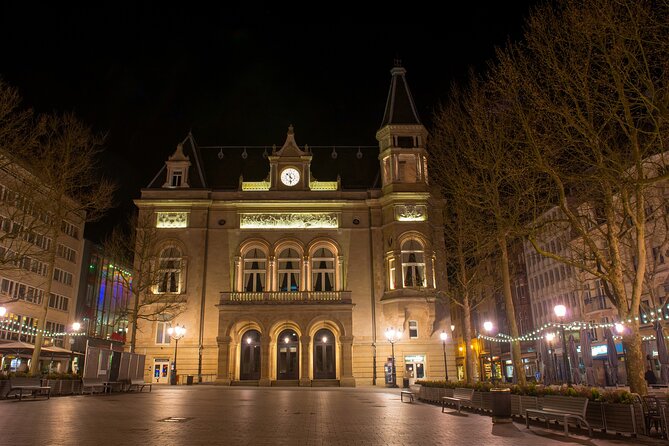
Then you’ll arrive at Place Guillaume II, a square in the historic Ville Haute area—locally known as Knuedler. The nickname comes from a Luxembourgish word connected to the knot in the belt worn by Franciscan friars.
This stop offers a clear architectural contrast: Luxembourg City Hall anchors one side, while the equestrian statue of former Grand Duke William II dominates the other.
If you like learning how places got their names, this is a memorable one. The puzzle structure makes it easier to connect the visual layout to the story.
Grand Duchess Charlotte statue on Clairefontaine Square: Heeschefraa
A bronze statue of Grand Duchess Charlotte sits on Clairefontaine Square, set in 1990 and created by French sculptor Jean Cardot. The app’s narrative emphasizes the gesture: a wide cloak, one arm raised with the palm turned skyward.
In local vernacular, it’s nicknamed Heeschefraa, often explained as the beggar-woman idea based on the hand gesture. That kind of local interpretation is exactly the sort of thing a fast sightseeing pass usually misses.
Grand Ducal Palace: official seat of the head of state
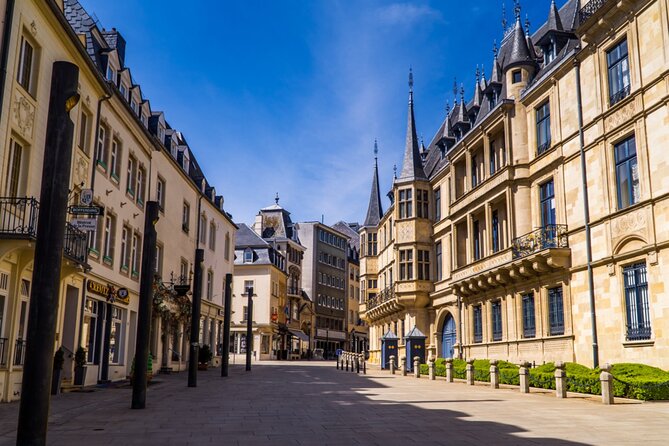
Next you’ll encounter the Grand Ducal Palace—the official residence of the Grand Duke of Luxembourg and where he performs many duties as head of state.
Even from the outside, it’s a visual reminder that Luxembourg City mixes old-world architecture with modern political importance. The puzzle layer helps you treat the building as more than a background.
The “most beautiful balcony of Europe” stretch: Corniche and Alzette views
Now you hit the part many people remember: the Corniche, described as the most beautiful balcony of Europe. The Corniche runs along the ramparts built by the Spaniards and the French in the 17th century, stretching along the Alzette valley.
The route moves from the Bock Promontory toward the lower part of the Holy Ghost Citadel, called the Rondellen. The story notes that the protective wall and steep stairways used to be different before later changes removed parts of the fortress structure, opening up better panorama.
This is where the walk earns its romantic label. You’re literally walking a long river view corridor, and the puzzle keeps you present instead of rushing.
My practical advice: on windy days or after rain, take it slow. The view is the payoff, but the ramparts and stairs can be slick and uneven underfoot.
Melusine lore and the final bridge over the Alzette
Near the end, you’ll reach a stop tied to Melusine, a folklore figure connected with freshwater springs or rivers in European mythology. She’s typically pictured as a woman with a serpent or fish body from the waist down (and sometimes wings or two tails).
The game also connects Melusine legends to medieval ruling families, including the House of Luxembourg, the House of Anjou, and later Plantagenet lines—presented as legendary descent.
Then you finish on a bridge above the Alzette River. That ending makes sense: you’ve been moving through viewpoints and monuments all along the way, and the final crossing wraps it up with a sense of motion and arrival.
Offline play, phone navigation, and why GPS can slow you down
The game is designed so you can play offline to avoid chewing through mobile data. That’s a win in Luxembourg City, where you might be hopping between quick views and don’t want to burn your data plan.
That said, the navigation side can still rely on map services. So if your goal is truly no internet, bring a backup plan:
- Save the general route in your maps app before you start
- Keep an eye on street signs and landmarks rather than only trusting the blue dot
- If something looks wrong, pause and reset your position before moving on
A few people have also noted GPS issues that put them in the wrong spot (even under the wrong structure). That’s not the end of the world, but it’s exactly why you should treat this as a puzzle walk, not a turn-by-turn driving tour.
Price and value: $7.20 for a full mini-adventure
At $7.20 per person, the price feels low for what you get on paper: about 1 to 1.5 hours, 13 puzzles, a mobile ticket, and lifetime access to replay the quest later.
The strongest value comes from repeatability. If you return to Luxembourg City later, you can redo the game with fresh eyes, or you can complete the chapters you didn’t finish the first time.
Also, you don’t pay for a live guide sitting on a schedule. The entire model is private and self-contained, so you’re effectively buying time efficiency and a curated path.
The main risk is expectation: if you want a deeply human, guided explanation at every stop, you might feel the experience is a little too lightweight.
Who should do this, and who might want a guided tour instead
I think this is a great fit if you:
- Want a low-cost way to learn Luxembourg City basics
- Like puzzles and prompts that push you to look at details
- Prefer a no-contact outing with your own pace
- Are comfortable navigating with a phone (and correcting when GPS stumbles)
It’s less ideal if you:
- Want a live guide to answer questions on the spot
- Get frustrated by confusing directions or backtracking
- Expect story text that feels fully natural and human throughout
If you’re traveling with a tight schedule, an app-driven walk is often the smartest use of time—especially in a city where steep streets can make long days feel heavier.
Should you book the Luxembourg City Romantic Game?
Book it if you want a structured way to see top sights without joining a group, and you like the idea of turning landmarks into a puzzle hunt. The Corniche viewpoint, the Gëlle Fra memorial, Notre-Dame Cathedral, and the Melusine story give you variety in one outing.
I’d skip it or switch your expectations if you know you’ll only enjoy a tour with a human voice guiding every step. Also, if you rely completely on phone directions, be ready to use street signs as your anchor.
FAQ
Is this a guided tour with a live guide?
No. Live tour guidance is not included. It’s an app-based quest you play on your own.
How much does the Luxembourg City Romantic Game cost?
It costs $7.20 per person.
How long does the walk take?
The duration is listed at about 1 hour to 1 hour 30 minutes.
Where do I start and where does it end?
You start at Pont Adolphe, Ville Haute, Luxembourg, and the quest ends at 48 Montee de Clausen, 1343 Grund, Luxembourg.
Can I play offline?
Yes, the quest is designed so you can play offline to avoid using up your data while you complete it.
How many puzzles are there, and how far do I walk?
There are 13 story-based puzzles across an approx. 3.5 km route.
What language is it offered in?
It’s offered in English.
Can I start at any time?
Access is 24/7 and you can start anytime, with opening hours shown as 5:00 AM to 9:00 PM.
Is there a group size limit?
It’s a private outdoor activity for your group only. If your group is larger than 15 people, you can book more bookings.
What’s the cancellation policy?
Free cancellation is available up to 24 hours in advance for a full refund. If you cancel less than 24 hours before the start time, the amount paid is not refunded.