REVIEW · LAS VEGAS
Lake Mead & Valley of Fire State Park Self-Guided Audio Tour
Book on Viator →Operated by Adventures with Action · Bookable on Viator
A drive with stories built in. This Lake Mead to Valley of Fire self-guided audio route mixes hands-free narration with real-world details for what you’re seeing.
I like that it’s easy to control—you can pause for photos or skip anything that doesn’t interest you. It also feels built for nature lovers, with birding spots and trail cues along the way.
One thing to consider: the app keeps audio in sync with your progress, so if you drive faster than the on-screen speed guidance, some stories can cut off early.
Practical key points at a glance
- GPS-triggered audio plays based on where you are, so you don’t have to tap through stops.
- Offline maps mean you can keep going even with spotty or zero cell service.
- One price per group (up to 4) makes a car day trip cheaper than most guided options.
- 60+ audio stories over 68 miles turns a long drive into a series of mini-adventures.
- Short walks at multiple stops keep the effort low while still getting you out to view canyons, arches, and petroglyphs.
In This Review
- Why Lake Mead to Valley of Fire Works Better by Car
- Price, Time, and Group Size: Getting Value From $15
- Setting Up the Action Tour App So Audio Starts on Cue
- Start at Lake Mead Visitor Center: The First Welcome and Setup Moment
- Stop-by-Stop: Lake Mead Stories and Easy Walks
- Lake Mead Marina
- Hatchery Saddle Point
- Scenic Overlook (Sunset View)
- Owl Canyon Trailhead
- Wetlands Trail (1.5 miles)
- Las Vegas Wash
- Anniversary Trails (Anniversary Narrows)
- Northshore Summit Trail
- Redstone Dune Trail
- Atlatl Rock
- Fire Cave / Windstone Arch
- Valley of Fire: Petroglyphs, Slot Canyons, and Red Rock Stops
- Pastel (Pink) Canyon Trail
- Fire Wave Trailhead
- Finishing at Fire Cove Road
- Birding Tips That Fit a Road Trip Pace
- Tech Reality Check: Where People Get Frustrated
- Who This Tour Suits Best (and Who Should Skip It)
- Should You Book This Self-Guided Audio Drive?
- FAQ
- How much does the Lake Mead & Valley of Fire self-guided audio tour cost?
- How long does the tour take?
- Do I need cell service to use the tour?
- Where do I start the tour?
- Where does the tour end?
- Are admission tickets included for stops?
- Can I play the audio through my car stereo?
Why Lake Mead to Valley of Fire Works Better by Car
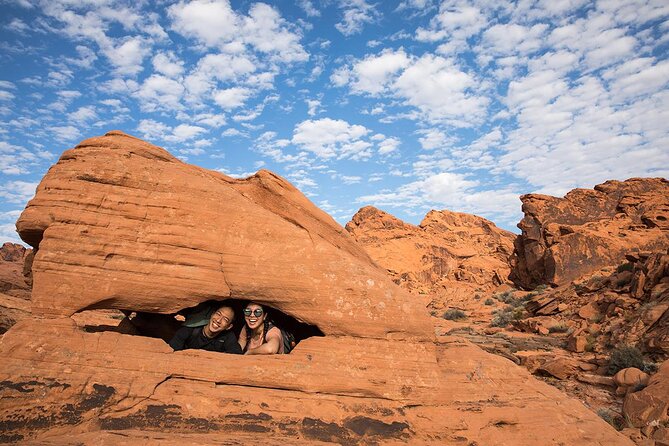
This drive works because it stacks two very different kinds of “wow” on one loop day: Lake Mead’s waterline history and the desert drama of Valley of Fire’s red rock. The audio guide turns your windshield time into something you can actually learn from, without demanding you keep a tight group schedule.
I also like the pacing. Most stops are brief—often around 10 minutes for the main audio moment—so you can hop out, read the view, then get back on the road. You’re not stuck on a long bus-style itinerary where every stop feels identical.
Price, Time, and Group Size: Getting Value From $15
The price is $15 per group (up to 4) for this self-guided experience, running about 2 to 3 hours for the main route. That matters, because in this part of Nevada the “tour cost” is often what you don’t control—admission tickets, guide fees, or bus pricing.
Here, the main value is that you’re buying time-efficient interpretation. For the same cost, a car-based group can split the price and still get the benefits of a planned route, timed audio cues, and offline navigation.
You can also read our reviews of more tours and experiences in Las Vegas.


Setting Up the Action Tour App So Audio Starts on Cue
To get the most out of this, plan your phone setup like part of the trip.
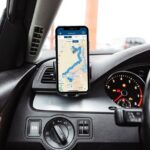
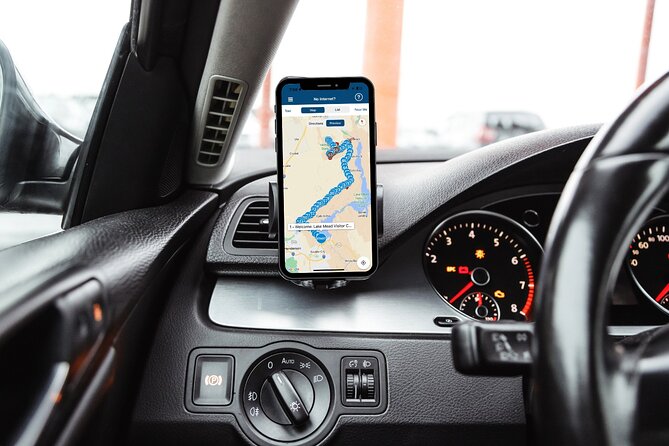
First, download the Action’s Tour Guide App while you’re on strong wifi/cellular. After that, the audio and offline maps are designed to work without signal.
Then use the email/text instructions and password sent after booking. On the day, you open the audio tour app once you’re at the start point and launch the correct tour version (direction and starting point matter).
Finally, audio is designed to play automatically as your phone recognizes your location. You’ll want to keep to the route and posted speed guidance, because the timing is synced. In plain terms: go too fast, and you might not hear the end of a story before you reach the next trigger point.
Start at Lake Mead Visitor Center: The First Welcome and Setup Moment
You begin at the Lake Mead Visitor Center, 10 Lakeshore Rd, Boulder City, NV 89005 (open 8:30 AM to 4:30 PM daily). No one meets you. This is very much a “show up, start the first audio point, and go” experience.
The end point is Fire Cove Road, Nevada 89040, near Valley of Fire—so the day naturally flows from Lake Mead toward the park.
The tour length is about 68 miles, with 60+ audio stories, so think of it like a sequence of short scenic breaks rather than one big hike day.
Stop-by-Stop: Lake Mead Stories and Easy Walks
The route begins with a welcome story that frames Lake Mead as more than water behind a dam. You get ideas that prepare you to look for layers: fossils, lost cities, and historical characters tied to how this region changed over time. That kind of setup makes the later viewpoints feel less random.
Lake Mead Marina
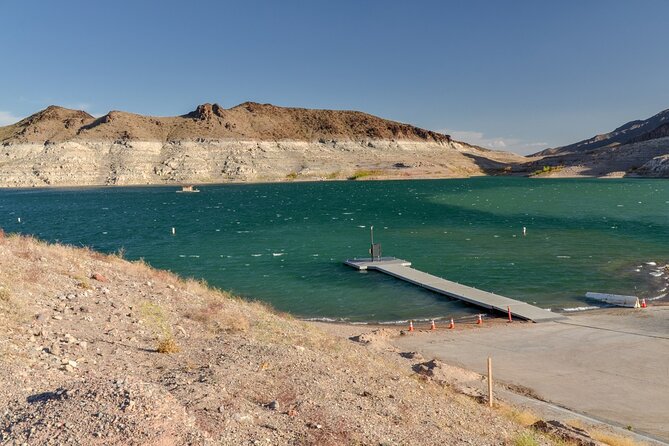
This is your first real “place look” moment—floating platforms and docks. The audio focuses on the idea that even the marina’s location and role aren’t fixed forever. It’s a quick start, roughly 10 minutes, and the entry note says free.
Why I’d do this early: you’ll calibrate your senses fast. If you’re new to Lake Mead’s scale, it helps to see the marina right after you begin.



Hatchery Saddle Point
Here the story centers on a now-defunct Lake Mead Fish Hatchery built in 1969. It was set up to grow striped bass and other fish for sport, and the audio uses that to connect “what you see now” with what was managed for recreation.
This is also about 10 minutes, with a free admission note. Even if you’re not a hardcore fishing fan, the point is how humans reshaped water life—and then how that influence changed when conditions shifted.
Scenic Overlook (Sunset View)
This is the panoramic payoff: you can look out toward the Boulder Basin, the Muddy Mountains, and Callville Mesa. Again, expect about 10 minutes.
The practical drawback: overlooks can get busy near popular photo times, and they’re not where you want to do long “hang and chat” moments. If you want quiet, come a bit earlier in the day and keep your time flexible.
Owl Canyon Trailhead
As Lake Mead’s water level drops, more features that were once underwater can become visible again. The audio points you toward Owl Canyon, once submerged and now revealed for hikers.
This is another short stop window (about 10 minutes for the audio moment), so treat it as a “take a quick look, then decide” kind of place. If you want a longer hike, you’ll need extra time beyond the 2–3 hour main pace.
Wetlands Trail (1.5 miles)
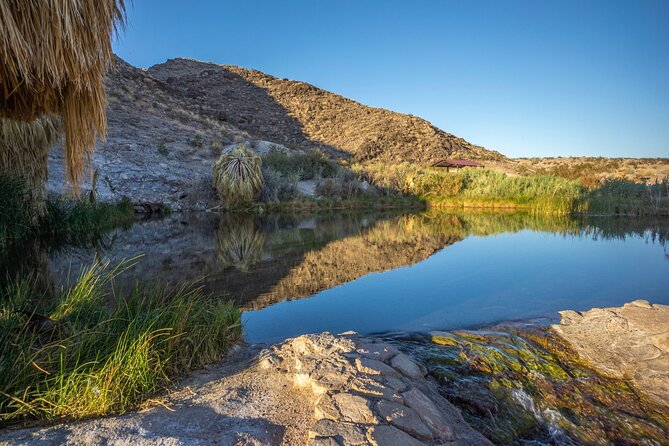
This is one of the best nature-focused stops. The Wetlands Trail is about 1.5 miles and usually takes less than an hour. The birding theme is clear: the audio calls out the Black-throated Sparrow and House finch around the vegetation corridor. You might even see a Great Blue Heron, and the wetlands often attract dragonflies.
If your group includes bird lovers, this is where the day feels like more than just scenic driving.
Las Vegas Wash
Las Vegas Wash is explained as the main channel returning excess water from the Las Vegas Valley back to Lake Mead. It’s the kind of stop that turns a dry “geography fact” into a mental map of how the area works.
It’s about 10 minutes. Don’t expect a hike here; this is more about understanding the water system behind the scenery.
Anniversary Trails (Anniversary Narrows)
Next up is Anniversary Narrows Trail, described as an easy 3-mile slot canyon route, often around 1.5 hours. This stop gives your day a chance to trade parking-lot viewing for walking in a narrow corridor.
The consideration: slot canyons can feel cool early and warm later, and 3 miles eats time fast. If you’re keeping to the main 2–3 hour loop, you may want to do a shorter out-and-back or move quickly.
Northshore Summit Trail
This one is short but steeper. The audio frames it as a payoff trail with views of the Muddy Mountains, Bowl of Fire, and Bitter Spring Valley. Expect about 10 minutes for the audio moment, but the hike effort is real for how short it is.
This is a good choice if you like “quick climb, big view” hikes.
Redstone Dune Trail
A much easier option: an easy loop about half a mile and under 30 minutes. It’s a nice reset after the steep push at Northshore Summit, and it helps keep the day from feeling physically repetitive.
Atlatl Rock
This is where archaeology enters the conversation. The audio explains what an atlatl is—a dart-throwing tool used by Pueblo tribes—and then connects it to the petroglyphs at Atlatl Rock.
This stop is about 10 minutes and free. Even if you only have time for a short look, it gives context you’d easily miss if you just glanced at the rock and moved on.
Fire Cave / Windstone Arch
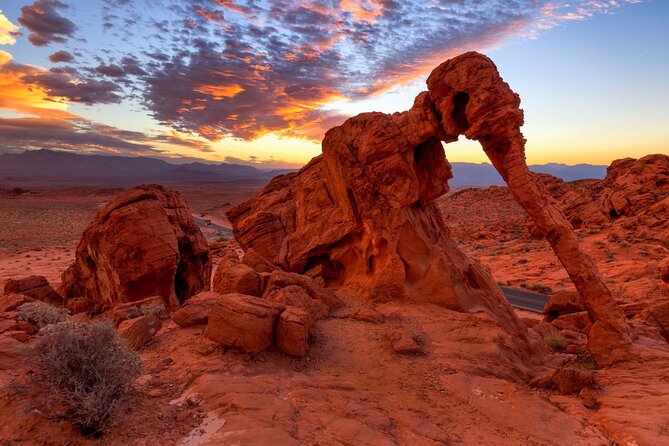
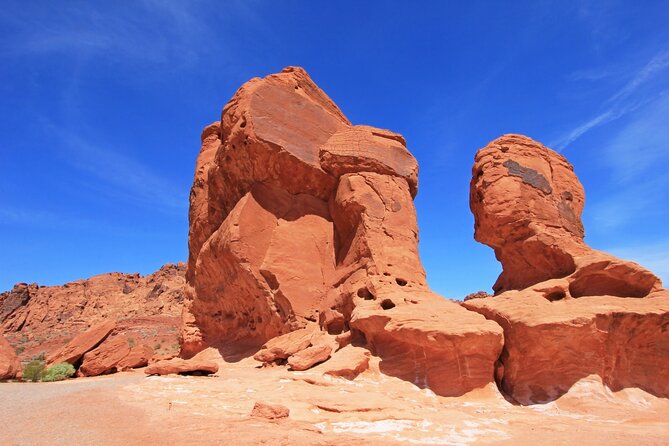
Expect another photo-ready red-rock moment. The audio talks about Fire Cave and Windstone Arch, associated with a mini wind-tunnel feeling and the iconic red hues that drew countless photographers.
The value here is that the audio teaches you what to notice: the arch shape, the cave setting, and why the color reads so strongly in photos.
Valley of Fire: Petroglyphs, Slot Canyons, and Red Rock Stops
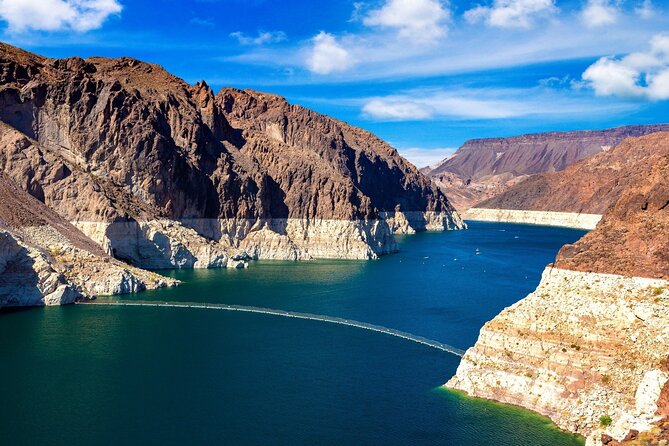
Once you reach Valley of Fire, the day turns into a classic red-rock highlight reel—except guided by story cues rather than a crowd’s pace.
Pastel (Pink) Canyon Trail
Pastel Canyon is described as a short, easy mile-long trail and a “hidden gem” style stop for people who like quieter routes. The point is color and texture—less about a big scramble, more about enjoying what’s right under your feet.
Short, easy trails also work well when it’s hot, because you’re not stuck out for hours.
Fire Wave Trailhead
This is one of the signature forms. The Fire Wave Trail is about 1.5 miles and rated moderate, taking around an hour. The audio frames the formation as looking like an ocean wave frozen in time.
The practical tip: give yourself enough time to walk slowly through the best sight angles. If you rush, you’ll miss why it’s famous.
Finishing at Fire Cove Road
The tour concludes at Fire Cove Road, which you can locate before starting around Valley of Fire. This endpoint helps you roll into the park with your sense of direction already set.
If you want to extend the day, you’ll be in the right area to keep exploring beyond the main self-guided route.
Birding Tips That Fit a Road Trip Pace
This is a nature-first tour, and birding is built into the plan. The Wetlands Trail is your anchor for that, with the Black-throated Sparrow and House finch called out as targets around vegetation, plus a possibility of a Great Blue Heron.
How to use that info without overthinking it:
- Spend your time at the wetlands stop listening first, then scanning.
- Keep moving, but don’t rush the stops that are explicitly bird-focused.
- If you want more species, consider arriving earlier in the day before heat drives birds deeper.
Also remember: your audio gives you the “what to look for” cues, but you still control how long you linger. That flexibility is a big part of why this kind of self-guided format works.
Tech Reality Check: Where People Get Frustrated

The tech is the star here—until your timing drifts.
One person who did a solo day trip loved the informative stories and the freedom to drive differently than a group tour. That matches the design goal: you’re meant to enjoy the views and learn as you go.
A second common issue is audio timing. Some stories can feel like they end early if you don’t follow the speed guidance closely. That’s not a “tour is broken” problem so much as how GPS-triggered audio stays in sync with your route.
On Android, there’s also a compatibility detail to watch. The audio is designed with support for Apple CarPlay, and Android Auto support is described as on the way. If Android Auto doesn’t work for you, the reliable workaround is to connect your phone to your car stereo using Bluetooth, USB, or AUX.
Who This Tour Suits Best (and Who Should Skip It)
This tour is ideal for:
- You if you like self-paced road days with short walks.
- You if you’re a nature and birding person who wants specific clues, not just general scenery talk.
- You if you want a plan that helps you see meaningful spots without committing to a full guided tour.
It may not be ideal if:
- You hate syncing to phone GPS triggers and would rather have a live guide you can ask questions to.
- Your group wants long, deep hikes at every stop. The main flow is built around shorter stops, with a few longer hikes like Anniversary Narrows and Fire Wave.
Should You Book This Self-Guided Audio Drive?
Yes, if you want a straightforward day that turns highway miles into a story-based route. The offline maps, the hands-free audio, and the $15 per group structure make it easy to justify, especially if you’re traveling with up to three others.
I’d book it if you’re the type who enjoys learning while you look—fossils, fish hatchery history, petroglyph context, and why canyons and arches emerge as water levels change. Just plan your phone download on strong wifi, connect your audio properly to your car (Bluetooth/AUX if needed), and drive close to the app’s pace so the stories don’t cut off.
If you’re trying to choose between “drive and guess” and “drive with cues,” this is the option that pays you back.
FAQ
How much does the Lake Mead & Valley of Fire self-guided audio tour cost?
It costs $15 per group (up to 4 people).
How long does the tour take?
The route takes about 2 to 3 hours to complete, depending on how long you spend at stops and trails.
Do I need cell service to use the tour?
No. After you download the tour content on strong wifi/cellular, it works offline.
Where do I start the tour?
You start at the Lake Mead Visitor Center, 10 Lakeshore Rd, Boulder City, NV 89005.
Where does the tour end?
It ends at Fire Cove Road, Fire Cove Rd, Nevada 89040.
Are admission tickets included for stops?
The tour does not include attraction passes, entry tickets, or reservations. The stop notes provided indicate admission is free at each listed stop, but you should still plan to handle any park or site requirements that apply.
Can I play the audio through my car stereo?
Yes. You can connect your phone to your car stereo using Bluetooth, USB, or AUX. Apple CarPlay is compatible, and Android Auto support is described as on the way.