REVIEW · LAS VEGAS
Red Rock Canyon Tour Self-Guided Drive Experience
Book on Viator →Operated by Shaka Guide Apps · Bookable on Viator
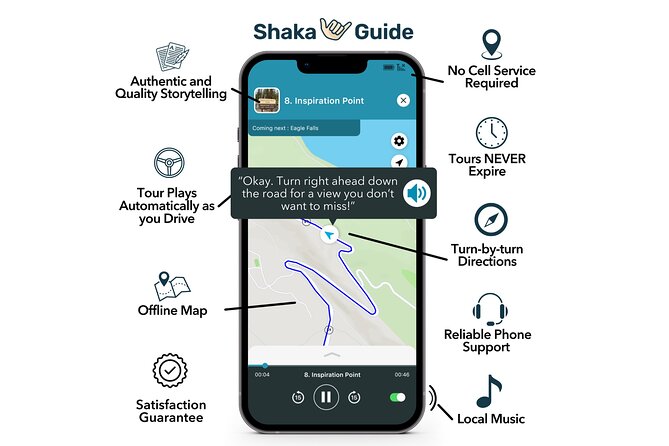
Red Rock Canyon clicks best when you are not watching a timer. This self-guided drive, using the Shaka Guide app, turns the Scenic Drive into a hands-free route with GPS-activated directions, audio stories, and music that matches the vibe. You also get an offline map, so once you’re in the park area, you can keep going without hunting for cell signal.
I like the control you get here: you can start, pause, and resume as you want, which matters a lot when you spot a view worth hopping out for. I also like that the narration is more than scenery talk—there’s geology and history flavor, and the audio helps you anticipate what you’ll see next. One possible drawback: the narration tone can feel more general than deep, and some people may want a more detailed adult-level guide.
In This Review
- Key highlights you will actually feel on the drive
- How the Shaka Guide self-drive works in the real world
- Hitting the Visitor Center first: your one-way advantage
- The Scenic Drive core: where the best red rock shows up
- Calico I and Calico Hills: quick stops that tempt you into hiking
- Sandstone Quarry Overlook and Calico Tanks Trail start: the “worth circling” stop
- High Point and White Rock Trailhead: big views with minimal time
- Willow Spring: petroglyphs, bighorn sheep spotting, and a picnic you’ll remember
- Ice Box Canyon and Red Rock Canyon Overlook: birds, photos, and hike energy
- Pine Creek Canyon and Oak Creek Canyon: later-day shadows and a short gravel detour
- The best overlook finish: the helipad trail at Red Rock Canyon Overlook
- Cowboy Trail Rides and Red Spring Picnic Area: a gentle ending with horses and views
- Price and value: what you pay, what you still need to budget
- Who this self-guided Red Rock Canyon drive suits best
- Should you book this self-guided Red Rock Canyon drive?
- FAQ
- How much does the Red Rock Canyon self-guided drive cost?
- How long does this experience take?
- Is the narration available in English?
- Do I need Wi‑Fi to use the route?
- Where does the tour start and end?
- What do I need to enter Red Rock Canyon?
- Do I have to keep the audio going the entire time?
- Are service animals allowed?
Key highlights you will actually feel on the drive
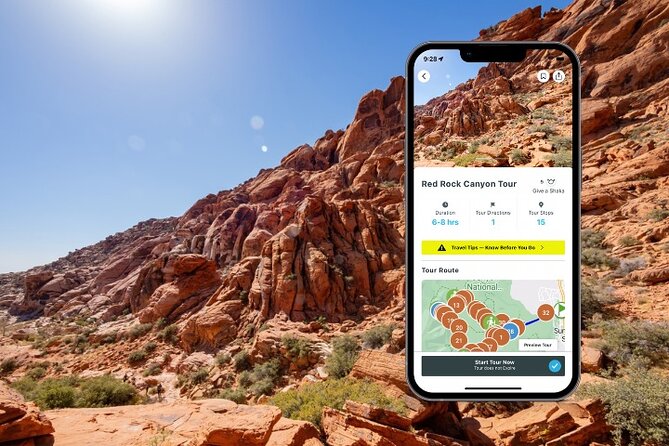
- GPS-activated audio and directions that play as you drive, so you can keep both hands free and attention on the road.
- Offline map access so the route stays usable even if data dies in the canyon country.
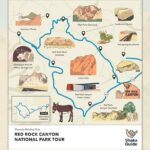
- A stop-by-stop route that balances quick overlooks with hike starting points like Calico Tanks and Petroglyph Wall.
- Visitor Center logistics solved, including the one-way Scenic Drive timing and the key restroom + water station stop.
- Freedom without guesswork, because the app provides turn-by-turn guidance while you decide how long to linger.
- Value for groups, since the tour price is per group up to 15, not per person.
How the Shaka Guide self-drive works in the real world

This experience is a private self-guided drive for your group, not a bus tour. The big practical win is that the audio narration plays automatically as you drive, and GPS provides turn-by-turn directions. You follow a suggested route and speed for the best experience, but you still decide when to park and step out.
Plan on spending about 5 to 6 hours total, depending on how many short hikes and overlook stops you turn into actual time outside. The tour includes hours of narration plus travel tips and music, and it is offered in English. It also has a setup that is designed for easy reuse: the tours never expire, and the route can be launched from the app after you redeem the code sent by email.
The app setup matters. You will download the tour using strong Wi‑Fi first, then you can use the offline map during the drive. For a place like Red Rock Canyon—where you can easily lose signal—this offline piece is not a small feature. It is the difference between staying in motion and spending your day troubleshooting.
You can also read our reviews of more tours and experiences in Las Vegas.

Hitting the Visitor Center first: your one-way advantage
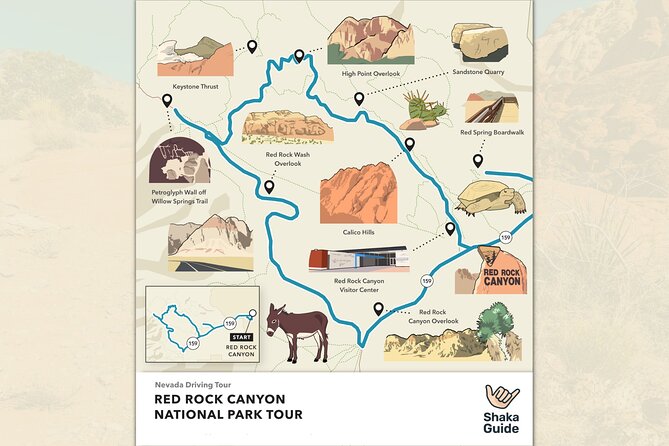
Red Rock Canyon’s Scenic Drive is one-way. That means your only clean shot to stop at the Visitor Center is at the start of the loop.
Why this first stop is worth it:
- You get the bathrooms with running water plus a water filling station. That alone is huge if you plan to hike.
- There’s an Information Booth with trail maps, a gift shop, and outdoor exhibits you can walk through without turning it into a full day commitment.
- You may even spot live desert tortoises, which is one of those “don’t rush it” moments.
There’s a catch: the Visitor Center admission is not included in the tour package. The Scenic Drive entry fee for the day and any parking costs are separate planning items. So treat Stop 1 as a kickoff step: use it to get water, check maps, and set your expectations before the road begins doing its magic.
The Scenic Drive core: where the best red rock shows up
Once you are rolling into the Red Rock Canyon National Conservation Area, nearly everything worth doing is along this drive. Admission for this area along the drive is listed as free, and most people focus their time here instead of trying to stitch together scattered viewpoints.
One timing detail you should not ignore: much of the year, a reservation is required for the Scenic Drive. The self-drive tour can still guide you, but you still need to make sure you can enter the Scenic Drive itself on your day. If reservations slip, you can’t “app your way around” a locked entry.
Here is how the scenic road energy plays out stop by stop.
Calico I and Calico Hills: quick stops that tempt you into hiking
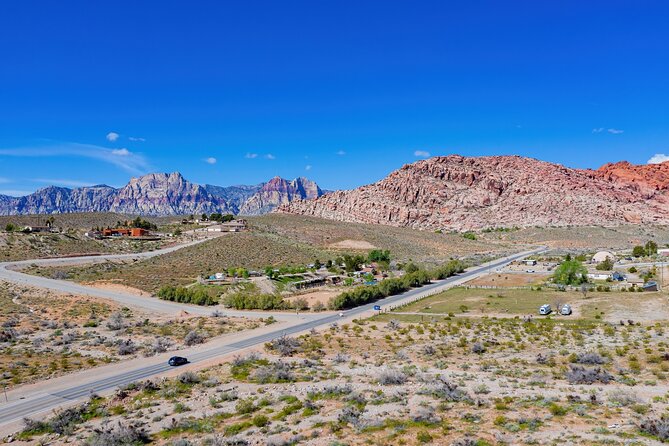
At Calico 1, the whole point is that the red rock hits fast. It is hard to pass without stepping out for photos, and the viewing is good enough that you might only mean to stay 5 minutes. Still, this stop also connects to a moderate hiking option that runs 2 to 6 miles from different start and end points. If you are short on time, even a small taste of the trail can give you the close-up look at the rock shapes.
Then comes Calico Hills, where the views multiply. The small lot can be tight, so if you want the most time outside, you may need to search for a parking spot. From here, you can also access part of the same Calico Hills trail as Calico 1, but you get different angles on the formations—one of those cases where two viewpoints feel like two different photos.
A quick heads-up: these are popular red-rock stops, so expect that your “quick photo stop” might stretch. That’s not a problem if you pace the day, but it is one reason this self-drive can easily become a full half-day.
Sandstone Quarry Overlook and Calico Tanks Trail start: the “worth circling” stop
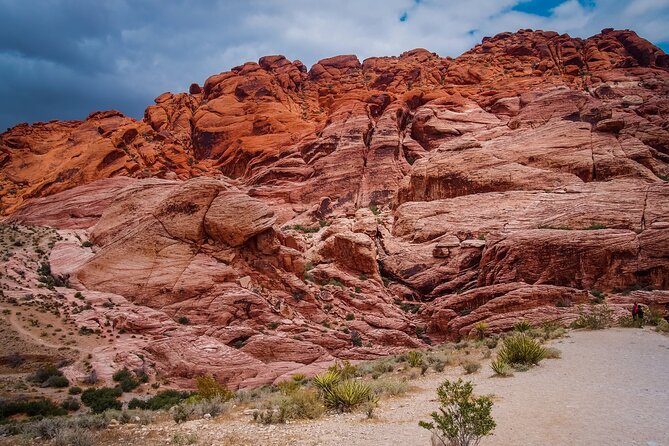
Sandstone Quarry Overlook is tied to a trail start that many hikers treat as a must. It’s also the site of an old quarry operation, so you can see old cuts in the sandstone and a few slabs left behind. That history makes the geology feel more than pretty—like the landscape used to be “worked.”
Look for rock climbers way up high. From street-level they can blend in, but they add energy to the viewpoint.
Most importantly, this is the starting point of the Calico Tanks Trail. If you are here during busy hours, you might have to drive around the parking lot a few times until a space opens up. I’d plan for that possibility. If you are the type who hates waiting, you can still enjoy the overlook itself, but if you do want the tanks trail, build in time to find a spot.





High Point and White Rock Trailhead: big views with minimal time
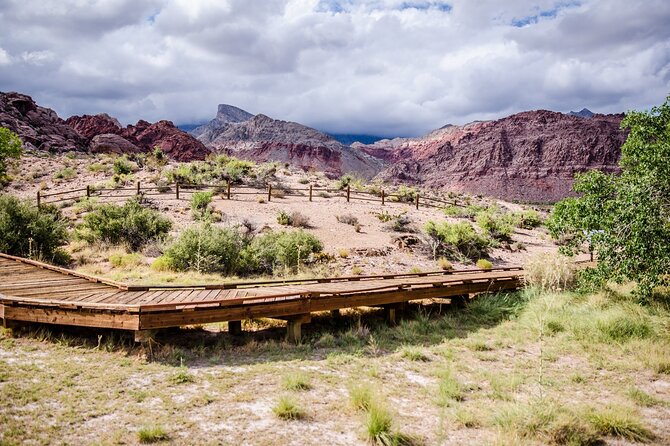
If you want a “walk out, see a lot, walk back” rhythm, High Point Overlook is your break. It is brief—park and take in the view for about 5 minutes. The value here is psychological. It resets your eyes after a couple of hiking-leaning stops.
Then you reach White Rock Trailhead, and this one punches above its time allowance. It is at the highest elevation point in Red Rock Canyon at 4,771 feet above sea level. When you pull in, you can get out and slowly turn full-circle to take in the mountain majesty around you.
This is one of those stops where you do not need a long trail to feel like you saw something special. The viewpoint does the work.
Willow Spring: petroglyphs, bighorn sheep spotting, and a picnic you’ll remember
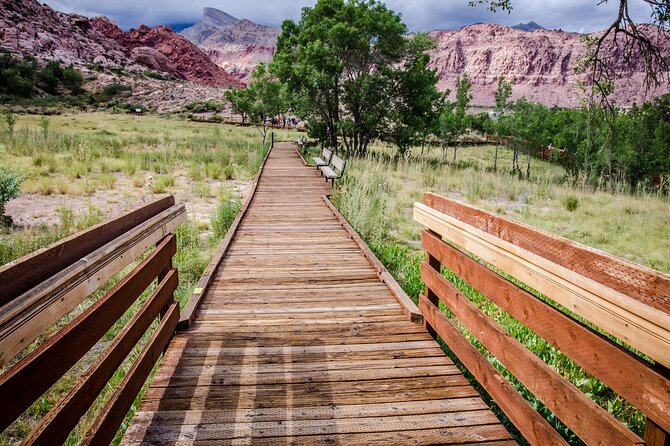
Willow Spring is a major “pay off” stop. It is a picnic area with mountain views, and it’s set up for easy hikes that still feel like you earned them.
Two highly recommended trails here:
- Petroglyph Wall Trail: a very short easy hike of 0.15 miles round trip, about 30 minutes. You’re looking at cliff side ancient art dating back over 800 years.
- Willow Springs Loop: an easy 1.5-mile round-trip option. The loop runs parallel to the parking lot, and you can start walking right from the picnic tables. Often bighorn sheep appear on the ledges above, and they can blend in with the rock. Keep your eyes up.
You’ll also pass the largest ancient agave roasting pits. Even if you skip details, just knowing they’re there gives you a reason to slow down and look at the ground and rock edges instead of only the distance views.
Lost Creek Canyon, right in the same area, keeps the bighorn sheep theme going. It’s another quick stop, more about spotting than rushing. A popular hike from here is the Children’s Discovery Trail: rated easy, with some rocky terrain and a boardwalk. There’s also a seasonal waterfall that usually flows between December and April. Even if you are not chasing the waterfall, the plants and trail variety make it feel different from just an overlook.
One note: the waterfall timing is seasonal. If you are outside December–April, you still get the trail, just don’t count on the falls.
Ice Box Canyon and Red Rock Canyon Overlook: birds, photos, and hike energy
At Ice Box Canyon, the vibe shifts toward birding and advanced hiking. The trailhead from here is listed as difficult and strenuous. If you are not up for that, you can still park and enjoy the scenery from the lot and take photos.
Then there’s Red Rock Canyon Overlook, a sweeping and serene stop. It’s short—just take it in for a couple of minutes. This is where you start noticing the small desert details: wind through the mountains, and birds you might spot in the Joshua trees, including the western tanager. It’s less about a big viewpoint moment and more about slowing your mind down long enough to actually hear the place.
Pine Creek Canyon and Oak Creek Canyon: later-day shadows and a short gravel detour
Pine Creek Canyon offers open desert views plus monolithic canyon walls. It also has diverse plant life, so if you like noticing how desert plants are adapted, this stop is for you. There’s also a useful light tip: if you arrive later in the day, this side of the Scenic Drive can be shrouded in silhouette, with the sun coming from behind the mountains. That can make for dramatic contrast in photos.
There is also a moderate hike from Pine Creek Canyon that leads past an old homestead site and into a meadow. That sounds like “only if you have time,” but the stop itself is still worth a quick pause if you’re keeping the day flexible.
Then comes Oak Creek Canyon, which is accessed by a short gravel road. The good news: regular cars handle it as long as you drive slowly. A practical thing to watch for here is wildlife. Mule deer sometimes romp around the area and can run right past your car, so keep an eye on the edges and don’t creep forward aggressively.
You’ll also see the canyon cutting into the Red Rock Escarpment—another quick detour that fits nicely between longer hikes.
The best overlook finish: the helipad trail at Red Rock Canyon Overlook
Stop 14 is described as arguably the best overlook in all of Red Rock Canyon. What makes it feel different is that you’re not only looking from the lot. There’s a paved trail that begins at the helipad on the far end of the parking lot.
You’ll stroll past Joshua trees to benches at the tip of the overlook. From there you can see most of the giant mountains along the Scenic loop that you just drove. It’s a nice mental wrap-up: you get to look back at the route you followed and realize how much you covered without a bus schedule.
This is also a great spot for a simple picnic with a view. If you brought food, this is where I’d use it—because the motivation to eat outdoors in desert air is real.
Cowboy Trail Rides and Red Spring Picnic Area: a gentle ending with horses and views
At Cowboy Trail Rides, the focus is horses and mules. You might also see Jackson the Red Rock Burro if he’s home and not out on a trail ride. It’s a quick stop, but it breaks up the geology-and-hiking pattern with a more ranch-style desert moment.
If you like the idea of riding, the Fossil Ridge Trail begins from here and it may tempt you to book a horseback ride along canyon paths. The tour itself doesn’t include a ride, but the presence of these options is why this stop feels like a fork in the road—stay self-guided now, or upgrade later if you want that specific experience.
Then you can finish at Red Spring Picnic Area, where you can settle in for about an hour. It’s another picnic spot with a stunning view, and it works well as a final decompression stop before heading back to Las Vegas.
Price and value: what you pay, what you still need to budget
The tour itself is $10.39 per group (up to 15 people). That pricing is a standout for families and mixed-age groups. If you fill the group limit, you are effectively paying under a dollar per person for the guided app portion.
But your day cost isn’t only the app. Here’s what is explicitly not included:
- Entrance fees: $15.00 per person
- Parking fees
- Meals and refreshments
That means your total cost will usually be dominated by the $15 per person entrance fee. So the real “value math” depends on whether you’re paying for a small group or a larger one. For a couple, you might feel the fixed group price a bit more. For a bigger party, the app cost becomes almost irrelevant, and you’re mostly paying the park entry.
On the plus side, the tour includes more than generic audio. You get GPS turn-by-turn directions, an offline map, and auto-playing narration, plus the ability to pause and restart without losing the route. For many people, that is what converts Red Rock from a drive into a planned day that still feels free.
Also, tours never expire. If you buy it on a trip day when weather or crowds don’t cooperate, you can still use it later.
Who this self-guided Red Rock Canyon drive suits best
This is a strong pick if you want:
- Freedom and privacy: your group only, no waiting for a larger crowd schedule.
- A mix of quick photo stops and optional hikes without committing to one rigid plan.
- A guided route that helps you hit the best stops, especially early when the Visitor Center timing matters.
It also fits people who like learning while they move. The narration covers more than sight descriptions, with geology and history-style info included in the audio.
If you are the type who wants a highly technical, deeply structured lecture, you might find the audio a bit general. That’s not a dealbreaker if you are more focused on the canyon itself, but it is worth flagging.
Should you book this self-guided Red Rock Canyon drive?
I’d book it if you want to see Red Rock Canyon efficiently, with offline GPS and hands-free audio, while still choosing how long you linger at each overlook. The route is built around the Scenic Drive, plus the hike start points that most people actually want, like Calico Tanks and Petroglyph Wall.
I wouldn’t book it if you already have a solid plan for the Scenic Drive, you hate using apps, or you know you will not stop at more than a couple of viewpoints. In that case, you might be better off with a simpler parking-and-road day.
If reservations are needed on your travel dates, double-check that you can enter the Scenic Drive before you go. Once that’s handled, this is a smooth way to turn a long desert drive into a day with rhythm, views, and just enough story to make the rock feel personal.
FAQ
How much does the Red Rock Canyon self-guided drive cost?
It costs $10.39 per group (up to 15 people). Entrance fees are not included, and listed parking fees also aren’t included.
How long does this experience take?
Plan for about 5 to 6 hours, depending on how many stops and short hikes you choose.
Is the narration available in English?
Yes, the experience is offered in English.
Do I need Wi‑Fi to use the route?
No. The tour includes an offline map, and it is designed to work without continuous Wi‑Fi or data.
Where does the tour start and end?
It starts in Summerlin, Las Vegas, NV, USA and ends back at the meeting point.
What do I need to enter Red Rock Canyon?
The entrance fee is listed as $15.00 per person, and parking fees are not included. Also, much of the year, a reservation is required for the Scenic Drive.
Do I have to keep the audio going the entire time?
No. The experience is flexible: you can start, pause, and resume on your schedule.
Are service animals allowed?
Yes, service animals are allowed.