REVIEW · STRASBOURG
Strasbourg Walking Tour with Audioguide on Your Smartphone
Book on Viator →Operated by TouringBee · Bookable on Viator
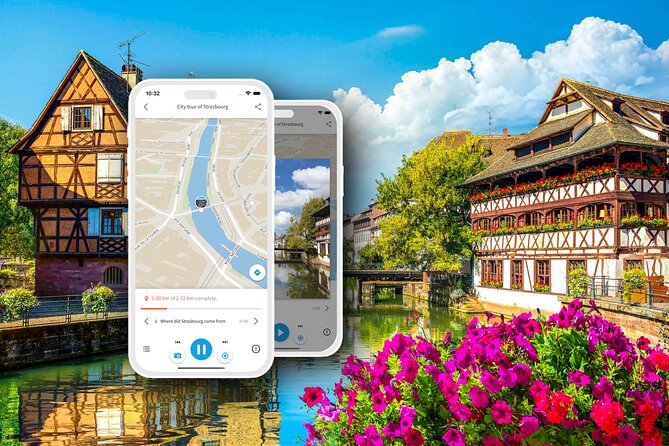
Strasbourg walks itself with your phone. This self-guided route pairs 33 audio stops (narrated by a professional historian) with a no-Wi-Fi offline map, so you can cover major sights like Cathédrale de Strasbourg and La Petite France without getting turned around.
I love the offline map and route that make turning points clear, especially along the canals. I also like the short, practical stop-by-stop explanations that let you pause for photos or a snack without falling behind. One thing to plan for: you’ll rely on your phone battery and you must bring your own headphones.
In This Review
- Quick hits before you start
- How this Strasbourg smartphone audioguide really works
- Price and value: why $6.73 can make sense
- Start in Strasbourg: building your day around Pont Kuss
- Stop-by-stop: what each landmark gives you
- Église Protestante Saint-Pierre-le-Vieux: the split-church story
- Grand’Rue: half-timbered street time
- Place Benjamin Zix: a quiet pause in Petite France
- Pont du Faisan: the turning bridge you’ll want to watch
- La Petite France: medieval-feeling canals and streets
- Ponts Couverts + Barrage Vauban: bridges, defense, and a viewpoint
- Église Saint-Thomas: Gothic + music legend
- Rue Mercière and Place Gutenberg: street views that aim at the cathedral
- Cathédrale de Strasbourg: inside wonder and the spire climb
- Maison Kammerzell: the Renaissance façade worth lingering on
- Place du Marché aux Cochons de Lait: a small square with a big name
- Pont du Corbeau: a river bridge with a darker medieval note
- Musée Alsacien: traditions through rooms and objects
- Offline audio on a walking day: your phone survival checklist
- Who should book this Strasbourg smartphone audio tour
- Should you book this Strasbourg tour?
- FAQ
- How long is the Strasbourg walking tour with smartphone audio?
- Do I need Wi-Fi during the walk?
- What language is the audioguide in?
- Is there a human guide with you during the walk?
- What do I need to bring with me?
- What’s included in the price?
- Can I cancel for a full refund?
Quick hits before you start
- 33 historian-narrated recordings that keep the pacing tight and useful
- Offline map + offline audio, so you’re not hostage to signal
- No fixed group agenda: follow the route at your pace, with freedom to linger
- Landmark illustrations help you confirm you’re at the right spot
- Key icons included: Petite France, Ponts Couverts, Barrage Vauban, and Cathédrale de Strasbourg
- Self-guided setup: no human guide at the start point
How this Strasbourg smartphone audioguide really works
This is a self-guided walking tour through Strasbourg’s historic center. You purchase the mobile ticket, download the TouringBee audio guide app for iPhone/Android, activate your ticket inside the app, and then follow the GPS-programmed route shown on your phone.
Here’s what that means for you on the ground:
- You’re not waiting for a group to arrive. You choose when to stop, start, and re-start.
- The app is built for navigation stress—turns and route segments are handled for you.
- The audio is packaged as bite-sized recordings per landmark, so you don’t need to commit to one long lecture.
You’ll want to treat your phone like a small tour companion, not a passive map. If you’re outdoors and walking fast, glance at the route line often. That reduces the chance you’ll hunt for a church sign or bridge detail when you’re one block off.
You can also read our reviews of more tours and experiences in Strasbourg.

Price and value: why $6.73 can make sense
At $6.73 per person for roughly 2 hours 30 minutes, this is priced for budget-friendly “see the main stuff” discovery. You’re paying for three big things:
- Access to 33 audio recordings by a professional historian
- Offline navigation support (map + route)
- A whole-year window to revisit the tour in your preferred language
If you like having context but don’t want to pay for a live guide, this fits well. If you’re someone who enjoys getting your bearings first, then wandering back later under your own steam, the format works.
The trade-off is depth. Audio tours are great for orientation and key facts, but they’re not the same as a real person answering your specific questions on the fly.
Start in Strasbourg: building your day around Pont Kuss
Your route starts at Pont Kuss on Rue du Maire Kuss (67000 Strasbourg). From there, the walk loops back to the meeting point.
Why this start location matters: you’re dropped into the dense historic core early, right where you want to be if your goal is a concentrated day of churches, bridges, and half-timbered streets. And because it’s near public transportation, you can adjust your day if you arrive late or want to hop off to grab lunch and return later.
Stop-by-stop: what each landmark gives you
Église Protestante Saint-Pierre-le-Vieux: the split-church story
The tour begins with Église Protestante Saint-Pierre-le-Vieux. This 13th-century church is special because it’s divided into both Catholic and Protestant sections, a physical reminder of Strasbourg’s religious coexistence over centuries.
What to look for:
- Gothic and Romanesque design details
- Stained glass windows
- A calm interior that helps you reset before the walking starts
Time here is short—about 10 minutes—so don’t expect a long sit-down. Use it as a “context stop” that gives meaning to the religious architecture you’ll keep seeing later.
Grand’Rue: half-timbered street time
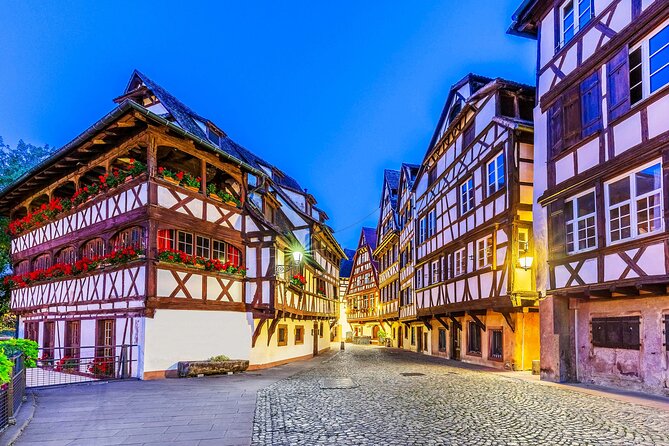
Next comes Grand’Rue. This is one of those streets where Strasbourg’s character shows up immediately: half-timbered houses, shops, cafes, and the mix of older and newer life along a medieval core.
Practical tip: treat Grand’Rue like your move-and-look street. Walk slowly enough to spot the building styles, then keep going. If you stop too long, you’ll lose momentum before the canal area.
Place Benjamin Zix: a quiet pause in Petite France
Place Benjamin Zix sits in the Petite France district area. It’s a small square with half-timbered houses and views that work great for a quick coffee or a breather between bigger sights. The name honors the 19th-century Alsatian artist Benjamin Zix, which makes this a good moment to look at the human side of the neighborhood.
This stop is about 10 minutes, so it’s perfect for:
- photographing from one of the square edges
- scanning canal views without committing to a long detour
Pont du Faisan: the turning bridge you’ll want to watch
Pont du Faisan (also called the Pont Tournant, or Turning Bridge) is one of Strasbourg’s fun engineering sights. It pivots to let boats pass through the narrow canal area, so it’s not just a pretty bridge—it’s a working piece of city infrastructure.
What makes it worth your time:
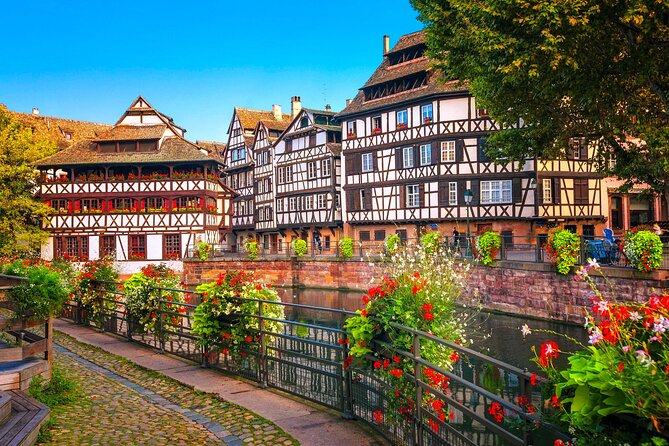
- You get canal views framed by Petite France’s half-timbered buildings
- It’s a quick stop that still feels distinctive
If boats are moving while you’re there, you’ll get an extra layer of interest. If not, the bridge shape still tells a story.
La Petite France: medieval-feeling canals and streets
Then you step into La Petite France, Strasbourg’s most famous picture zone. You’ll see well-preserved medieval half-timbered houses, flower-adorned balconies, and winding cobblestone lanes by the Ill River.
This is where you slow down a little—even if the audio keeps moving. It’s also where you’ll likely want to step back and take a few steady photos. The stop is brief (about 5 minutes in the route notes), but your extra moments here are what turn an audio tour into an actual day.
If you’re tempted to wander off for longer: do it after you confirm you’re still oriented on the app route. Petite France looks easy to explore, and it is—until you realize you’ve drifted a full street away.
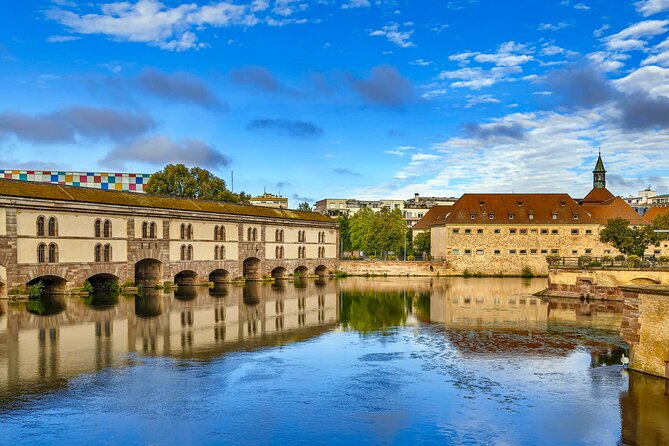
Ponts Couverts + Barrage Vauban: bridges, defense, and a viewpoint
The route then becomes “engineering tour,” with three interconnected stops around the Ill.
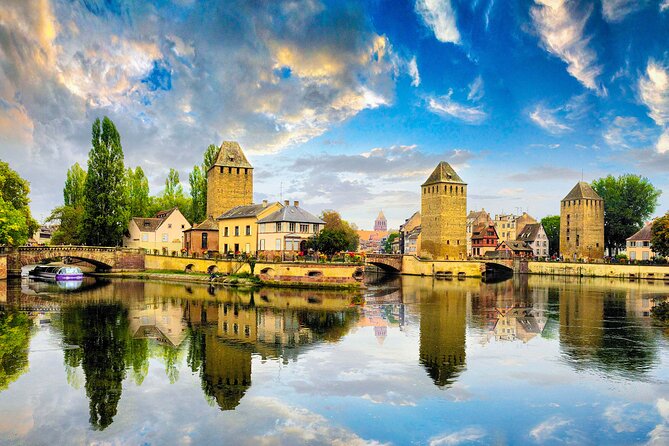
First: Pont Couverts. This refers to Ponts Couverts, dating to the 13th century, with three bridges and defensive towers once used as part of Strasbourg’s medieval protection system. You can cross for canal views, and you’ll understand why this stretch was so strategically important.
Next: Barrage Vauban. This 17th-century defensive weir and bridge was designed by Sébastien Le Prestre de Vauban. It includes a covered gallery with sculptures and exhibits. You can also climb up to a panoramic terrace for views over Petite France and Strasbourg’s skyline.
Then the route returns again to Ponts Couverts for another angle (you’ll have better framing once you’ve seen the Vauban area). The double appearance is useful: bridges can look different from opposite approaches, and the audio helps you catch that.
Time reality check: these stops are short (about 5 minutes each). So the best move is to focus on one “anchor activity”:
- either take a few steady photos from the bridge
- or use the audio to connect the defense function to what you see
Église Saint-Thomas: Gothic + music legend
Église Saint-Thomas is a standout church stop. It’s a Gothic building completed in the 13th century and known for the 18th-century Silbermann organ, famously played by Wolfgang Amadeus Mozart, plus the Mausoleum of Maurice de Saxe.
If you care about music or arts history, this is a great place to pause and listen with extra attention. The organ connection is a strong detail for remembering the building later.
This is also a good reminder that churches here can be more than architecture—they’re cultural storage rooms. The route keeps it quick (around 5 minutes), so if you want a longer look inside, plan extra time on your own after the audio ends.
Rue Mercière and Place Gutenberg: street views that aim at the cathedral
Now you move toward central classic Strasbourg scenes.
- Rue Mercière is lined with preserved half-timbered buildings, and it offers a famous view toward the cathedral at the end of the street.
- Place Gutenberg is a central square named after Johannes Gutenberg, inventor of the printing press. It has a Gutenberg statue and lots of cafes and events around it, so it’s a natural “reset point.”
Why these fit together: Rue Mercière sets up the approach. Place Gutenberg is where you look around and absorb the street energy before committing to the big Gothic moment.
Cathédrale de Strasbourg: inside wonder and the spire climb
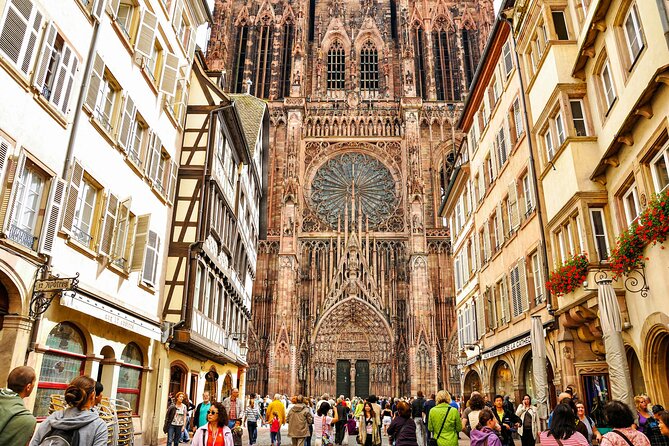
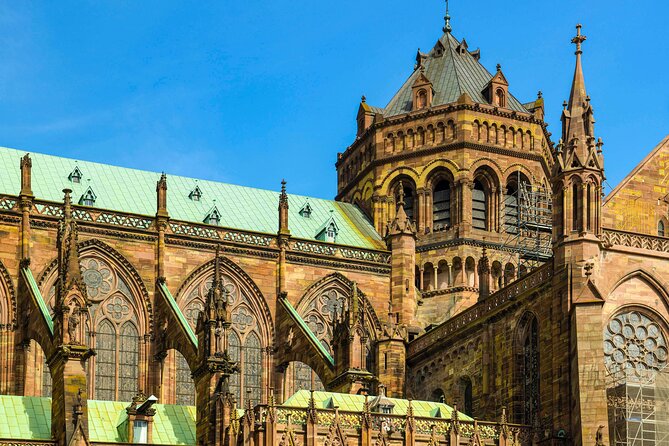
Cathédrale de Strasbourg is the major icon on this route. Expect soaring Gothic architecture, a detailed façade, sculpture work, and a famous interior experience with stained-glass windows, an astronomical clock, and a grand organ.
And yes, there’s a workout option: climb 332 steps to the spire’s platform for panoramic views.
Important practical note: the audio doesn’t include entrance fees. So if you plan to go inside and especially if you want spire access, check what you need ahead of time and plan your timing so you’re not rushing.
This is also where your phone habits matter. If you’re filming or photographing, stop playing audio briefly so you don’t miss route prompts. Then start again once you’re safely inside the area.
Maison Kammerzell: the Renaissance façade worth lingering on
Close by is Maison Kammerzell, a 15th-century building with Alsatian Renaissance style. Its wooden façade is carved and decorated with whimsical sculptures and detailed artwork, and it’s known for being home to a renowned restaurant today.
Even if you don’t eat there, this is a great “look closer” moment. The façade is the kind of thing you only fully appreciate when you slow down and stand directly in front of it.
Place du Marché aux Cochons de Lait: a small square with a big name
Next is Place du Marché aux Cochons de Lait, translated as the Suckling Pig Market Square. It’s another quick pause with half-timbered buildings and a cozy feel that suits a snack or coffee break while you regroup before the river crossing moments.
It’s short (about 5 minutes), so your goal is atmosphere + photos, not long browsing.
Pont du Corbeau: a river bridge with a darker medieval note
Pont du Corbeau (Raven Bridge) crosses the Ill River and connects the Grande Île to the Neustadt district. It’s remembered for a grim medieval use as a public execution spot, but today it’s all about the views and the historic bridge feel.
What to do here:
- walk slowly across if you want the full river perspective
- use the audio to connect the historical function to the place
It’s another quick one (about 5 minutes), so keep your time allocation realistic.
Musée Alsacien: traditions through rooms and objects
The last major stop is the Musée Alsacien. It’s housed in several historic 17th-century buildings along the Ill River. The museum focuses on traditional Alsatian life, with rooms of period furnishings, regional costumes, everyday objects, and recreated home and workshop interiors.
This is a good “end with meaning” stop. Architecture and streets are fun, but museums help connect what you saw to how people lived. Again, admission fees aren’t included in the audio, so treat the museum as an optional add-on depending on your energy level.
Offline audio on a walking day: your phone survival checklist

A lot of the success of this kind of tour comes down to practical phone management.
Do this:
- Download the audio and offline map before you start. Offline is the whole point of not needing Wi-Fi.
- Bring your own headphones. They aren’t included.
- Keep your phone battery protected. One review note pointed out that the phone can get low toward the end, so a small power bank can save your day.
- If you get lost, trust the app’s map and illustrations. The route is designed to guide you between stops, but you still need to match the landmark visually.
Also, don’t panic if a pronunciation sounds slightly off. It won’t change where you are. It just means you’re hearing the audio narration style.
Who should book this Strasbourg smartphone audio tour
You’ll likely enjoy it most if you:
- want to cover major Strasbourg sights in one 2.5-hour walking block
- prefer solo pace over group pacing
- like historical context in short, usable chunks
- want offline navigation so your day doesn’t depend on Wi-Fi
It may not be your best choice if you need:
- very deep storytelling at each stop (audio recordings tend to stay short)
- lots of human back-and-forth questions
- a low-tech experience, since everything depends on your phone working smoothly
Should you book this Strasbourg tour?
Book it if you want an efficient, low-stress way to see Strasbourg’s classics—especially the cathedral area and canal neighborhoods—while still keeping control of your time. The price is low enough that you’re not overcommitting, and the offline map + audio is the feature that makes it feel like a real travel tool, not just a novelty.
Skip it (or pair it with a separate plan) if your main goal is deep, long-form history. In that case, you’ll probably want a live guide for at least part of the day. But for getting your bearings and enjoying a smart route through key sights, this one does the job.
FAQ
How long is the Strasbourg walking tour with smartphone audio?
It runs about 2 hours 30 minutes.
Do I need Wi-Fi during the walk?
No. The map and audio narrations are available offline after you’ve downloaded them.
What language is the audioguide in?
The tour is offered in English.
Is there a human guide with you during the walk?
No. It’s self-guided, and there is no human guide at the meeting point.
What do I need to bring with me?
You’ll need your own smartphone and headphones. Headphones are not included.
What’s included in the price?
You get 33 audio recordings narrated by a professional historian, the audio guide app for iPhone and Android, illustrations to identify landmarks, and offline map navigation. Access is available for 1 year.
Can I cancel for a full refund?
Yes. Cancellation is free up to 24 hours in advance for a full refund.