REVIEW · SEQUOIA AND KINGS CANYON NATIONAL PARK
Kings Canyon National Park Self-Guided Audio Tour
Book on Viator →Operated by Shaka Guide Apps · Bookable on Viator
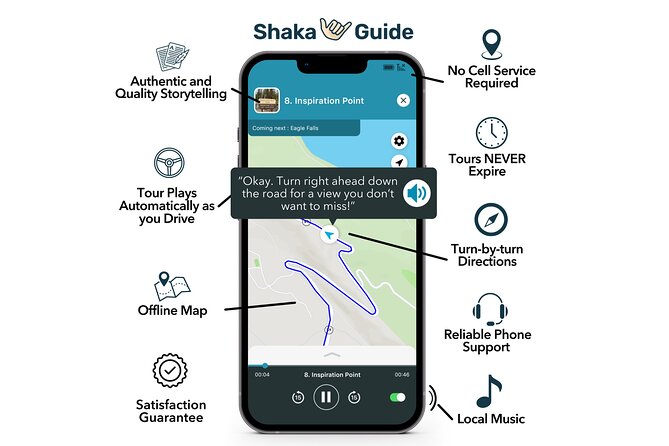
Your car becomes the tour bus. This self-guided audio tour uses GPS so stories and directions play as you drive, plus an offline map so you can keep going without cell service. I especially like how easy it is to use hands-free, and how the narration strings together big-tree history with real-world park tips. One thing to plan for: Boyden Caverns costs extra and the cave tour involves a short, steep walk.
You’ll also enjoy the way it mixes quick pull-offs with a few low-effort walks. At Big Stump Picnic Area, an easy 2-mile loop gets you to what’s left of the Mark Twain Tree, and at Grant Grove you can reach the General Grant Tree on a short paved loop without needing a big hike. It’s a great setup when you want big scenery but don’t want to be bouncing between complicated reservations.
The overall value is strong because the price covers one group (up to 15 people) and the route is flexible. You’re not locked into a rigid bus schedule, and you can pause, skip stops, and restart as you like.
In This Review
- Key highlights worth building your day around
- Price and what you truly get for $9.59 per group
- How the app runs the route: offline GPS and hands-free narration
- Your day in Kings Canyon: the 17 stops, what to expect, and how to pace it
- 1) Big Stump Picnic Area and the 2-mile loop to Mark Twain Tree
- 2) Redwood Mountain Overlook for the biggest sequoia grove in the world
- 3) Kings Canyon Overlook: breathtaking even without walking
- 4) Kings Canyon Visitor Center in Grant Grove Village
- 5) Grant Grove and the General Grant Tree loop
- 6) Panoramic Point for Hume Lake views and an optional fire-lookout hike
- 7) McGee Vista Point and the story behind fire damage
- 8) Junction View: Kings River forks plus Mount Whitney sightline
- 9) Yucca Point: another easy overlook above the Kings River
- 10) Scenic Byway Viewpoint for marble/limestone vein contrast
- 11) Boyden Cavern: a paid guided cave tour with a steep walk
- 12) Grizzly Falls Picnic Area: an easy lunch stop by an ~80-foot waterfall
- 13) Cedar Grove Visitor Center: second visitor stop and seasonal timing
- 14) Knapp’s Cabin: historic riverside cabin you can reach by a short trail
- 15) Roaring River Falls: calm sound, easy walk, and optional meadow continuation
- 16) Zumwalt Meadow Trail: the short way to a wide-open view
- 17) Muir Rock: the final sit-down moment on the Kings River
- What you’ll learn along the way (beyond facts on a screen)
- Timing, food, and practical pacing for a 6–7 hour drive
- Should you book this Kings Canyon self-guided audio tour?
- FAQ
- How much does the Kings Canyon National Park self-guided audio tour cost?
- How long should I plan for the tour?
- Do I need Wi-Fi or data for the audio and map?
- Is the tour audio in English?
- Are park or entrance fees included?
- Where does the tour start and end?
Key highlights worth building your day around
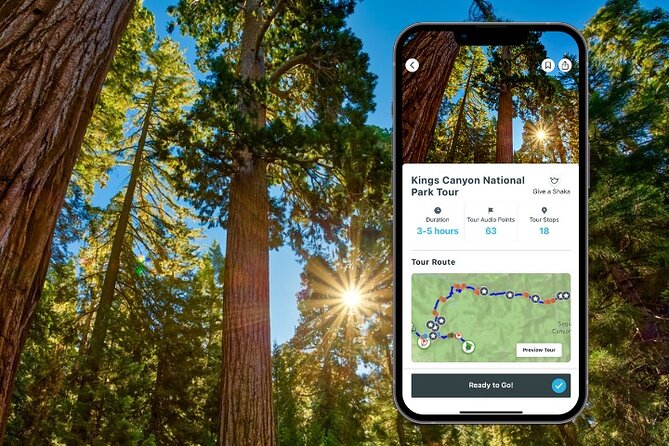
- GPS-activated audio: directions and stories play automatically while you drive
- Offline map support: you can navigate without data or Wi-Fi
- Big-tree stops without hard hikes: paved loops at Grant Grove and short walks at key overlooks
- Waterfalls and canyon views on demand: frequent pull-offs mean you can stop for photos fast
- Fire-and-sequoia context: McGee Vista Point adds meaning to what you’re seeing
Price and what you truly get for $9.59 per group
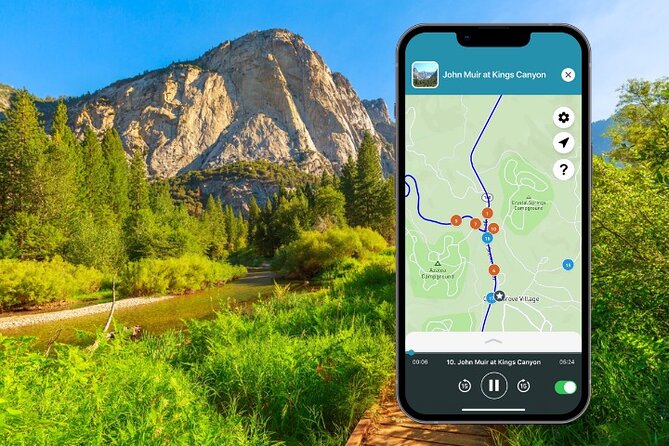
At $9.59 per group (for up to 15 people), this tour is priced like a smart add-on rather than a big-ticket guiding expense. The cost makes sense when you’re traveling with family or friends and sharing a single vehicle. If you’re paying per person for a classic ranger tour, the math gets awkward fast—especially in parks where options can be limited by timing.
You’re buying three practical things:
- Time-saving navigation: GPS turn-by-turn directions reduce decision fatigue.
- Story support: audio narration gives context while you’re stopped or moving.
- Flexibility: you can pause, skip, and take it over multiple drives since tours never expire.
Duration is listed as about 6 to 7 hours, so think of it as a full driving day with selective walking. If you want to move faster, you can skip some of the walk-heavy stops (like the meadow trail or the cavern) and still hit the best viewpoints.
You can also read our reviews of more tours and experiences in Sequoia and Kings Canyon National Park.
How the app runs the route: offline GPS and hands-free narration
This isn’t a headset-only experience. The audio is designed to play automatically as you drive, with GPS-triggered stops and turn-by-turn guidance. That matters because Kings Canyon and Sequoia areas are full of “tiny decisions”: which road turn, where the pull-off is, when it’s worth parking.
Two features that make this easier in real life:
- Offline map so you’re not hunting for service at the worst possible moment.
- Music, travel tips, and highlights woven into the narration, so you don’t feel like you’re just listening to facts.
Also, you can choose a custom starting point. The tour lists optional starts near:
- Highway 180 heading toward Big Stump Entrance
- Highway 245 heading toward Big Stump Entrance
That flexibility helps if you’re already on the right side of the park loop when you reach Three Rivers (your start/end area).
Your day in Kings Canyon: the 17 stops, what to expect, and how to pace it
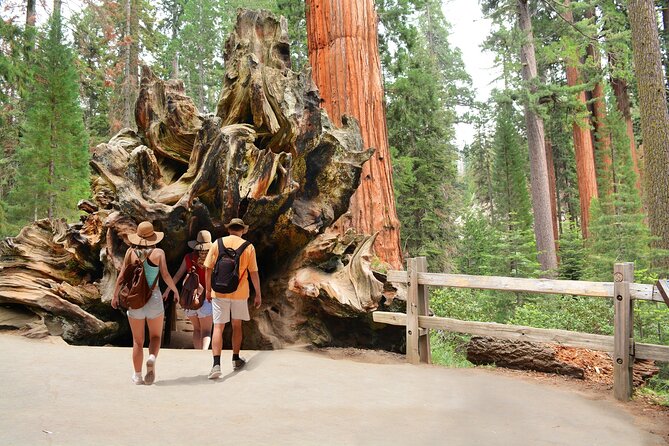
Below is the route logic you’ll follow: quick scenic overlooks, visitor centers for context and amenities, then a handful of walks and canyon-side moments. The best strategy is to treat each stop like a “pause button,” not a timed obligation.
1) Big Stump Picnic Area and the 2-mile loop to Mark Twain Tree
You start at Big Stump Picnic Area, then take an easy 2-mile loop to Big Stump itself. This is the remnant of the Mark Twain Tree—once about 16 feet in diameter and over 300 feet tall. The narration here is useful because it turns a simple walk into an actual story of how iconic trees were treated in the past.
Why I like this stop:
- The walk is manageable for most people.
- It builds the big-tree theme early, so later stops hit harder.
Practical note: this is a good place to stretch before you go full “drive-and-pull-off mode.”
2) Redwood Mountain Overlook for the biggest sequoia grove in the world
Next up is Redwood Mountain Overlook. You’re pulling in for a view of Redwood Mountain Grove, which spans almost 2,500 acres and is described as the biggest sequoia grove in the world.
Then you get a real planning fork. From this general area, the tour mentions hikes like:
- Sugarbowl Loop (6.8 miles)
- Hart Tree Loop (7.3 miles)
Those are optional, but they show what kind of terrain you’re moving through. If you’re aiming for a 6–7 hour day, treat the overlook as your win and skip the long trails unless you’re ready for a heavier commitment.
3) Kings Canyon Overlook: breathtaking even without walking
At Kings Canyon Overlook, the point is simple: pull up and take in the view. The park’s namesake canyon is described as being almost 2,000 feet deeper than the Grand Canyon, with Kings Canyon reaching 8,200 feet versus Grand Canyon maxing at 6,000 feet.
This is the kind of stop that pays off if you’re short on time or tired of walking. I’d use it as a reset: photos, a snack bite if you packed one, then back in the car.
4) Kings Canyon Visitor Center in Grant Grove Village
The Kings Canyon Visitor Center is where you switch from “views only” to “learn more, shop less, plan better.” You can watch a short film, grab maps/books/souvenirs at the Sequoia Parks Conservancy Store, and eat nearby at the Grant Grove Restaurant or quick stop at the Market.
This is also a good place to confirm seasonal details you’re unsure about, like what’s open in the moment. Even if you keep the rest of your day self-guided, this is a solid anchoring stop.
5) Grant Grove and the General Grant Tree loop
Now for the heavyweight: Grant Grove and the General Grant Tree. It’s listed as the world’s second-largest tree, plus it’s near other named landmarks like the Fallen Monarch, Gamlin Cabin, and the Centennial Stump.
The tour gives hard numbers: 268 feet tall and 107 feet around, and you can reach it on about a third of a mile, easy, paved loop trail.
This is a favorite style of stop: big payoff with low effort. Even if you only have energy for one short walk, make it this one.
6) Panoramic Point for Hume Lake views and an optional fire-lookout hike
Panoramic Point is another minimal-walking stop with a high-elevation look that includes Hume Lake. The tour also suggests a longer add-on: the trail to Park Ridge Fire Lookout, listed as 5 miles (8 km) and moderately difficult.
If you’re with kids, older legs, or limited time, stick to the parking-lot view. If you do take the lookout, plan on using this stop to build in extra time for a real hike, not just a photo stop.
7) McGee Vista Point and the story behind fire damage
At McGee Vista Point, you’re looking down at damage from the Rough Fire, and the audio connects that to the relationship between wildfire and sequoia trees.
This is one of those stops where the narration genuinely changes how you see what’s in front of you. Without context, burned areas can feel random and sad. With the audio explanation, it becomes part of a larger ecological story.
8) Junction View: Kings River forks plus Mount Whitney sightline
Junction View gives you a panoramic look toward Mount Whitney (tallest peak in the lower 48 states). The overlook also gets its name from the junction of the Middle and South forks of the King River, with Kings Canyon in the picture too.
This is a classic “worth the car pull-off” moment. The time commitment is small, but it helps tie the canyon system together across distances.
9) Yucca Point: another easy overlook above the Kings River
Yucca Point is placed after a mention that the drive into the canyon can be long and twisty. So this stop is practical: get out, stretch, and grab a view above the Kings River.
If your driving time is tiring, I’d treat these overlook stops as breaks you schedule on purpose, not things you squeeze in when you already feel rushed.
10) Scenic Byway Viewpoint for marble/limestone vein contrast
At Scenic Byway Viewpoint, the tour points out a specific visual detail: a limestone vein, also called marble, running through the park. You’re meant to look for gray stone against the surrounding ground cover.
This is a nice stop because it trains your eye. Instead of just looking, you’re practicing noticing geology—one of the most satisfying ways to understand a park’s history.
11) Boyden Cavern: a paid guided cave tour with a steep walk
Boyden Cavern is the itinerary’s only clearly stated paid activity beyond the general tour. The tour gives you the key facts:
- Guided cavern tours run 45 minutes to an hour
- Entrance is not included, listed as $8–23 per person
- There’s a short but steep walk from the parking area to the entrance
- It’s filled with stalactites, stalagmites, and other rock formations
This is the one part I’d plan carefully. If you’re already on a tight schedule, skip it and keep the rest of the route flowing. But if you like caves and don’t mind the stairs, it adds a totally different texture to the day—cool, dark, and made of stone instead of views.
12) Grizzly Falls Picnic Area: an easy lunch stop by an ~80-foot waterfall
At Grizzly Falls Picnic Area, you get an 80-foot cascade in a shaded forest area. The falls are a short walk from the picnic area and parking lot, and there are restrooms—so this can work as a lunch reset without needing a long hike.
If you want one stop that does multiple jobs—food, comfort, and scenery—this is it.
13) Cedar Grove Visitor Center: second visitor stop and seasonal timing
Then you hit the Cedar Grove Visitor Center in Cedar Grove Village. It shares natural and cultural history and includes a Sequoia Parks Conservancy Store.
But here’s the practical detail that matters: it’s open seasonally, roughly from Memorial Day through mid-September. If you’re visiting outside that window, you may still pass through the area, but the visitor center portion may not be available.
14) Knapp’s Cabin: historic riverside cabin you can reach by a short trail
Next is Knapp’s Cabin, listed on the National Register of Historic Places. It belonged to George O. Knapp, who brought friends on fishing trips there. You’ll reach it via a short trail from the parking area, and it also includes canyon views.
This stop adds a human layer. Instead of only learning about trees and geology, you’re seeing how people used this river corridor.
15) Roaring River Falls: calm sound, easy walk, and optional meadow continuation
Roaring River Falls is an easy out-and-back trail of nearly a third of a mile. You can also continue on to Zumwalt Meadows on a 4-mile (6 km) trail.
The audio makes this feel like a path with choices. If you want the scenic waterfall without overcommitting, treat it as your goal. If you want a bigger nature walk, continue onward.
16) Zumwalt Meadow Trail: the short way to a wide-open view
The tour highlights Zumwalt Meadows as a can’t-miss experience. You can get there on an easy 0.75-mile out-and-back trail, and you should keep an eye out for wildlife.
This is a great “final act” hike before the last photo-and-sit stop. Low effort, open space, and a chance to spot movement that feels different from the canyon views.
17) Muir Rock: the final sit-down moment on the Kings River
Muir Rock is the last stop. It’s a flat slab on the bank of the Kings River, and the narration connects it to local lore about John Muir hanging out and chatting with passersby.
It’s a short, easy walk from the parking area, and it’s perfect for slowing down—sit, listen, and let the day sink in.
What you’ll learn along the way (beyond facts on a screen)
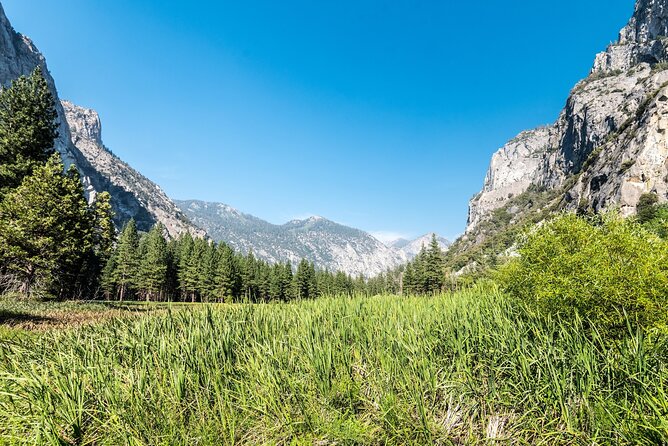
One reason this audio tour works is that the narration doesn’t just repeat signage. It ties the scenery to specific ideas:
- Sequoia scale and survival: from Mark Twain Tree history at Big Stump to later grove and tree size context.
- Wildfire and sequoias: McGee Vista Point gives you a reason to pay attention to burned areas instead of writing them off.
- Geology you can spot: the marble/limestone vein at Scenic Byway Viewpoint turns observation into a real game.
- Human stories: Knapp’s Cabin brings the river corridor into focus as a place people used, not just a place to look at.
The result is that you finish the day with mental connections, not just photos.
Timing, food, and practical pacing for a 6–7 hour drive
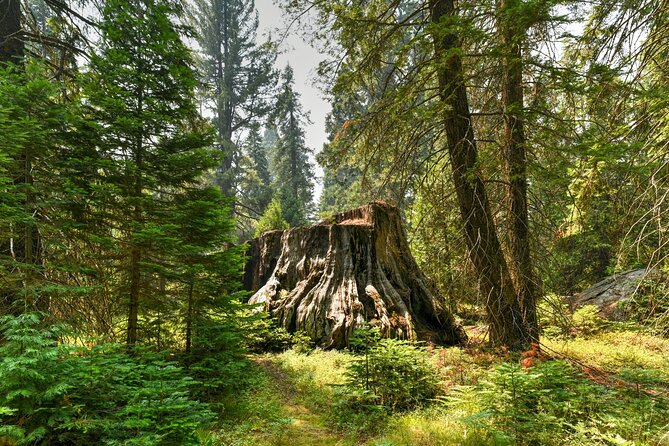
Because the route is self-guided, your timing is mostly about how often you park and how long you linger. Here’s a pacing plan that tends to keep the day smooth:
- Start early enough to enjoy daylight for the last viewpoints and the river-side stops.
- Use visitor centers (Kings Canyon Visitor Center and Cedar Grove Visitor Center) as anchor points for restrooms and orientation.
- Put the waterfalls (Big Stump has walking; Grizzly Falls is your lunch-friendly waterfall) in the middle so you’re not saving all comfort stops for the end.
- Reserve the “longer choices” for where you have energy: Park Ridge Fire Lookout or Zumwalt continuation via Roaring River Falls.
Food isn’t included, so rely on what’s available at the visitor centers/nearby areas. At minimum, I’d plan to bring snacks and water, especially since the tour includes multiple short walks.
Also, remember the tour is for your group in one vehicle. It’s not private transport. You’ll want your car ready, and you should expect to handle your own driving and parking.
Should you book this Kings Canyon self-guided audio tour?
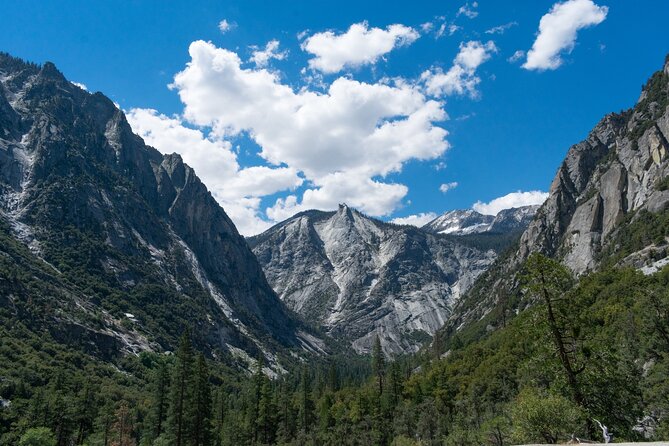
Book it if you want:
- Value that works for families and groups (up to 15 in one group price)
- A hands-free, offline-capable way to hit major stops without hunting for directions
- A day built around short walks and big views, with a few optional extras
Skip or reconsider if:
- You’re hoping for a fully guided ranger experience with no extra costs. Boyden Caverns is explicitly not included, and the cave itself is a paid guided tour.
- You hate the idea of managing your own schedule and parking. This tour is flexible, but you’re still the driver.
For most people, this is a smart way to explore Sequoia and Kings Canyon at your own pace—especially when you want the story behind what you’re seeing, not just a list of stops.
FAQ
How much does the Kings Canyon National Park self-guided audio tour cost?
It’s priced at $9.59 per group (up to 15 people). Boyden Caverns entrance is not included and is listed as $8–23 per person.
How long should I plan for the tour?
The tour duration is about 6 to 7 hours. Your exact time will depend on which stops you choose to walk and how long you pause at viewpoints.
Do I need Wi-Fi or data for the audio and map?
No. The tour includes an offline map, so you don’t need continuous Wi-Fi or data.
Is the tour audio in English?
Yes, it’s offered in English.
Are park or entrance fees included?
The tour notes that entrance fees are not included. Most listed stops are marked free in the description, but you should still expect possible additional costs such as parking fees, since those are also not included. Boyden Caverns is separately priced.
Where does the tour start and end?
It starts in Three Rivers, CA 93271, USA and ends back at the meeting point.