REVIEW · FLORIDA
Key West and Overseas Highway Self-Guided Audio Tour
Book on Viator →Operated by Shaka Guide Apps · Bookable on Viator
A long Keys drive, guided by your phone. This self-guided route is interesting because GPS-activated narration plays as you drive, and it also mixes in music between segments. I also like the economical per-group price for a full day on the Overseas Highway. The main catch: entrance fees and parking aren’t included, so your day can cost more once you start picking attractions.
You’ll spend about 16 to 17 hours hitting major nature, animal, and history stops from Key Largo down through the Keys. It’s private (just your group), it works offline, and you can choose east-to-west or west-to-east. Just plan for a long day behind the wheel, plus a little time learning the app so you can start clean and avoid the frustration that comes when audio doesn’t kick in right away.
In This Review
- Key Points You’ll Feel Right Away
- Why This Audio Road Trip Beats a Normal Guided Tour
- Price and Value: $12.79 per Group for a 16–17 Hour Route
- How You’ll Drive This: Offline Maps, Auto Audio, and Two Directions
- Key Largo to the Reef: Pennekamp and the African Queen
- Windley Key Fossil Reef to Marine Parks: Geology, Animals, and Sweet Snacks
- Long Key to Marathon: State Parks, Overlooks, and Dolphin Research
- Turtle Hospital, Bahia Honda, and Key Deer: End with Meaning
- Tips to Make the Day Go Smoothly (and Avoid Tech Friction)
- Should You Book This Key West and Overseas Highway Audio Tour?
Key Points You’ll Feel Right Away
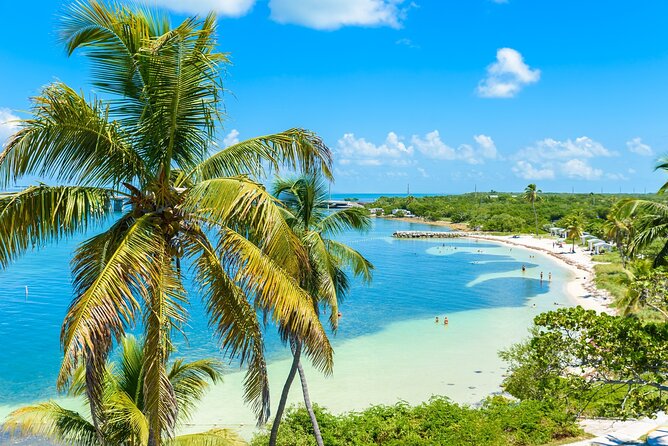
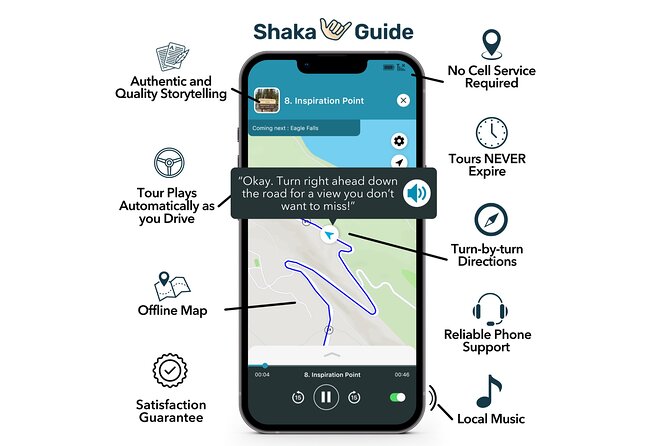
- Automatic GPS audio keeps the stories and directions synced to your drive.
- Offline map support means you can keep going even without cell service.
- One price per group (up to 15) makes it a solid deal for families and friends.
- Two possible directions (Homestead to Key Largo or the reverse) helps you fit it to your itinerary.
- Short, focused stop windows let you sample a lot without turning the whole day into one long line.
- Free stops are built in, so you can reduce add-on costs even if you skip paid attractions.
Why This Audio Road Trip Beats a Normal Guided Tour
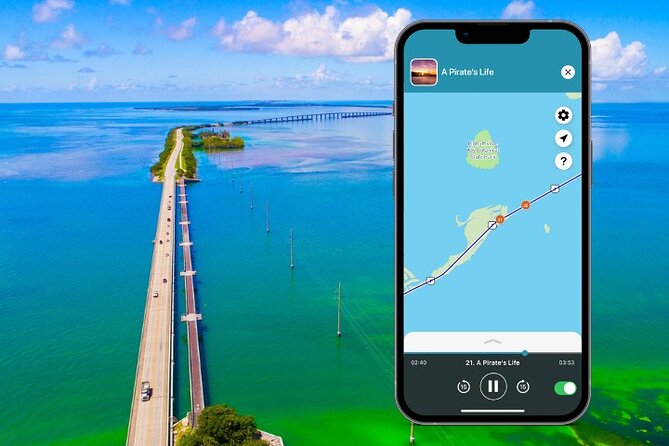
The big idea here is simple: you’re driving the Florida Keys, but you’re not stuck listening to a single guide for every mile. Instead, the audio and directions trigger from your phone using GPS. That means you can pause, take photos, stretch, or cut a stop short without feeling like you’re holding up a group.
I like how the narration isn’t just facts. It’s framed around what you’re seeing from the road: the reason a state park matters, why a museum collection exists, and what to look for when you walk into a place. One review nailed the feeling: it was entertaining and informative, and the music between the info helped it stay pleasant for a long drive. If you’re the type who gets bored by “talking head” tours, this format usually lands better.
The other win is pacing. This is built for a road trip day where you want options, not a rigid schedule. You get turn-by-turn direction guidance, but you still decide how long you linger at beaches, wildlife areas, or attractions.
Price and Value: $12.79 per Group for a 16–17 Hour Route
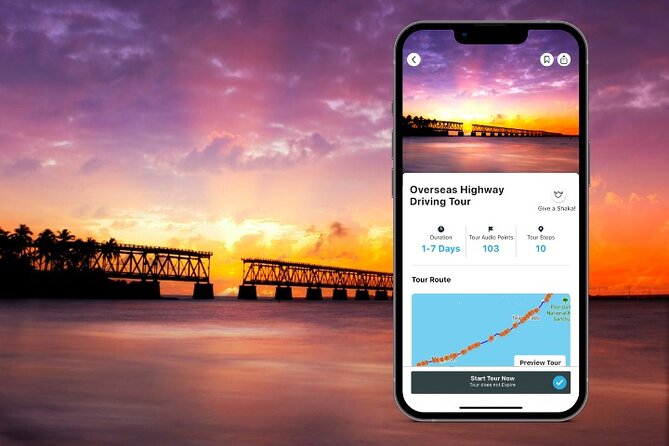
At $12.79 per group (up to 15), you’re paying for the tour access, not each individual attraction. That’s the value play. If you’re traveling with 3–6 people, the math gets very friendly fast compared to booking separate paid tours.
Here’s the trade you should expect: the tour price does not include admission. Several of the best-known stops on the route are paid attractions (like Pennekamp Coral Reef State Park, the African Queen boat, and a lot of the animal-focused sites). Parking also isn’t included. So the tour itself can be cheap, but your total day cost depends on how many paid stops you choose.
My practical take: use the audio tour as your “route brain.” Decide in advance which paid stops you really care about most—then let the free stops cover the rest so you don’t feel like every hour costs extra.
How You’ll Drive This: Offline Maps, Auto Audio, and Two Directions
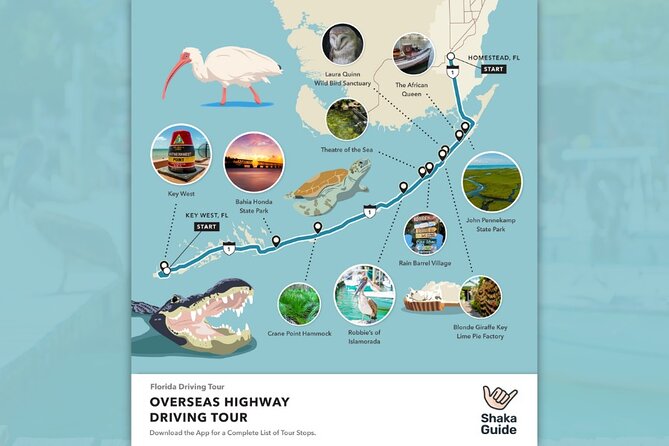
This tour uses the Shaka Guide app with a mobile ticket. Once you start, the audio is designed to play automatically as you drive, with GPS-activated stories, directions, and music. You also get an offline map, so you don’t have to fight for data coverage all day.
Do two things before you go:
- Download the tour while you’re on strong Wi‑Fi, since the instructions specifically recommend preparing ahead.
- Start in the right spot: the tour begins in Homestead, Florida, and it ends back at that same meeting point.
You can do the route in two directions: east to west (Homestead to Key Largo) or west to east. That’s helpful if you’re building around where you’re staying or where you want your early-day stops.
One small note from the less-happy experience: one person reported that the audio didn’t work and they were only out the tour price. That’s rare from the overall rating, but it’s enough to justify being prepared. Bring a charged phone, check your volume before you hit the road, and make sure location/GPS is turned on so the audio has something to track.
Key Largo to the Reef: Pennekamp and the African Queen
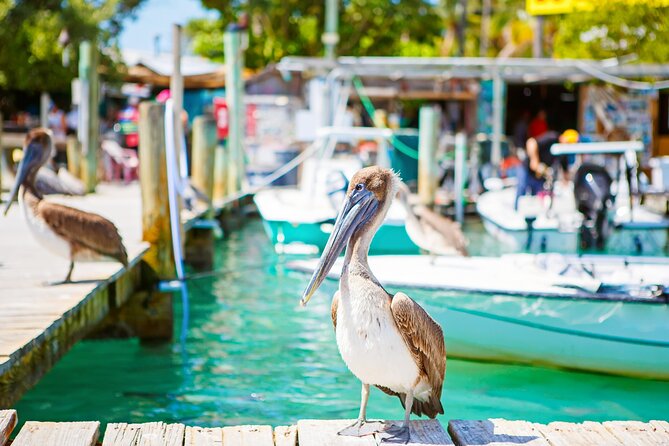
Stop 1: John Pennekamp Coral Reef State Park (about 1 hour)
This is where your road trip turns into coastal daydreaming. You can swim, hike trails, and do glass-bottom boat tours and kayaking. If you’re craving underwater sights, Pennekamp is also known for snorkeling and scuba sessions tied to ship wrecks.
Why it’s worth it: it’s a true state-park experience—nature first, and the water activities give you a change of pace from driving.
Possible drawback: admission isn’t included here, so plan that add-on if you want the full menu.
Stop 2: The African Queen (about 1 hour)
This is a meticulously restored historic boat famous from the classic film. You can view the boat or take scenic cruises around the Florida Keys.
Why it’s worth it: it’s fun, easy, and it adds a pop-culture layer to all the nature stops.
Possible drawback: it’s another admission-based stop, so decide early if you want the boat experience or if you’re saving money for later attractions.
Stop 3: Wild Bird Sanctuary / Florida Keys Wild Bird Center (about 1 hour, free)
This nonprofit focuses on refuge and rehabilitation for injured wild birds. You stroll through gardens and see rehabilitated birds.
Why it’s worth it: it’s one of the emotional “pause and reset” stops—quiet, educational, and free.
Good to know: free doesn’t mean short-shrift. Give yourself time to actually look around.
Stop 4: Blond Giraffe Key Lime Pie Factory (about 1 hour, free)
This is a family-owned key lime pie stop with classic and modern takes. There’s also a serene garden if you want a breather between coastal activities.
Why it’s worth it: it’s a tasty, low-cost break that doesn’t require additional fees.
Possible drawback: you might arrive hungry—so expect this stop to turn into a “stay a bit longer” moment.
Windley Key Fossil Reef to Marine Parks: Geology, Animals, and Sweet Snacks
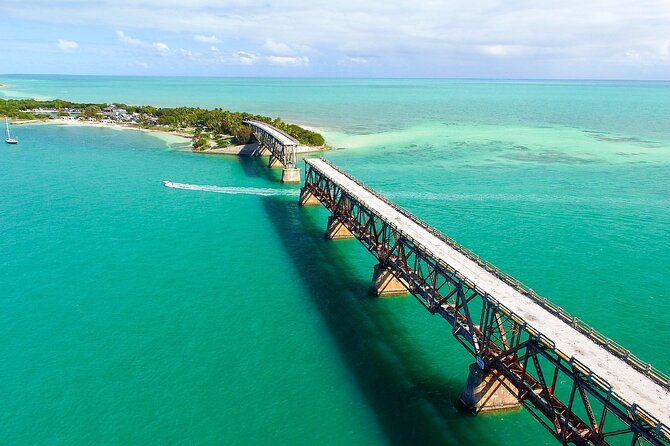
Stop 5: Windley Key Fossil Reef Geological State Park (about 1 hour)
This park highlights an old quarry that supplied limestone for the Overseas Railroad. You explore nature trails and fossilized coral formations that hint at the Keys’ deep timeline.
Why it’s worth it: it’s the geology stop that makes the whole region feel older and more interesting. Even if you’re not a rock person, the fossils give you something to look for on the trail.
Possible drawback: admission isn’t included, and it’s more of a walking-and-looking experience than an “attraction with shows.”
Stop 6: Theater of the Sea (about 1 hour)
A marine park and animal sanctuary with dolphin, sea lion, and sea turtle shows. There are also opportunities for snorkeling and swimming.
Why it’s worth it: if you want guaranteed on-site animal programming, this is built for it.
Possible drawback: because it’s admission-based, it’s best if it’s high on your “must-do” list.
Stop 7: Tiki Bar (about 1 hour, free)
This is described as the birthplace of the Rum Runner cocktail—light and dark rum with tropical juices.
Why it’s worth it: it’s a low-pressure break in the day and adds Keys-style nightlife flavor without an entry ticket.
Possible drawback: if you’re trying to keep the day kid-friendly or alcohol-free, you’ll still get the vibe, but it’s not the focus for everyone.
Stop 8: History of underwater exploration museum (about 1 hour, admission not included)
This museum traces the evolution of underwater exploration, with diving-equipment artifacts and interactive exhibits.
Why it’s worth it: it gives context to all the reef-and-shipwreck talk earlier in the day. You’ll see how technology and daring changed how people explore the water.
Possible drawback: it can feel like “mostly exhibits” if you’re hoping for more hands-on than described—though it does say interactive elements are included.
Stop 9 (listed without a clear number in your data): Hand-feeding tarpon and watersports through Robbie’s
This stop focuses on the chance to hand-feed massive tarpon fish from the dock, plus watersports activities like kayaking, paddleboarding, and snorkeling.
Why it’s worth it: it’s a rare-feeling experience that’s different from the standard zoo-like approach—wildlife interaction at the dock.
Possible drawback: you’ll want to confirm whether activities fit your comfort level and schedule, since this stop describes both feeding and water activities.
Stop 10 (listed without a clear number in your data): Anne’s Beach mangrove boardwalk and shallow water
Anne’s Beach offers elevated wooden boardwalks through lush mangroves, and shallow warm water for wading.
Why it’s worth it: it’s a calmer nature stop, great for stretching legs and easing down after busier animal stops.
Possible drawback: you may need to time it around weather and water conditions since wading is part of the appeal (and the tour data doesn’t promise conditions).
Long Key to Marathon: State Parks, Overlooks, and Dolphin Research
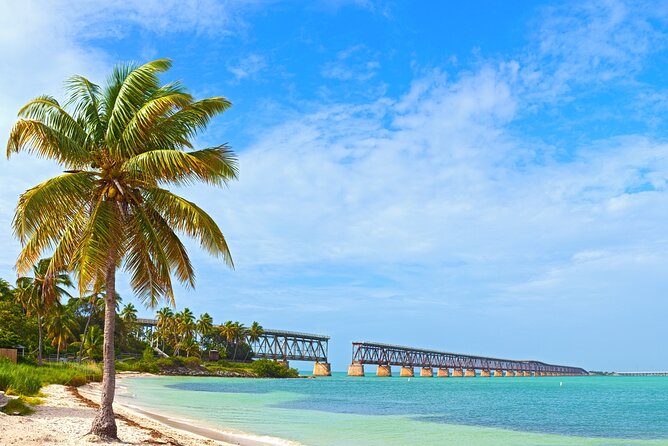
Stop 11: Long Key State Park (about 1 hour, admission not included)
Known for swimming, snorkeling, and fishing along a pristine shoreline, plus nature trails and birdwatching.
Why it’s worth it: it’s a full “beach plus birds plus trails” package, which makes it a strong mid-day reset.
Possible drawback: again, admission isn’t included, so treat it as a chosen experience rather than a free stroll.
Stop 12: Duck Key overlook (about 10 minutes, free)
A quiet viewpoint with stunning views of clear turquoise waters.
Why it’s worth it: short and sweet. Use it for photos and a quick breath without committing an hour.
Possible drawback: it’s brief by design—don’t expect a full stop.
Stop 13: Dolphin Research Center (about 1 hour, admission not included)
A study, conservation, and rehabilitation facility for dolphins and sea lions. You can watch dolphin shows and educational programs, and there’s also the option to swim with the dolphins (as described).
Why it’s worth it: the conservation angle matters. This isn’t presented as just entertainment.
Possible drawback: admission applies, and the described “swim with dolphins” option can be a decision point depending on your budget and what you’re comfortable with.
Stop 14: Curry Hammock State Park (about 1 hour, admission not included)
Picnic areas, nature trails, and water activities like kayaking and paddleboarding, with coastal scenery.
Why it’s worth it: it’s a more outdoorsy state-park stop that fits a road trip well because it’s flexible—walk, picnic, or paddle.
Possible drawback: it’s not described as a “watch from a deck” type of attraction, so you’ll want comfortable shoes.
Stop 15: Florida Keys Aquarium Encounters (about 1 hour, admission not included)
Interactive exhibits and touch tanks with marine life focused on local underwater ecosystems.
Why it’s worth it: if you want a controlled, weather-friendly marine stop, this can be easier than planning water time outdoors.
Possible drawback: it’s ticketed, so make sure you want the hands-on aquarium format.
Stop 16: Crane Point Hammock (about 1 hour, admission not included)
Nature trails through tropical hammocks and mangroves, an on-site museum, ranger demonstrations, and a fish pedicure pool.
Why it’s worth it: you get a mix—walking, learning, and a weirdly fun-sounding feet-in-the-water moment.
Possible drawback: you’ll likely be on your feet, and it’s not the fastest stop.
Turtle Hospital, Bahia Honda, and Key Deer: End with Meaning
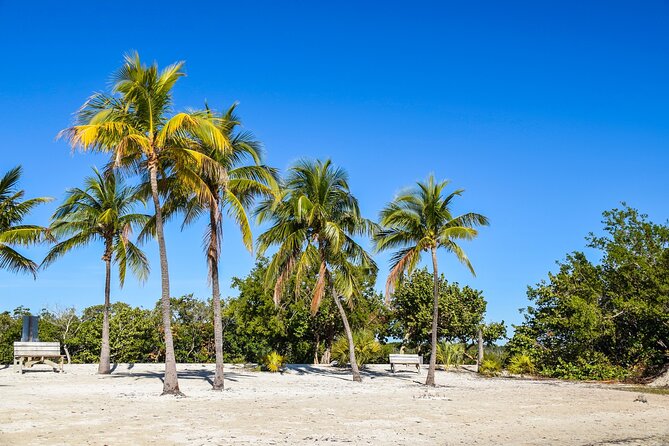
Stop 17: The Turtle Hospital (about 1 hour, admission not included)
You can see rescue, rehabilitation, and release efforts for injured sea turtles. You tour the facility, meet turtles up close, and learn about conservation challenges in the wild.
Why it’s worth it: this is one of the most educational stops on the route because it connects animal care to real conservation work. It’s also a good emotional arc closer to the end of the road trip.
Possible drawback: admission applies, so if you’re prioritizing, make it a “yes” or skip it with intention.
Stop 18 (listed without a clear number in your data): Local boutiques and art galleries in colorful Keys-style buildings
This is presented as a stroll-through culture stop with locally crafted art, jewelry, and island treasures.
Why it’s worth it: it balances the animal and beach-heavy itinerary with something human and local—perfect for cooling down and walking at your pace.
Possible drawback: it’s easier to overspend here if you love shopping, because the setting is designed for browsing.
Stop 19 (listed without a clear number in your data): National Key Deer Refuge (about 1 hour, free)
A natural setting for wildlife observation, hiking, and learning about conservation efforts.
Why it’s worth it: free, nature-based, and it adds a land-wildlife angle after a day of marine focus.
Possible drawback: you’re relying on observation—if you’re unlucky with sightings, it can feel more like a hike than a “see-see-see” stop.
Stop 20: Bahia Honda State Park (about 1 hour, admission not included)
One of Florida’s most picturesque natural spots with stunning beaches and clear blue waters. There’s swimming, snorkeling, picnicking, and hiking trails with big views.
Why it’s worth it: this is your classic finale-beach stop. It’s where the whole road trip pays off in scenery.
Possible drawback: ticketed entry can add cost right when you’re also tired. Plan your energy.
Tips to Make the Day Go Smoothly (and Avoid Tech Friction)
- Treat this as a full-day plan
Sixteen to seventeen hours isn’t “oops we’ll squeeze it in.” It’s a real road trip day. Start early if you can, and keep buffer time for restroom stops and parking.
- Download before you leave
The instructions specifically recommend downloading the tour using strong Wi‑Fi. Don’t gamble on patchy connections.
- Use the audio to navigate, not to replace your attention
It gives turn-by-turn directions and plays automatically, but you still need to watch the road. Pull over to choose paid stops and decide how long to linger.
- Pick your paid priorities
Since entrance fees aren’t included, decide what’s worth paying for: one big reef/water stop, one marine-animal experience, and one nature-or wildlife facility. Let the free stops—Wild Bird Center, Blond Giraffe, Tiki Bar, Duck Key, National Key Deer Refuge—cover the rest.
- Don’t panic if you struggle at first
One positive review mentioned it took a little to figure out how to use, then it became easy. Expect a learning curve of minutes, not hours.
Should You Book This Key West and Overseas Highway Audio Tour?
Book it if you want a cost-efficient, flexible way to drive the Keys with built-in stories and smart routing—especially if you’re traveling as a group and you like the idea of stopping on your schedule instead of being marched along.
Skip or reconsider if you hate tech-based tours and you rely on a guide standing beside you. Also think twice if you’re not ready for a long driving day plus extra costs for admissions and parking. The tour price is low, but a day packed with ticketed parks and animal attractions adds up.
If you like road trips that teach you something while you go—reef, geology, wildlife rehab, dolphin conservation, sea turtles, and those Keys-style culture breaks—this one gives you structure without taking away control.