REVIEW · PHILADELPHIA
Historic Sites of Philadelphia Self-Guided Walking Audio Tour
Book on Viator →Operated by WalknTours · Bookable on Viator
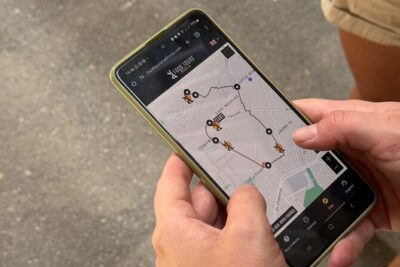
Revolutionary Philadelphia feels close-up on your phone. This self-guided audio walk lets you move at your own pace while the WalknTours app keeps you on track with turn-by-turn arrow guidance, starting at Elfreth’s Alley Museum and ending at City Tavern. You’ll hit major outside landmarks tied to the Revolution—plus Washington, Franklin, Haym Solomon, and Hamilton—without waiting for a group.
I really like the mix of big-name sites and the “wait, what?” stories that fit the street corners—like George Washington’s nickname Town Killer and the money man behind the Revolution, Haym Solomon. My other favorite part is how quick and doable it is: most stops are short audio segments (about 5 minutes), so even with breaks you can finish the whole loop in roughly 1 to 1.5 hours.
One thing to consider: it’s audio-only and there’s no human guide, so if you don’t bring earbuds you’ll miss the commentary. Also, the stop-by-stop facts are brief by design—great for an efficient overview, less ideal if you’re hunting for very deep, obscure details at every corner.
In This Review
- Key highlights you’ll feel right away
- Why this Revolution-themed audio walk is a smart Philadelphia use of time
- Price and time: how the $9.49 tag holds up
- Stop 1: Elfreth’s Alley and the feeling of walking where history stayed put
- Betsy Ross, Franklin’s grave, and Haym Solomon: key Revolutionary stories outside the gates
- Washington, the President’s House, and Liberty Bell Center: big symbols, no ticket stress
- Signer’s Garden and Carpenters’ Hall: the artwork and craft-guild angle
- Hamilton stops: fiscal power, the First Bank, and Maria Reynolds
- Ending at City Tavern: a fitting last stop with a Revolutionary-era vibe
- How the WalknTours app experience really affects your day
- What’s included, what’s not, and how to plan your own ticket strategy
- Who should book this audio walk, and who might want a different format
- Should you book? My practical call
- FAQ
- How much does the Historic Sites of Philadelphia self-guided walking audio tour cost?
- How long does the tour take?
- Where does the tour start and end?
- Do I need admission tickets for the stops?
- Is there a human guide?
- What language is the audio offered in?
- Can I get a refund if I cancel?
Key highlights you’ll feel right away
- Turn-by-turn arrow navigation in the WalknTours app helps you correct your route fast
- Outside-only sights mean you can keep moving without worrying about entry lines or tickets
- Rebel-focused storytelling connects Washington, Franklin, Haym Solomon, and Hamilton in one walk
- A pace you control lets you pause, skip ahead, or linger when something catches your eye
- Short stop format (about 5 minutes each) works well with limited time
Why this Revolution-themed audio walk is a smart Philadelphia use of time
Philadelphia can swallow a day whole. This tour is built for the opposite: a tight, walkable route that targets the Revolutionary-era must-dos without dragging you into long waits.
The big win is that you’re not stuck with a fixed pace. You press start, put your phone away while walking, and the audio leads you stop to stop. If you drift, the app’s arrow helps you snap back toward the next location. That small detail matters, especially in a historic district where streets can look similar and you don’t want to burn time guessing.
Another advantage is the theme. Instead of random sightseeing, the route is organized around the people and symbols behind independence. You’ll hear about the American flag story tied to Betsy Ross, Benjamin Franklin’s Revolution role (including partnership with French), and Haym Solomon’s financing work. Then the tour shifts into Washington’s world and the government-building moment at Independence Hall—still from the outside, but in context.
You can also read our reviews of more tours and experiences in Philadelphia.


Price and time: how the $9.49 tag holds up

At $9.49 per person for a self-guided tour, the value is in flexibility. You’re paying for guided storytelling plus navigation support, not for a coach, not for timed entry, and not for a live guide.
Typical duration is listed as about 1 hour to 1 hour 30 minutes. That matters because you can slot it into a half day and still have time for other neighborhoods. It’s also easy to repeat parts of your day: you can walk the route, then later return to the single site you want to see more carefully with ticketed entry.
It’s also booked ahead—on average about 5 days in advance—so plan to reserve if you’re coming during a busy stretch. The tour is offered in English, and you’ll get a mobile ticket you can access on your phone.
Stop 1: Elfreth’s Alley and the feeling of walking where history stayed put
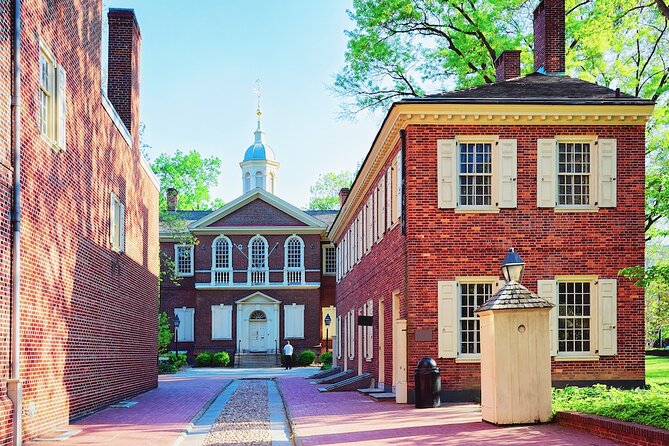
Your tour starts at the Elfreth’s Alley Museum on Elfreth’s Alley. This alley is tied to Jeremiah Elfreth, an 18th-century blacksmith, and it’s named after him. The point of starting here is simple: Elfreth’s Alley offers that rare visual sense of what the city looked like in the Revolutionary era, even though much of Philadelphia has changed.
When the audio begins, you’re not just hearing facts—you’re getting a street-level orientation. Put your phone in your pocket, follow the prompts, and treat this first stop like your warm-up. It helps you make sense of what comes next, because later you’re bouncing between people, propaganda symbols, and early government spaces.
Practical tip: since the tour is self-guided, give yourself a minute at the start to line up mentally. Once you start walking, the app expects you to move with it.
Betsy Ross, Franklin’s grave, and Haym Solomon: key Revolutionary stories outside the gates
After Elfreth’s Alley, the tour moves to a series of outside stops that are easy to miss if you’re just doing landmark spotting.
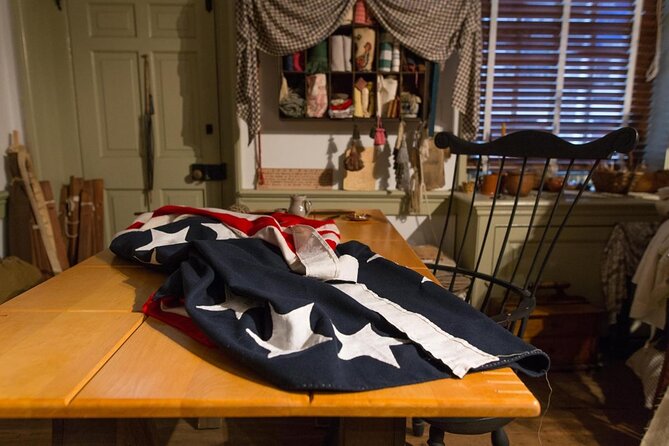
Outside the Betsy Ross house, you’ll hear the story of how Betsy Ross met with George Washington and designed the American flag. The audio here also adds sound—music is mentioned as part of the experience—so it can feel less like reading a plaque and more like being handed a scene.
Then comes Benjamin Franklin’s grave. This stop focuses on Franklin’s pivotal Revolution role and his partnership with French. Franklin is often reduced to a famous portrait, so hearing him framed as part of the Revolution machine helps the rest of the walk click into place.
Next is the Synagogue known as the Synagogue of the Revolution, tied to Haym Solomon, the Revolution’s financier. This is one of those moments where a self-guided format can shine: the audio gives you a story that connects finance, risk, and outcomes—things history tours sometimes skim.
If you want one practical move: bring earbuds. The whole tour runs on the audio track, so being hands-free matters.
Washington, the President’s House, and Liberty Bell Center: big symbols, no ticket stress

This portion is where you start feeling the Revolutionary government story.
You’ll stop at the President’s House, described as the first president’s home where George Washington lived. You’ll also hear that Washington had many nicknames, including Town Killer. That kind of detail is useful because it makes a famous figure feel like a person with a reputation—not just a statue.
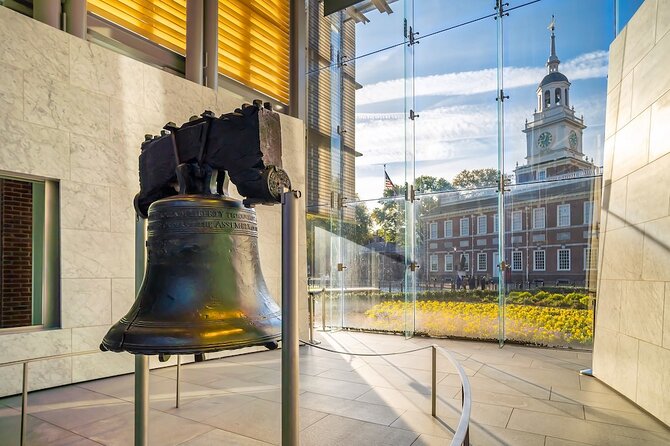
Next is Liberty Bell Center. The tour notes that the bell was around during the Revolution, was hidden in Allentown, and became a symbol of liberty after the Revolution. You’ll see the bell for free from the stop location. It’s a quick hit: short audio, clear symbolism, then you’re back moving.
Then the route reaches Independence Hall area. The key point here is that your tour goes outside only. Independence Hall is where founding fathers debated and adopted the Declaration of Independence and the United States Constitution—but if you want to go inside, you have to book an entrance ticket separately. The self-guided walk keeps things simple: it frames what the building represents so you get something even without entry.
My take on this outside-only approach: it’s not trying to replace a ticketed visit. It’s trying to make the ticketed visit easier to value later.
Signer’s Garden and Carpenters’ Hall: the artwork and craft-guild angle
After Independence Hall, you shift from government symbols to the people behind the decision.
At Signer’s Garden, the central statue recognizes the spirit and risks the American colonists took when they signed the Declaration of Independence. The statue mentioned is of George Clymer, a local merchant and politician. This stop helps you slow down for a minute, because statues work best when you know what they’re pointing at. It’s also a good place to take photos while the audio frames the meaning.
Then you reach Carpenters’ Hall, built for and still owned by the Carpenters company of Philadelphia—called the country’s oldest craft guild. Carpenters’ Hall is described as the Birthplace of Liberty. The story you hear here focuses on the rebels meeting at the hall and boycotting the British.
One of the underrated benefits of this stop is the shift in perspective. Revolutionary history often centers on “leaders,” but here you get craft, organization, and collective action. That context makes the earlier stops feel less like isolated landmarks and more like a network of people taking real risks.
Hamilton stops: fiscal power, the First Bank, and Maria Reynolds
The latter stretch turns toward Alexander Hamilton—specifically his fiscal legacy and his personal drama.
You’ll learn about the First Bank of the United States, operating from 1791 to 1811, described as a cornerstone of Hamilton’s fiscal policy. The audio frames Hamilton’s idea that a national bank would stabilize and improve the nation’s credit and help handle government financial business under the newly enacted Constitution.
Then you’ll see spots tied to Hamilton’s everyday life and the scandal that ended his career. One of the audio-highlight notes is his affair with Maria Reynolds, presented as scandalous and career-ending. This is a good reminder that history isn’t just policy. It’s personalities, reputations, and consequences.
Hamilton stories can sometimes feel like a completely separate museum wing. Here, because the tour has already laid out Revolution-to-government continuity, Hamilton feels like the next chapter instead of a tangent.
Ending at City Tavern: a fitting last stop with a Revolutionary-era vibe
Your tour ends at the City Tavern (Museum) on South 2nd Street. The tour frames it as a spot the founding fathers often met to drink and eat.
Even if you don’t go inside, ending here works. It ties the Revolution back to ordinary human life: meetings, conversations, and food—places where decisions were talked through, not just announced. It’s also a good visual “wrap” because you can close your audio tour and decide what you want to do next without feeling like you’re still locked into the script.
The City Tavern location also gives you an easy transition to other parts of Philadelphia since it sits in an active central area.
How the WalknTours app experience really affects your day
This is a solo, self-guided walking tour navigated by the WalknTours app. There’s no human guide, so the app is the “guide voice” and the arrow is the safety net.
Here’s what you’ll likely feel during the walk:
- You can pause and take a break when you want. That’s ideal in Philadelphia weather, where conditions can flip fast.
- You control pacing, so the tour doesn’t punish you for lingering on details you care about.
- You might hear music at certain stops, like around Betsy Ross, which helps keep audio from feeling purely factual.
One caution: headphones are key. If you forget them, you’ll be stuck standing at street corners while the important part (the audio narration) is locked behind your phone speaker choice. If you do forget, you’ll want to fix it quickly or you’ll lose the point of paying for a guided audio experience.
Also, because the audio segments are built to fit short stops, don’t expect every point to become a full lesson. One reviewer-like sentiment you’ll want to avoid is arriving hoping for long, obscure deep facts everywhere. This tour moves briskly on purpose.
What’s included, what’s not, and how to plan your own ticket strategy
Included features are built around the app and storytelling:
- Rebels of the Revolution Solo Walking Tour on the WalknTours app
- WalknTours patented technology
- Stories focused on Revolutionary figures including Washington, Franklin, Hamilton, and more
- The route covers major historic spots, including Independence Hall and Carpenters’ Hall, mainly from outside
Not included:
- No food or drinks
- No human guide
- No entrance tickets, because the tour is primarily outside
That outside-only design is the reason the tour can stay affordable and quick. For most stops, you can keep walking without paying for entry. For Independence Hall specifically, you’ll need a separate ticket if you want inside access.
My planning suggestion: if your must-see is Independence Hall interior, book that separately. Then do this audio walk first (or close to it) so you understand what you’re looking at once you’re inside.
Who should book this audio walk, and who might want a different format
This tour is a great match if you:
- Have limited time but want a smart overview of Revolutionary-era Philadelphia
- Like controlling pacing and taking breaks
- Prefer self-guided navigation over joining a group schedule
- Enjoy story-driven stops that connect people and symbols
It’s less ideal if you:
- Want long, deeply detailed explanations at every single stop
- Need a live guide to answer questions or keep a tight thread when you miss audio cues
- Plan to walk without earbuds or you hate wearing headphones
If you’re traveling as a small group, the tour is listed as private with only your group participating, and it mentions group discounts. That can be a nice way to share one phone-less experience—though everyone will still need the app on their own device to follow the audio.
Should you book? My practical call
Book this tour if you want the Revolutionary Philadelphia highlights in a single, efficient walk—and you’re happy letting audio do the guiding. The arrow navigation and the short-stop structure make it easier than you’d think to follow along without feeling lost.
Skip it (or pair it differently) if you’re specifically hunting for deep, obscure facts at every location or you want inside access everywhere. This route keeps you outside by design, and it trades extra depth for easy coverage.
If you do book, do this one simple thing: bring earbuds and set aside about 90 minutes with a little wiggle room. You’ll get the story, you’ll see the key symbols, and you’ll finish with a strong sense of how Revolution led into early government.
FAQ
How much does the Historic Sites of Philadelphia self-guided walking audio tour cost?
The tour costs $9.49 per person.
How long does the tour take?
It’s listed as about 1 hour to 1 hour 30 minutes.
Where does the tour start and end?
It starts at the Elfreth’s Alley Museum at 126 Elfreth’s Alley, Philadelphia, PA 19106, and ends at the City Tavern (Museum) at S 2nd St, Philadelphia, PA 19106.
Do I need admission tickets for the stops?
The tour is designed for outside viewing and says entrance tickets are not included. Independence Hall interior would require a separate ticket, if you choose to go in.
Is there a human guide?
No. It’s a solo self-guided tour navigated by the WalknTours app.
What language is the audio offered in?
It’s offered in English.
Can I get a refund if I cancel?
Yes—free cancellation is available. You can cancel up to 24 hours in advance for a full refund. If you cancel within 24 hours of the experience start time, the amount you paid isn’t refunded.