REVIEW · PHILADELPHIA
Valley Forge Revolutionary War Self-Guided Driving Tour
Book on Viator →Operated by Action Day Trips · Bookable on Viator
Valley Forge by car sounds simple, but the stories make it feel personal. This self-guided GPS audio route turns key Revolutionary War sites into a stop-by-stop narration, and the app still works when you lose reception thanks to offline maps. I also like that the price is per group (up to 4), plus the access is lifetime, so you get real value if you plan to return. One thing to keep in mind: getting the app started and staying perfectly on track can be fiddly, especially if you struggle with directions or if GPS timing lags.
You’ll cover more than 10 miles with 30+ audio moments in about 1–2 hours, so it’s perfect when you want a meaningful history outing without committing to a fixed tour schedule. Just be ready for a few moments where you’ll want to step out for viewpoints or monuments, and some portions may be affected by what’s open on the day you go.
In This Review
- Key things to know before you go
- Valley Forge Revolutionary War drive: the big idea
- Price and value: $16.99 per group is the real selling point
- How the offline GPS app works (setup tips that save frustration)
- Getting audio in your car
- Two setup habits I’d use if I were you
- Route pacing: 1–2 hours, over 10 miles, and lots of story moments
- Stop-by-stop: what you’ll see and why it matters
- Stop 1: Visitor Center at Valley Forge
- Stop 2: Muhlenberg Brigade
- Stop 3: Maine Memorial
- Stop 4: National Memorial Arch
- Stop 5: General Wayne Statue
- Stop 6: Knox’s Quarters parking
- Stop 7: Delaware Memorial
- Stop 8: Washington’s Headquarters
- Stop 9: Washington’s Headquarters / Valley Forge National Historical Park focus
- Stop 10: New Jersey Brigade Memorial
- Stop 11: Statue of Friedrich von Steuben
- Stop 12: Varnum’s Quarters
- Stop 13: Patriots of African Descent Monument
- Stop 14: Philander Chase Knox Estate (optional detour)
- Stop 15: Valley Forge Train Station (detour)
- Stop 16: Washington Memorial Chapel
- Stop 17: Washington Memorial Chapel Cemetery
- Stop 18: Maurice Stephens House
- Stop 19: Port Kennedy Railroad Station
- Navigation and directions: how to avoid getting lost
- Families and comfort: do you need walking shoes?
- Common friction points (and how to handle them)
- Who this tour suits best
- Should you book the Valley Forge Revolutionary War Self-Guided Driving Tour?
- FAQ
- How long does the Valley Forge self-guided driving tour take?
- Is this an audio tour you drive yourself?
- Does it work offline without cell service?
- Is the price per person?
- Are admission tickets included for the stops?
- Where do I start and where does the tour end?
- What are the opening hours for the Visitor Center area?
- Can I pause the tour to take photos?
- What if I need a refund after booking?
- How do I play the audio in my car?
Key things to know before you go

- Offline-first audio and maps mean no cell service needed once you download
- GPS-triggered playback keeps the narration tied to where you are
- Per-car pricing makes it a smart family or small-group buy
- Lifetime access lets you reuse the same tour on future trips
- A long route with frequent stops works best if you’re okay moving at your own pace
- Some stops may require tickets separately (the tour price doesn’t include admissions)
Valley Forge Revolutionary War drive: the big idea

This is a self-guided driving tour focused on one theme: what made the Continental Army’s winter at Valley Forge so brutal—and how that winter shaped the war.
Instead of reading plaques for hours, you drive a planned route and listen as your phone guides you stop to stop. The audio starts automatically when you reach each location, so you’re not hunting for content. And because it’s GPS-based with offline maps, you’re not stuck waiting for service when the park dips in and out of reception.
If you like your history with a strong narrative thread, this format helps. The stories connect people and places—George Washington, Henry Knox, Friedrich von Steuben, and key memorials—so it feels like a timeline you can actually see.
You can also read our reviews of more tours and experiences in Philadelphia.


Price and value: $16.99 per group is the real selling point
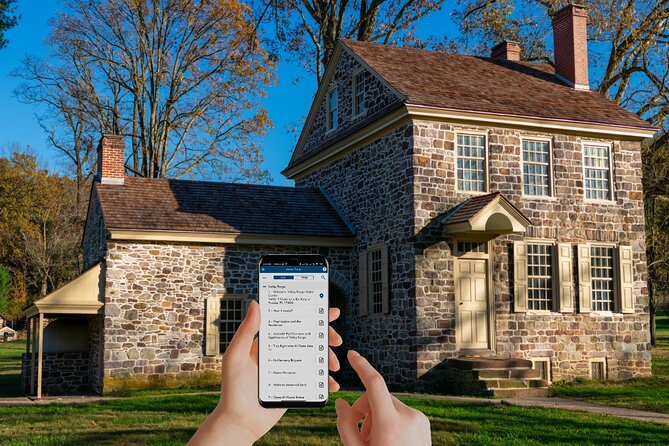
The most practical reason to consider this tour is the price structure: you pay $16.99 per group up to 4, not per person. In other words, one booking can cover a family of four in the same car, which is often cheaper than booking a guided outing or piecing together multiple audio options.
You also get lifetime access with no expiry, which matters more than it sounds. Valley Forge is the kind of place you might revisit—especially if you return to Philadelphia and want another outing that isn’t just city sightseeing.
The downside is that you don’t get “included tickets.” Some stops note admission is not included, so plan on paying separately if you want entry where entry is required. Still, for a mostly outdoor drive with plenty of monuments and viewpoints, this is a strong value way to experience the park.
How the offline GPS app works (setup tips that save frustration)
To use the tour, you download Action’s Tour Guide App using the password sent after booking (via email and text). A critical step: you must download the tour while you’re on strong wifi/cellular. After that, the app works offline.
Once you’re at Valley Forge, you open the app and start the correct tour version tied to your starting point and direction. No one meets you. The audio then begins automatically when you’re at the first story location, and each subsequent stop should play on its own as you follow the route.
Getting audio in your car
If you’re driving, you can connect your phone to your car stereo using Bluetooth, USB, or AUX. That’s a big deal for families and mixed-age groups, since multiple people can listen together without headphones.
If you’re also getting out to walk, headphones can be helpful, but it’s not required. For vehicle tech, audio playback is compatible with Apple CarPlay, and support for Android Auto is on the way.
Two setup habits I’d use if I were you
- Download before you leave the city (or at least before you enter a weak-signal area).
- Give yourself a few minutes at the Visitor Center to confirm the app is running and the GPS is reading your location correctly.
Some people have found start-up and navigation harder than expected. Those two habits are your best odds of avoiding that kind of day.
Route pacing: 1–2 hours, over 10 miles, and lots of story moments
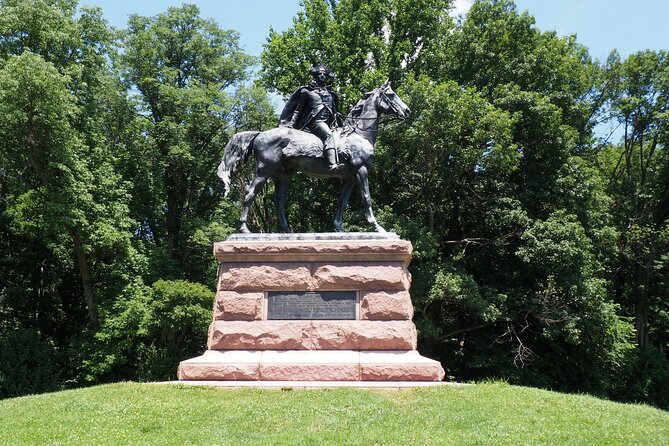
Plan on about 1–2 hours for the full route, but understand the timing depends on how often you pause for photos, look around, or get out of the car.
The tour includes multiple short stops—each one has its own audio scene—so the narration naturally encourages you to slow down and pay attention. If you take pictures, audio may pause so you don’t miss the next point. That can be a plus for clarity, and it can also make the drive feel longer.
Also, this isn’t designed as a “sit and cruise” experience. Several locations are outdoor memorials and monuments you’ll want to see up close, and some stops with “parking/estate” notes may involve more time on foot.
Stop-by-stop: what you’ll see and why it matters
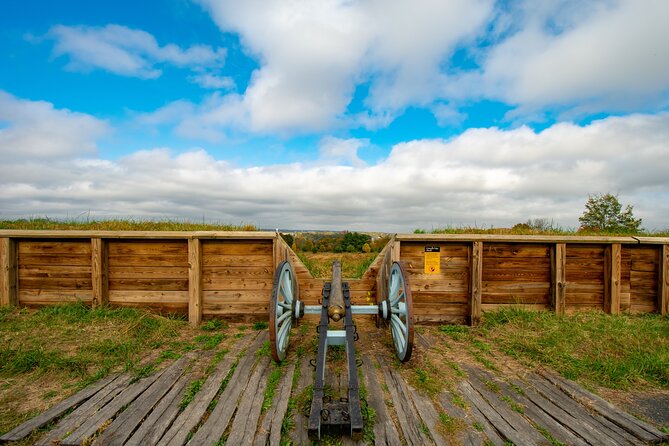
The route is built around recognizable Valley Forge landmarks and several memorials that broaden the story beyond the famous names.
Stop 1: Visitor Center at Valley Forge
You begin at the Visitor Center, where the whole winter crisis is framed: December 1777, a Continental Army camped through a long, cold season, and Washington knowing the army might not survive to see spring. It’s your emotional and historical kickoff.
This stop notes admission is not included. In practice, you may still get plenty from the outdoor area, but if you want any indoor exhibits, budget for separate entry.
Stop 2: Muhlenberg Brigade
Next is the site tied to the story of “Devil Pete” Muhlenberg, a former reverend who put down the good book and picked up a rifle. It’s a reminder that the Revolution pulled people into roles they never expected to fill.
Stop 3: Maine Memorial
The Maine Memorial focuses on how tenuous connections could be between men from different colonies. It’s easy to talk about “the Continental Army” as one unit, but this point brings home how complicated unity really was.
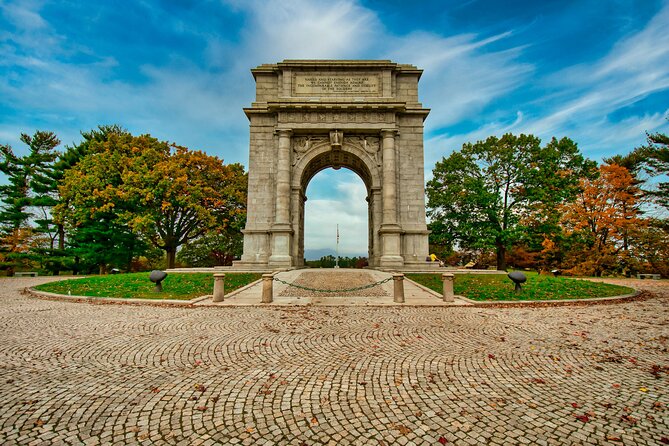
Stop 4: National Memorial Arch
Then you reach the National Memorial Arch, one of the most prominent monuments here. It honors the entire Continental Army wintered at Valley Forge, including those who survived and those who didn’t.
This is the kind of stop where you’ll want to glance up before you keep moving—because the scale changes how the moment feels.
Stop 5: General Wayne Statue
A statue of General Wayne is next, recalling Anthony Wayne’s intense fighting reputation—famously tied to the nickname “Mad Anthony.” The narration helps connect why the Army needed leaders who could keep discipline when morale was under strain.
Stop 6: Knox’s Quarters parking
Now you’re in the orbit of Henry Knox. The story highlights the self-taught artilleryman turned general and how he became a voice of reason during the hard winter months.
This stop notes admission is not included, so treat it as a “go see the area + listen” moment unless you plan extra entry.
Stop 7: Delaware Memorial
At the Delaware Memorial, the audio explains how the situation at Valley Forge began to unravel. It’s not just hardship—it’s the fragile chain of events that could tip into failure.
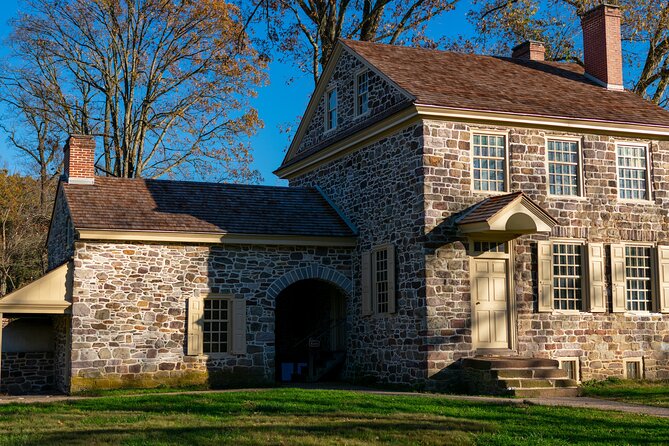
Stop 8: Washington’s Headquarters
Next you arrive near the huts of Washington’s personal guards, with a narrative about a secret plot involving the Commander in Chief. If you’re the kind of person who likes political tension alongside military hardship, this is a good spot.
Stop 9: Washington’s Headquarters / Valley Forge National Historical Park focus
This segment zooms in on George Washington: his French and Indian War experience, his appointment as head of the Continental Army in 1775, and why a Virginian in command could help unify the colonies.
The narration also makes a fair point: Washington is framed as strong on organization and leadership more than battlefield tactics. That angle helps you understand why systems, training, and discipline mattered as much as bravery.
This stop lists admission as free, so you can treat it as a no-extra-cost learning moment.
Stop 10: New Jersey Brigade Memorial
The New Jersey Brigade Memorial recognizes troops described as dependable and well-trained within a ragtag army. It’s a reminder that “not ready yet” didn’t mean “no skill”—it meant training and cohesion were still being built.
This stop notes admission not included, so again, think of it as a listen-and-look stop tied to where you can safely park and observe.
Stop 11: Statue of Friedrich von Steuben
Now you hit General Friedrich von Steuben, where the story turns into a turning point: Washington realizes the army isn’t ready. The months of surviving the winter are not enough—the Continental Army has to become a real fighting unit.
This stop gives the training element a face, which makes “the hard work” feel more human.
Stop 12: Varnum’s Quarters
General James Mitchell Varnum comes into view at Varnum’s Quarters. The audio notes him as a close advisor and specifically highlights his role in bringing the first Black soldiers into the Continental Army.
This is one of the more meaningful “context stops,” because it corrects the usual narrow focus on the most famous names.
This stop notes admission not included, so you’ll likely experience it through the outdoor/area viewing rather than a paid exhibit.
Stop 13: Patriots of African Descent Monument
The Patriots of African Descent Monument expands the Varnum story and gives you a closer look at an often overlooked slice of the Revolution.
This is a good stop to slow down for a minute and actually read what you can see. The audio makes more sense when you connect the words to the monument in front of you.
Stop 14: Philander Chase Knox Estate (optional detour)
There’s an optional detour to the Philander Chase Knox Estate, tied to the Attorney General who served under Presidents McKinley and Roosevelt. It’s not core “winter camp history,” but it connects Revolutionary-era memory to later American political life.
This stop notes admission not included, so only plan time here if you care about that extra layer.
Stop 15: Valley Forge Train Station (detour)
Another detour takes you to the Valley Forge Train Station, with information about trains and Washington. It’s a useful reminder that Valley Forge wasn’t just a Revolutionary War moment—it became part of how later generations remembered it.
Stop 16: Washington Memorial Chapel
For many people, the Washington Memorial Chapel is a standout. It includes a replica of Philadelphia’s Liberty Bell, which is a neat physical link between two big American symbols.
This stop notes free admission, so it fits well in an already tight 1–2 hour plan.
Stop 17: Washington Memorial Chapel Cemetery
Behind the chapel sits the Washington Memorial Cemetery, where several important figures such as Philander Knox are laid to rest.
If you’re listening closely, the audio here adds a “memory and legacy” tone that changes the mood from wartime survival to long-term commemoration.
Stop 18: Maurice Stephens House
The tour continues to the Maurice Stephens House, built atop the site of another general’s quarters from the winter of 1777.
This is one of those stops where time overlap matters: you’re seeing a later structure placed on earlier ground, which helps you understand how sites get reused and reinterpreted.
Stop 19: Port Kennedy Railroad Station
Finally, the route heads to the Port Kennedy Railroad Station, a defunct station shuttered since the 1980s. The vibe here is different from the Revolutionary stops, but that’s part of why it works: it breaks the “history museum” feel and lets you experience the area’s leftover infrastructure.
Navigation and directions: how to avoid getting lost
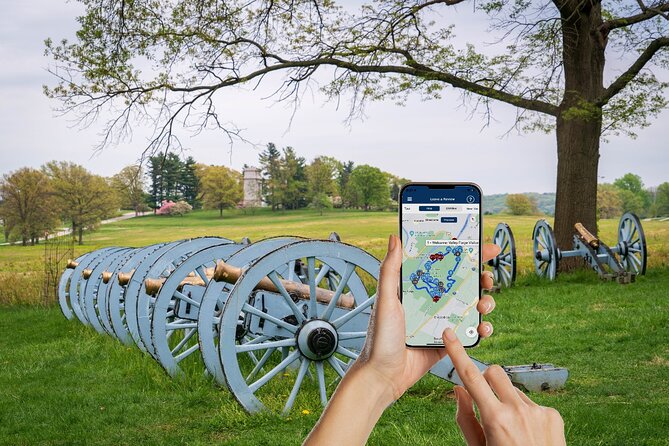
A theme from real-world use is that the tour can be easy when the GPS syncs smoothly—and frustrating if it doesn’t.
Here’s how to keep it smooth:
- Follow the audio cues and don’t rely on physical numbered signs lining up with the app. Some maps and stop numbers can differ.
- If you’re hard of hearing or noise is high in the car, connect to your stereo or consider keeping the volume steady. Some people reported missing directions.
- When you see audio pauses around photos, treat it as a feature. Stop, take your shot, then resume when the next prompt triggers.
- Use the route speed limit. The tour encourages safe driving and slower turns for stop matching.
If GPS feels delayed, don’t panic. Slow down near each story area and wait for the audio to catch up. That’s usually faster than forcing the next stop before your phone registers your location.
Families and comfort: do you need walking shoes?
This is a driving tour, but it’s not 100% stay-in-the-car.
You’ll want comfortable shoes because:
- several stops are outdoors and work best when you step out for a closer look
- some stops with “parking” or “estate” notes likely take a little extra time on foot
- audio may prompt you to look around and reposition
And if you’re traveling with kids, the pacing works because you can go at your own speed. The narration keeps you oriented so you’re not doing the mental math of what to see next.
Common friction points (and how to handle them)
To be fair, not every day runs perfectly. Here are the most common problems and the fixes you can use:
- Hard to start the tour at the Visitor Center: double-check that you’ve downloaded and entered the password, then reopen the app at the start point.
- Map confusion: don’t assume map stop numbers and audio stop numbers will match exactly. Use the audio cues and your location.
- Roadblocks or route changes: if you hit barriers, follow the route as safely as you can. The tour remains your framework, but the drive might feel different depending on what’s open.
- Missing stops: if audio didn’t play, it usually means GPS sync or you moved too quickly through a story zone. Slow down at each location so the trigger can catch.
With that said, the positive side is strong: when the app is running right, people consistently describe the tour as informative, easy to listen to, and a good fit for limited time.
Who this tour suits best
This is a great fit if you:
- want a meaningful Revolutionary War outing without committing to a guided group
- like learning as you move, using GPS-triggered audio rather than reading every sign
- travel as a family or small group and want cost-effective value per car
- want something flexible for an itinerary day (start when you’re ready, pause for photos)
It’s less ideal if:
- you get easily frustrated by app navigation
- you’re expecting a fully “no-stops-on-foot” experience
- you need lots of physical signage to feel confident driving and parking
Should you book the Valley Forge Revolutionary War Self-Guided Driving Tour?
Yes, if you’re okay doing a bit of app setup and you want a low-stress way to experience Valley Forge beyond the headline sites. The offline GPS audio format is exactly what you want in a park where reception can be unreliable, and the per-car value makes it easy to justify.
I’d especially recommend it if you’re visiting Valley Forge for the first time and want a structured route that connects major figures like George Washington, Henry Knox, and Friedrich von Steuben to the places you’re actually seeing.
If you’re the type who hates any navigation friction, consider building in extra time at the Visitor Center to get the audio stable before you start moving.
FAQ
How long does the Valley Forge self-guided driving tour take?
It’s approximately 1 to 2 hours.
Is this an audio tour you drive yourself?
Yes. It’s a self-guided driving experience using an app that plays audio based on your location.
Does it work offline without cell service?
Yes. You download the tour first while you have strong wifi/cellular, and then it works offline afterward.
Is the price per person?
No. It’s priced per group, up to 4 people, so it’s per car/group rather than per individual.
Are admission tickets included for the stops?
No. Attraction entry tickets and reservations are not included, and some specific stops note admission is not included.
Where do I start and where does the tour end?
You start at the Visitor Center at Valley Forge on Outer Line Drive in King of Prussia, PA, and the tour ends at 3113 Valley Forge Cir, King of Prussia, PA.
What are the opening hours for the Visitor Center area?
The tour’s listed operating window is 9:00 AM to 5:00 PM, Monday through Sunday.
Can I pause the tour to take photos?
Yes. You can start anytime and pause anywhere, then continue at your own pace.
What if I need a refund after booking?
You can cancel for a full refund if you cancel up to 24 hours in advance. Within 24 hours, refunds are not available.
How do I play the audio in my car?
You can connect your phone to your car stereo using Bluetooth, USB, or AUX. Audio playback is compatible with Apple CarPlay, and Android Auto support is on the way.