REVIEW · SAVANNAH
Historic Savannah Self-Guided Walking Audio Tour
Book on Viator →Operated by Action Day Trips · Bookable on Viator
Savannah hits different when you control the pace. This self-guided walking audio tour lets you follow location-triggered stories across classic squares, churches, and historic houses, with offline maps so you are not stuck searching your phone. For $14.99, you get a lot of structure for a walk that otherwise could feel like you’re just taking pretty photos.
What I like most is how practical it feels on the street. You can start when you want, pause for snacks, and keep going without waiting for anyone else, and the audio plays automatically as you reach each stop. Second, the lifetime access matters: it’s not a one-and-done ticket you rush to use.
The main thing to consider is the physical side. The route is over 5 miles, and while it’s paced as short stop stories (about 5 minutes each), bad weather or high winds can make the walk less fun than the stories.
In This Review
- Key highlights to notice before you go
- Why this $14.99 Savannah walk feels like good value
- How the location-based audio and app setup works (and where it can trip you up)
- Stop 1: MLK Visitor Information Center and the big-picture opening
- Stops 2–3: First African Baptist Church and Reynolds Square
- Stops 4–6: Olde Pink House, Johnson Square, and Wright Square
- Stop 7: Owens-Thomas House & Slave Quarters (the first ticket decision)
- Stop 8: Chippewa Square and architecture you can actually spot
- Stop 9: Independent Presbyterian Church of Savannah
- Stop 10: Historic Savannah Theatre (another ticket stop)
- Stops 11–13: Harper Fowlkes House, St. John the Baptist Cathedral, and Old Sorrel-Weed House
- Stop 14: Flannery O’Connor Childhood Home Museum
- Stop 15: Massie Heritage Center and hands-on learning
- Stop 16: Forsyth Park and the one place you’ll want to linger
- Stop 17: Mercer-Williams House Museum and Midnight in the Garden of Good and Evil
- Stop 18: Ralph Mark Gilbert Civil Rights Museum
- Stops 19–21: Waving Girl Statue, Pirates’ House, and Davenport House
- Who should choose this self-guided audio tour
- Should you book this Historic Savannah self-guided walking audio tour?
- FAQ
- How long is the Historic Savannah self-guided walking audio tour?
- Where does the tour start and end?
- What language is the tour offered in?
- Does it work offline?
- Do I need admission tickets for every stop?
- Can I start and pause whenever I want?
- Is the tour self-guided or do I meet someone?
Key highlights to notice before you go
- Offline GPS maps mean you can keep moving even with shaky cell service.
- Hands-free, location-triggered audio plays as you arrive at each stop.
- 21 stops across downtown cover everything from churches and squares to the riverfront.
- Most stops are admission-free, with a couple of notable ticket exceptions.
- Lifetime, no-expiry access lets you reuse the tour on another Savannah trip.
- A big story library (50+ audio stories) gives you more depth than a typical quick overview.
Why this $14.99 Savannah walk feels like good value
For $14.99, you’re not buying a guided lecture with a single fixed start time. You’re buying freedom plus content: a route, audio storytelling tied to where you are, and a format that keeps you exploring instead of checking directions every five steps.
The real value is the mix of structure and flexibility. The tour is built as a long downtown loop with about 1–2 hours of walking time, and it’s designed so you can pause, skip, or linger. That matters in Savannah, where you’ll constantly be tempted to duck into a doorway view, browse a shop window, or circle back for one more photo.
Then there’s the lifetime access. You can download once, keep the tour available, and use it anytime on any trip without worrying about an expiry date. If you plan to revisit Savannah (or you’re traveling with someone who will want to replay the best stops), lifetime access is the part most people don’t realize they will appreciate.
You can also read our reviews of more tours and experiences in Savannah.



How the location-based audio and app setup works (and where it can trip you up)
This is a self-guided experience using an app called Action’s Tour Guide App. You download the tour while you have strong Wi-Fi or cellular, then it’s supposed to work offline after that, using your phone’s GPS.
Once you start on-site, you open the app at the beginning point, and the audio should begin automatically. As you walk, the stories switch based on your location, so you’re not constantly tapping through menus.
Two practical tips that keep the experience smooth: bring headphones/earbuds, and make sure you start through the app rather than trying to jump around by visiting random spots. One of the biggest complaints about this kind of setup is people opening it in the wrong way or connecting to another audio app, which can cause the tour to mismatch what they’re looking at.
Also, if your phone struggles with maps, expect some irritation. The app’s map view can be finicky depending on signal and device behavior, so plan to keep your attention on the sidewalks and street corners more than the screen.
Stop 1: MLK Visitor Information Center and the big-picture opening
You begin at 301 Martin Luther King Jr Blvd, and the first story is more than a greeting. The Savannah MLK Visitor Information Center is used as a launch point for context—cobblestone streets, antebellum architecture, and the stories of the people who shaped the city.
This opening works well because it sets expectations before you start stacking up landmarks. If you’ve visited Savannah before without a narrative, this kind of start helps you notice details instead of just admiring the scenery.
Practical note: it’s listed as an admission ticket free stop, so you can focus on listening first and deciding later if you want extra reading or side exploration.
Stops 2–3: First African Baptist Church and Reynolds Square

Next is the First African Baptist Church, a stop that centers Savannah’s African American community and its role in the wider American story. It’s a short stop by design (about 5 minutes), but the point is to make sure the walk doesn’t only skim architecture—it also connects to people.
Then you move to Reynolds Square to meet John Wesley, the founder of Methodism, with a statue that anchors the story. It’s a classic example of how Savannah squares work: they look like open space, but each one has a character shaped by religion, politics, and local power.
You’ll likely find these brief chapters useful if you’re walking fast or you’re with someone who wants quick facts without a long guided tour.
Stops 4–6: Olde Pink House, Johnson Square, and Wright Square
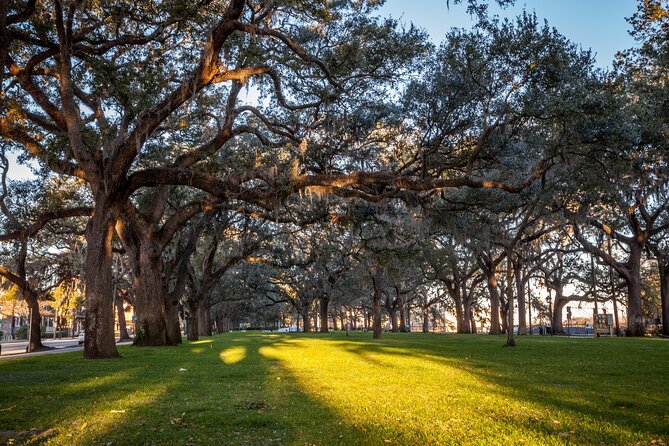
At the Olde Pink House, you see one of Savannah’s instantly recognizable buildings. The building is described as an 18th-century landmark that now houses a restaurant, which gives the stop a modern hook: history you can smell and hear over lunch.
Johnson Square follows, with James Oglethorpe tied to the centerpiece statue. You also get a nearby look at Christ Church Episcopal, built in the 18th century and noted as one of Savannah’s oldest churches.
Then the route reaches Wright Square, anchored by a statue of William Washington Gordon, associated with the Central of Georgia Railway. Around these squares, the audio is doing more than naming buildings—it’s training you to recognize different architectural eras as you move.
These stops are admission ticket free as listed, which makes them ideal when you want to keep the day flexible. You can listen, step into a courtyard view if open, then keep walking.


Stop 7: Owens-Thomas House & Slave Quarters (the first ticket decision)
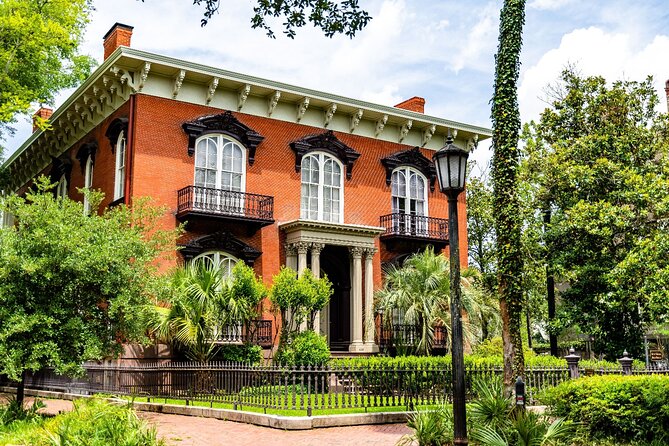
This is the first stop where entry is not included. The Owens-Thomas House & Slave Quarters is described as a historic museum, and the story focuses on the architecture and the families who lived there.
If you like house museums, it’s one you’ll probably want to pay for. The caution is simple: plan your time because a museum stop can stretch beyond the planned short audio chapter.
If you’re trying to keep the whole walk to 1–2 hours, you can still enjoy the outside views and the audio, but you’ll have to decide whether you want to commit to the on-site admission.
Stop 8: Chippewa Square and architecture you can actually spot
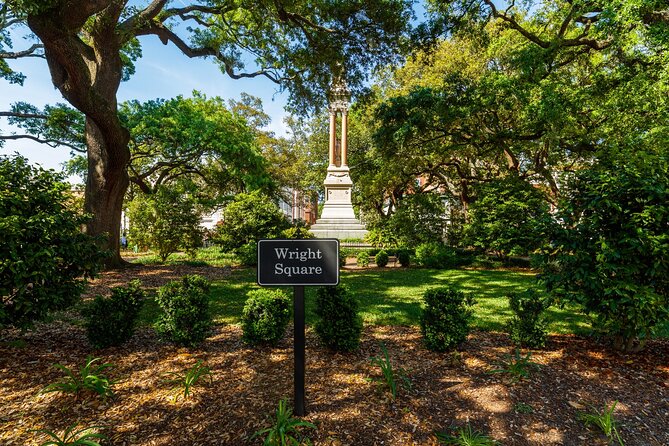
Chippewa Square is a strong “look closer” stop. The audio highlights architectural styles around the square, including Federal, Italianate, and Victorian, so you know what you’re seeing instead of guessing.
This is the kind of place where walking slowly pays off. Even if you don’t become an architecture expert, you’ll start noticing how window shapes, rooflines, and ornamentation change as you move from square to square.
Admission is listed as free here, so you can spend just a few minutes listening, then extend if you feel the urge.
Stop 9: Independent Presbyterian Church of Savannah
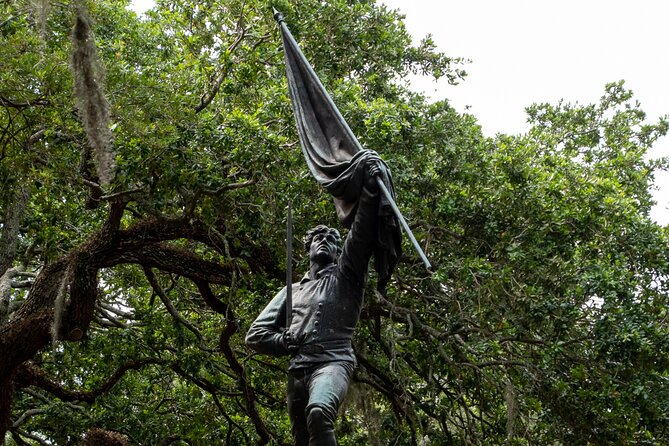
Next comes the Independent Presbyterian Church of Savannah, described with a Greek Revival facade. It also points you toward the Civil War-era history that sits behind the stone.
This stop is worth it if you like the way buildings record changing times. Savannah churches aren’t just religious spaces; they also mark civic identity and local history, often right in the middle of everyday downtown life.
Admission is listed as free, which helps keep your cost down on a day that already includes a lot of walking.
Stop 10: Historic Savannah Theatre (another ticket stop)
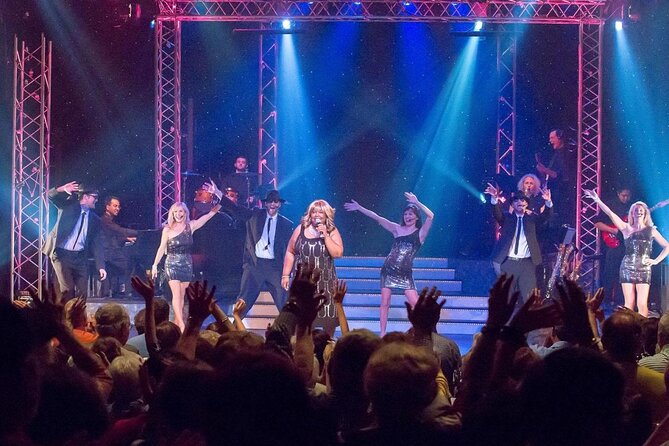
The Savannah Theatre is dated to 1818 and is described as one of the oldest continuously operating theatres in the United States. That alone is a reason to pay attention as you pass.
But admission is listed as not included, so you’re making a decision. You can enjoy the audio for context, and if you want to step inside, you’ll need to handle admission separately.
If you’re a theatre person, this may be your best chance to add a quick ticket stop without turning the day into a museum marathon.
Stops 11–13: Harper Fowlkes House, St. John the Baptist Cathedral, and Old Sorrel-Weed House
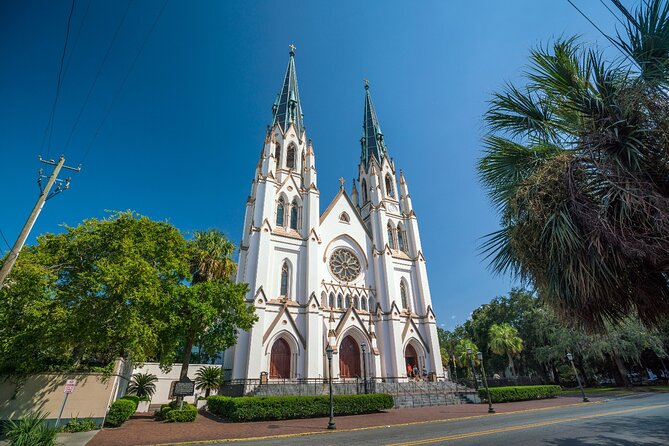
Harper Fowlkes House enters next, described as neoclassical with Greek Revival style and built in 1842, plus a mention of its garden. Then you walk to the Cathedral of St. John the Baptist, built in 1876 with French Gothic architecture and stained glass.
These two stops work together: one helps you read “power and taste” in a mansion-style exterior, the other teaches you how faith and art show up in public architecture.
Then comes the Old Sorrel Weed House Museum & Tours, a 19th-century Greek Revival mansion tied to guided tours and also mentioned for paranormal activity stories. Admission is listed as free for this stop, but it’s still described like a place where you might want to lean in if you enjoy “history with mystery.”
If you prefer straightforward history only, you might still enjoy the tone shift. Savannah is famous for ghost stories, but this tour uses that theme as a storytelling tool rather than a replacement for history.
Stop 14: Flannery O’Connor Childhood Home Museum
Flannery O’Connor’s name is the anchor here. The stop describes her childhood home and frames it as a literary treasure where you can connect her upbringing and influences to her storytelling.
This is a nice break from purely civic and architectural themes. If you’ve ever wondered why Savannah produces certain kinds of artists and writers, this kind of stop gives you a clue: the places themselves helped shape the minds who later wrote about America.
Admission is listed as free, so it’s an easy add if you’re curious about the author side of the city.
Stop 15: Massie Heritage Center and hands-on learning
Massie Heritage Center is presented as an educational hub with interactive exhibits and programs. It’s housed in a historic 1856 school building, and the story focuses on architecture, people, and heritage through displays and guided tours.
This is a smart pause point when your feet start running on autopilot. Interactive exhibits tend to reset your attention, and a school building feels especially appropriate in a city where so much of the historic district is tied to learning and institutions.
Admission is listed as free, so you can treat this stop as a low-cost brain reset.
Stop 16: Forsyth Park and the one place you’ll want to linger
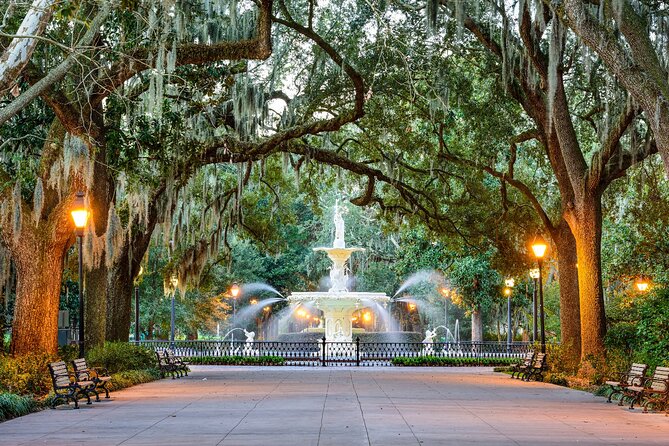
Forsyth Park is the open break in the route. The description calls it a 30-acre urban oasis with walking paths and a central fountain, plus landscaped areas and a place for picnics and cultural events.
Even if you only listen for a few minutes, this stop changes the vibe from “look and identify” to “rest and breathe.” Savannah is gorgeous, but it can also be hot or windy; a park stop gives you permission to slow down.
Admission is listed as free, so it’s an easy place to stretch your legs and re-check your energy for the last stretch.
Stop 17: Mercer-Williams House Museum and Midnight in the Garden of Good and Evil
Next is the Mercer-Williams House Museum, described as Italianate and tied to songwriter Johnny Mercer’s family. The stop also connects the house to the book Midnight in the Garden of Good and Evil, which helps explain why the home draws attention beyond local circles.
This is another option-heavy stop. The audio gives you the hook and the story, and you can decide how much time you want to spend inside if you’re able to.
Admission is listed as free here, which keeps the day from turning into a ticket-heavy checklist.
Stop 18: Ralph Mark Gilbert Civil Rights Museum
Rounding the corner into the civil rights era, the Ralph Mark Gilbert Civil Rights Museum is described as a poignant tribute to the struggle for civil rights. The story emphasizes racial equality movements, artifacts, and the sacrifices and achievements of local activists.
This stop is heavy in the right way. It’s not just naming events; it frames what people fought for and why those struggles still matter.
Admission is listed as free, making it one of the most powerful “value per minute” stops on the route if you’re open to learning at a deeper level.
Stops 19–21: Waving Girl Statue, Pirates’ House, and Davenport House
The route finally heads to the riverfront with the Waving Girl Statue. Florence Martus is highlighted as a long-time greeter of ships, and the story frames the statue as a symbol of welcome for sailors entering the port.
Then you move to the Pirates’ House, tied to 18th-century maritime lore and described as a restaurant and museum experience today. It’s also mentioned as reportedly inspiring elements of Robert Louis Stevenson’s Treasure Island, so it carries a playful side alongside the historical setting.
Finally, Davenport House Museum closes the story arc with a Federal-style home built in 1820. It’s framed as a preserved window into Savannah’s early 1800s life and includes period furnishings and guided tours.
Admission is listed as free for these three stops, which is a nice way to finish without adding extra costs late in the day. If you’ve done the full loop, you’ll end with a strong mix: welcome at the port, sea stories you can taste, and domestic life from early Savannah.
Who should choose this self-guided audio tour
This is a good fit if you like to travel at your own speed and you don’t want to worry about lining up with a group. It’s also ideal for first-timers who want a structured walk through the historic core without signing up for a long, scripted guided tour.
It’s especially suited for people who like stories as much as sights. The tour includes 50+ audio stories and keeps chapters short, so you can keep moving while still learning.
On the flip side, if you hate walking long distances or you’re traveling in rough weather, the over-5-mile route can be a deal-breaker. Savannah is walkable, but your comfort still counts.
Should you book this Historic Savannah self-guided walking audio tour?
Yes, you should book it if you want a reliable, low-stress way to see a lot of Savannah in a short window. At $14.99 with lifetime access and offline maps, it’s one of those purchases that can pay off fast—especially if you plan to revisit or you want your partner/kids to get more than just postcard views.
I’d also book it if you appreciate a narrative that touches civil rights, local architecture, and real institutions like churches and historic houses. The route gives you a broad cross-section of what Savannah is known for, from the squares to the riverfront.
Skip it or plan carefully if you’re sensitive to cold wind or you’re not confident you’ll handle a 5+ mile walk. Also make sure you’re willing to set up the app properly before you start; a self-guided tour only works when your phone is ready to follow along.
FAQ
How long is the Historic Savannah self-guided walking audio tour?
The tour takes about 1–2 hours to complete and is described as over 5 miles long.
Where does the tour start and end?
It starts at 301 Martin Luther King Jr Blvd, Savannah, GA 31401, USA, and it ends back at the meeting point.
What language is the tour offered in?
The tour is offered in English.
Does it work offline?
Yes. The tour includes offline maps, and it works without cellular or Wi-Fi after you download it.
Do I need admission tickets for every stop?
No. Most stops are listed as admission ticket free, but the Owens-Thomas House & Slave Quarters (Stop 7) and the Historic Savannah Theatre (Stop 10) are marked as admission not included.
Can I start and pause whenever I want?
Yes. You can start anytime and pause anywhere to take breaks for snacks and photos.
Is the tour self-guided or do I meet someone?
It’s self-guided. No one meets you at the start, and only your group participates.