REVIEW · KATAKOLO
Half-Day Ancient Olympia VR Audio Tour from Katakolo Cruise Port
Book on Viator →Operated by Open Top Bus hellas M.E.P.E. · Bookable on Viator
Olympia feels close when it’s on your phone. This half-day trip from Katakolo cruise port pairs roundtrip bus transport with an on-site VR/audio guide that adds scene-setting as you walk. I like that you’re not guessing your way through the ruins, and you also get admission tickets included for both the archaeological site and the museum. One possible drawback: the whole experience leans on your smartphone (battery, audio, and sometimes signal), so if your phone misbehaves, you’ll lose the very thing you paid for.
The format is mostly self-guided once you arrive. You’ll get an English-speaking driver/escort on the bus, but you’re walking the site on your own, using the app and the signage. That can be great for flexibility, but it also means a bit more planning on your side than with a traditional live guide tour.
In This Review
- Key points to know before you go
- From Katakolo Cruise Port to Ancient Olympia: the ride that makes cruise days work
- VR and audio on your phone: how to set expectations (and avoid the tech pain)
- Ancient Olympia Archaeological Site: what you’ll actually see for 3 hours
- Temple of Hera and the Olympic Flame connection
- Temple of Zeus (and why its remains hit hard)
- Stadium and the oath-setting spaces
- VR’s role here
- Museum time: the inside story that makes the ruins make sense
- Olympia village stop: a short break with real options nearby
- Logistics that matter on a cruise day: timing, steps, and walking reality
- Value for money: when the $66 ticket feels fair
- Who this tour is best for—and who should skip it
- Should you book this half-day Ancient Olympia VR Audio tour?
- FAQ
- How long is the Half-Day Ancient Olympia VR Audio Tour from Katakolo?
- How much does the tour cost?
- What’s included in the price?
- Is there a live guide inside the monuments?
- Do I need my own phone or headphones for the VR/audio?
- Where do I meet the tour from the cruise port?
Key points to know before you go
- VR/audio runs on your phone: no separate headsets are provided, and setup takes a moment.
- Temple of Hera and Temple of Zeus highlights: you’ll focus on the Olympic Flame area, Zeus, the stadium, and the oath-setting spaces.
- Museum time with included entry: plan for the collections that connect directly to what you’re seeing outside.
- Transport is the real stress-saver: the bus pickup is close to the ship and the coach ride is air-conditioned.
- You’ll walk a lot: comfortable shoes matter, especially with a large site and museum stops.
- Tech hiccups can happen: some days the audio/VR is smooth, and some days it’s frustrating—bring a charged phone and headphones.
From Katakolo Cruise Port to Ancient Olympia: the ride that makes cruise days work
This tour starts fast. After you get off your ship, you walk about 5 minutes to the meeting area at the exit of the cruise terminal. You then meet representatives at Greka Land, and from there you board an air-conditioned bus for the drive to Ancient Olympia (about 30 minutes through the countryside).
It’s a smart setup for cruise passengers. Katakolo is easy to access, but getting to the archaeological site on your own means figuring out schedules and transport in a tight time window. Here, you’re handed the route and the timing, and you just follow the plan.
Group size is capped at 40 travelers, though your day can still feel like a bigger operation depending on how the company groups people across buses. The upside is that the pickup/drop-off flow is usually efficient, and you’re not wandering around the port trying to match a name with a bus number.
One practical note: the experience provider is Open Top Bus hellas M.E.P.E., but the ride you take is described as an air-conditioned coach (not an open-top style for this specific trip). Either way, it’s a comfortable way to get out to the ruins without baking on pavement.
You can also read our reviews of more tours and experiences in Katakolo.

VR and audio on your phone: how to set expectations (and avoid the tech pain)
Here’s the deal: the headline feature is VR audio via an app on your own smartphone. The tour also includes an audio guide in multiple languages (the information you’re given mentions up to 10 languages, while the package details list 8 languages—either way, English is offered). There are no VR headsets handed out like you might see on other tours.
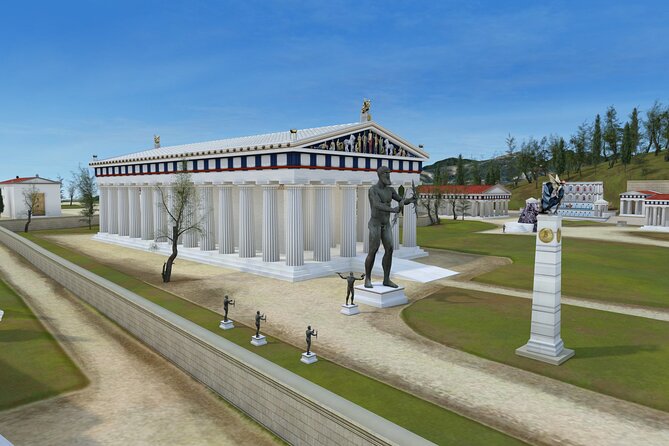
This is exactly why the experience can be great… or not. When it works, your phone’s screen and audio clips help you visualize what you’re standing in front of—like explaining what the original Olympic Games looked like when the site was active.
When it doesn’t, you end up with a phone that drains fast, audio that may not trigger correctly, or connections that fail. Several tour experiences highlight the same theme: you need your phone ready to go. That includes:
- a fully charged battery
- headphones if you want clearer audio (and to avoid blasting audio to everyone nearby)
- a phone that can access the app reliably
If you’re bringing a power bank, this is one of the rare tours where it actually matters. Also check your phone settings before you leave the bus area. Low battery plus a complex app equals a ruined soundtrack.
And be aware of the “stand in the right spot” reality. Some audio/VR clips can be position-sensitive. If you expect everything to trigger just by pointing your camera generally at the ruins, you may feel stuck. Slow down, pause, and give the app a few seconds to catch your location.
Ancient Olympia Archaeological Site: what you’ll actually see for 3 hours
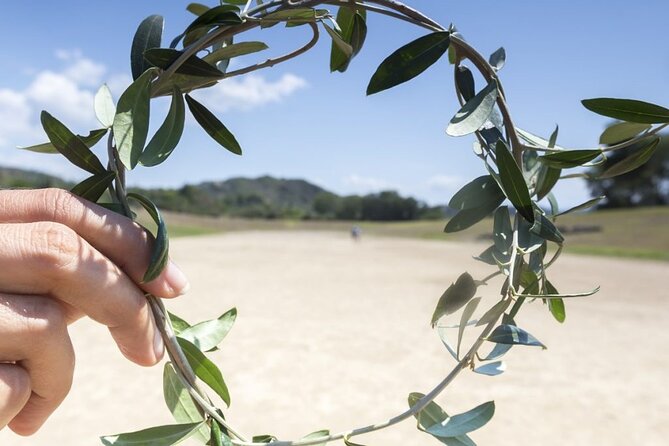
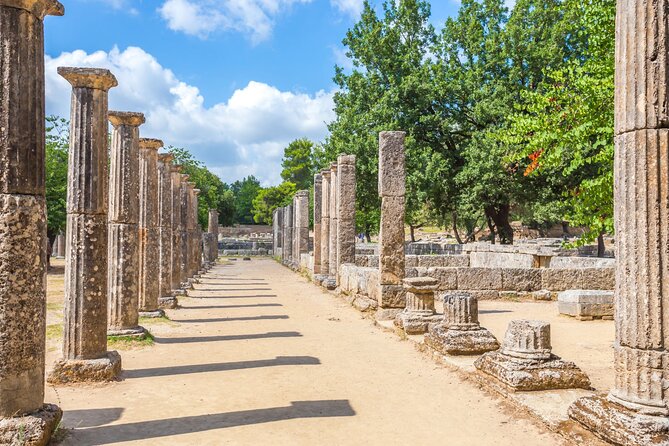
Once you arrive, the heart of the day is the archaeological site of Olympia, the birthplace of the Olympic Games. The timeline matters here: the Olympic games date back to 776 BC, and the site connects that long story to specific places you can still walk through.
Expect about 3 hours here. It’s long enough to actually follow the “story” (instead of sprinting), but short enough that you’ll still want a plan before you start.
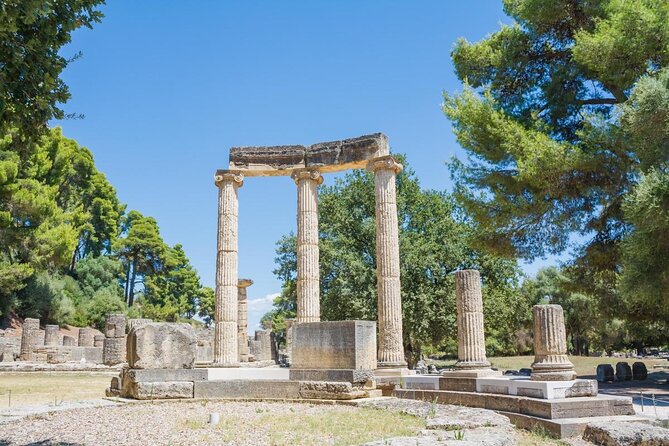
Temple of Hera and the Olympic Flame connection
You’ll see the Temple of Hera. In modern Olympic tradition, the Olympic Flame is lit at Olympia (symbolically linking today’s games to ancient ritual spaces). Even if you’ve watched the Flame ceremony on TV, seeing the temple area in person adds a grounded sense of continuity.
Temple of Zeus (and why its remains hit hard)
Next up is the Temple of Zeus, the home of the famous statue of Zeus (notably described as a gold and ivory work among the ancient Wonders of the World). Even in ruin, the scale of the structure—and the fact that something so iconic once stood there—makes the site feel bigger than the walking distances suggest.
Stadium and the oath-setting spaces
You’ll also visit the stadium and the Bouleuterion. The Bouleuterion is tied to the oath competitors took to follow the rules—details like that turn the stone benches and ceremonial spaces into something closer to a real system, not just ruins.
VR’s role here
When the VR/audio is working well, it acts like a visual and audio narrator. As you walk, the app can activate clips that explain what you’re seeing and what the space likely looked like when the games and ceremonies were active.
When it’s finicky, you still have the signage and the museum ticket to rely on. But you’ll do more of the imagining yourself. Either way, Olympia rewards patience.
Museum time: the inside story that makes the ruins make sense
Admission to the museum is included, so you don’t have to debate whether it’s worth the extra time. The museum is where you start seeing the artifacts and sculptural fragments that connect directly to the outdoor spaces.
While your exact flow can vary, the key is this: if you treat the museum as a “quick glance,” you’ll miss the best payoffs. Give yourself time to look at the items that match what you walked through outside.
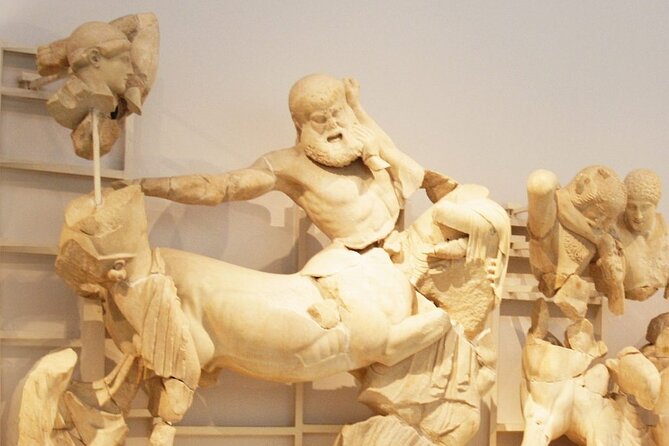
Several items are specifically called out in the information you’re likely to notice, including works such as Hermes of Praxiteles and Nike (Victory). You’ll also see building elements and engraved material tied to the temple world you visited in the sun.
If you want a simple strategy: pick a few objects that match the outdoor landmarks you care about most (Zeus and Hera, for example). Then let the museum reinforce those stops rather than trying to see everything.
One more practical point: some experiences highlight that the outside and inside can take longer than planned, so don’t assume you’ll “just pop in” for 15 minutes. If your phone audio is also running, that adds time too.
Olympia village stop: a short break with real options nearby
After the main historical time, you’ll get a 30-minute stop near the archaeological zone in the modern village of Olympia. It’s close enough that it works as a breather, but not so long that you’ll lose your momentum.
This is the moment for small comforts: shopping, souvenirs, and grabbing a quick lunch, coffee, and snacks. If you brought water already, you’ll be glad. If you didn’t, this is when you can correct that mistake.
It’s not a “big town day,” and that’s part of the charm. You’re not distracted by unrelated attractions—you’re still in the Olympia atmosphere, with just enough time to reset.
Logistics that matter on a cruise day: timing, steps, and walking reality
This is a half-day tour that still turns into a lot of movement. Olympia is a walking site plus a museum, and it takes energy even if you keep it casual.
Some experiences mention step challenges when exiting the bus and general mobility concerns. The takeaway: if you have knee issues or mobility limits, plan carefully. This is not the kind of tour where you can easily duck out halfway for a rest.
Comfort-wise, it’s smart to:
- wear comfortable shoes with good grip
- bring water (especially in warm conditions)
- keep your phone accessible but protected (ruins can be dusty, and you’ll be referencing the app)
Also, timing is essential with cruises. The overall experience is structured so you return to Katakolo village and the port with enough time to reboard. That matters more than the exact minutes in the itinerary because cruise schedules do not care about your scenic photography.
Value for money: when the $66 ticket feels fair
The listed price is $66.08 per person. At first glance, it might feel like you’re paying for transportation plus tickets. That’s partially true.
But here’s the value math that makes this tour work for many cruise travelers:
- You get roundtrip transport that solves the hardest part of the day.
- You get entry tickets for both the archaeological site and the museum.
- The VR/audio component adds context when it’s functioning, which can turn a self-guided walk into something closer to a narrated story.
So when does it feel like a win? When your phone works, the audio triggers correctly, and you actually use the museum time. Then you’re getting a structured experience with the flexibility of going at your own pace.
When does it feel weak? If VR/audio fails or your phone battery drops early, you’re left with transportation and a self-guided site experience. Olympia is still worth visiting, but you might feel like you paid extra for a feature that didn’t show up.
My practical advice: decide what matters most to you. If you want a live guide inside the monuments telling you what to look at, this may not be your best fit. If you’re comfortable using an app and you like learning while walking, it can be a strong value.
Who this tour is best for—and who should skip it
This tour fits best if you:
- want a simple cruise-day plan with transport handled
- enjoy exploring on your own but want audio/VR context
- don’t mind walking through ruins and museum halls
- are traveling with a smartphone that’s reliable and charged
It’s less ideal if you:
- hate relying on technology for your main learning tool
- need a full live guide experience at the monuments
- are worried about battery drain or connectivity
- have mobility limitations that make uneven ruins and museum walking stressful
Also, for anyone who has glasses or needs frequent adjustments, it can slow you down when you’re constantly aligning your phone to trigger audio and keep your bearings. Go slower and give yourself time.
Should you book this half-day Ancient Olympia VR Audio tour?
Book it if you want Olympia without the hassle of transportation and tickets, and you’re excited by the idea of VR/audio on your phone as you walk through key spaces like the Temple of Hera, Temple of Zeus, the stadium, and the Bouleuterion. It’s the kind of experience that can feel “made for cruise time,” because you get back to the port with less stress.
Consider booking something else if VR/audio is a must-have and you don’t want any tech risk. If you go, come prepared: charge your phone fully, bring headphones, and be ready to use the museum and signage if the app is slow. If you’re flexible and curious, the ruins and museum will still deliver even when the tech has a bad day.
FAQ
How long is the Half-Day Ancient Olympia VR Audio Tour from Katakolo?
The duration is about 4 hours 30 minutes.
How much does the tour cost?
The price is listed as $66.08 per person.
What’s included in the price?
You get roundtrip transportation by air-conditioned vehicle, VR application and an audio guide in multiple languages (English offered), an English-speaking driver and escort on the bus, and entry tickets for the archaeological site and the museum.
Is there a live guide inside the monuments?
No live guide in the monuments is listed as included. The site experience is set up as self-guided with the audio/VR application.
Do I need my own phone or headphones for the VR/audio?
The VR experience is on your phone. Headsets are not mentioned as being provided, so you should plan for audio on your device and bring headphones if you want clearer sound.
Where do I meet the tour from the cruise port?
You meet representatives at the Greka Land shop near the cruise terminal exit. The meeting point is listed as J8W9+64 Katakolo, Greece.