REVIEW · GREAT SMOKY MOUNTAINS NATIONAL PARK
Great Smoky Mountains National Park Self-Guided Driving Tour
Book on Viator →Operated by Travel with Action · Bookable on Viator
Big views, told in a laid-back way. This self-guided Smoky Mountains driving tour uses GPS to play hands-free audio stories as you roll past famous overlooks and trail areas. I also like that it’s set up for the park’s no-signal problem: download ahead, then use offline maps and audio on your schedule.
The $16.99 price is also a big win because it’s per group (up to 4), not per person. The only real drawback is that setup matters—if you don’t download on good signal or you start in the wrong spot, the audio timing and map feel can get frustrating fast.
In This Review
- Key things I’d bet you’ll care about
- Why this Smoky Mountains driving loop feels so easy
- The big promise: you control the pace
- Price and value: what $16.99 really buys
- Setup that decides whether it feels smooth or stressful
- Download on strong signal, then trust offline mode
- Use car audio so you don’t miss cues
- Your route from Oconaluftee to Gatlinburg: stop-by-stop
- Start at Oconaluftee Visitor Center: history before the views
- Rockefeller Memorial: a famous name with a park connection
- Carlos Campbell Overlook and the “through-the-mountain” moment at Morton Tunnel
- Quick reality check: overlooks are weather-dependent
- Alum Cave Trail area and Chimney Tops: why fire and erosion matter
- Beech Flats Quiet Walkway: a gentle way to feel the forest
- Sugarlands Valley Trail and Sugarlands Visitor Center: easy access plus deep context
- Rainbow Falls and Cataract Falls: big water, then quieter water
- If you want the smoothest day, park early
- Newfound Gap: where travel history meets the mountain pass
- A quirky museum stop: shrunken heads, animal skeletons, and a comic origin
- Roaring Fork Motor Nature Trail: slow down, because the road does the talking
- Reagan Cabin and the tub mill: old tech you can picture
- Grotto Falls and the salamander story: quieter and less crowded
- Place of a Thousand Drips: multiple falls, one satisfying stop
- Baskin Creek Falls: a water feature with a name puzzle
- What can go wrong: GPS timing, speed, and winter road notes
- Keep your speed steady
- Starting point clarity is everything
- Winter caveat
- Who this driving tour is best for (and who should skip it)
- Should you book this Smoky Mountains self-guided tour?
- FAQ
- How long does the Great Smoky Mountains driving tour take?
- Is this tour priced per person?
- Does it work without cell service?
- Do I need a park pass?
- How do I start the tour once I arrive?
- Are any stops suitable for strollers or wheelchairs?
Key things I’d bet you’ll care about

- GPS-triggered audio that plays automatically as you reach each stop
- Offline-friendly: download with strong Wi‑Fi/cellular, then use it inside the park
- Value per car: one purchase covers up to 4 people
- 40+ audio stories across 45+ miles of scenic driving
- Great photo/walk breaks without locking you into a fixed tour pace
- Waterfalls plus history, so it’s not just scenery
Why this Smoky Mountains driving loop feels so easy

The whole point here is simple: you drive, you pause, you listen. The audio plays based on your location, so you don’t need to constantly check your phone screen. That’s a nice match for the Smokies, where the best moments often happen from a pull-off you just happen to notice.
I also like how the tour is built for real driving life. You can start anytime during opening hours, pause for snacks and photos, and skip anything that isn’t your thing. If you’re the kind of traveler who gets annoyed by schedules, this format is a relief.
You can also read our reviews of more tours and experiences in Great Smoky Mountains National Park.

The big promise: you control the pace
The route is designed to take about 2–3 hours for a full run, but you’re not locked to it. If you want longer stops at places like Morton Overlook (famous for sunsets), you can. If you’re moving fast to beat crowds, you can do that too. That flexibility is the reason this tour works well for couples, friends, and families.
Price and value: what $16.99 really buys
It costs $16.99 per group (up to 4). For a driving tour, that’s a fair deal—especially in a national park where a guided tour can run much higher per person.
Two value notes to keep you grounded:
- Park passes aren’t included. You’ll still need whatever entry you need for the days you visit.
- You’re paying for the convenience of offline audio + route guidance, not for any physical attraction tickets.
Also, this tour comes with new lifetime access with no expiry. So if you come back to the Smokies next year—or if your group wants to re-drive portions later—you aren’t buying again.
Setup that decides whether it feels smooth or stressful
This is the “do it right once” part. The park can be a dead zone for data, so the tour is designed to work offline after download. That means your prep day (or prep hour) matters.
Download on strong signal, then trust offline mode
After booking, you get setup instructions plus a password by email/text. The key step: download the tour while you’re on strong Wi‑Fi/cellular. Once it’s downloaded, it should work offline.
If you’re prone to last-minute tech panics, I’d do this:
- Download before you get deep into the park.
- Stand somewhere with a strong connection and let the download finish cleanly.
- Only then drive toward your first stop.
Use car audio so you don’t miss cues
The tour is meant to be hands-free, but your audio still needs to be audible. The instructions suggest connecting your phone to your car stereo via Bluetooth, USB, or AUX. If you prefer headphones, that can help too.
One small tip: keep an eye on your phone’s location permissions. If location tracking is off or inconsistent, GPS-triggered playback can feel like it’s slipping or replaying.
Your route from Oconaluftee to Gatlinburg: stop-by-stop

This is a long but logical route through some of the most famous “Smokies hits,” plus a few stops that feel like fun side quests. The full drive covers 45+ miles with 40+ audio stories.
Below is the flow you’ll follow, in the same order you’ll feel it on the road.
Start at Oconaluftee Visitor Center: history before the views

The drive begins at the Oconaluftee Visitor Center. It’s a strong starting point because you get context early—why this park is such a big deal, and why it attracts millions of visitors.
If you need restrooms and a quick stretch, this is a practical early stop. Then you roll onward with the audio guiding you to the next story moments.
Rockefeller Memorial: a famous name with a park connection
Next up is the Rockefeller Memorial, tied to the importance of Rockefeller to the park. The memorial is noted as having been dedicated by President Theodore Roosevelt. It’s a short stop, but it sets up the theme the Smokies love: conservation, money, politics, and people—mixed with the mountains.
Carlos Campbell Overlook and the “through-the-mountain” moment at Morton Tunnel

The next overlook on your route is Carlos Campbell Overlook, built for panoramic views of towering mountains and lush forest.
Then comes Morton Tunnel, which the tour frames as “passing through the heart of a mountain.” The audio also connects the park’s names to a politician named Ben Morton—another one of those moments where the park’s map labels suddenly feel meaningful.
Quick reality check: overlooks are weather-dependent
Some of the best views here happen when visibility is clear. If fog rolls in, you’ll still get a moody Smokies feel—but you might miss the “big depth” views. Plan for both.
Alum Cave Trail area and Chimney Tops: why fire and erosion matter

As you keep driving, you’ll pass the Alum Cave Trail area. The audio talks about the remains of an old salt mine, with history that adds a “human story under the trees” layer.
Then you’ll reach Chimney Tops Overlook. This stop shifts to wildfires and how they cause lasting damage to mountains like this one. It’s not a doom-and-gloom detour; it’s a practical reminder that nature changes on its own schedule—and people need to understand those cycles.
Beech Flats Quiet Walkway: a gentle way to feel the forest

After the more intense history and wildfire stories, the tour brings you to the Beech Flats Quiet Walkway. This is a good fit if you want to stretch your legs without committing to a big hike. The audio frames it as an easy way to soak in the forest and mountain atmosphere.
If you’re traveling with kids, older adults, or anyone who prefers short walks, this is the kind of stop that makes the whole day feel balanced.
Sugarlands Valley Trail and Sugarlands Visitor Center: easy access plus deep context
Next you’ll hit Sugarlands Valley Trail, and this is one of the strongest “family-friendly” moments in the tour. The route notes that it can be accessed by wheelchair or stroller.
That matters because it gives you wilderness time without a steep or long commitment. The audio also turns back the clock to explain the complicated history of the valley and the settlers who once lived here.
After that, the tour leads you next to the Sugarlands Visitor Center, which is a smart place to regroup: trailheads, restrooms, and a good chance to re-check your next priorities.
Rainbow Falls and Cataract Falls: big water, then quieter water
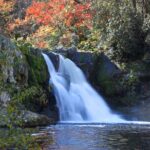
The tour takes you next to the Rainbow Falls Trail, described as leading to the park’s most popular waterfall. Rainbow Falls is said to be 80 feet tall, and the tour notes that when the sun hits right, it can glimmer like a rainbow.
Then you continue to Cataract Falls, described as more secluded and tucked under shaded beech trees. This pairing works well: you get the headline waterfall first, then you shift toward a calmer feeling.
If you want the smoothest day, park early
Waterfall areas can fill up. Your best shot at relaxed parking is to arrive with a little buffer, not at the last second.
Newfound Gap: where travel history meets the mountain pass
Next is Newfound Gap, framed as a pass with huge historical significance. The audio covers how trappers, farmers, and merchants once crossed the Smokies—and how the gap changed travel patterns over time.
This stop is a great example of why the audio version is better than simply driving. Instead of just taking a photo, you understand what you’re looking at and why roads here matter.
A quirky museum stop: shrunken heads, animal skeletons, and a comic origin
After Newfound Gap, the tour includes a funky museum stop. You’ll see oddities like shrunken human heads and rare animal skeletons, and the audio explains how it started as a one-panel comic strip and grew into a national phenomenon.
This is one of those “only in the Smokies” moments. It’s not a must if you hate quirky stops, but if you like roadside weirdness, this will make the drive feel memorable.
Roaring Fork Motor Nature Trail: slow down, because the road does the talking
Now you move onto the Roaring Fork Motor Nature Trail. This part is designed for slow driving, with the audio encouraging you to take in the forest and historic buildings of the area.
The tour notes that this driving trail features three of the park’s most famous waterfalls. One practical consideration: even when you’re driving, some waterfall access can involve walking from pull-offs. If you’re planning a very easy day, check in advance which falls you truly want versus which are just “nice from the roadside.”
Reagan Cabin and the tub mill: old tech you can picture
At the Reagen Cabin, the audio highlights an example of old-time technology: a “tub mill.” The point isn’t just the name; it’s what made it useful here, and why people used these tools in mountain life.
This stop adds texture. You’ll start seeing that the Smokies aren’t just a nature park—they’re also a place where people worked, built, and adapted.
Grotto Falls and the salamander story: quieter and less crowded
Keep driving to the Grotto Falls trail. The tour describes it as less grand than Rainbow Falls but worth it, especially if you want something more secluded.
On the way, you’ll hear about a rare salamander found only in this area. It’s a nice way to connect the “water you can see” to “life you might miss unless someone tells you.”
Place of a Thousand Drips: multiple falls, one satisfying stop
Next comes the Place of a Thousand Drips, where numerous narrow falls come together into a stunning torrent. This stop is a classic for people who like variety. You’re not just chasing one waterfall—you’re watching many small streams do the heavy lifting.
Baskin Creek Falls: a water feature with a name puzzle
Your final waterfall stop on the route is Baskin Creek Falls, with the audio explaining the amusing (and slightly misguided) history behind the name.
Then you roll onward, and the tour closes when you arrive in Gatlinburg, where the experience ends back at the meeting point.
What can go wrong: GPS timing, speed, and winter road notes
Most people find this tour easy once it’s set up. But a few common problems pop up often enough that you should plan for them.
Keep your speed steady
Because the audio triggers by location, if you go too fast or skip ahead, stories can cut off early. One tip from the ride vibe: aim to follow the posted speed limits. The tour experience improves when you’re not constantly zooming past the spots.
Starting point clarity is everything
The audio needs you to begin at the right start location so playback lines up. If you’re trying to guess where to begin, you can end up turning around or missing the flow of stories. When in doubt, pause and confirm your first stop before you set off.
Winter caveat
There are also seasonal road notes that can affect timing. The provided update states that from Jan 5, 2026 onward, there may be delays in the park. It also mentions single-lane sections around US‑441/Newfound Gap Road (Gatlinburg–Sugarlands) for a certain window, plus hazard tree impacts on several roads and parking areas. If you’re traveling in that period, I’d build extra time and be ready to adapt.
Who this driving tour is best for (and who should skip it)
This tour is a strong match if you:
- Want a self-guided plan with built-in stories so you don’t drive aimlessly
- Like scenic stops, waterfalls, and short walks without committing to a full day hike
- Travel in a group where one purchase per car makes sense
- Prefer to control pacing—stop for sunrise photos, skip a detour, or linger at overlooks
It might not be the best fit if you:
- Hate doing phone setup (download, permissions, audio connection)
- Want a “guaranteed works no matter what” experience with zero tech involvement
- Need perfect map guidance at all times, since some people find offline maps don’t replace a full park map depending on how their phone handles offline mode
Should you book this Smoky Mountains self-guided tour?
Yes—if you want a smart way to experience the Smokies without hiring a guide and without rushing. The value per car is hard to beat, and the route hits the classic names you’ll recognize, plus enough history and natural notes to make each stop feel worth it.
Book it especially if you’re the type who likes to pause for photos, enjoys learning why places got their names, and can spend a few minutes getting your phone ready before entering the no-signal zone.
If you’re worried about tech setup or you know GPS can be unreliable on your device, consider downloading early, testing audio before you start driving, and carrying a backup park map just in case.
FAQ
How long does the Great Smoky Mountains driving tour take?
It takes about 2–3 hours to complete on average.
Is this tour priced per person?
No. It’s $16.99 per group (up to 4), so one booking covers the whole car.
Does it work without cell service?
Yes. You’re expected to download the tour while you have strong Wi‑Fi/cellular, and it’s designed to work offline after download.
Do I need a park pass?
A park pass is not included, so you’ll need to plan for whatever entry is required for your visit.
How do I start the tour once I arrive?
Open Action’s Tour Guide app onsite, choose the right tour version if needed, then enter the first story point. The audio is designed to start and play automatically based on your location and follow the route.
Are any stops suitable for strollers or wheelchairs?
Yes. The Sugarlands Valley Trail is described as accessible by wheelchair or stroller.